Ciao cari lettori e saluti dall’italia!
It’s a rainy day here in Napoli. (Piove = it’s raining.) I went out a bit earlier today (some of you may have seen my lives and posts on Insta), but the rain has driven me back inside.
At the beginning of the month, I announced I had moved abroad again, but really haven’t said a lot since then. In the last month, I just haven’t had a lot of time to explore. I’ve been busy trying to buy a car (which meant I was stuck at the hotel for a while), looking for a place to live, and working. (Yes, they expect me to work while in Italy!)
As a coworker of mine rightly stated, nothing is easy in Italy. And he isn’t wrong. It took over 2 weeks just to get the car purchase and registration done.
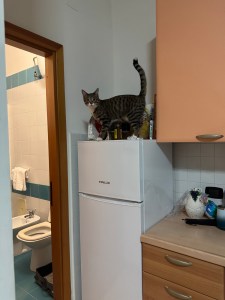
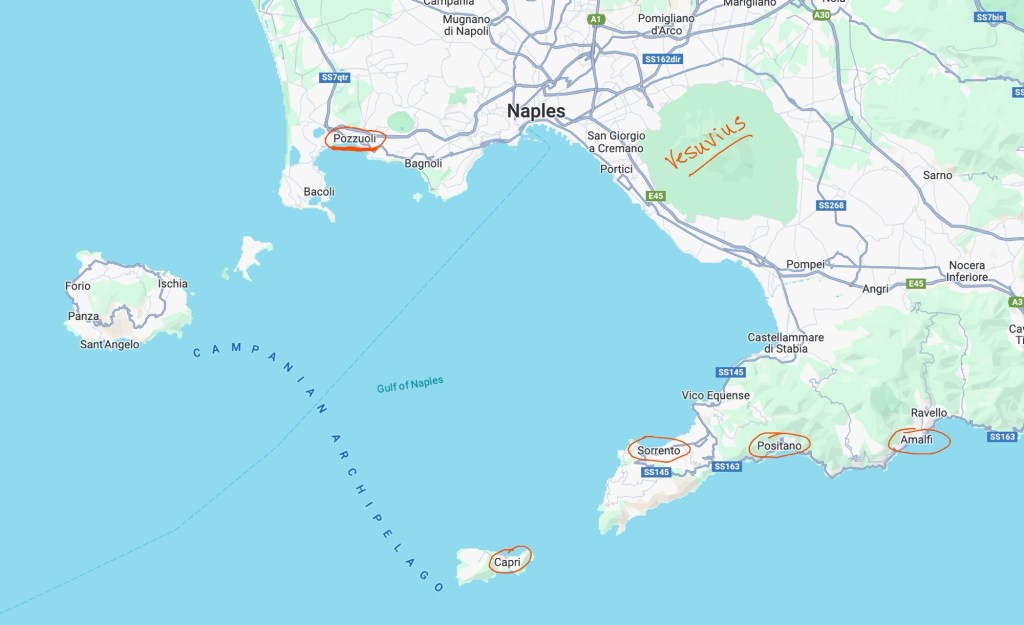
This week, I finally got the car! I’m now the proud owner of a 2-door 2010 A160 Mercedes that’s perfect for narrow Napoli streets. (Although at times I do feel like Amanda driving Iris’s mini in The Holiday.) Finally having wheels meant that I could get out of the Lodge (which is located north of Naples in the Province of Caserta and isn’t convenient to anything) and relocate to a small, temporary apartment in Pozzuoli (walkable and near train/metro stations).
A Little Pozzuoli History
Pozzuoli is a comune (municipality) of Napoli, which is in the Italian region of Campania. Founded in the middle of the sixth century BCE by settlers from Greece, Pozzuoli was originally named Dicaearchia (“Just Government”). Sometime in the third century BCE, the Greek rule lost out to the Samnites. Then in the second century BCE, Hannibal laid siege, the Romans won, and Dicaearchia was renamed Putèoli and became a Roman colony in 194 BCE.
Putèoli is Latin for “little wells,” referring to the many sulfur fumaroles in the area. The modern Italian term, pozzilli, is the diminutive of “wells”, and the modern name became Pozzuoli.
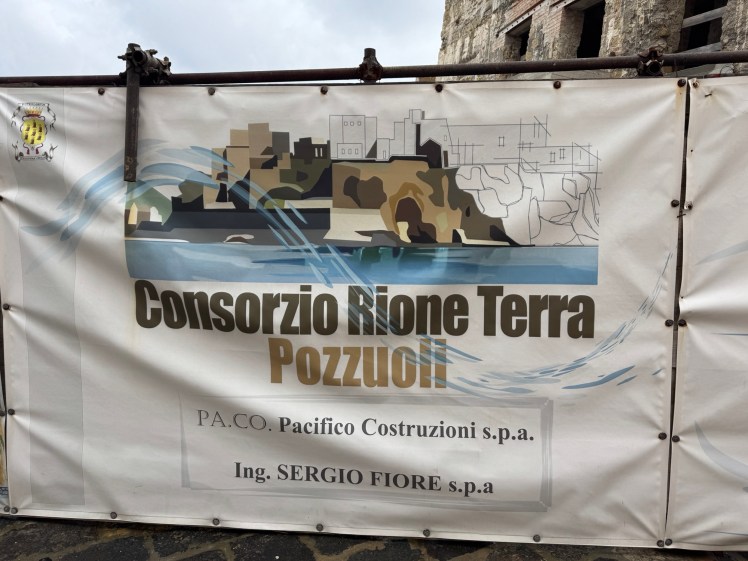
Rione Terra is the oldest part of Pozzuoli and has been the only place that has evolved from the Greek-Roman colonization to modern times.
Rione Terra
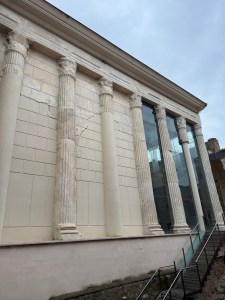
The original second century BCE temple to Jupiter, Juno, and Minerva was replaced by a temple to Augustus in the 1st century. The latter’s marble columns now form part of the 17th-century Duomo (cathedral), home to paintings by 17th-century artists including Artemisia Gentileschi, Giovanni Lanfranco, and Jusepe De Ribera.
Rione Terra was populated until 1970 when it was evacuated due to a sudden bradyseism event that raised the hill by 1.7 m (5.6 ft) relative to sea level. The district was further damaged by the 1980 Irpinia earthquake, which was followed by a period of serious seismic volatility. On one night, at least 500 tiny earthquakes struck Pozzuoili, and scientists witnessed what is known as an “aborted eruption”—when magma rises close to the surface but without the velocity to break through.
After the seismic activity calmed down, residents still weren’t allowed back and Rione Terra sat abandoned for decades.
In the early 2000s, a series of local authorities began working to renovate it. In 2003, a competition to rebuild the cathedral was announced and a Milanese architect’s design won. In 2014, the cathedral reopened as an open-air museum. But the Covid-19 pandemic led to a closure.
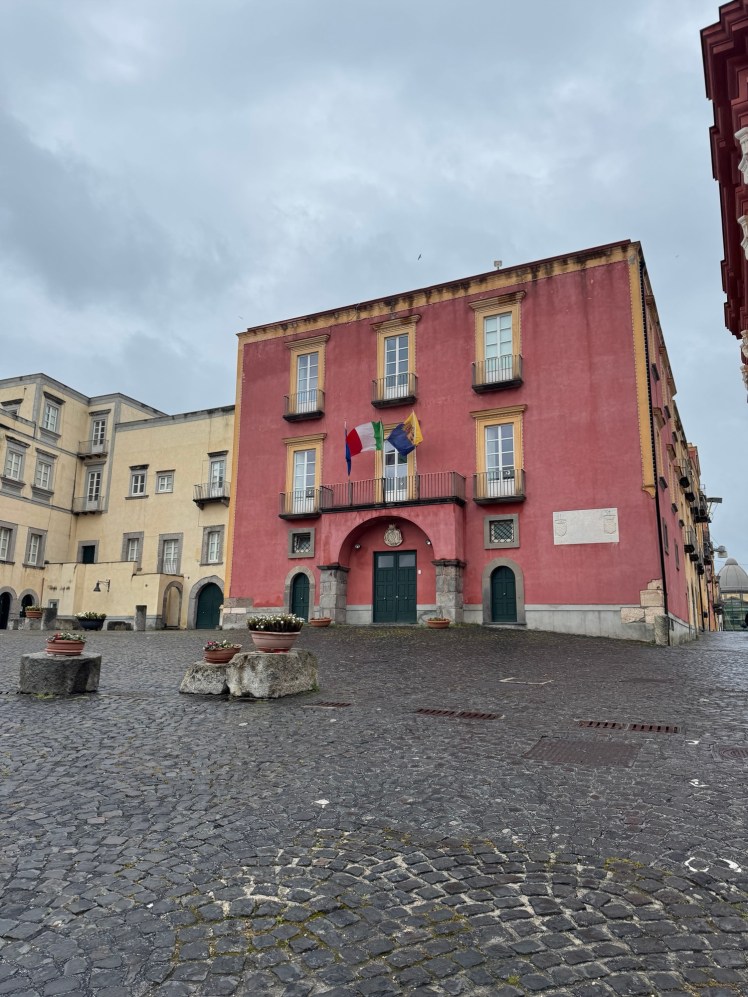
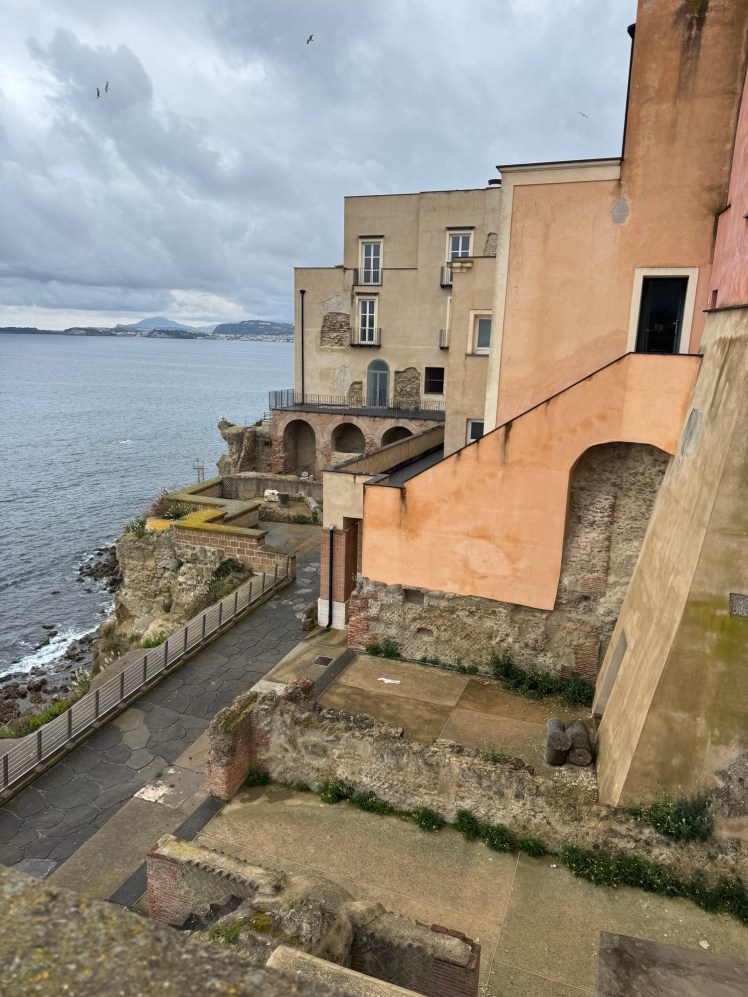
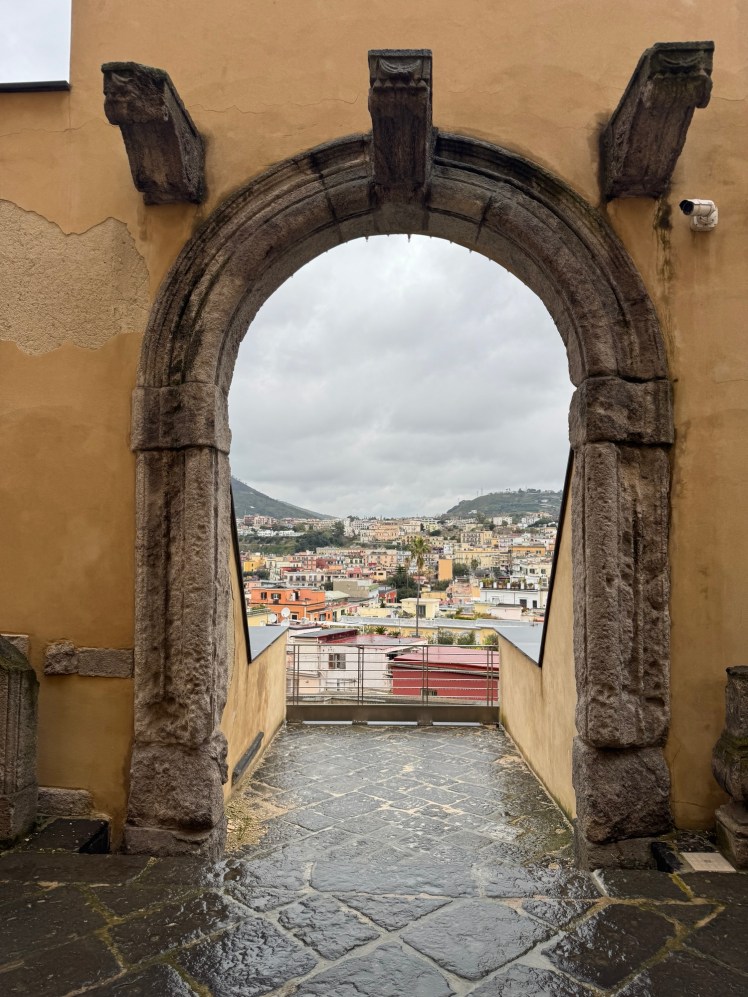
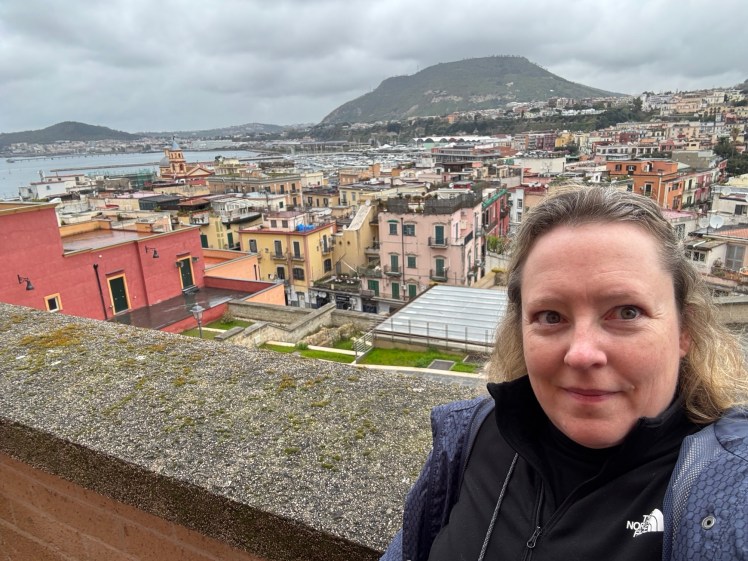

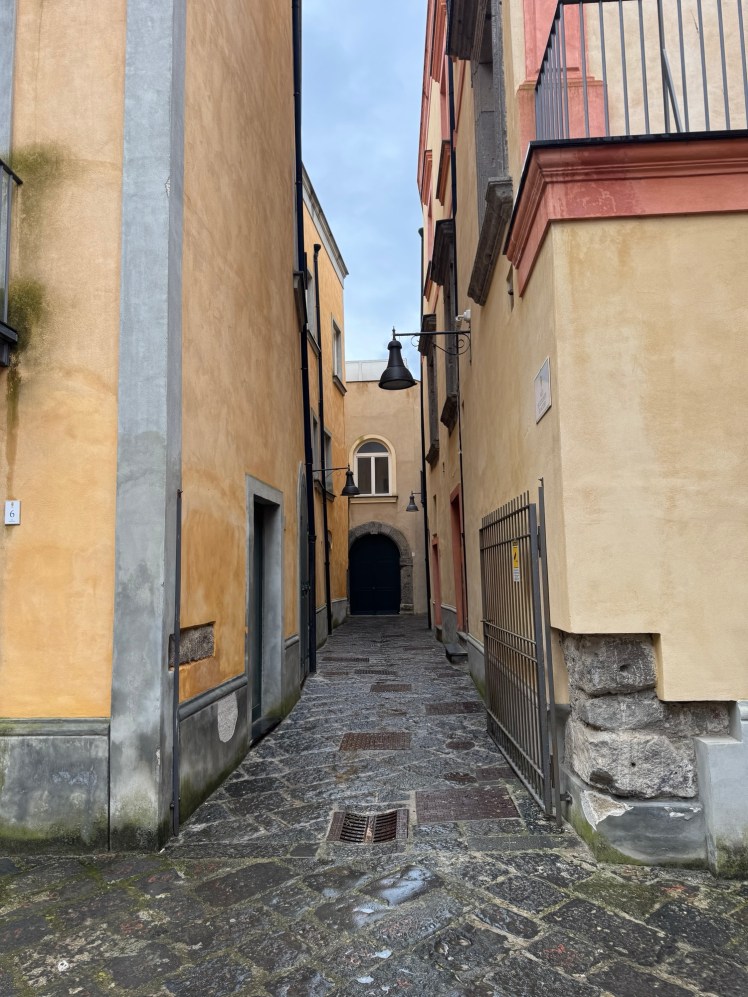
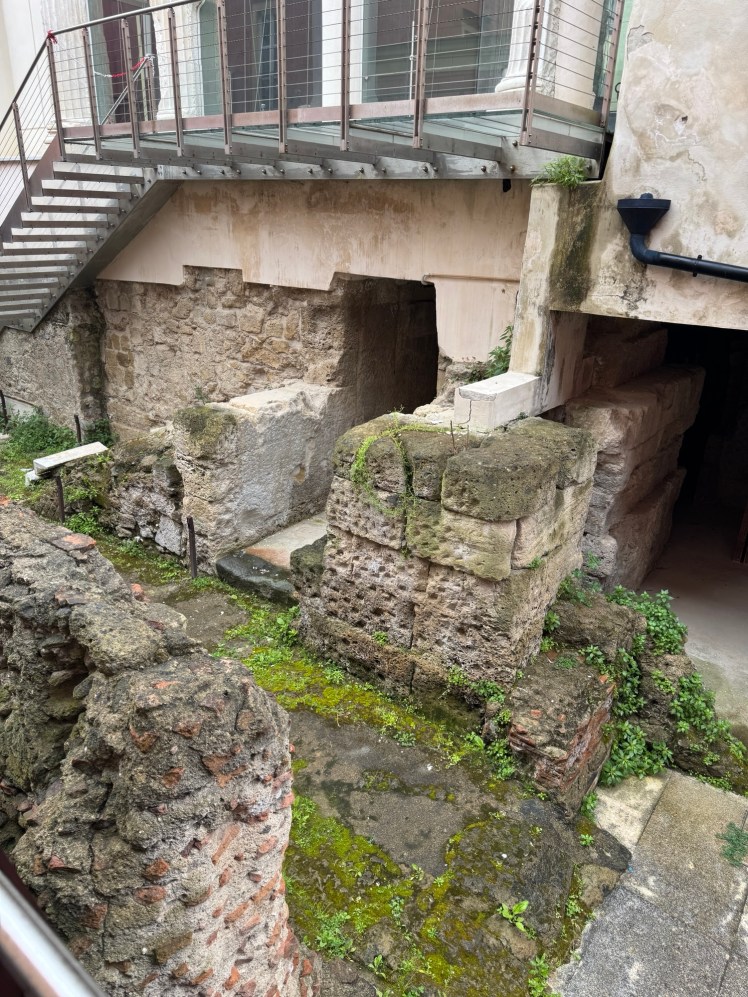
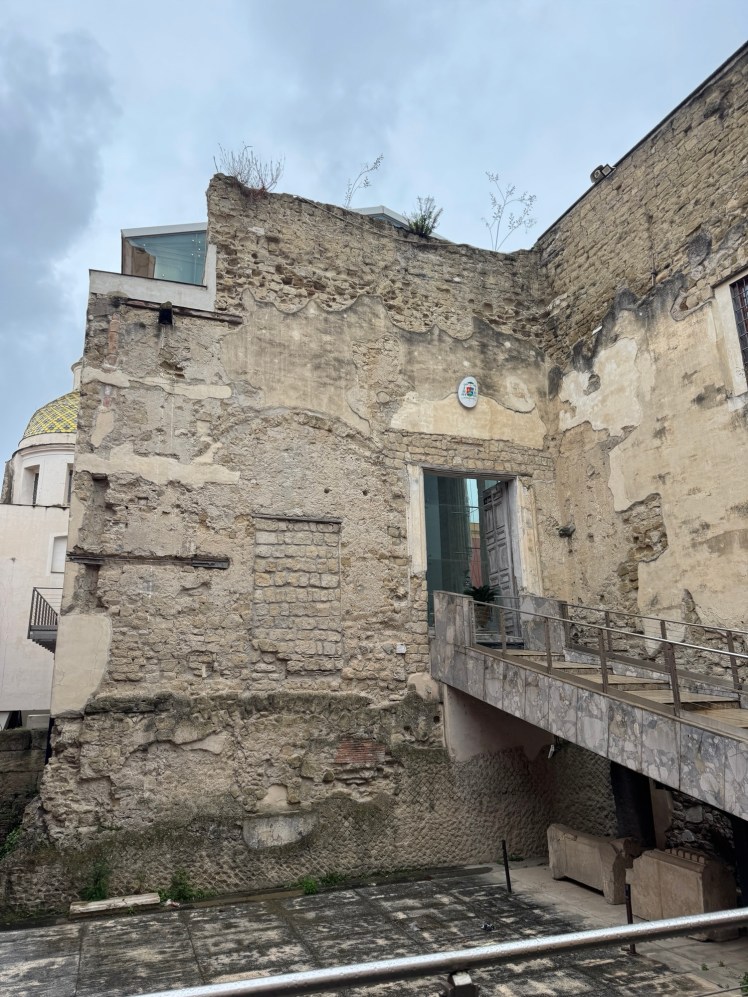
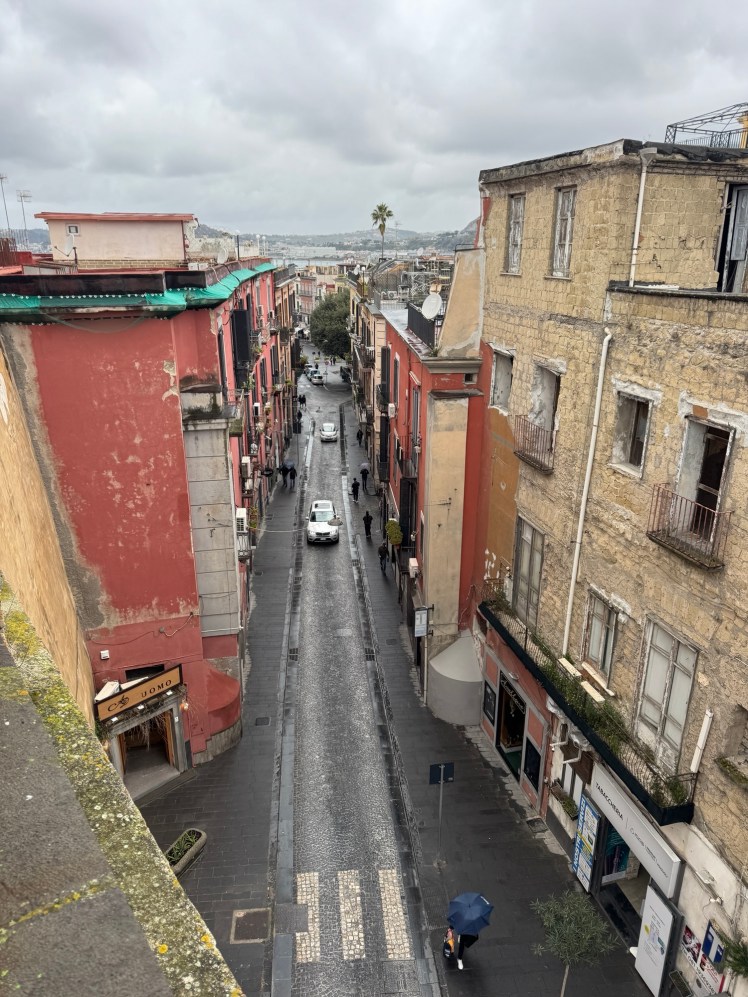
So while the area is open to walk around, there are no shops and it remains uninhabited, which is sad because it has some of the best views.
Unfortunately, it’s supposed to rain for the next couple of days. Next weekend, provided the forecast remains true, is supposed to be sunny. So I will hopefully get to explore a lot more. I’m thinking about visiting Pompeii, provided the weather cooperates.
Until then, follow me on Insta to see more photos and videos of Napoli.
 wanderinglynn.com