Now I’m (mostly) settled into my new apartment, I plan to take advantage of every long weekend to explore my new country, as well as neighboring countries.
As I travel, I’ll post about my journeys, so check back frequently or subscribe to get updates.
First up: Memorial Day weekend in Bologna.
Why Bologna for the first trip? Mostly because my friend C wanted to go there for the food and I want to go everywhere and anywhere.
C & I took the fast train from Napoli (only 3.5 hrs) to spend the long weekend exploring Bologna. We left on Friday morning with a return ticked for Monday evening. But we found three nights in Bologna was too long. Two nights would have been enough, because outside of the food, there wasn’t much else we wanted to see that we didn’t see in two days. Luckily, Italo (one of the fast train companies) offers flex tickets, meaning you can change the time of your departure. So we left earlier on Monday than we had intended.
Bologna is the capital and largest city of the Emilia-Romagna region in northern Italy. The seventh most populous city in Italy, Bologna is known for being the home to the oldest university in continuous operation, the Università di Bologna, established in AD 1088.
But what Bologna is most well-known for is fast cars and slow food. (Car & motorcycle manufacturers here include Ferrari, Lamborghini, Maserati, and Ducati.)
Not the best angled photo but the street was packed!Not being a huge car people, our weekend focused on food.
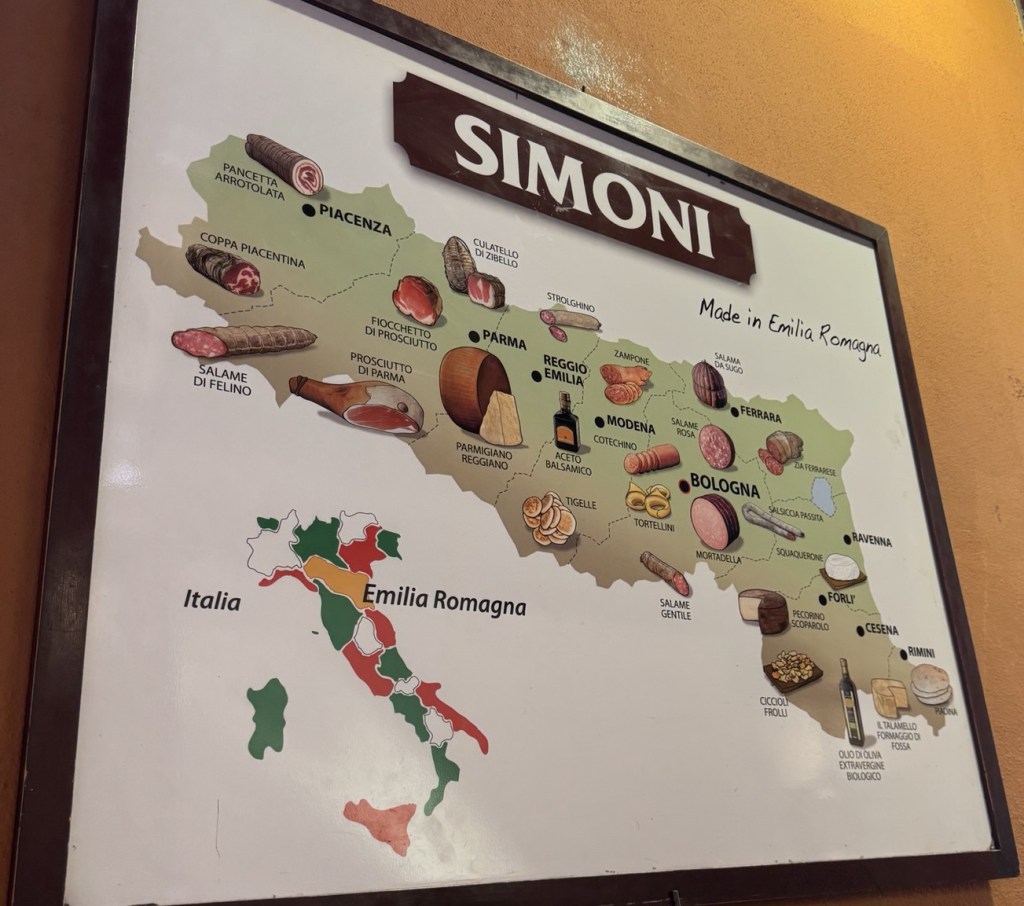
Known as Italy’s “food valley”, the Emilia-Romagna region has the most European-certified food products, with 44 Protected Designation of Origin (PDO) and Protected Geographical Indication (PGI) products. These include items like Parmigiano Reggiano, Prosciutto di Parma, Balsamic Vinegar of Modena, and Mortadella di Bologna.
The region also is fourth among Italy’s 20 regions for wine production with 33% of their wines being recognized as DOC (Denominazione di Origine Controllata, meaning Controlled Designation of Origin) or DOCG (Denominazione di Origine Controllata e Garantita, which translates to Controlled and Guaranteed Designation of Origin” and it is the highest classification for Italian wines, signifying controlled production and guaranteed quality).
The most famous wine of the Emilia-Romagna region is Lambrusco, which is both the name of the grape and the sparkling red wine made from the grape. I tried it and it is delicious. In fact, all the wines I tried— sparkling, white (bianco), & red (russo)—were light and on the sweeter side. A perfect complements to the rich sauces and fatty meats.
Then there’s the food. And wow did we do food, including a 4 hour food tour with a local.
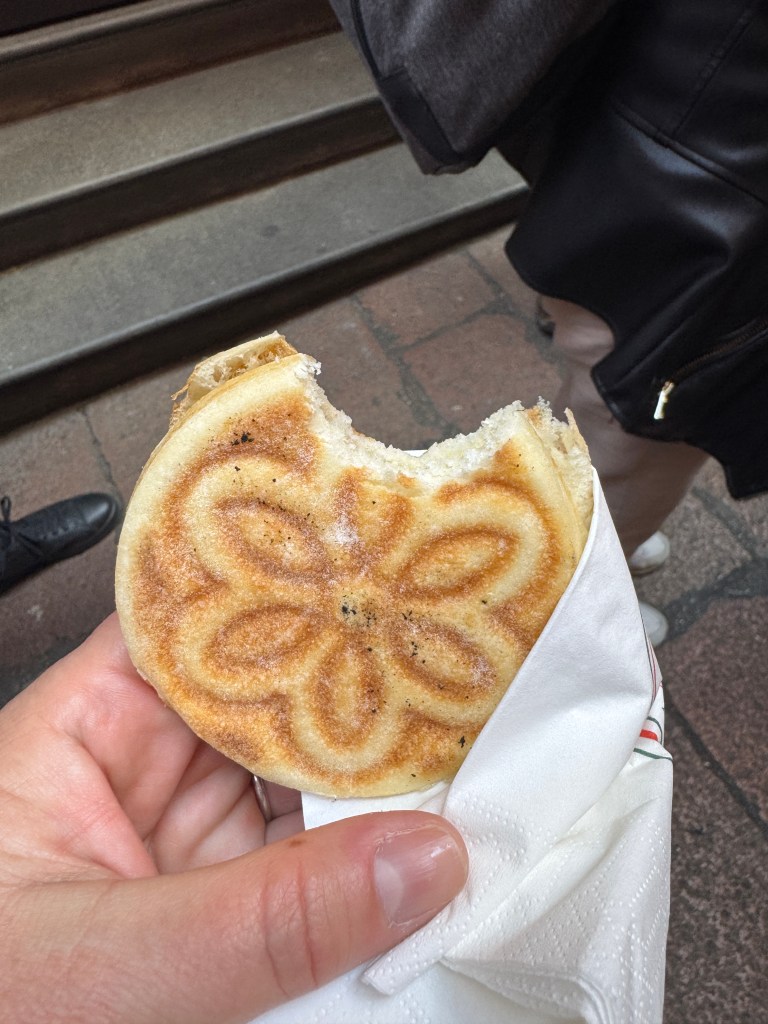
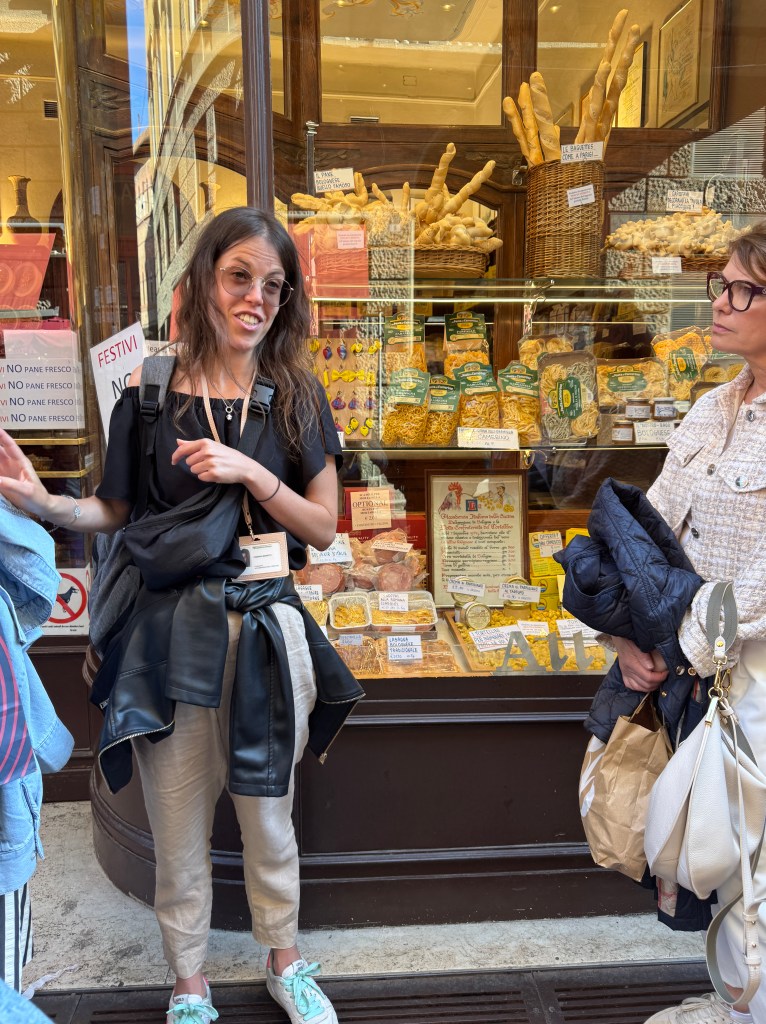
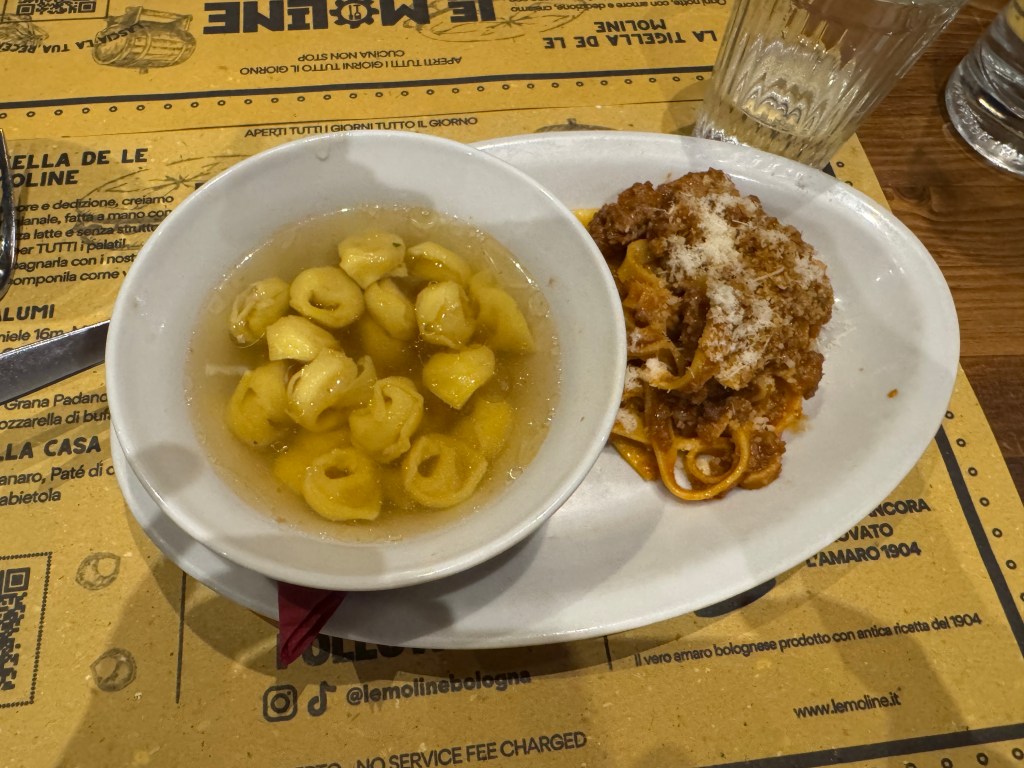
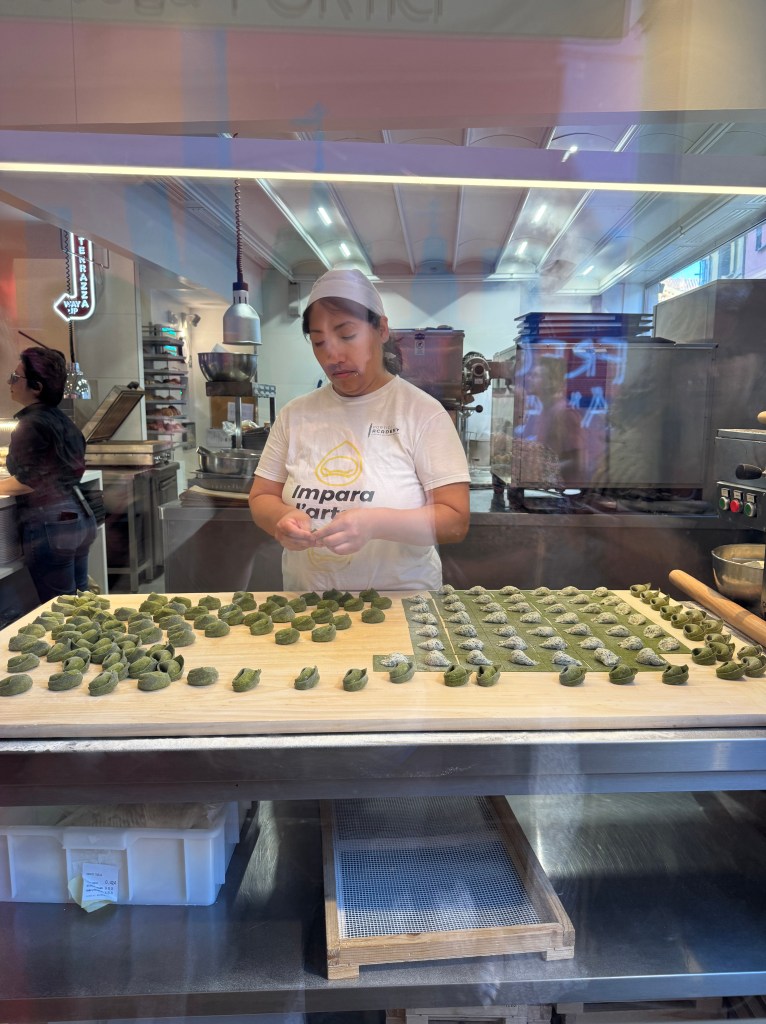
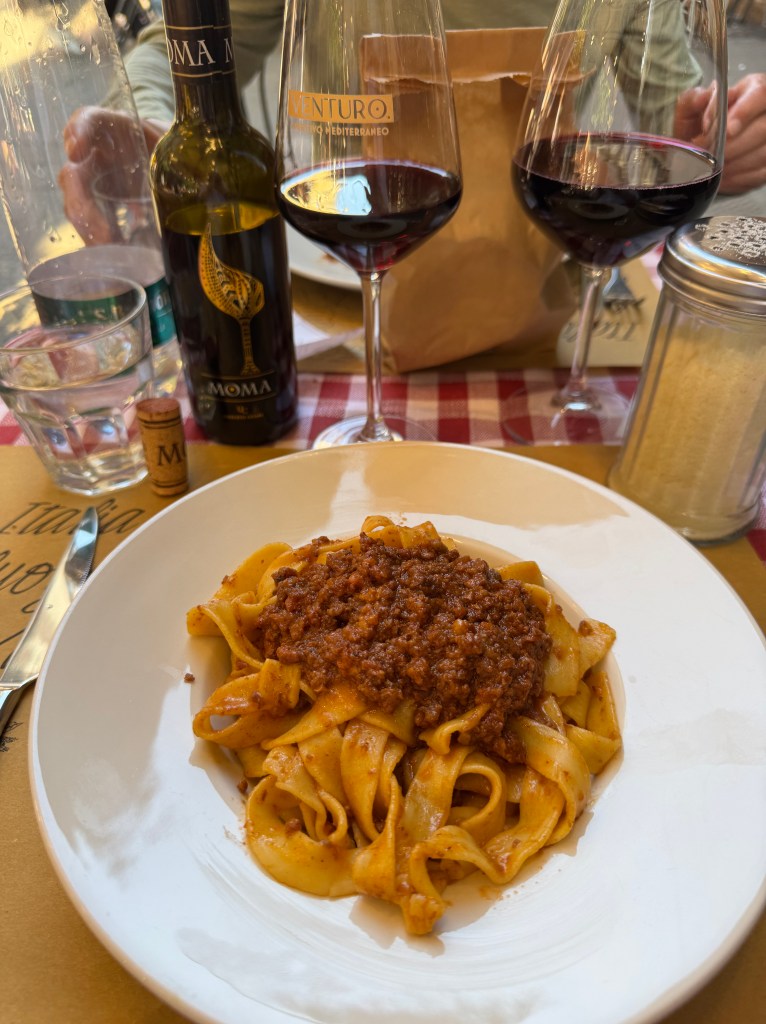
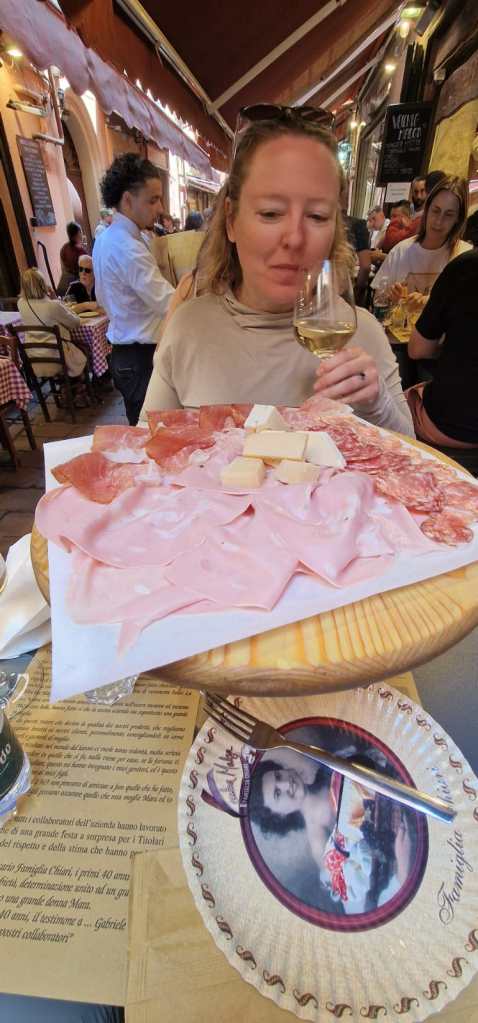
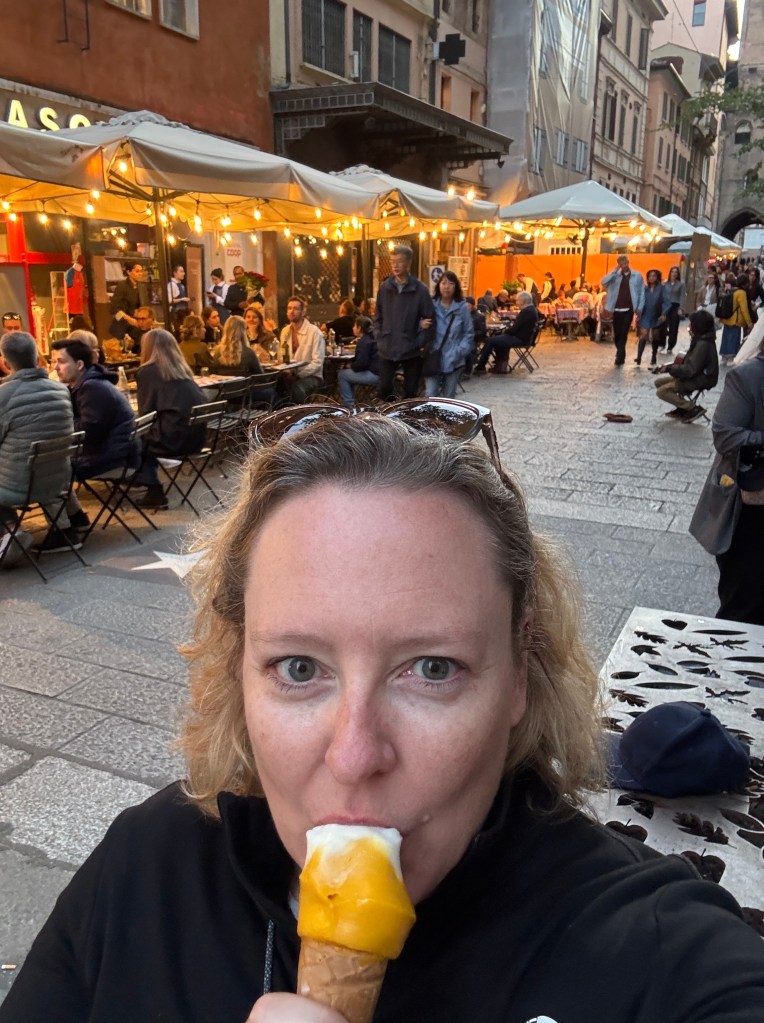
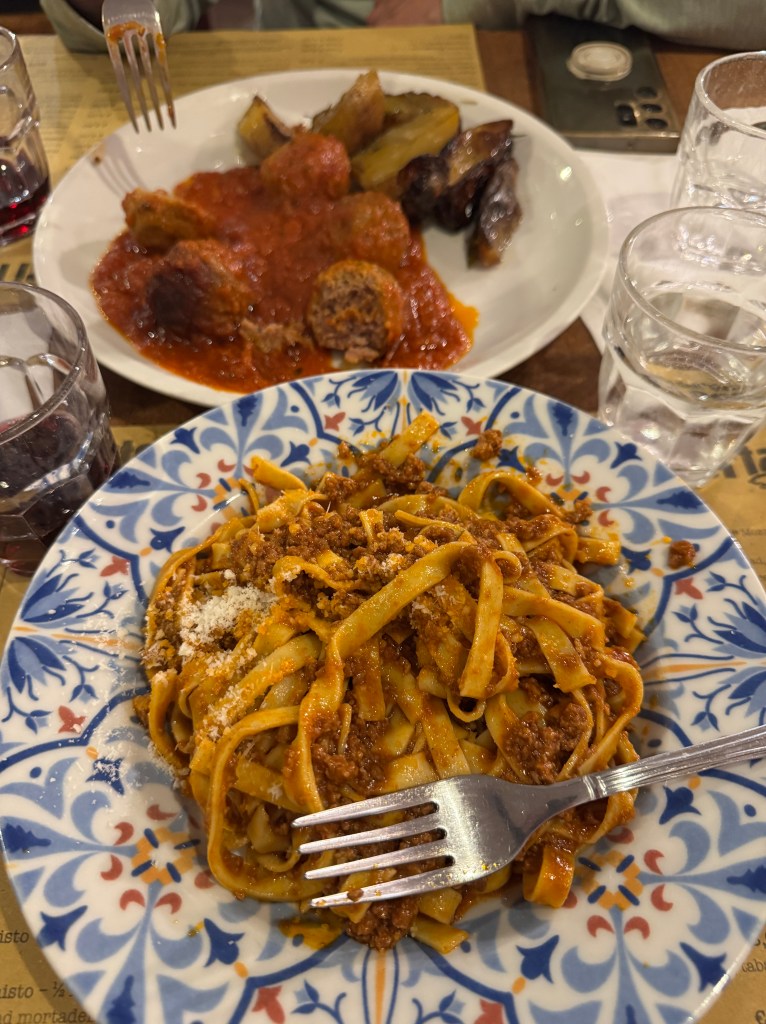
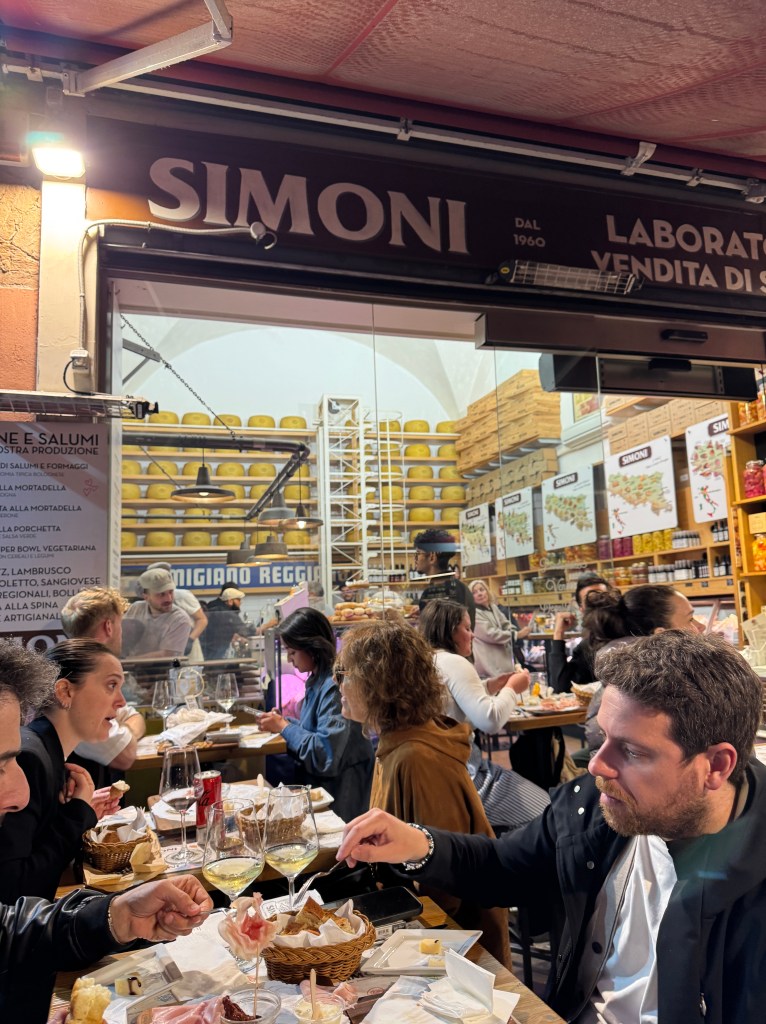
Bologna is easy to navigate—the town is flat, no hills (unlike my new Italian hometown) and has fairly wide sidewalks (especially compared to my new hometown, Monte di Prochida). While it has no metro or rail system, it does have an extensive bus network, making it convenient to get anywhere, including some of the outer zones.
However, we never did figure out how to get and validate a bus ticket. The web said the bus drivers took cash, but we found that not to be true. Through the “Roger” app, i was able to buy a ticket but then couldn’t figure out how to validate it. There’s a machine on the bus, but no matter what I did, it didn’t validate. But no worries, about 75% of the riders never validated a ticket either. Va bene.
On day 3, we decided we had seen Bologna and I talked C into a day trip to Verona. Because Shakespeare. (Yes, I love literature tourism, even if it’s not really authentic).
Only a 90 minute regional train ride from Bologna, Verona is known primarily for la casa di Giulietta (Juliet’s house) from Romeo & Juliet.
Two households, both alike in dignity,
In fair Verona, where we lay our sceneFrom the Prologue of Romeo & Juliet, available here.
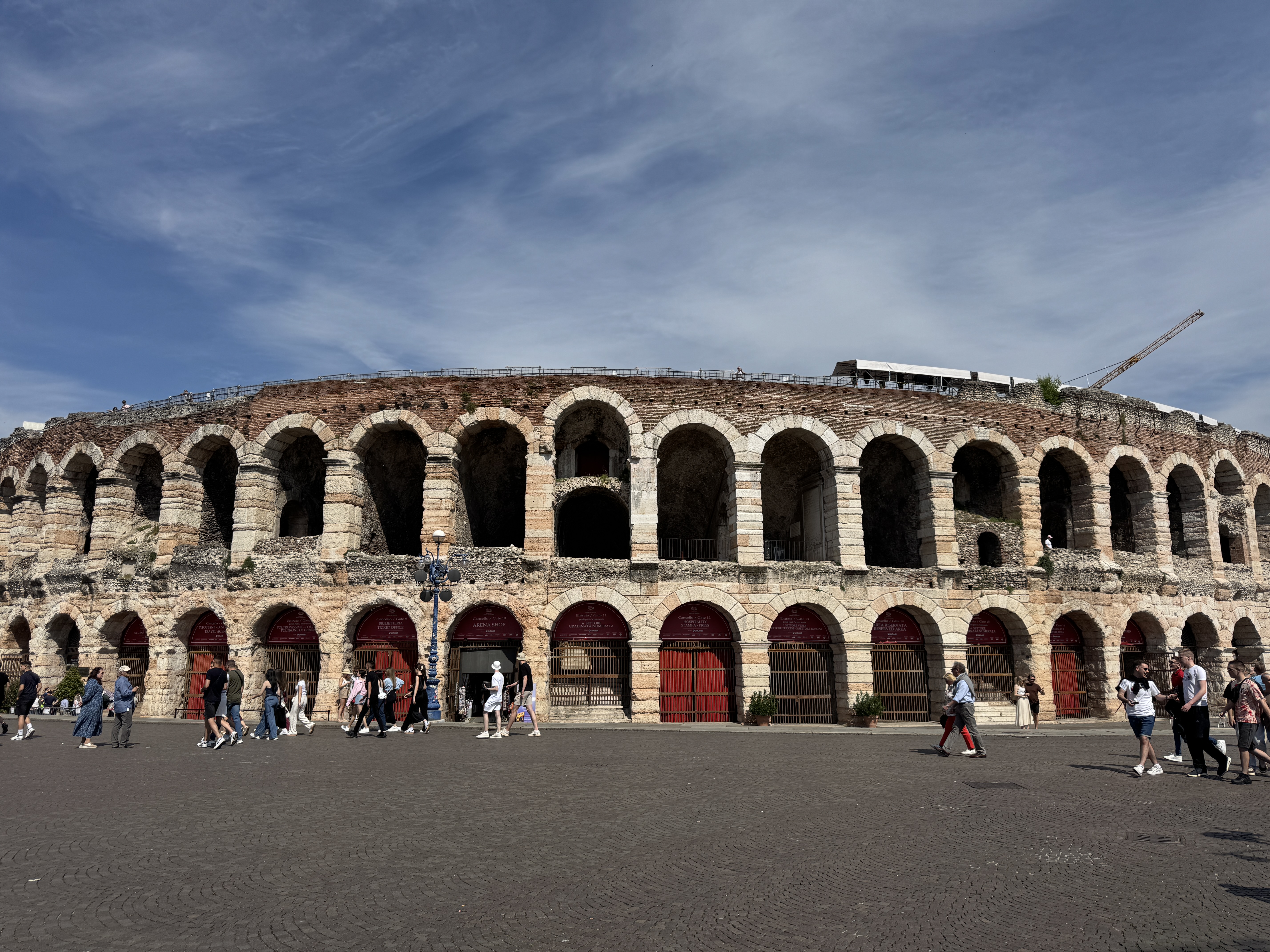
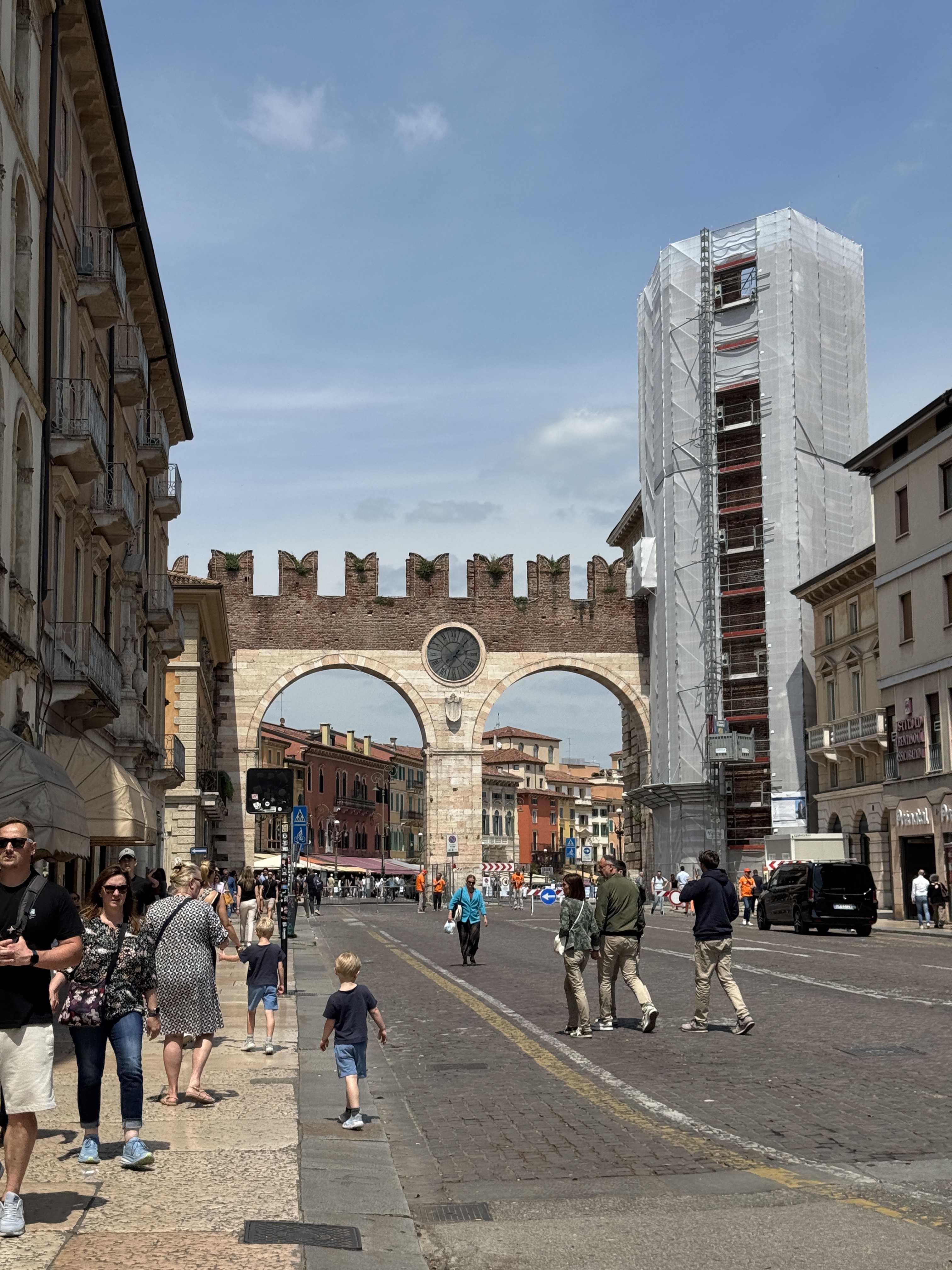
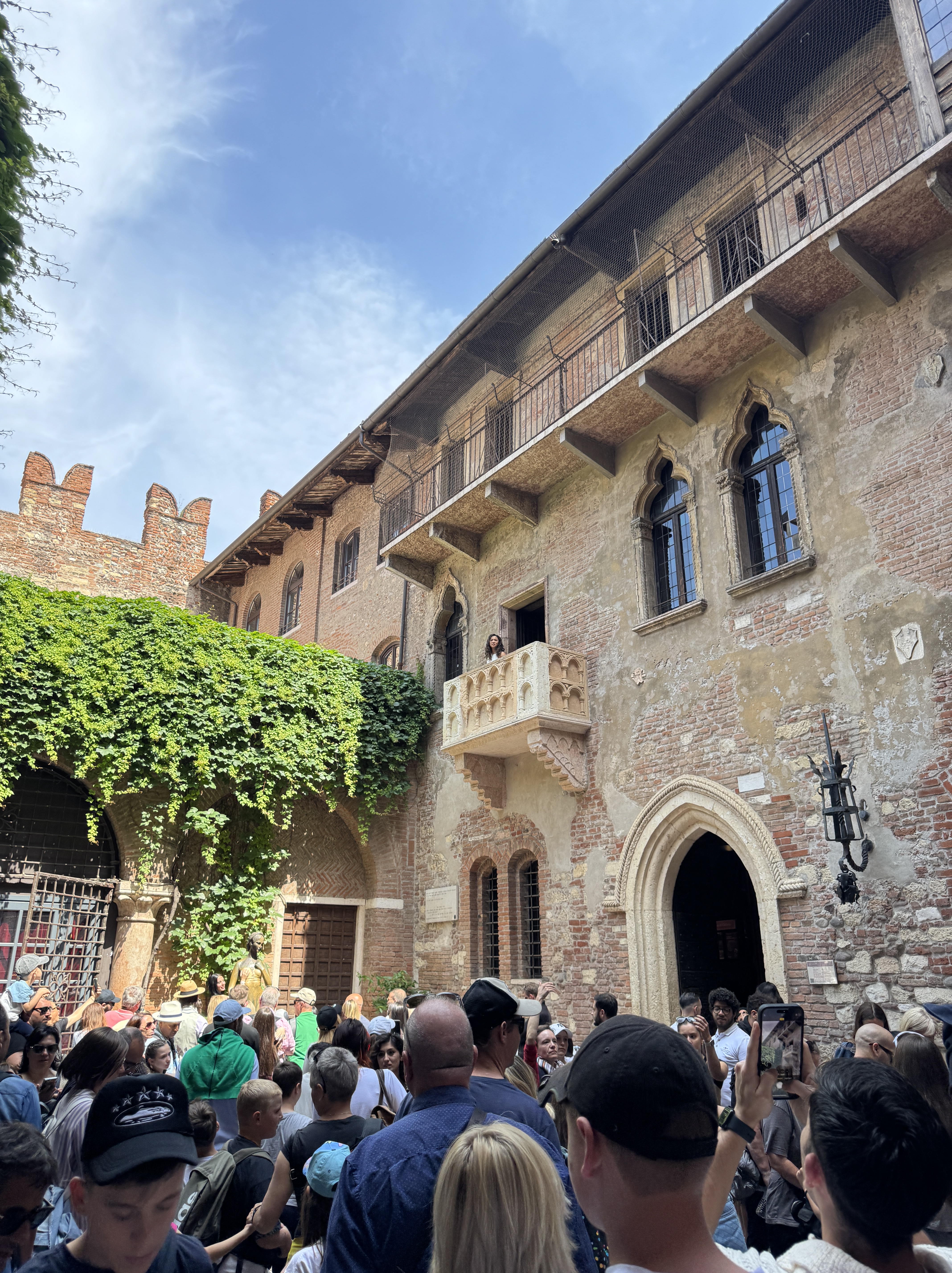
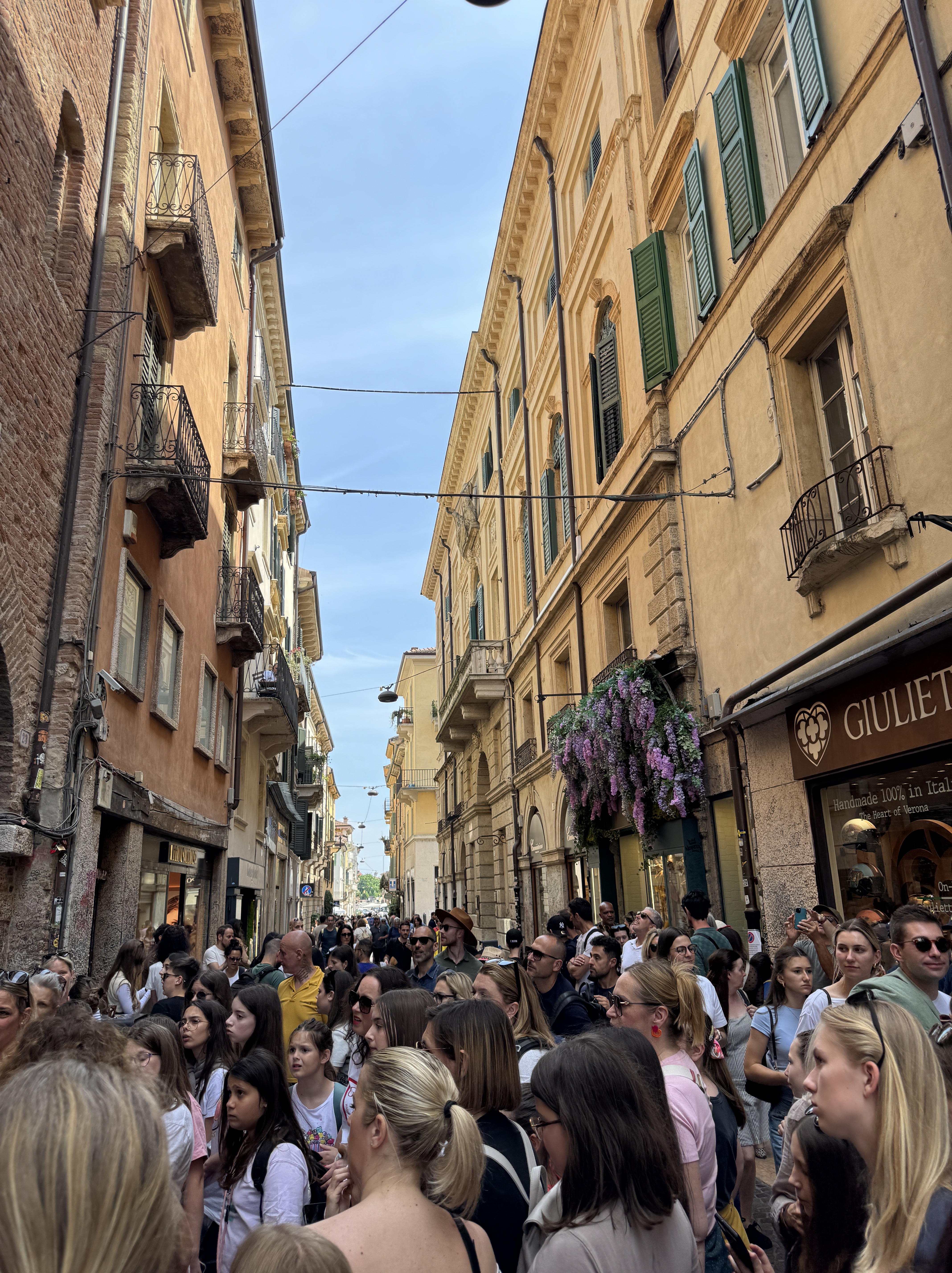
Verona, at least the old part of the city, looks exactly as one would expect a European town to look—quaint and charming.
A colosseum, which held 30,000 people in its heyday, is featured in the city’s center and now holds operas and plays. Of course, like most historical cities, Verona plays to the tourist trade with stores like Gucci and Louis Vuitton, typical tourist shops, and, of course, a Shakespeare festival.
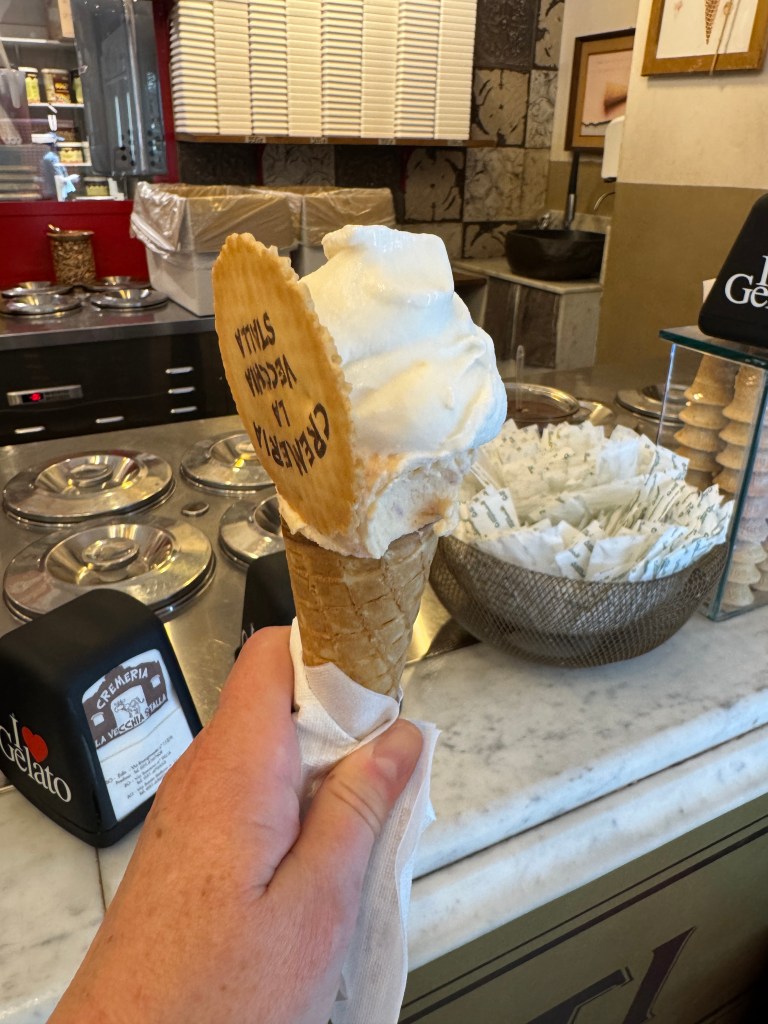
We wandered through the streets, stopping for gelato (always a must) on the way to Juliet’s house, and then had an apertivo after (also a must).
While I recommend seeing Verona, one day is more than enough. Either see it as a stop on a longer journey, or do what we did, a day trip from Bologna or another city.
Overall, a fun weekend filled with food and wine and great company. I definitely recommend including a one or two night stop in Bologna and highly recommend doing one of the many, many food tours.
 wanderinglynn.com