The Amalfi Coast (Costiera Amalfitana) is only about an hour and half drive from Napoli. Since we didn’t have plans to go anywhere this weekend, we opted for a day trip to the Amalfi Coast. The Costiera Amalfitana region is one of UNESCO’s World Heritage Sites.
(Or rather, C indulged my desire to see the Amalfi Coast despite summer tourism starting to seriously increase.)
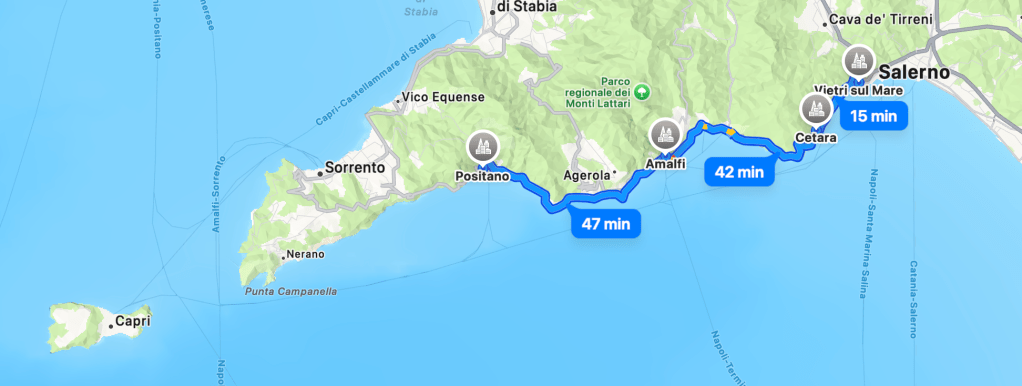
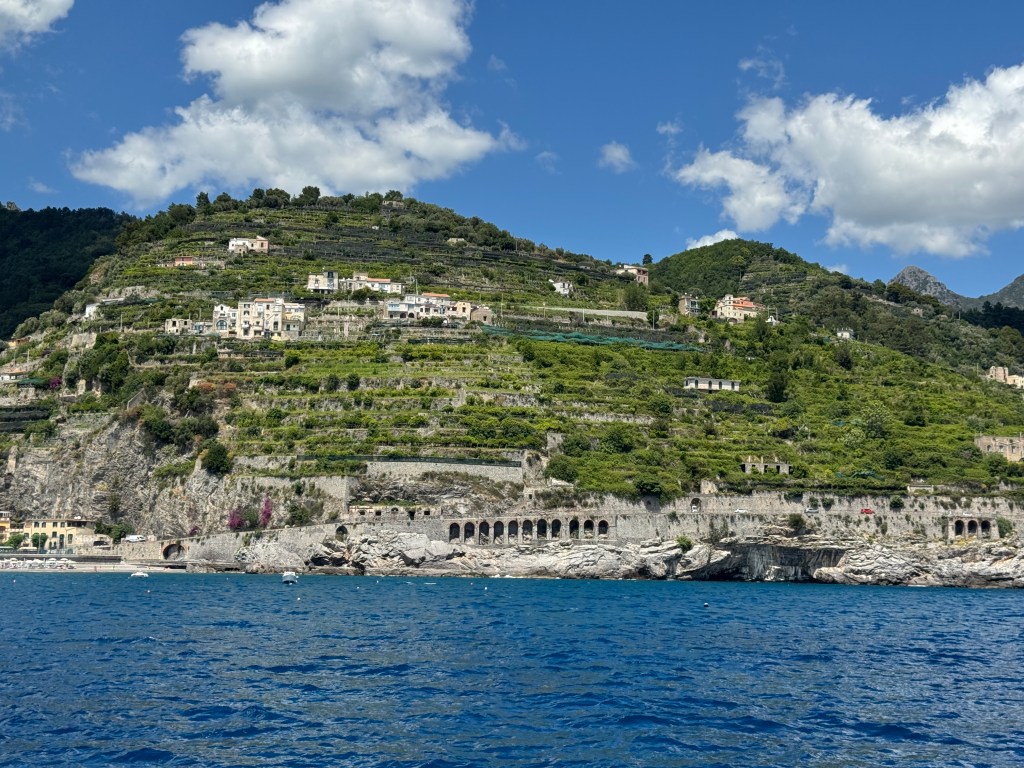
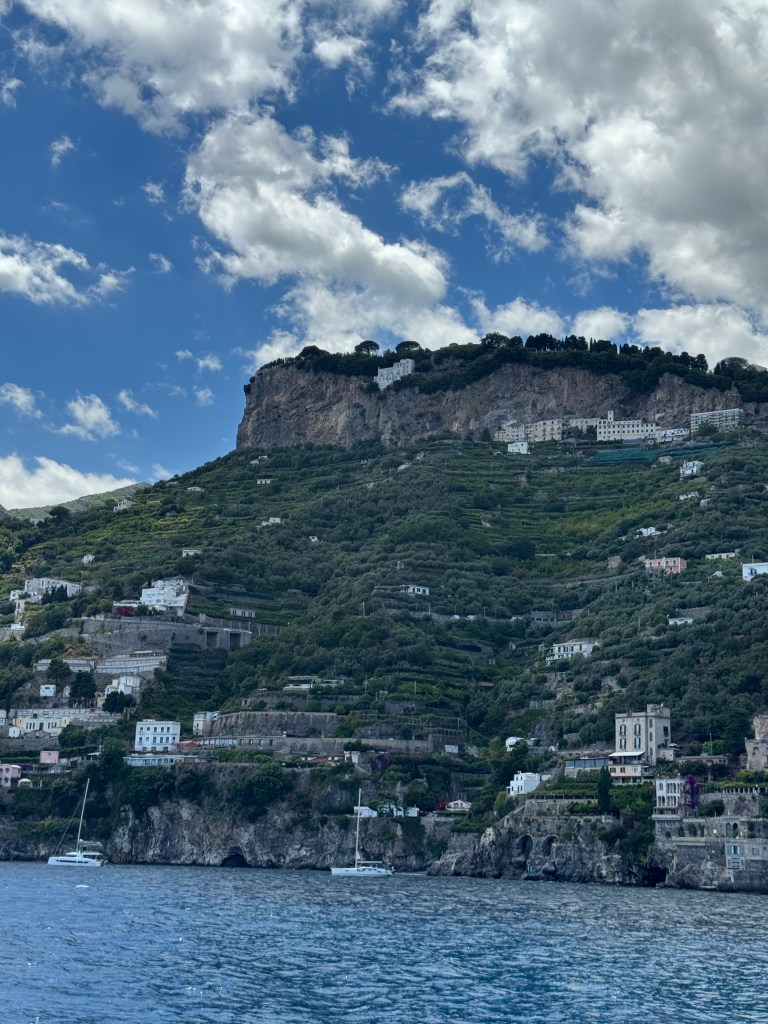
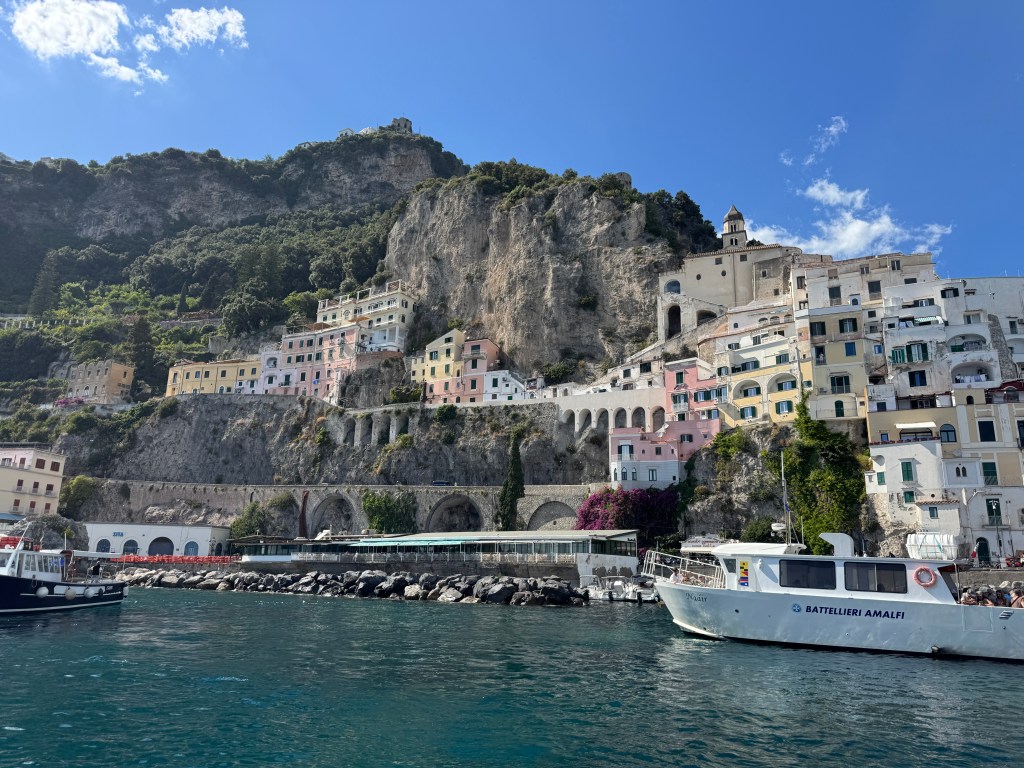
The Amalfi Drive (properly, the strada statale 163 Amalfitana (SS163)) is an Italian state highway stretching between just south of Sorrento to Vietri sul Mare. A large majority of the route is carved out of the side of the cliff with stunning views down to the Tyrrhenian Sea. Houses and hotels line the cliff sides and I wondered how anyone built anything on these cliffs.
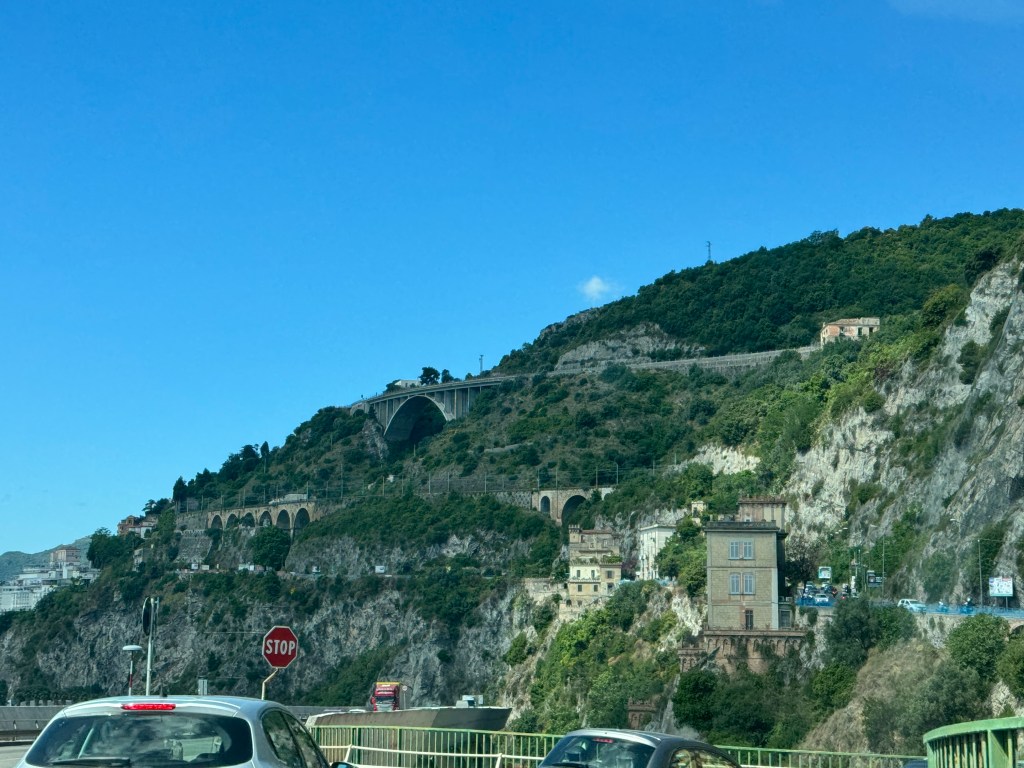
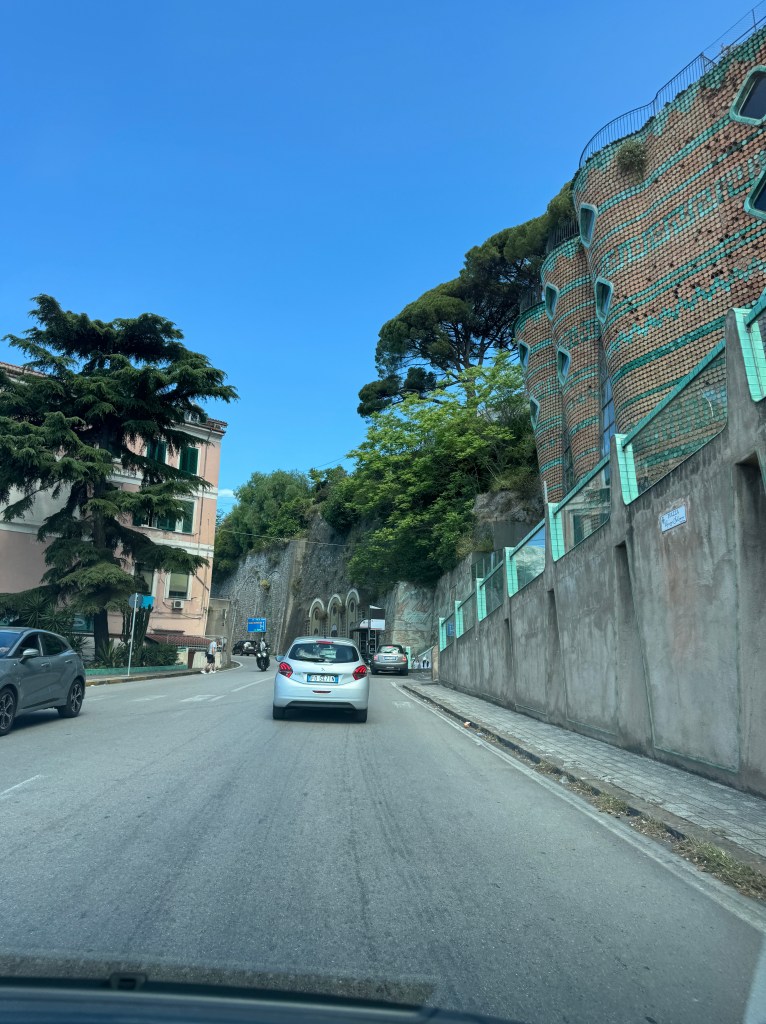

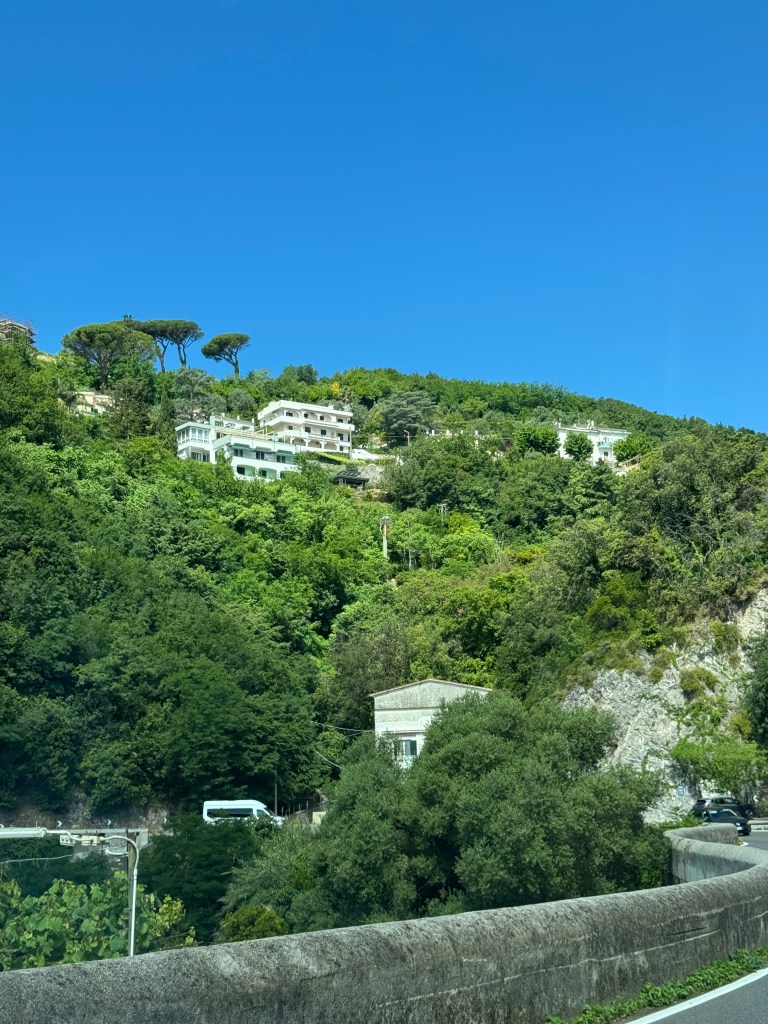
We drove into Vietri sul Mare on the A3, and then took the SS163 to Cetara. The SS163 not too bad considering (what constitutes a “narrow” road is not the same as the American standard of “narrow” road). But it is windy little road with some magnificent drop-offs.
If you aren’t familiar with driving in Italy, I don’t recommend starting with the Amalfi Drive—it’s not for the faint of heart.
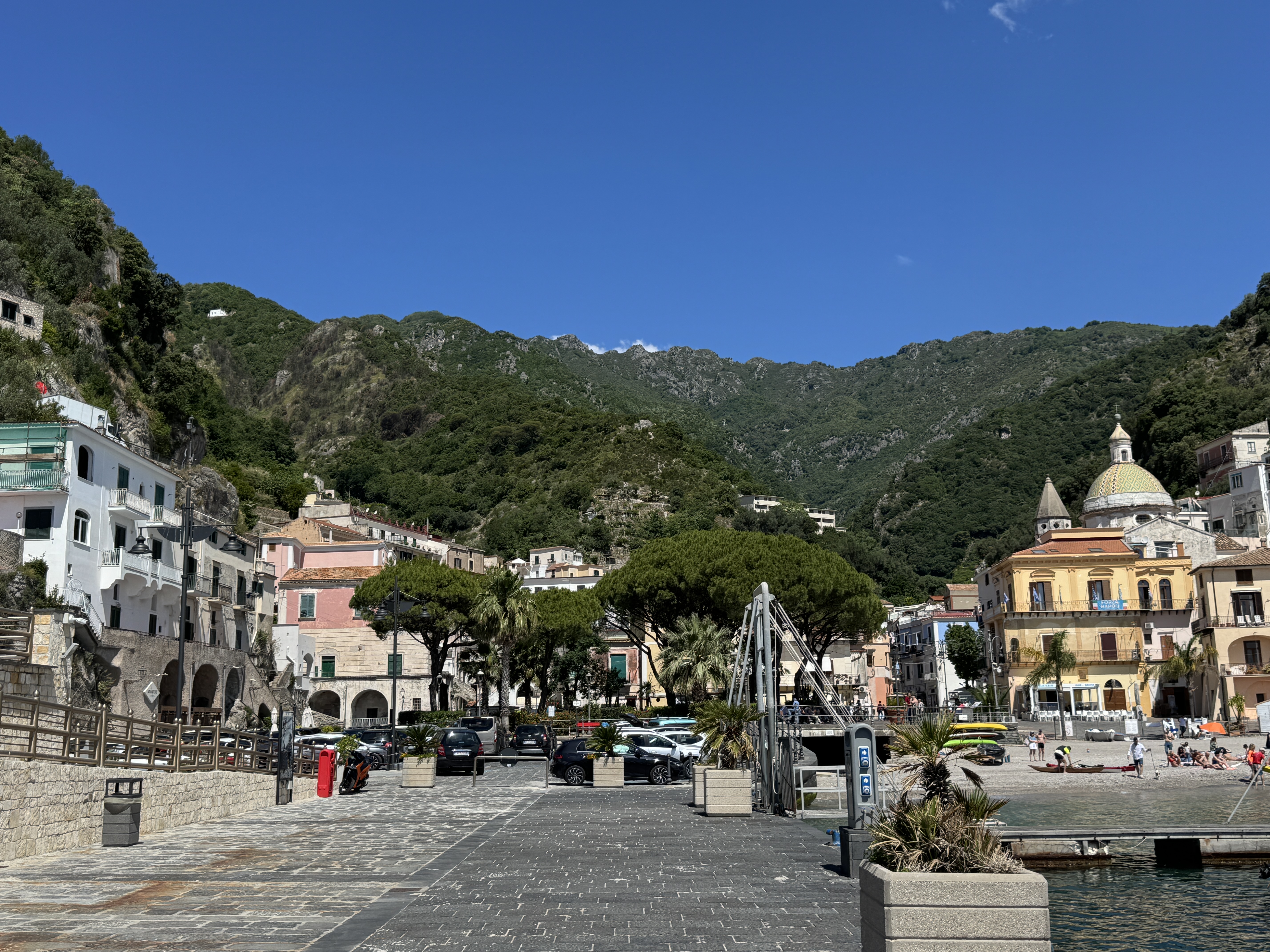
C volunteered to drive so I could take photos and videos.While we had originally intended to drive the majority of SS163, we changed our mind after first stopped in Cetara where we found a decent parking lot. (Parking is always a challenge in Italy, so when we find an actual parking lot, we use it.)
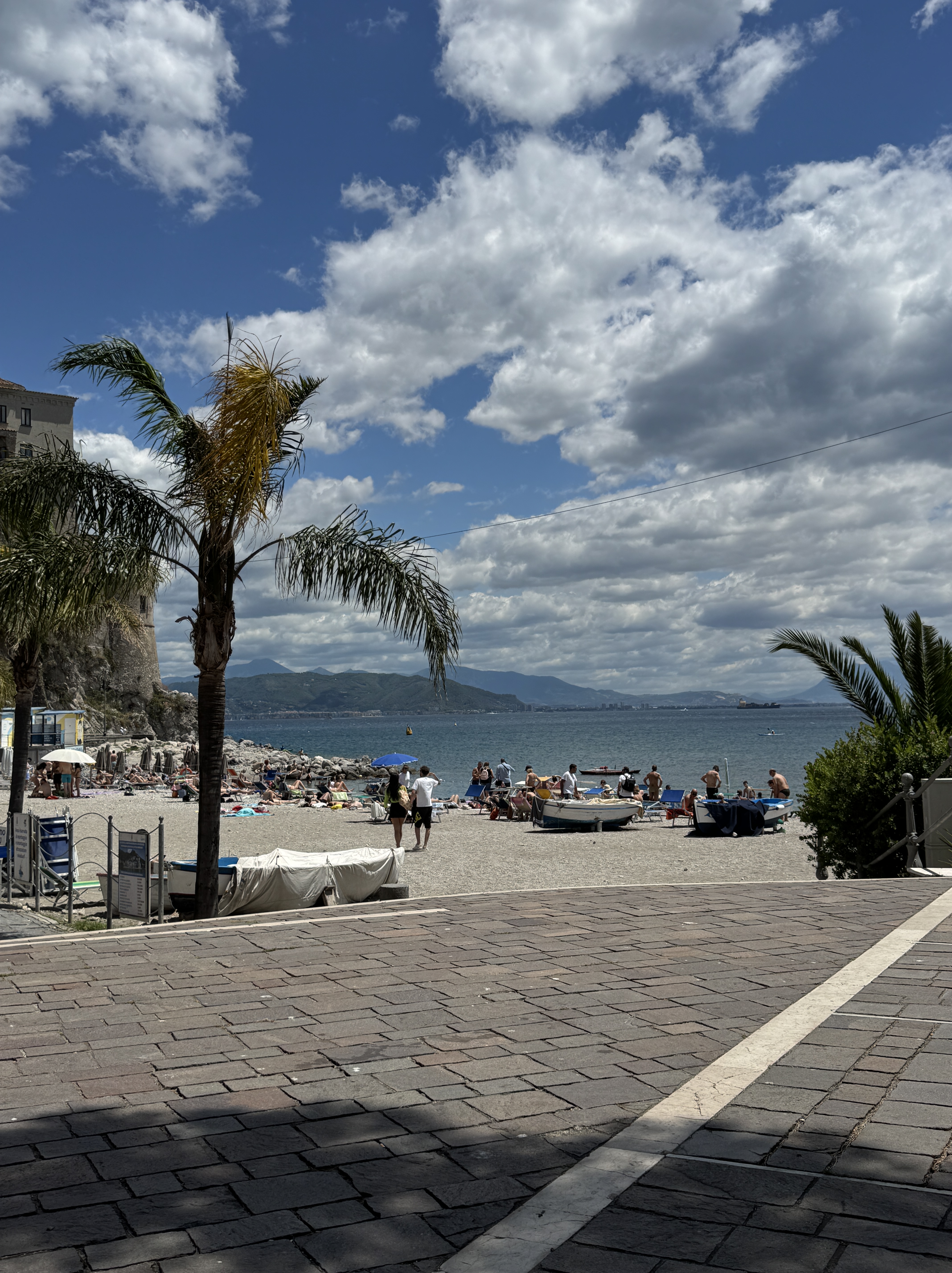
Like many Italian beaches, the beach in Cetara was smallish with more rocks than sand. But people were on the beach enjoying the gorgeous day. It was around 80F (~26C) with clear blue skies.
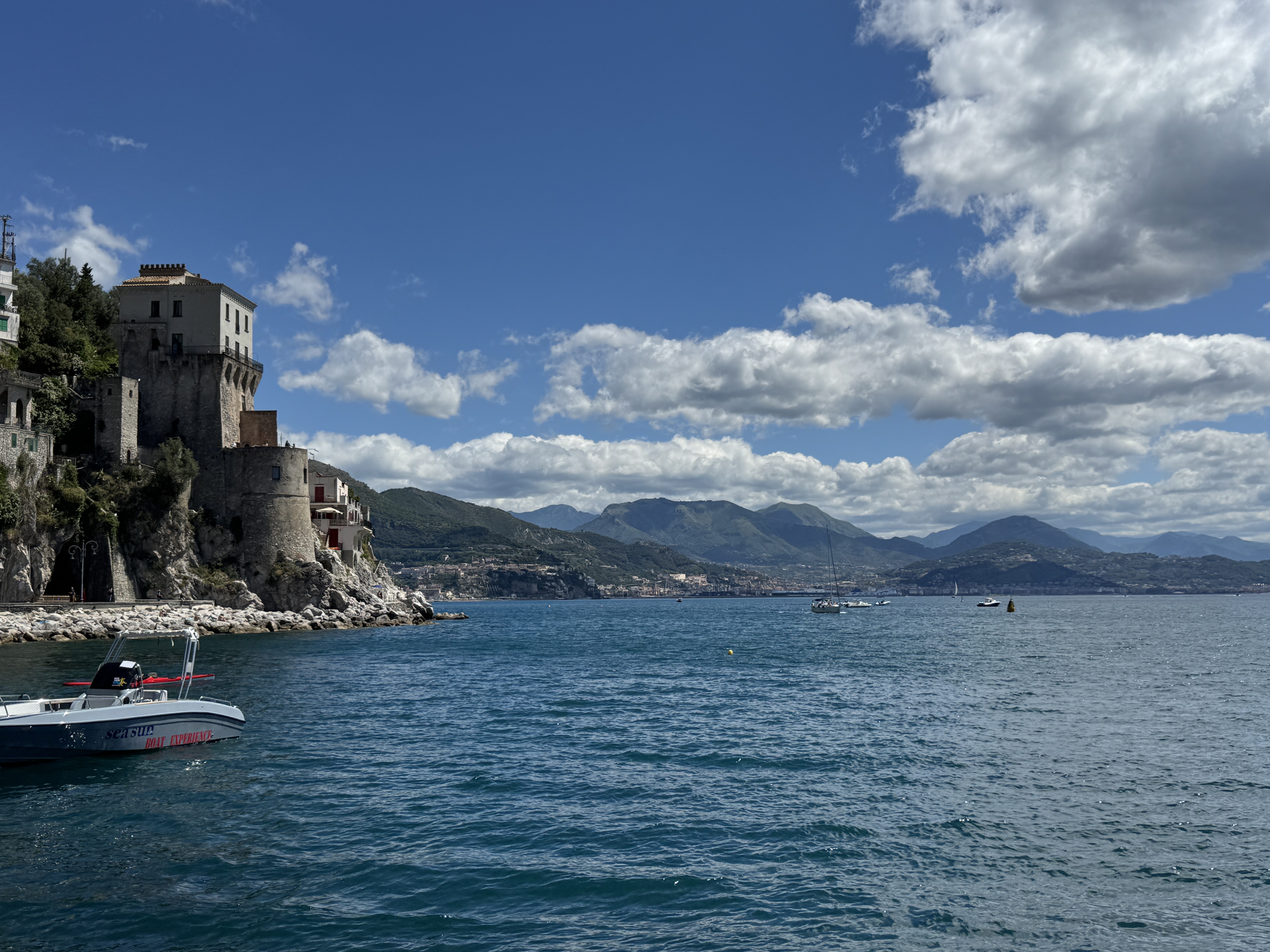
The village of Cetara is framed by little cottages with a fishing port and a tower. Cetara is absolutely worth visiting—not only is it a quaint village, but it’s a lot less crowded than it’s more well-known neighbors of Positano and Amalfi.
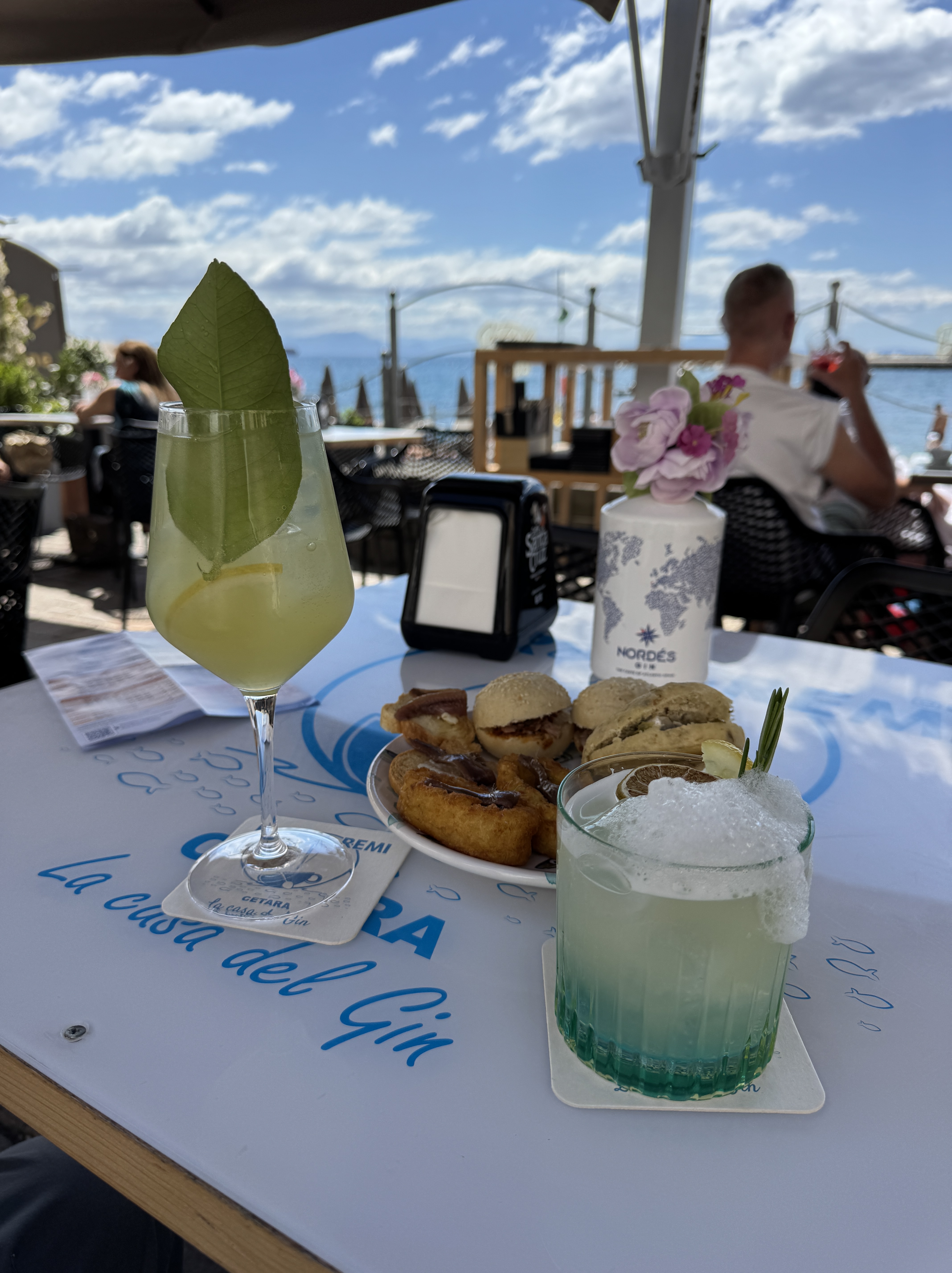
Our first stop was BarCheRemi, which was right off of the beach. Labeled a “Gintonicheria Coktail Lab”, their menu features over 200 gins and another 100 rums. So instead of the traditional aperol spritz, I opted to try BarCheRemi’s signature cocktail, the Cetara Garum Sour, which is made with London dry gin and limoncello pallini, topped with seafoam and a sprig of rosemary (delizioso! ) while C opted for their other special cocktail, the Basil Lemon Spritz. (I liked my cocktail better. 😉)
Our apertivi came with 4 different light bites—an anchovy on patatina (my favorite because potatoes, yum), anchovy on a flatbread, some sort of white meat on a little bun, and an anchovy with some sort of fermented green on a different kind of bun. The view from the bar was fantastic.
Because we found a good parking area and because traffic is picking up as the summer tourist season really gets going, we decided to leave the car parked and travel to Amalfi by passenger ferry. Also, the ferry is a fun and different way to see the coast.
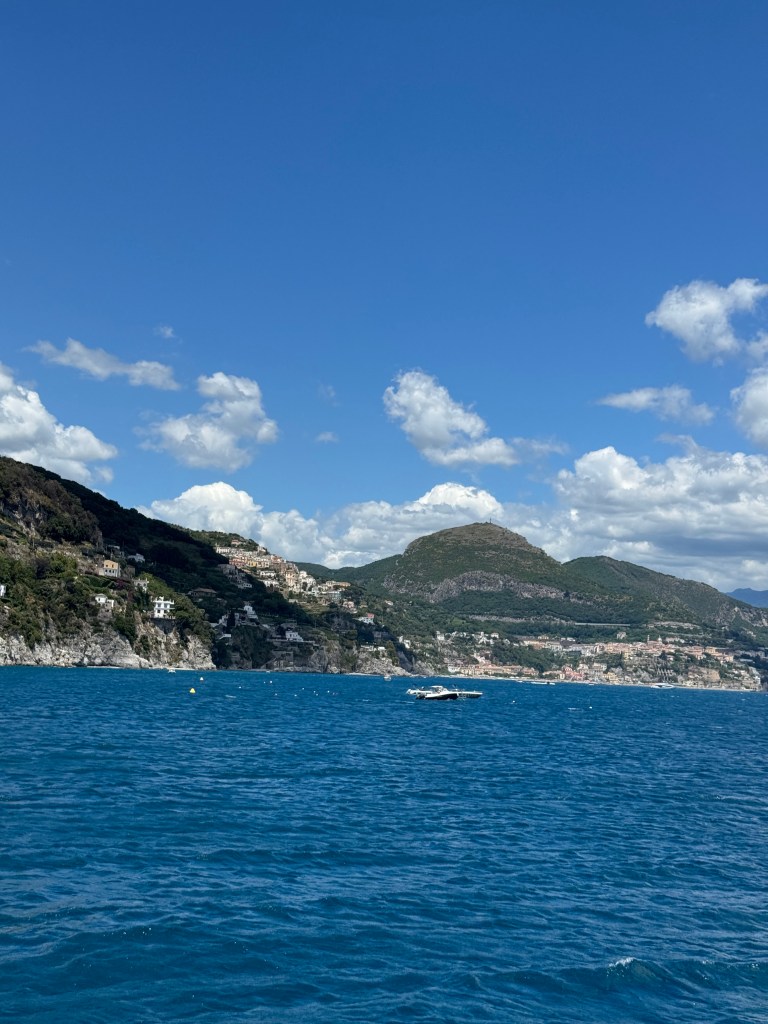
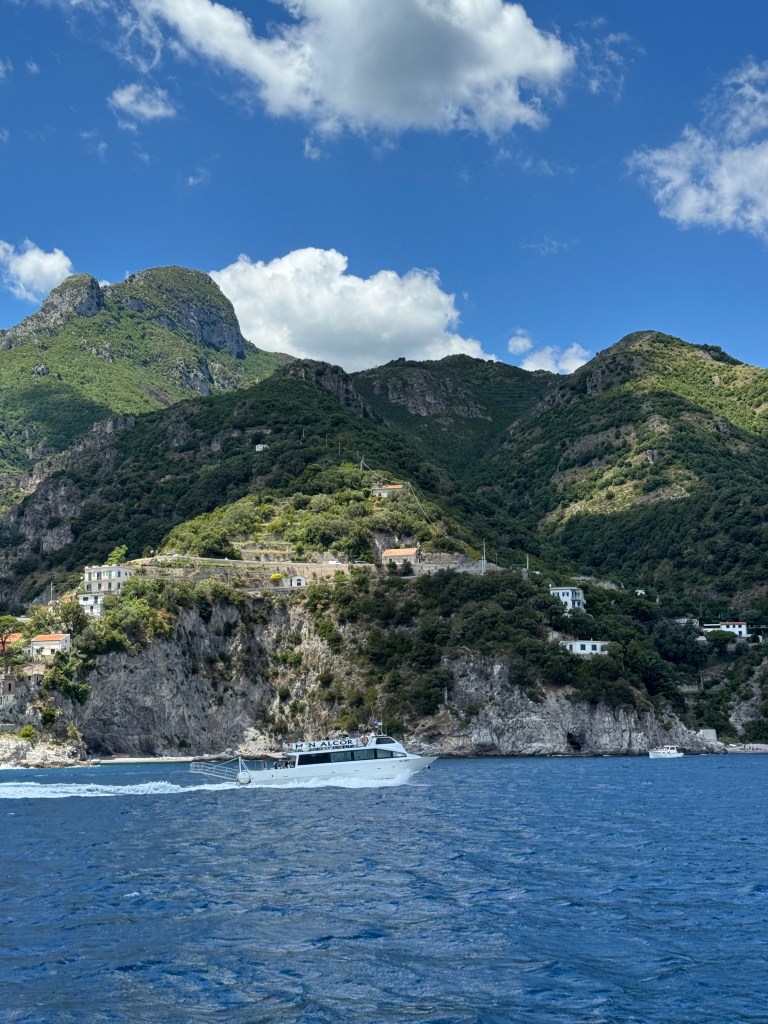
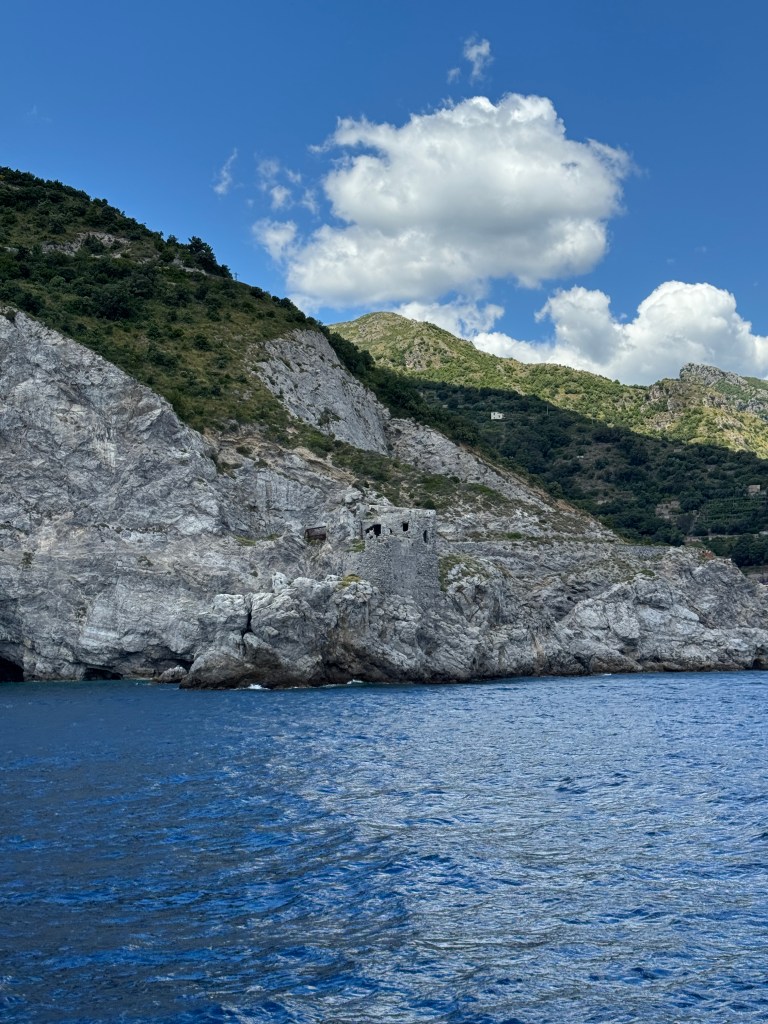
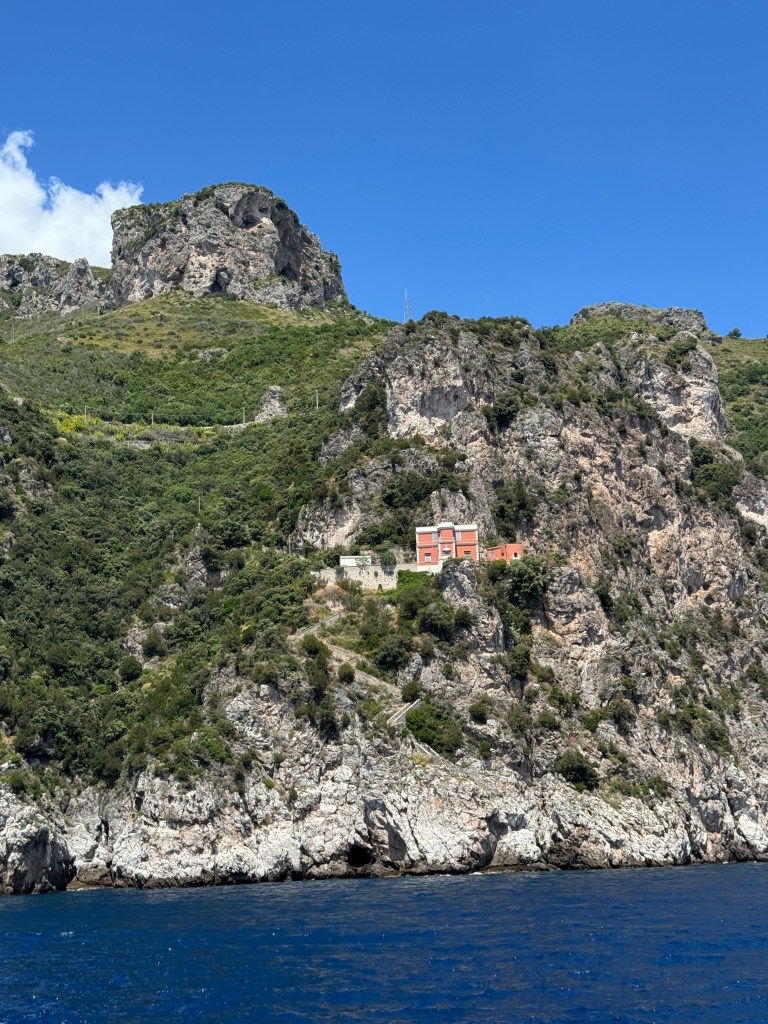
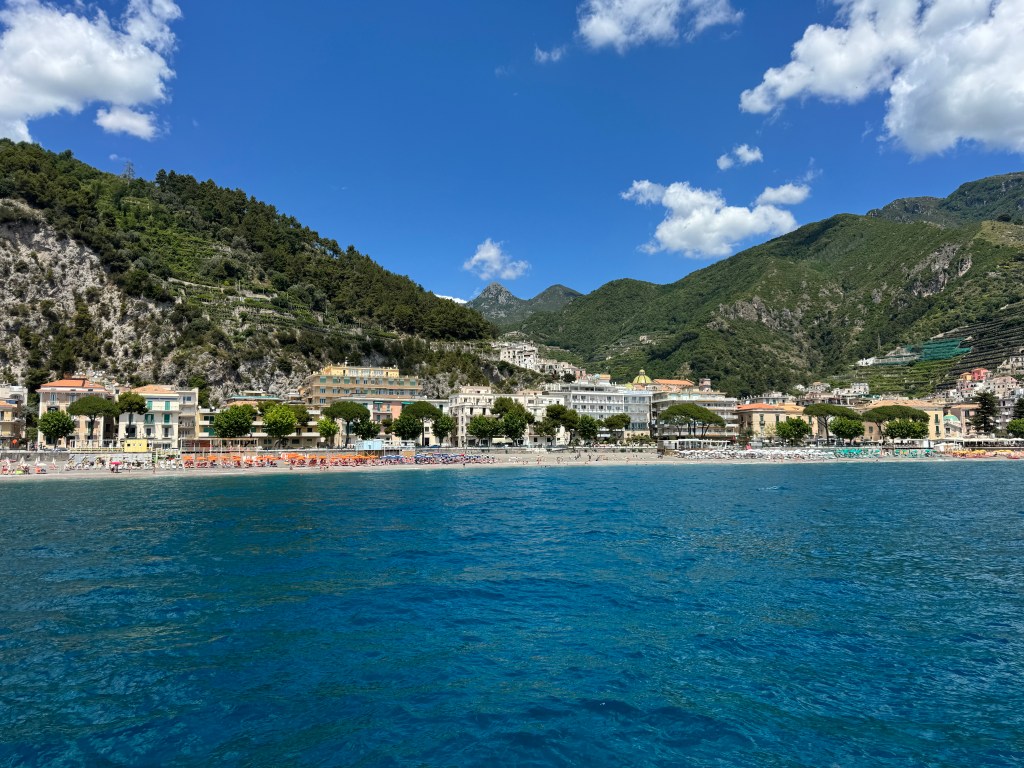
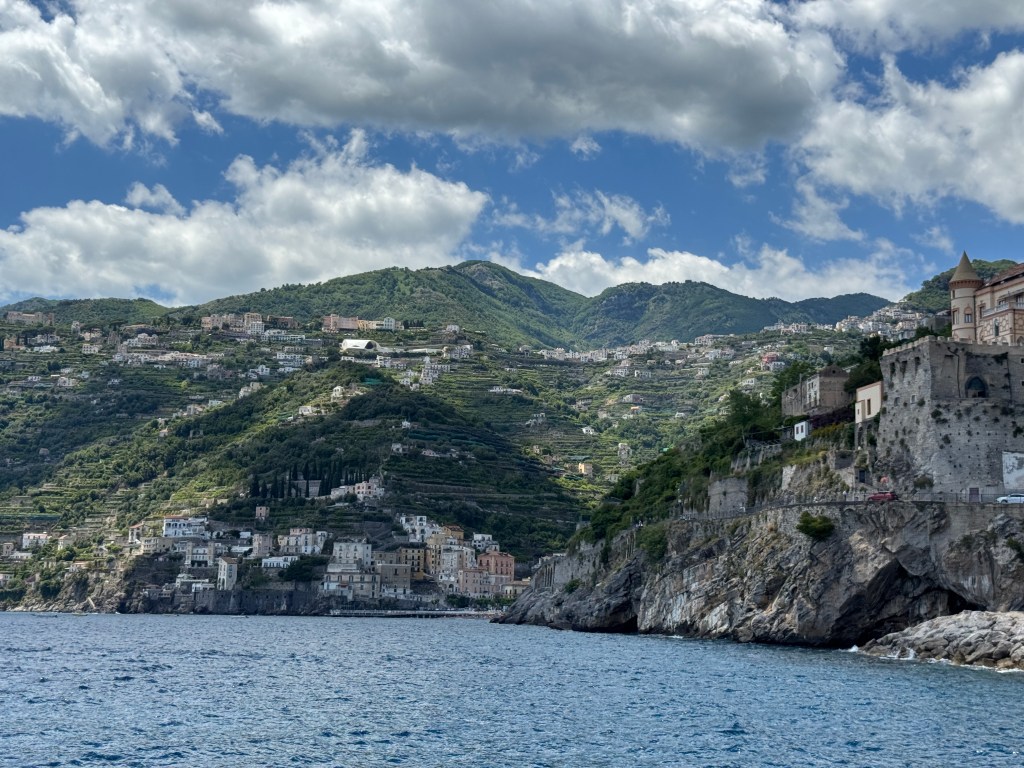
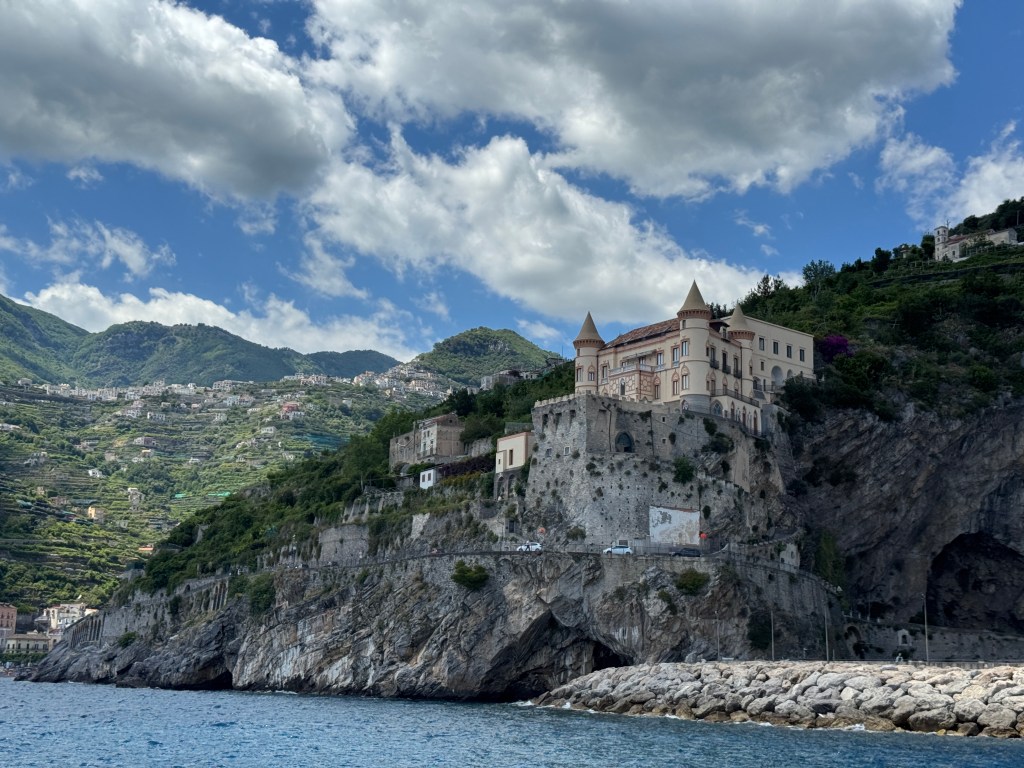
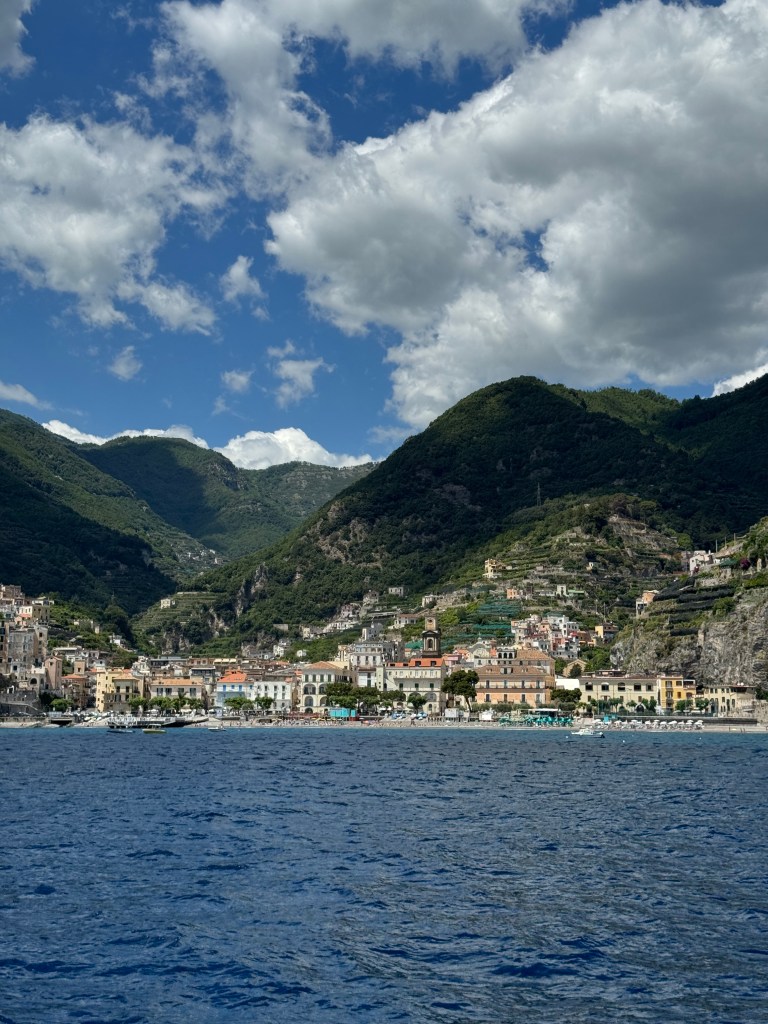
From Cetara, the ferry to Amalfi takes about 40 minutes with stops in Maiori and Minori. The views along the way were absolutely fantastic. Ruins of watchtowers intermingled with the various villages and the windy Amalfi Drive. Various yachts, sailboats, and even a catamaran or two were anchored along the coast and in the coves.
Some of the buildings have clearly been built into the rock cliff. Others sit seemingly precariously above the sea. All made me wonder how they were ever built because it would not be an easy feat.

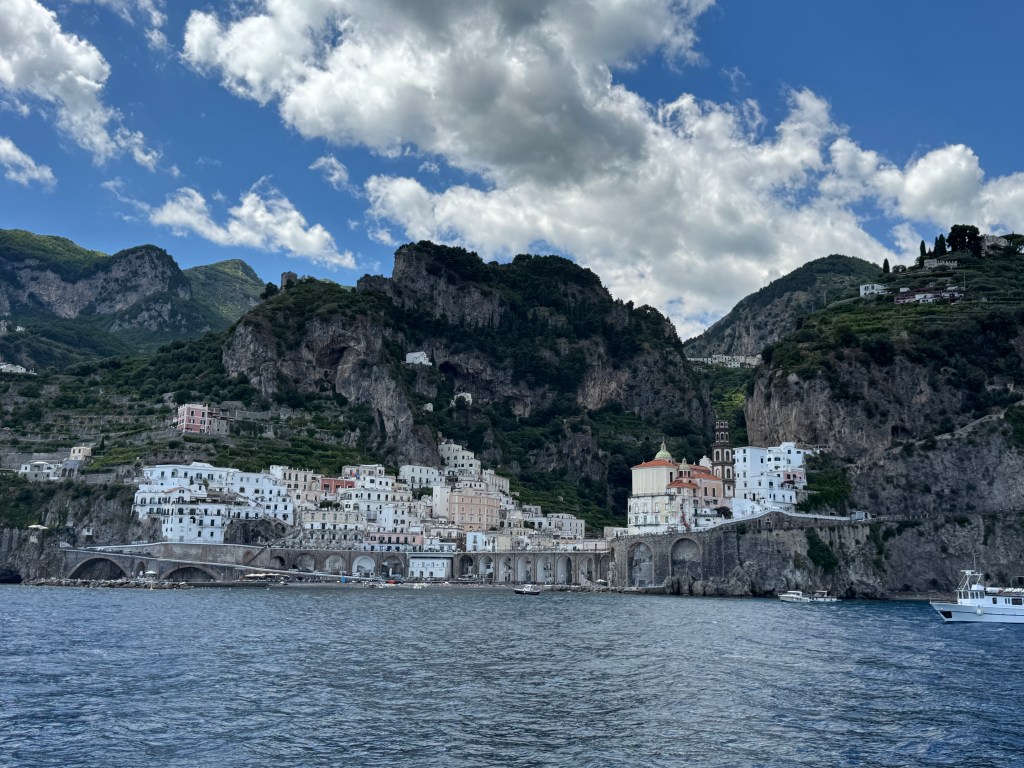
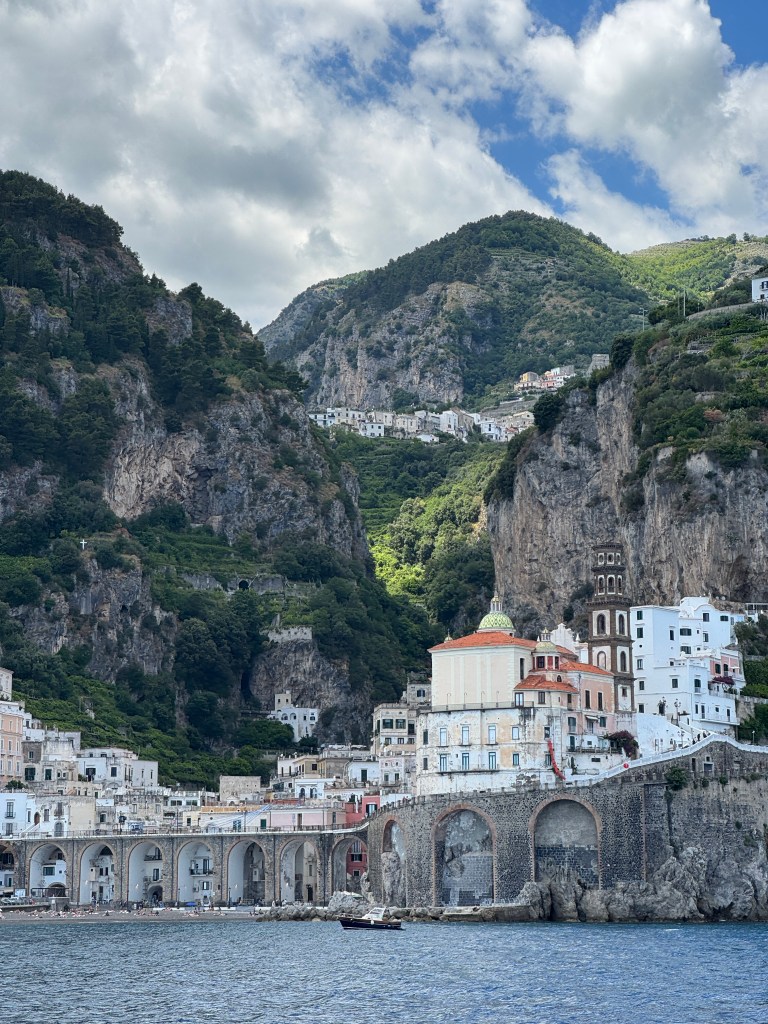
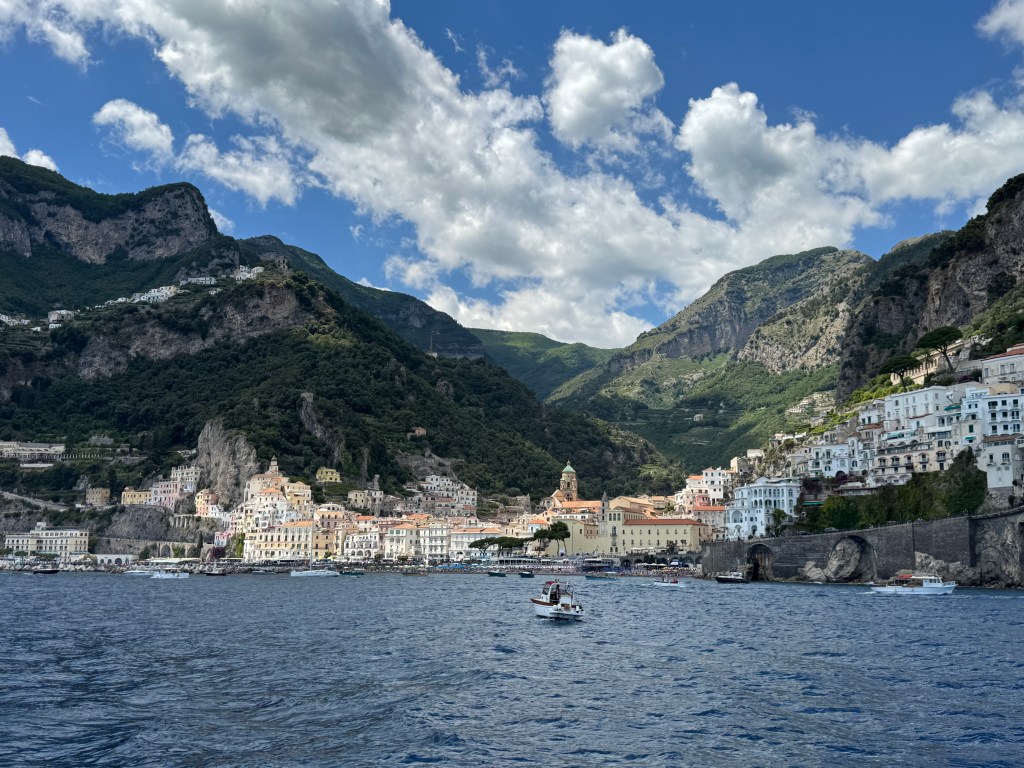
Once we arrived in Amalfi, we started up the main alley, looking into the various shops and checking out the many restaurants. We stopped at a pizzeria where I had a pizza with arugula and prosciutto (listed as Parma ham). We then continued to tour this cute village.
Like most of the Costiera Amalfitana, has leaned into the lemons. The Sfusato d’Amalfi were crossed with bitter local oranges until they produced the direct parent of the Sfusato d’Amalfi. There are miles upon miles of lemon trees that line the Amalfi coast. And the specific variety of Amalfi Lemon, named for its long spindle-like shape, has been cultivated only to grow on the coastline around Amalfi.
But lemon farming is not for the casual farmer and often described as Italy’s agricoltura eroica (“heroic agriculture”). The rocky outcrops of the Amalfi Coast make the use of machinery impossible. Lemon growers work extremely hard, climbing thousands of stone steps every day with large baskets to collect their fruits. In Maori, you can climb the “Sentiero dei Limoni“ (Path of the Lemons), which runs between Maiori and Minori. Although just shy of 2 km, the path will take around 90 minutes because of all the stairs. We saw some folks who had clearly done the Lemon Path, but for us, it was a bit too warm. We plan to go back after the tourist season, when there are fewer people and the temperatures are a bit better.
The locals have also embraced the lemon as the symbol of the Amalfi Coast, selling all sorts of products with lemons on it, including dresses, scarves, bags, and ceramics. And there there are the tasty treats, including limoncello, limone gelato, and the Delizia al limone (Lemon Delight, a soft sponge cake filled and coated with delicious Costa d’Amalfi IGP lemon cream).
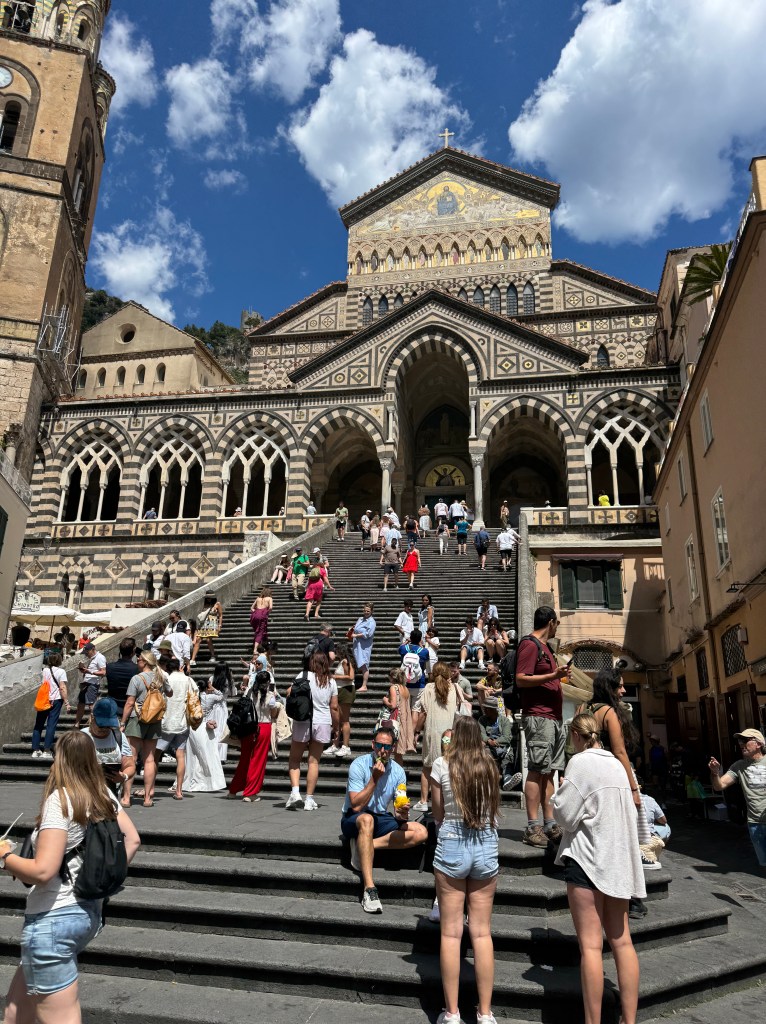
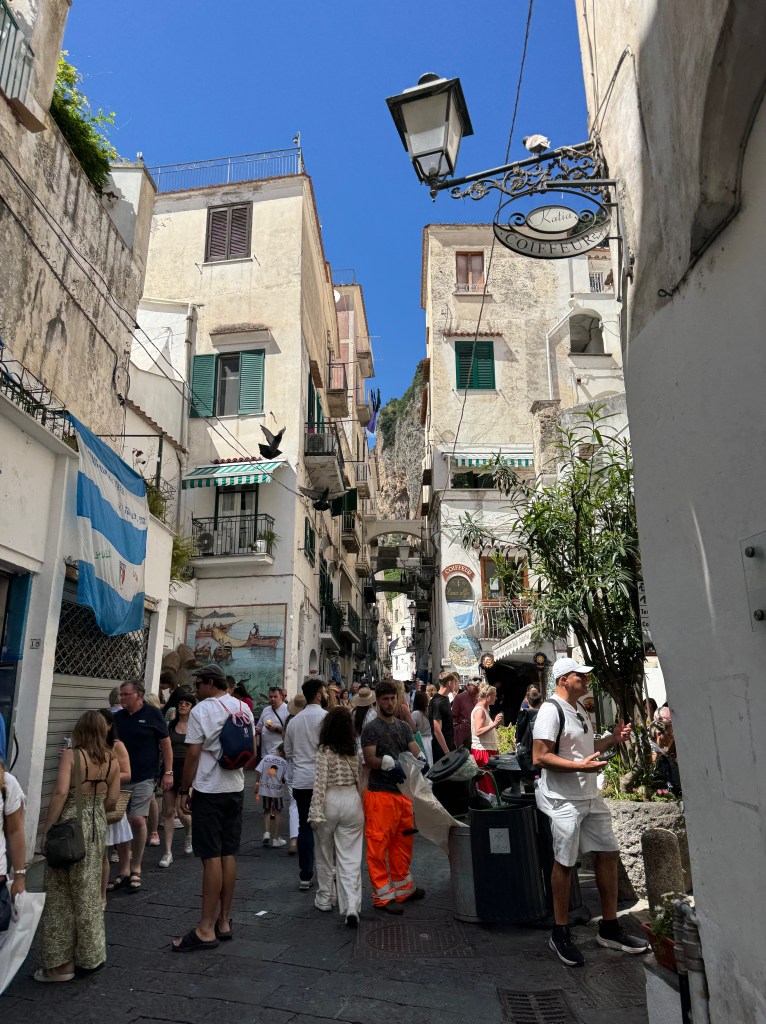
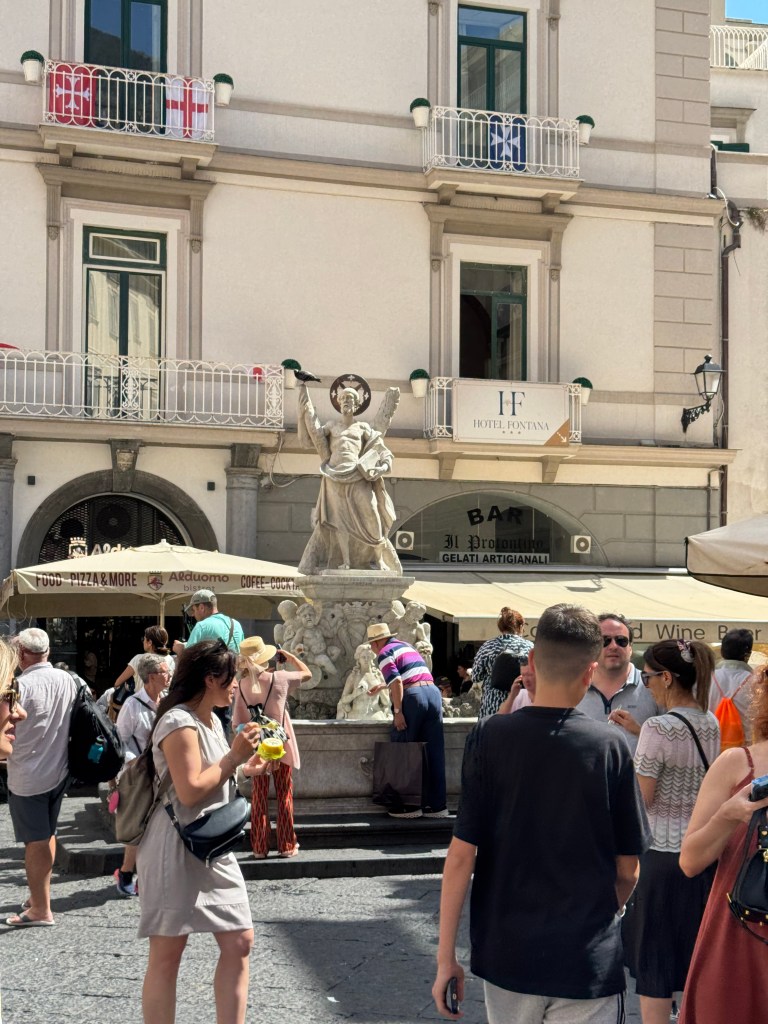

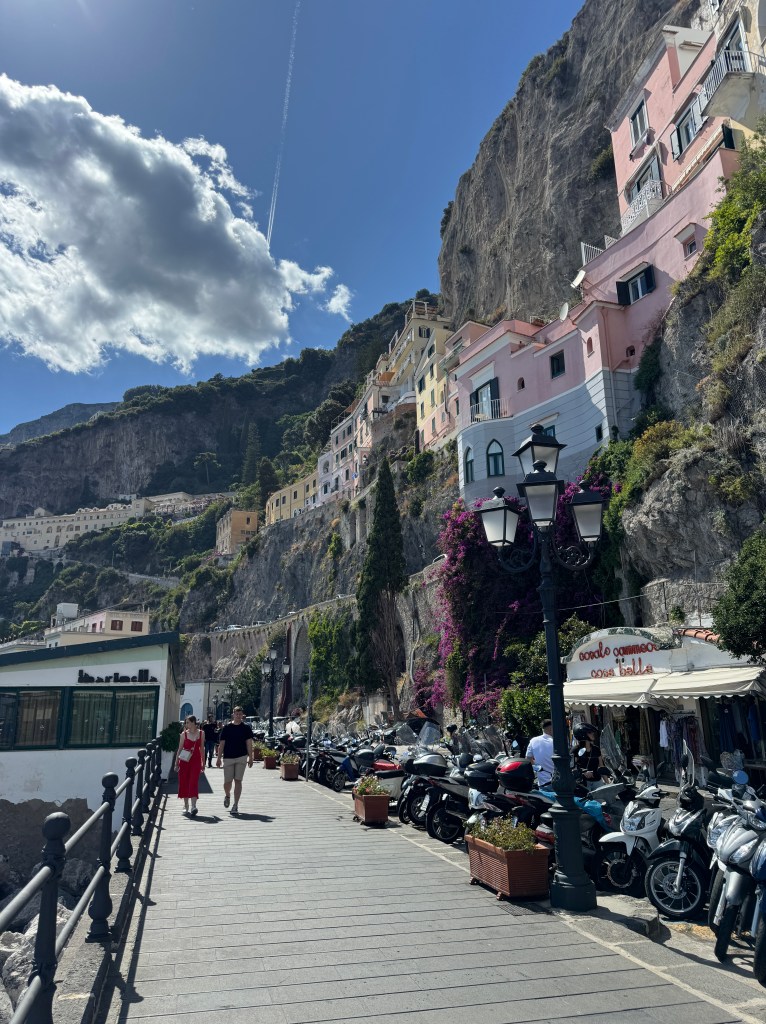

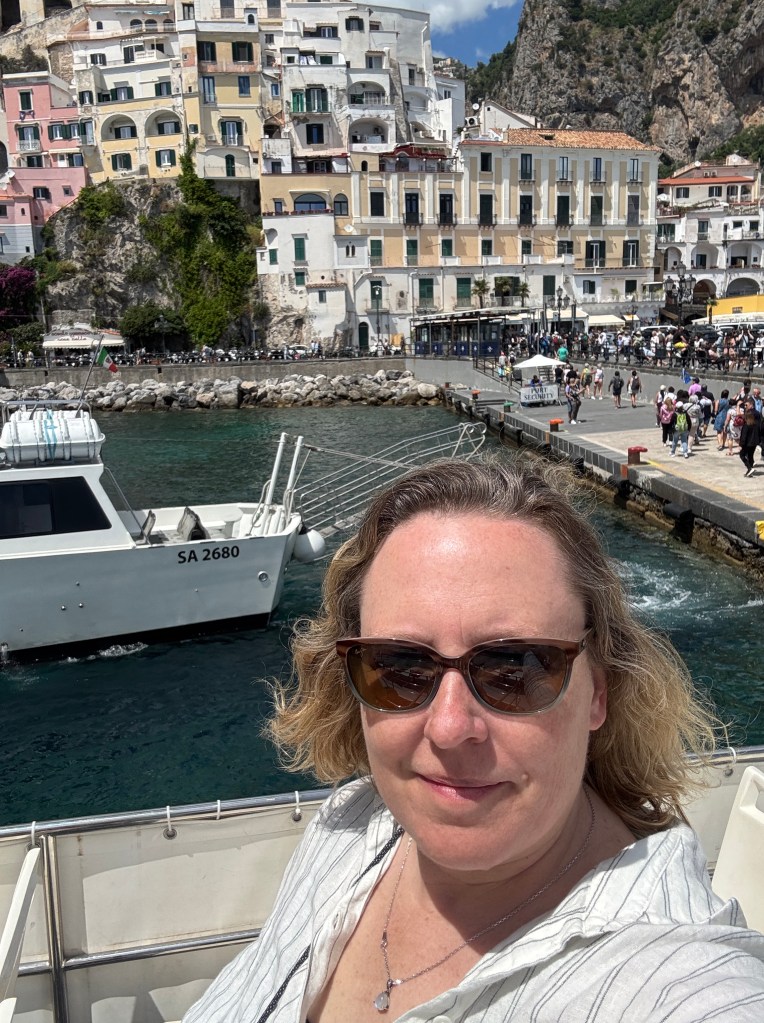
While we could navigate the narrow streets, we definitely had to weave in and out of people. Amalfi has entered the start high tourist season as we saw numerous tour buses and tour groups. And the ferries were packed—in fact our return ferry was standing room only.
After spending a couple of hours in Amalfi, we decided to return to Cetara and head back home. Positano is definitely on my “must-see” list, but I decided to save that for another day. After a couple of hours walking around Amalfi, after a 40-minute ferry ride and a couple of hours in Cetara, we were both a bit hot and tired. So I’ll plan to go to Positano on day with fewer crowds and slightly cooler temps. We also plan to drive the entire Amafi Drive next time too.
Quick Tips
The Costiera Amalfitana is definitely worth seeing with its iconic beathtaking natural beauty, rich history, and cultural significance. If the Amalfi Coast is on your travel radar, I recommend coming either in spring, ideally early-May, or after August, ideally September. The weather will be beautiful but not hot and the crowds will be far less.
To see more than just Positano or Amalfi, I recommend staying at least 3 nights, potentialy even more. This is a fairly large area and Maiori, Minori, or Cetara are also worth seeing or even driving/riding further in to Sorrento. And since this area is a tourist destination, many of the restaurants and store proprietors do speak English and other languages.
Be forewarned though, like many parts of Europe, this area is not easily accessible. There are hills and stairs in many parts, and the roads are cobblestone. I did see a handful of strollers, but navigating with a stroller, much less any kind of wheelchair or other mobility accessibility device, will be a challenge and will limit where you can go.
Happy Adventuring!
 wanderinglynn.com