
I’m a bit behind in updating this journal. Ferris had it right. Life does move pretty fast. And this summer has flown by!
Since I’m furloughed from work due to the lapse in appropriations, I’m taking the opportunity to catch up on posting my Italian Adventures.
As I’ve mentioned, every month I try to do 1 trip outside Italy and at least 1 local adventure. So far, I have stuck to that and both my Italy specific checklist and my countries to visit checklist are getting some checkmarks! But I’ve recently posted only about the trips. So here are some of my recent local adventures (click on the link to skip to that section):
Share in the comments which local adventure you liked best.
Parco Archeologico di Ercolano
Herculaneum, located in the modern-day comune of Ercolano, is one of the few ancient cities to be preserved nearly intact thanks to Mount Vesuvius. And it’s only a 45 minute drive from Monte di Prochida (MDP) where I live and only about 15-20 minutes from Naples.
Herculaneum, named for the Greek god Hercules, is more intact than its better known sister city Pompeii because the solidified material from the volcano that blanketed the town protected it against both looters and the elements.
Unlike Pompeii, the mainly pyroclastic material that covered Ercolano carbonized and preserved the city nearly intact. Buried beneath 16 meters of ash and mud during the eruption of Mount Vesuvius in 79 AD, this layer of detritus saved two-story domus homes with the internal architecture and décor intact, including features in wood and marble, decorations, jewelry, and even organic remains like food, providing a unique view into the daily lives of the ancient population of Ercolano.

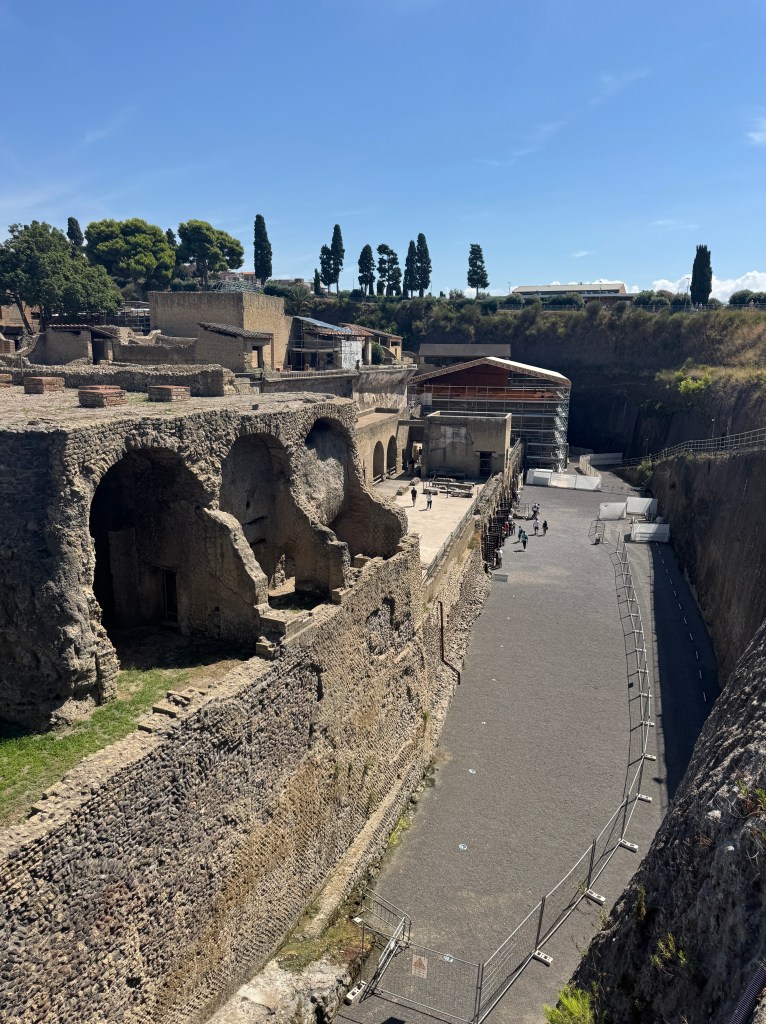
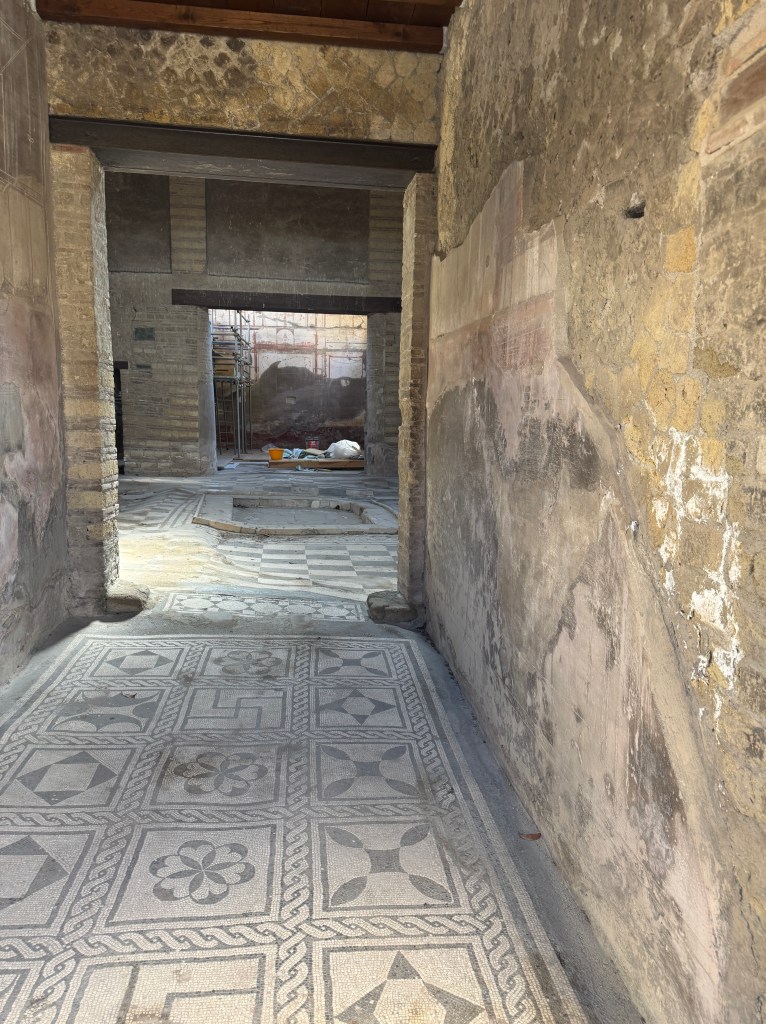

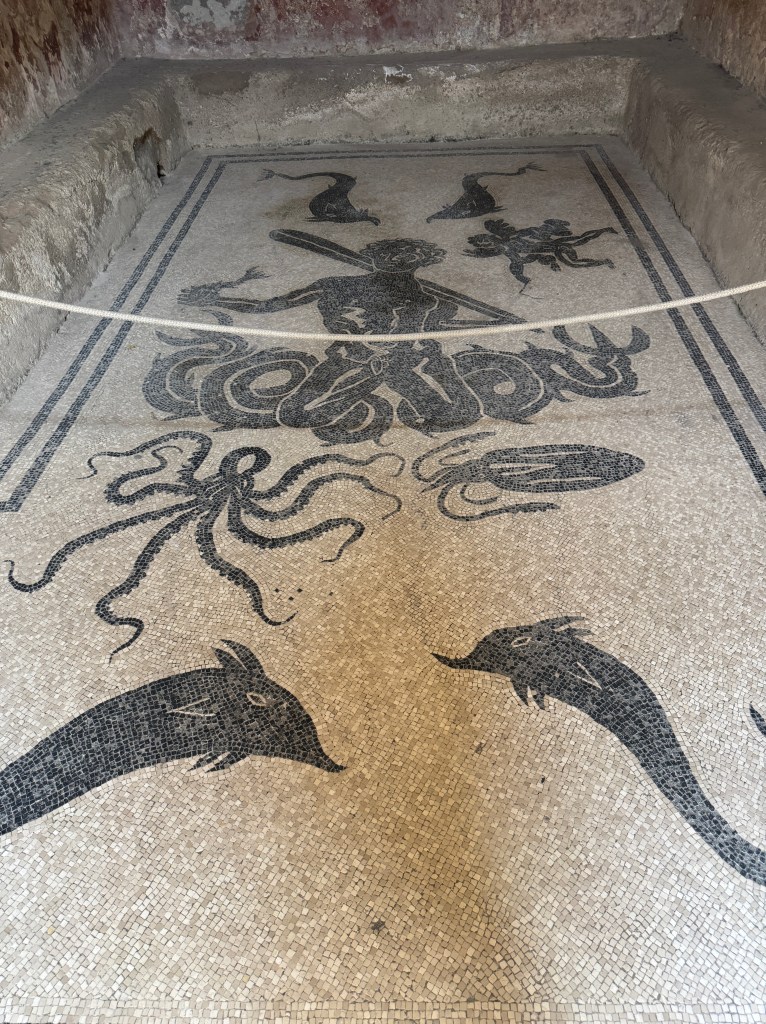


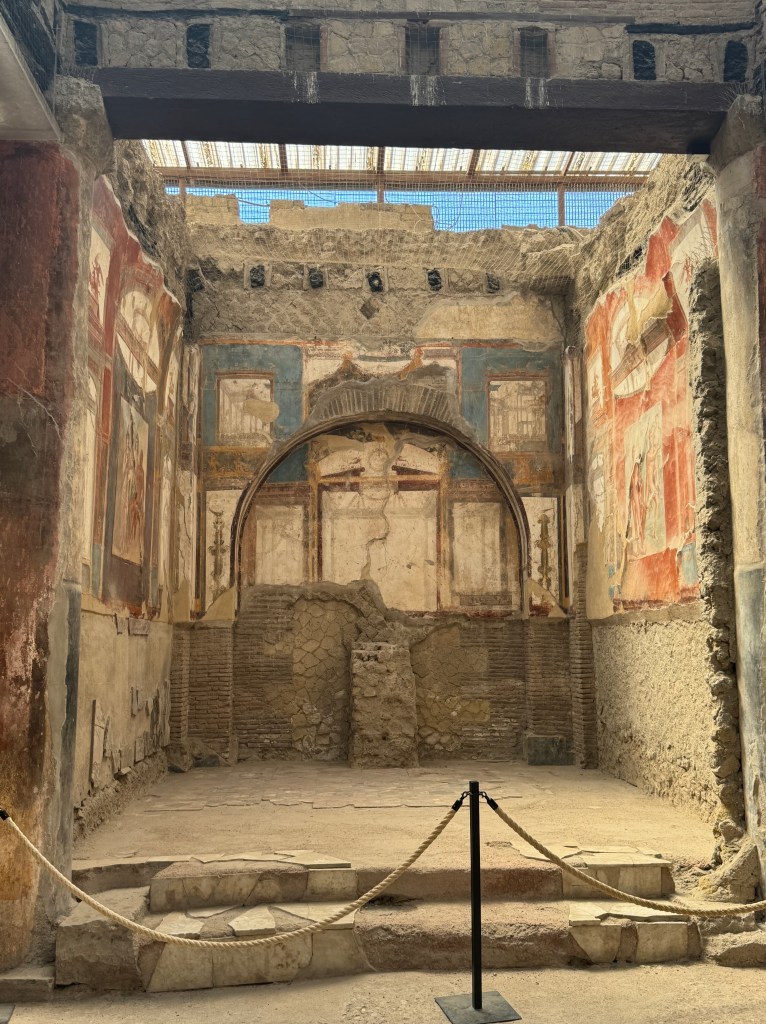
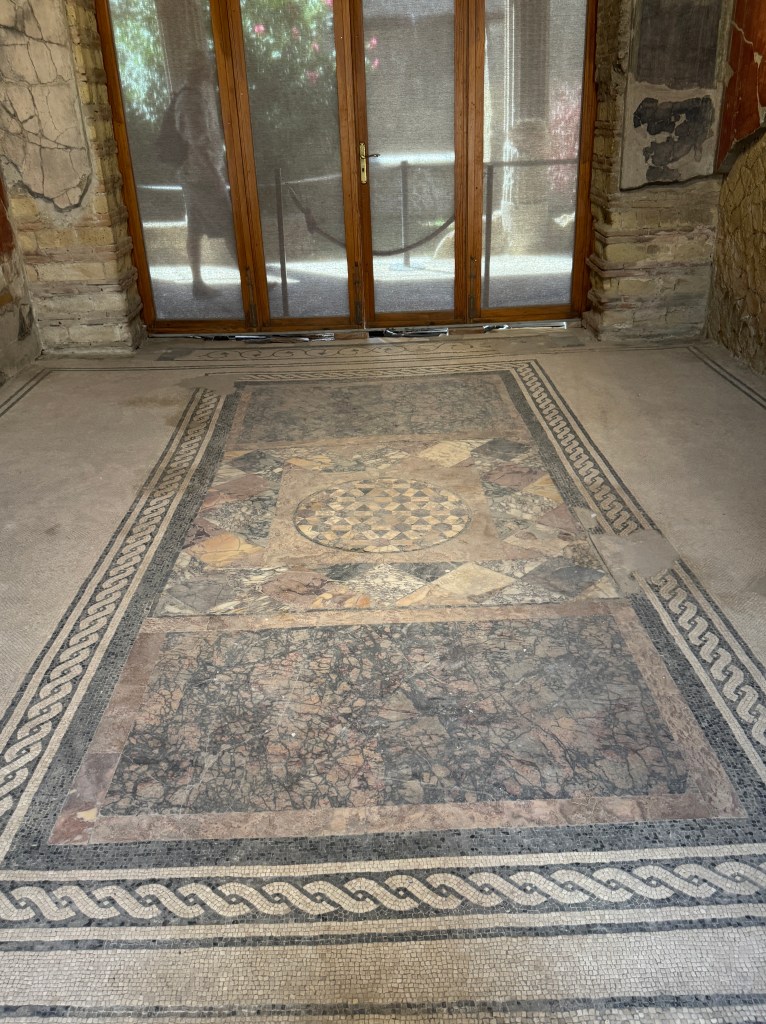
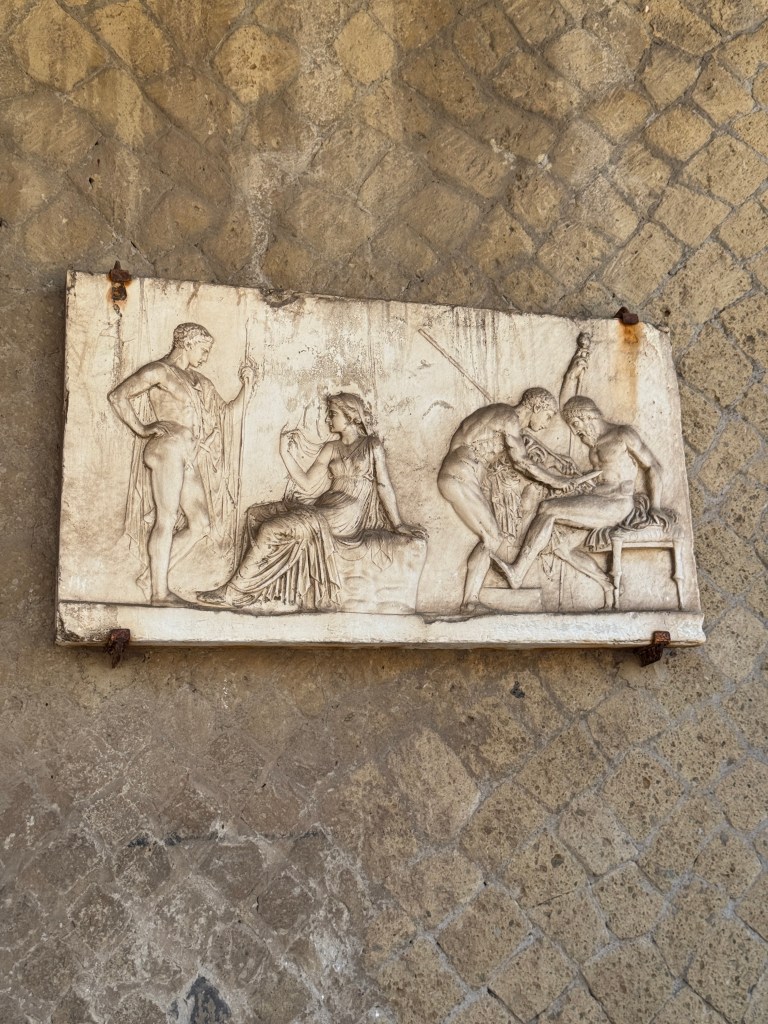


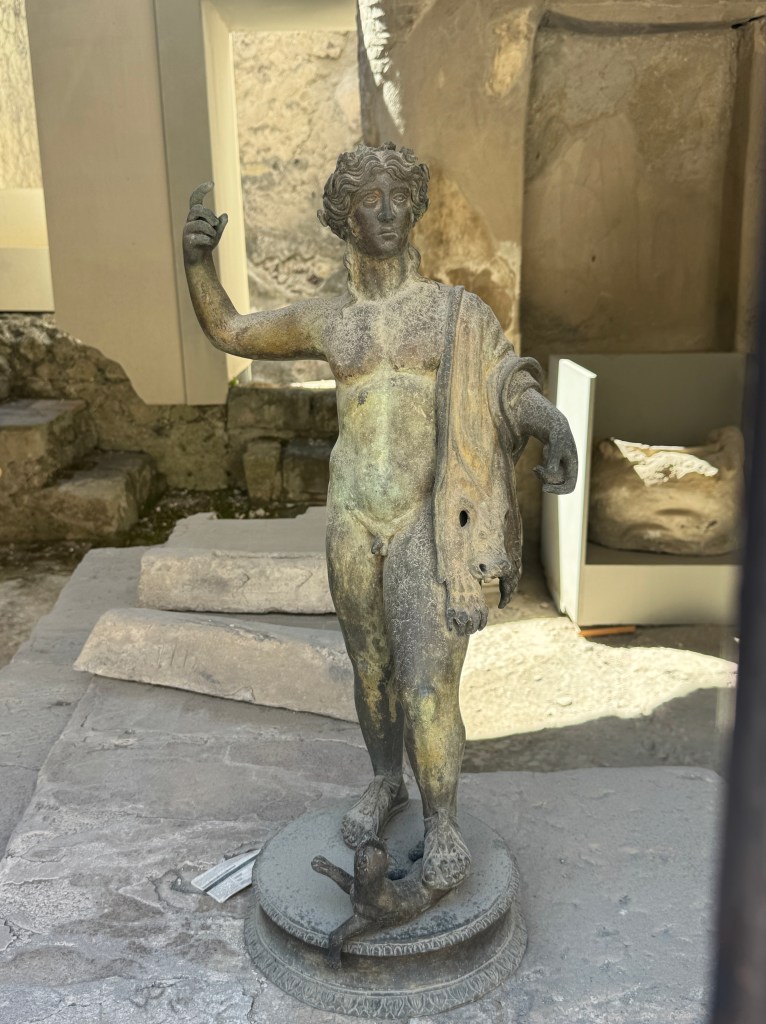
Historic analysis suggests that the city was founded by the Oscans or the Etruscans in the 7th century BC, then conquered by the Samnites in the 5th century BC. In 90 BC the city was dominated by Rome and transformed into a municipium. Smaller than Pompeii with a population of only circa 5,000, Herculaneum was a wealthier town. With its coastal location, clean air, and mild climate, it was a popular seaside retreat for the Roman elite. Herculaneum has much more luxurious houses featuring lavish use of coloured marble cladding. Buildings include the Villa of the Papyri and the so-called “boat houses”, wherein the skeletal remains of at least 300 people were found.
Discovered in 1707 (whereas Pompeii was revealed in 1748), you can visit all of Herculaneum in just a few hours, which is what we did one Sunday.
I highly recommend visiting Herculaneum. Not only is it better preserved than Pompeii, it is a lot easier to get around. We visited then entire site in about 3 hours.
Grape Harvesting at Porto di Mola
Italy is the land of food and wine (vino). Italy has red wine (vino rosso), white wine (vino bianco), rose wine (vino rosato), and sparkling wine (spumante).
Did you know?
Most people think Italy’s sparkling wine is called Prosecco. Similar to Champagne, prosecco is a DOC (controlled designation of origin) or DOCG (controlled and guaranteed designation of origin) white wine that can only be produced in certain areas of the Veneto and Friuli Venezia Giulia, using Glera, Verdiso, Pinot bianco, Pinot grigio or Pinot noir grapes. It can only be produced with the Charmat method—the fizziness develops in large receptacles (autoclaves)—and can be a spumante (fully sparkling), frizzante (lightly sparkling), or even still.
Spumante, on the other hand, is a category of wines, those that produce foam when the bottle is opened, caused by the presence of carbon dioxide produced by fermentation, not added.
C’s landlord Enzo introduced us to the wines from Porto di Mola. The vineyard owner, Antimo lives in Bacoli, which is just down the hill from MDP and Enzo will only drink Porto di Mola’s spumante. After tasting Porto’s spumante and rosa, C & I decided to go to Porto di Mola for a tour and tasting.

Antimo giving our group a bottle of spumante.Our first trip there was in June. The vineyard is about 90 minutes northish of MDP. We had so much fun and we learned they have grape harvesting tours starting in September through October. Several of my colleagues wanted to go too, so I arranged a group of 12 of us to go and we had the best time.
First, we headed to the vineyard to cut some grapes. There was a tour bus there too, so there were quite a few of us and we harvested numerous crates of grapes. I joked that I could have a career as a grape harvester if I ever needed a back-up plan.
The winery then put some of the grapes in barrels so we could try the traditional grape stomping. I tell you now, it is not as easy as it looks because squashed grapes are slippery!
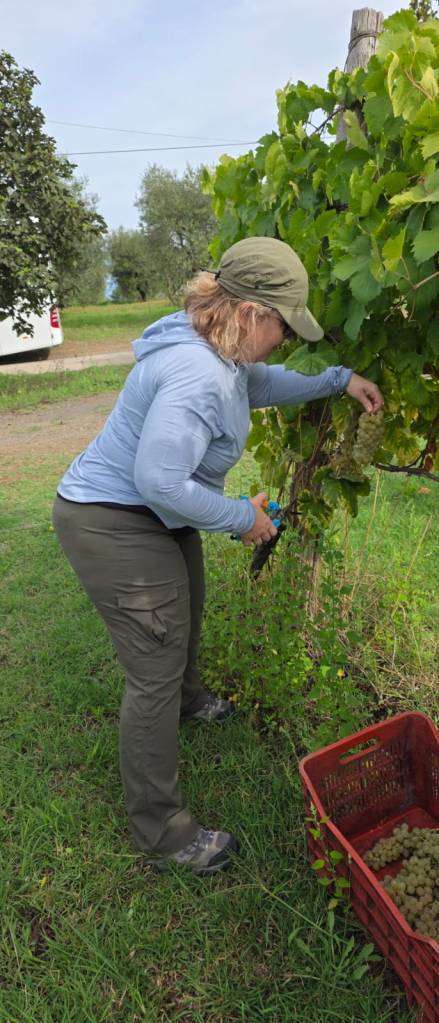
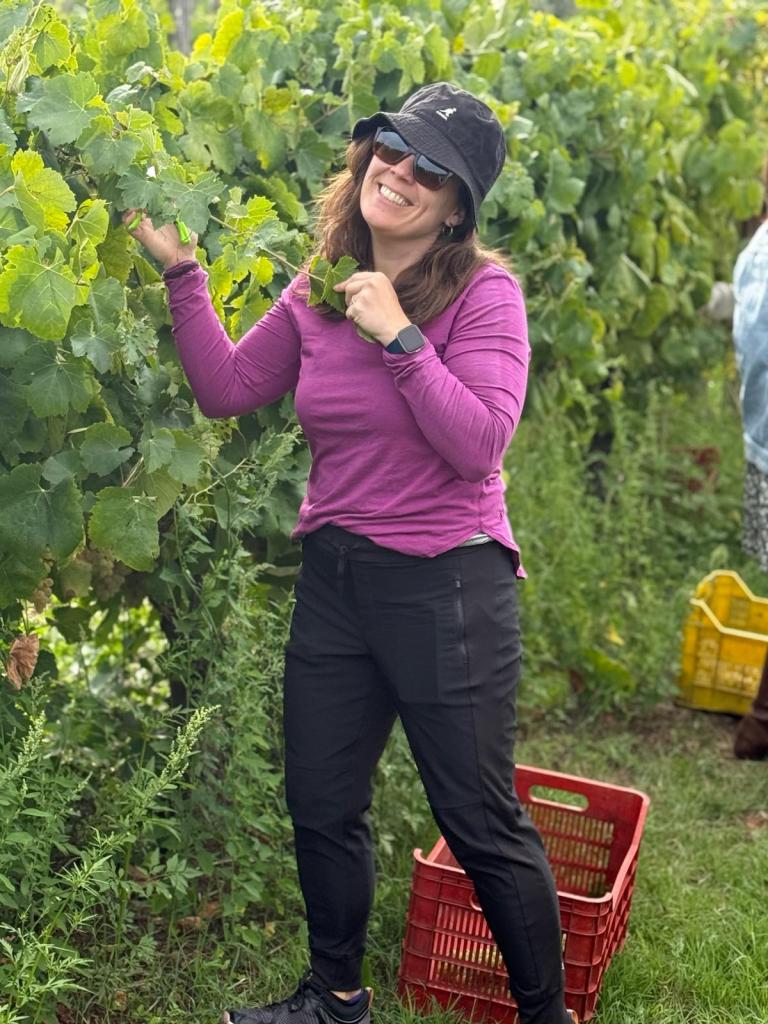
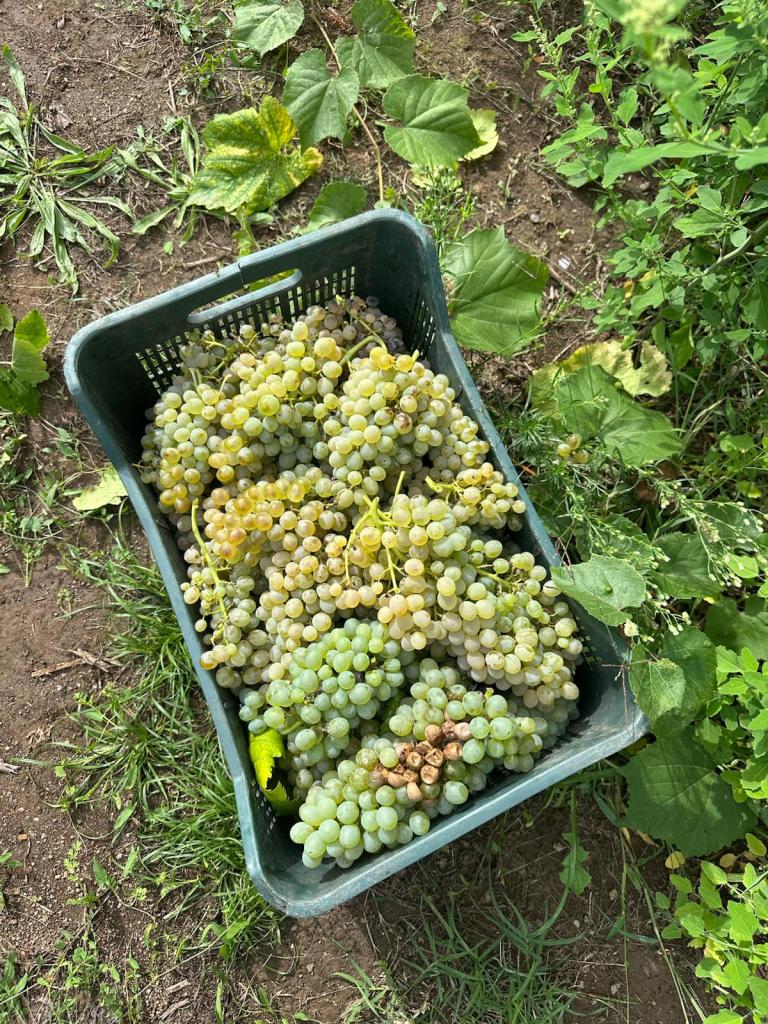
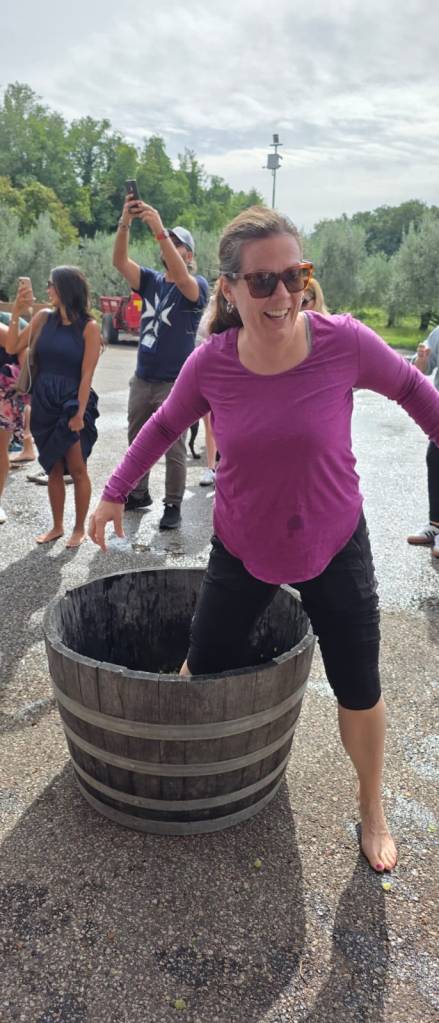
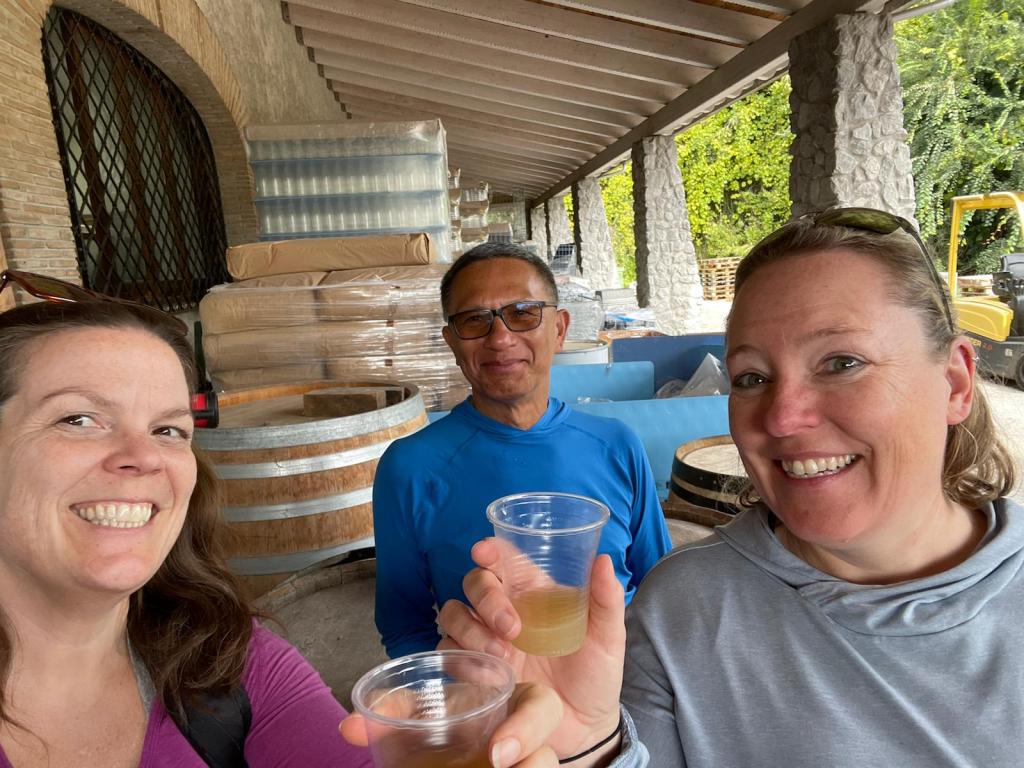




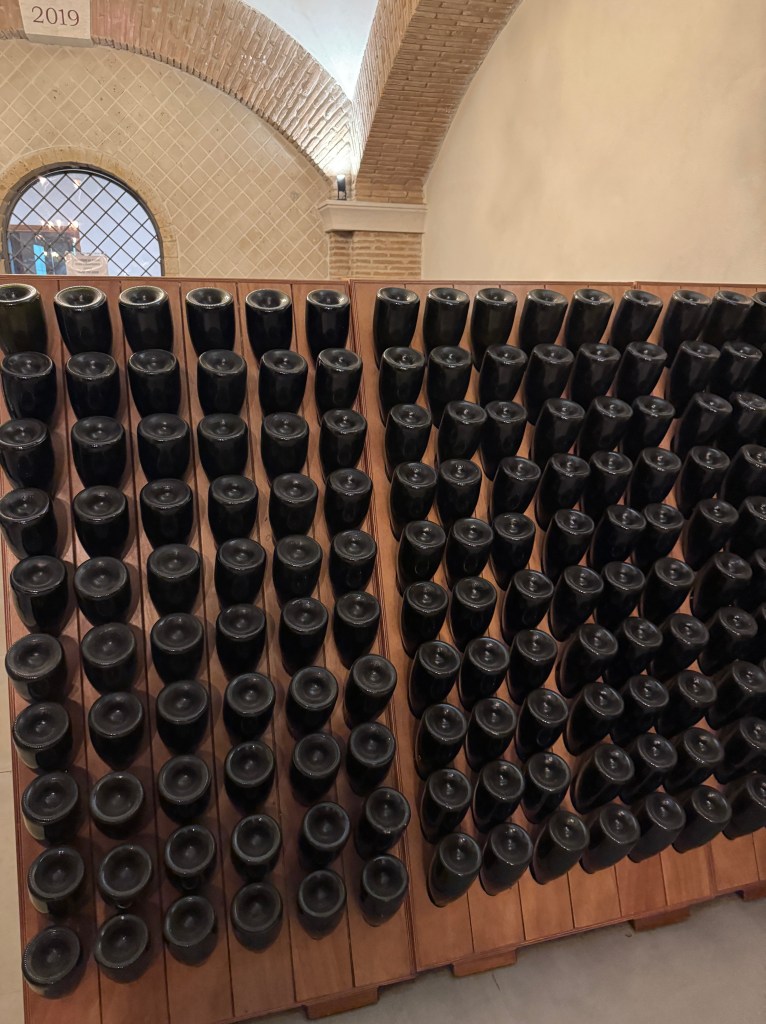
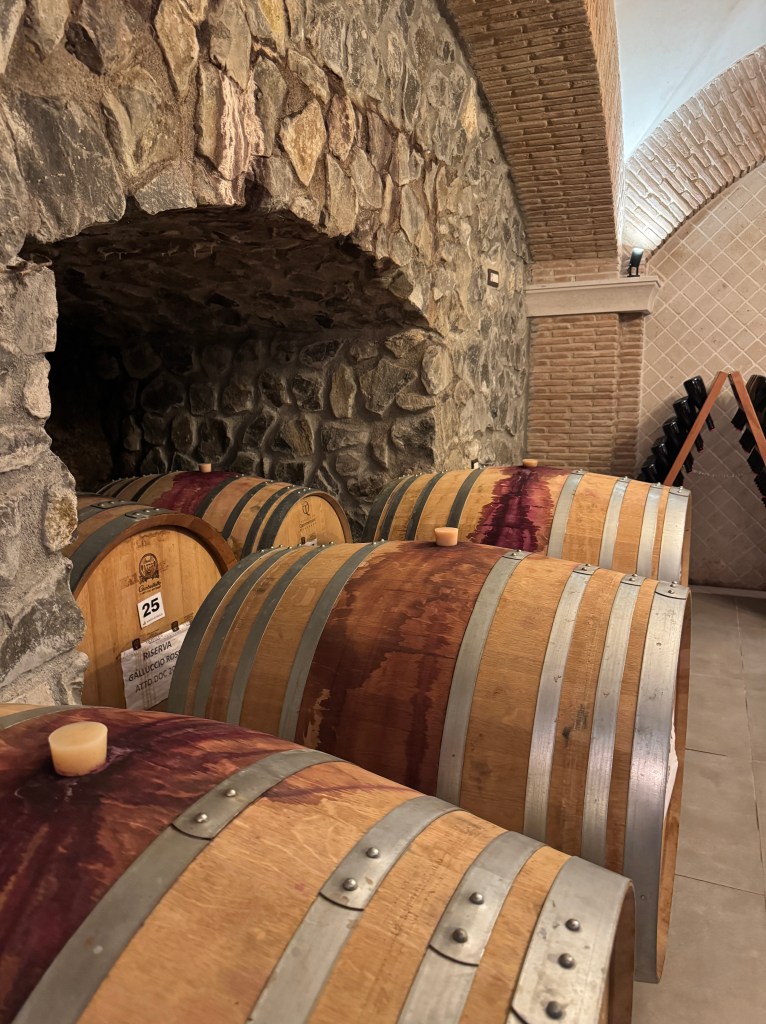

Then we saw how they actually press the grapes and go to try fresh pressed grape juice. The grapes we harvested were green and sweet, so the juice was sweet and refreshing.
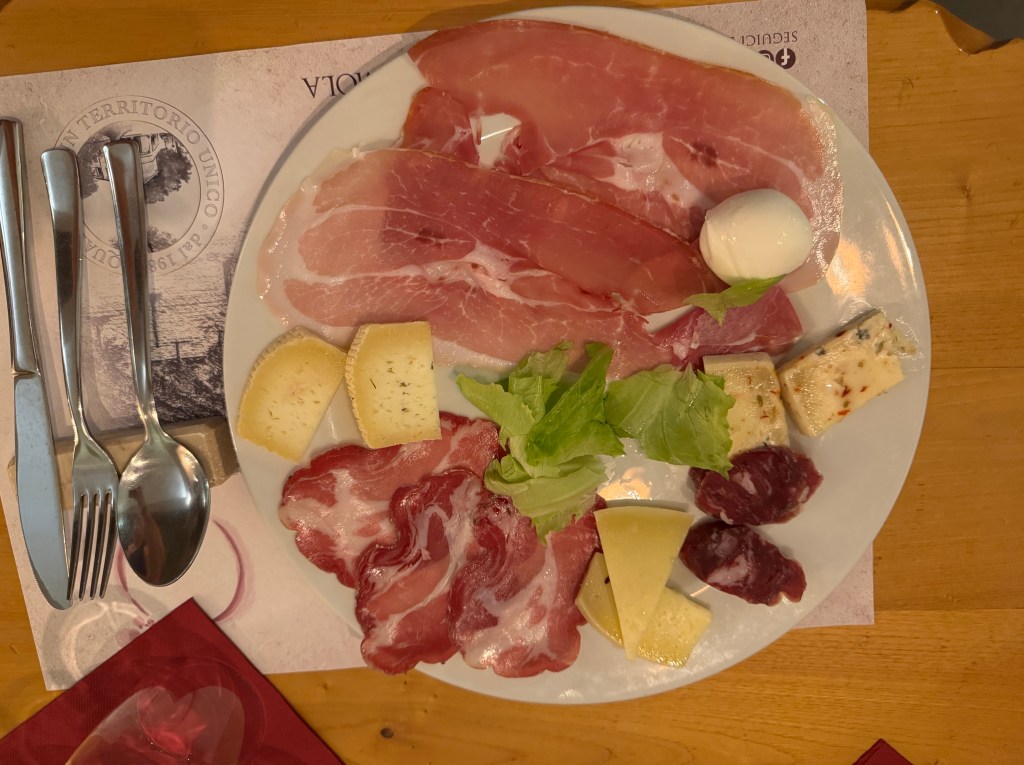
Finally, we had a splendid wine tasting with so.much.food. starting with a plate of meats and cheese, followed by pasta, a meat with potatoes, a bean soup, another meat dish, and finally a tart for dessert. Let me tell you that no one went hungry.
If you enjoy wines, grape harvesting is an experience I highly recommend.
Parco Archeologico di Cuma
Cuma is basically the next town over from MDP and Bacoli. The archaeological site of Cumae, part of the vast Campi Flegrei archaeological park, is only a 10 minute drive from MDP.
Did you know?
Campi Flegri or the Phlegraean Fields (from the ancient Greek literally “burning fields”) is an ancient caldera, or sometimes considered in common parlance to be a dormant supervolcano (a term for which, however, there is no precise scientific definition). The geophysical characteristics of the Phlegraean Fields make the area particularly fertile, and thanks also to the mild climate, which is likely why the ancient Greeks built some of their cities in this area, the most famous being Cumae.
The fields have been active for more than 80,000 years. Inhabited since prehistoric and protohistoric times, this area was the site of the settlement of the first colonies of Magna Graecia in the 8th century BC, included between the present-day municipalities of Naples , Bacoli and Pozzuoli.
Having had eruptions of large proportions in prehistoric times, Campi Flegri are
If you have forgotten your ancient history, the Greeks were here in Italy—the Greek-speaking areas of southern Italy, which encompasses the modern Italian regions of Calabria, Apulia, Basilicata, Campania, and Sicily, were extensively settled by Greeks beginning in the 8th century BC. That’s why so much of Roman mythology mirrors Greek—the ancient Romans plagiarized!
On the hill overlooking the Tyrrhenian Sea in what is now called Cuma stood one of the oldest Greek colonies, Cumae, founded around 750 BC. Cumae was later sacked by the Oscans in the 5th century BC and incorporated into the Roman Empire in the 4th century. The area was chosen by the ancient Romans as their favorite spa area.
So while Cumae has mostly Roman, there are several Greek remains as well. The site contains the remains of the Temple of Apollo, the Temple of Jupiter, a Roman Crypt, an immense spa building of the Imperial age, the Amphitheater, and the Forum. There are also numerous sepulchers of Greek and Roman citizens. The site is also famous for “Antro della Sibilla”, one of the most known and consulted oracles of the ancient world, whose predictions are remembered by Virgil in some verses of the Aeneid.

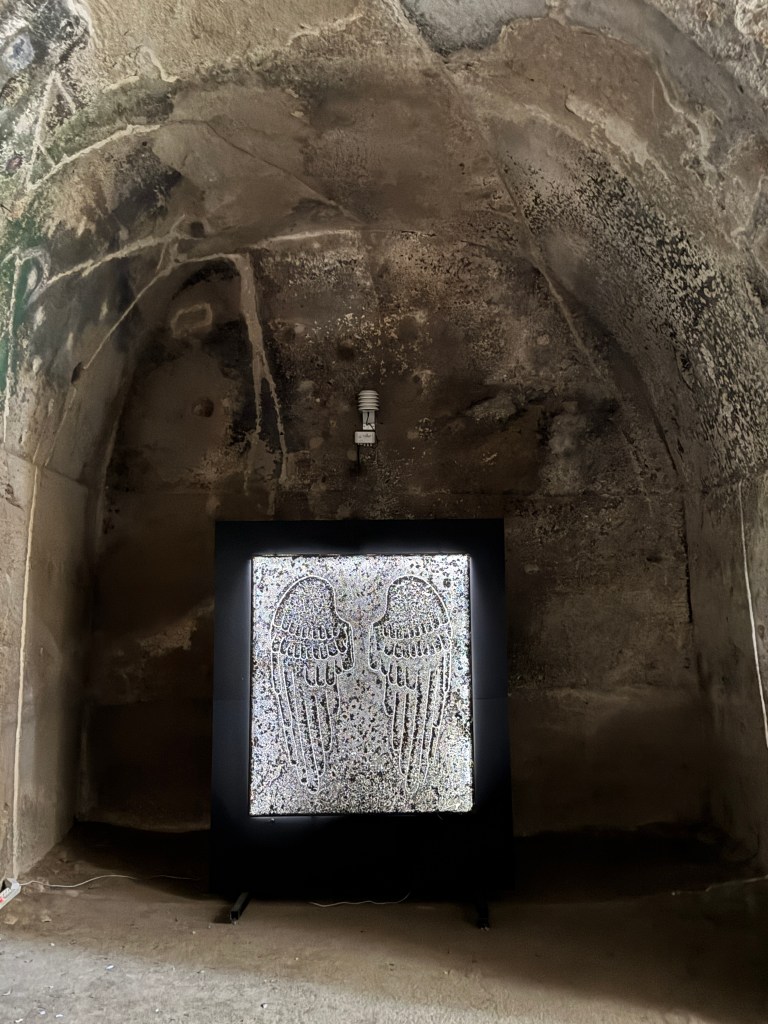


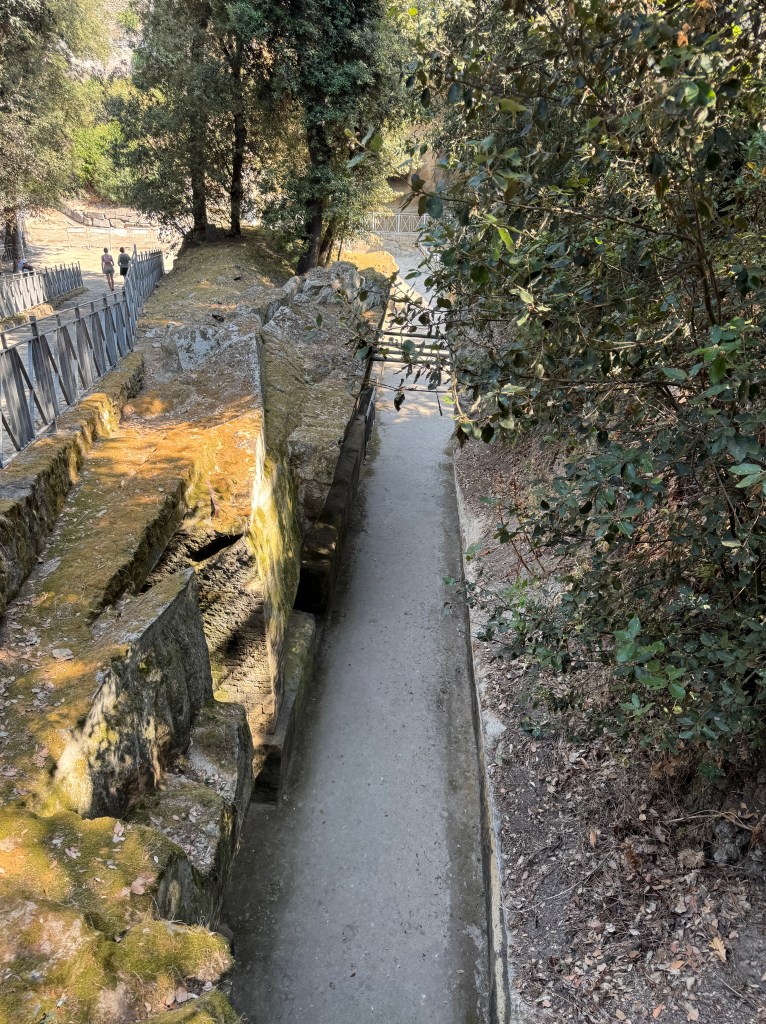


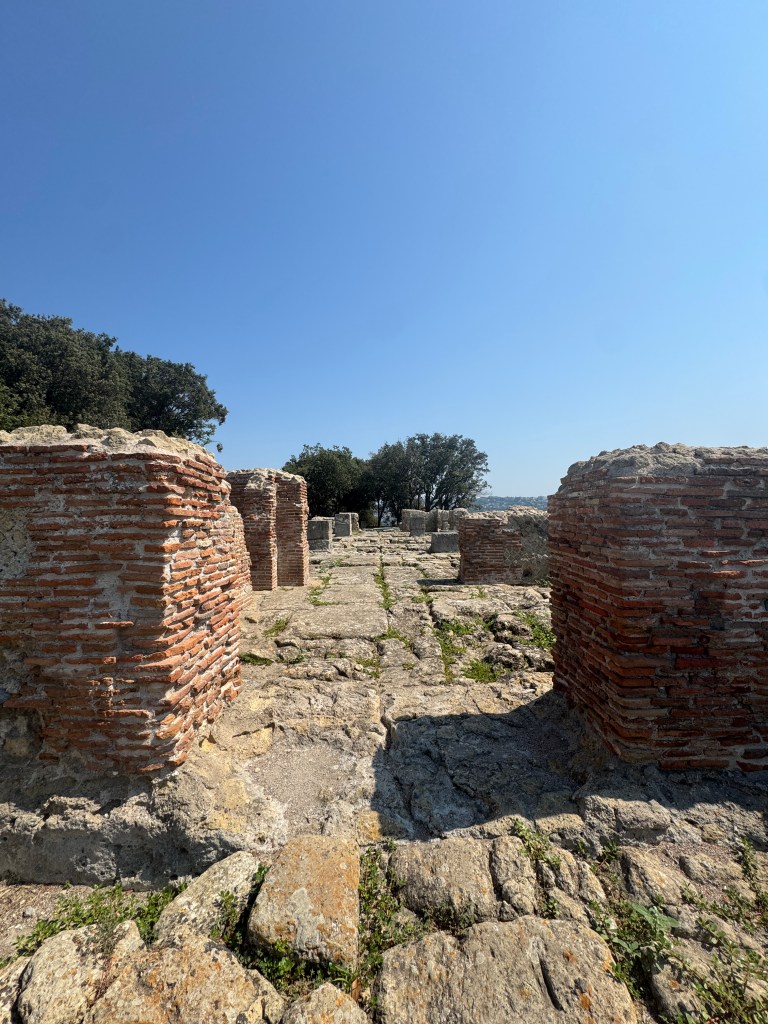


The day C & I visited was a hot August day, so we didn’t see everything (like the tree growing upside down) as the park is rather large. Luckily, it’s just a quick drive to visit again.
Reggia di Caserta
The Royal Palace of Caserta is located in Caserta, Campania, about 50 minutes north of MDP. The monumental complex at Caserta was created by the Bourbon king Charles III in the mid-18th century to rival Versailles and the Royal Palace in Madrid and was designated in 1997 as a UNESCO World Heritage site.
Built 100 years after Versailles, it is more than 3 times bigger than Versailles. The complex is the largest palace erected in Europe during the 18th century covering an area of 120 hectares (1.2M sq. meters). The palace has a floorspace of 61,000 sq. meters (657,000 sq. ft.) distributed across 5 floors. The complex length (palace square + palace + gardens) is 4 kilometers with the garden length at 3.3 kilometers.
The palace alone has 1200 rooms (which includes a museum, library, chapel, and theatre), 1742 windows, 56 staircases, and 1026 chimneys. The grounds include a sculpture park, an English Garden, the experimental silk factory, and 40-km-long Carolino Aqueduct.
Did you know?
During World War II, Caserta Palace was first used by the Germans and then later served as the Allied Force Headquarters in the Mediterranean. On April 29, 1945, the German forces in Italy signed their unconditional surrender at the palace e German forces in Italy signed their unconditional surrender at the palace, referred to as “The Surrender of Caserta,” guaranteed the permanent removal of German and Italian fascist troops from southern Europe.
Caserta represents an Italian Baroque masterpiece by architect Luigi Vanvitelli. A grid-like rectangle with five stories and four interior courtyards, Vanvitelli was determined that the design of the complex would not feel derivative, and that it would be recognized by his contemporaries as completely unique. He fused his deep understanding of Renaissance, Mannerist and Baroque styles into a fresh architectural language, and today many art historians point to the Reggia di Caserta as one of the first major expressions of the Neoclassical style.


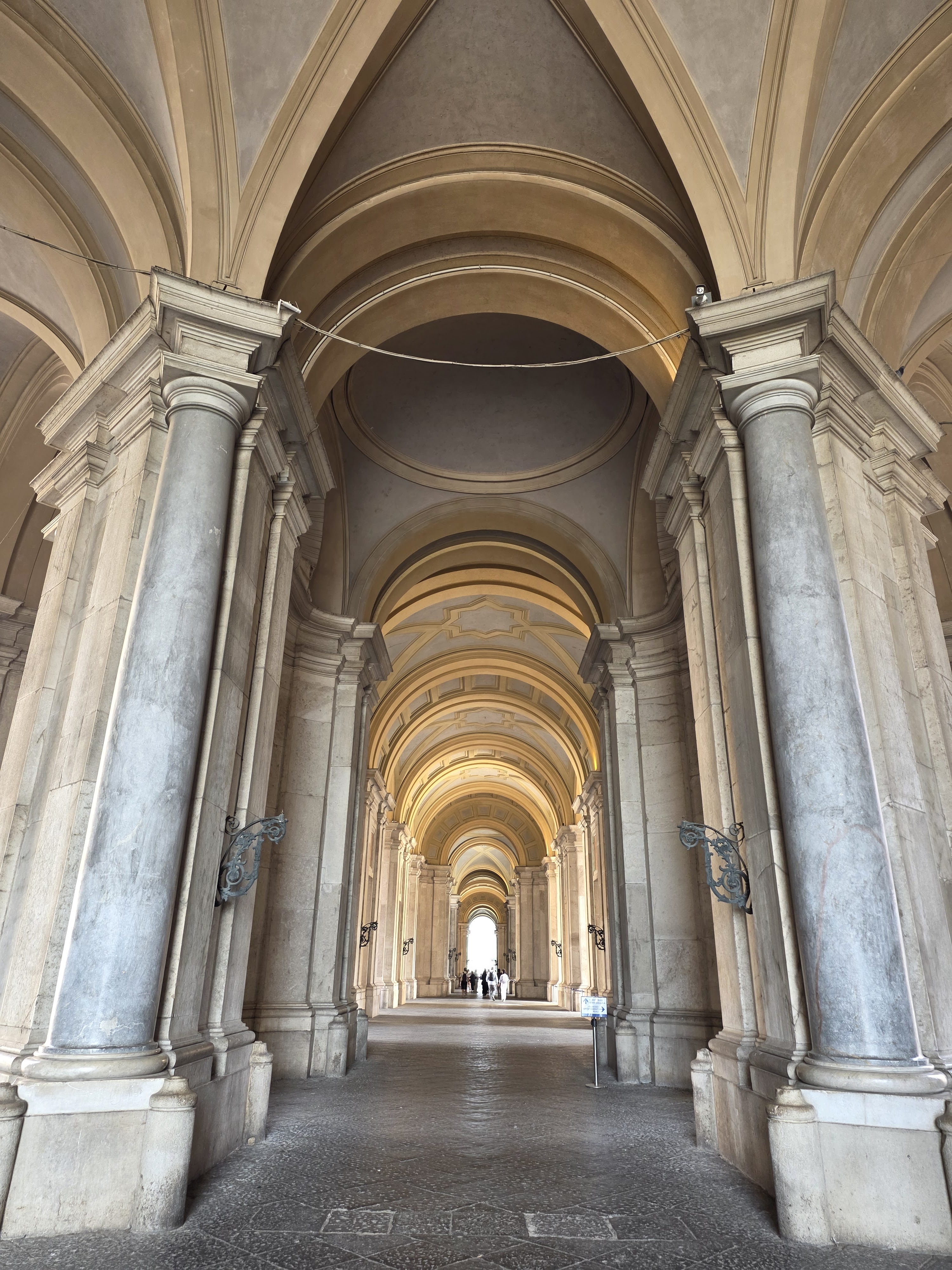
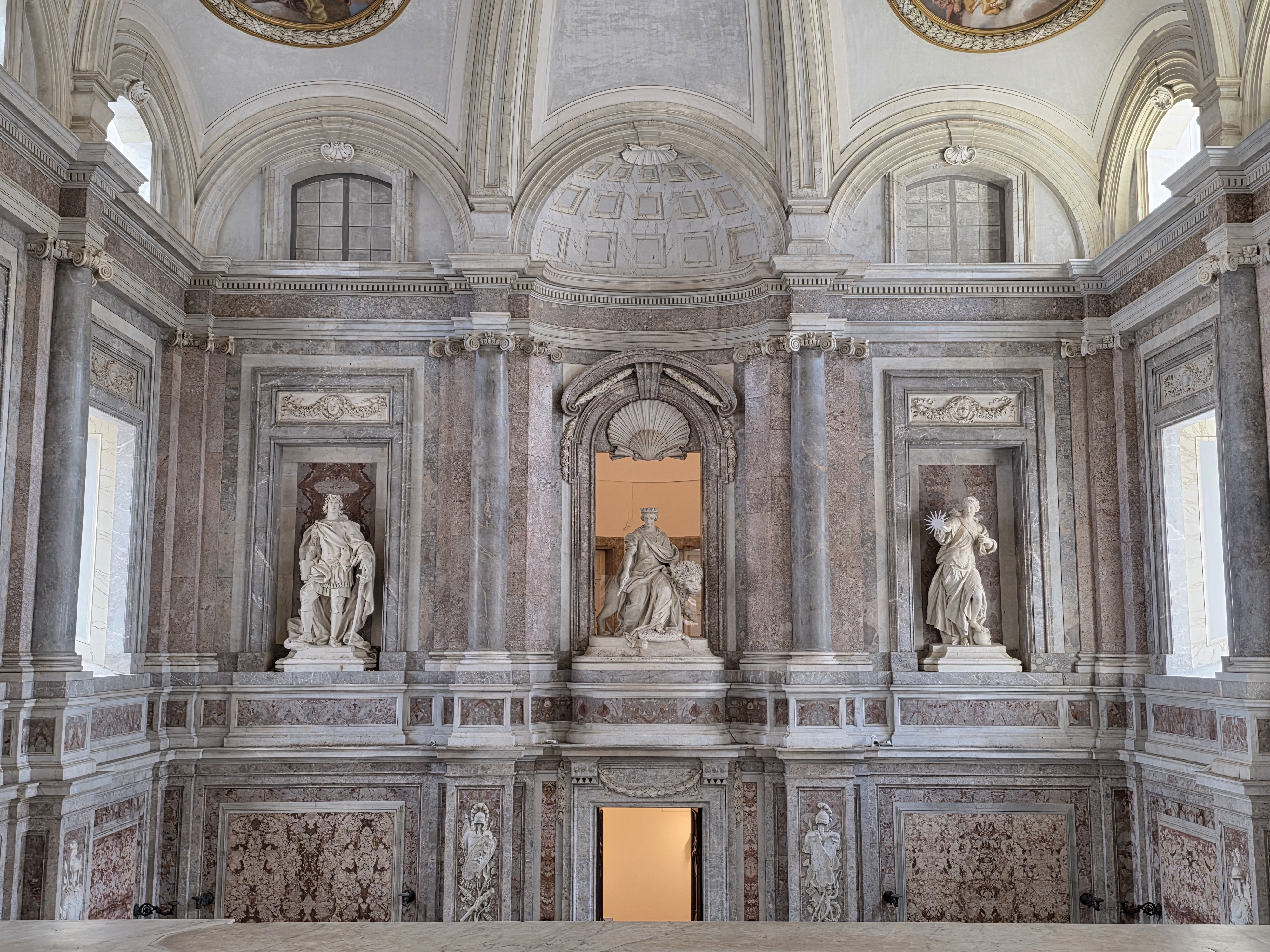

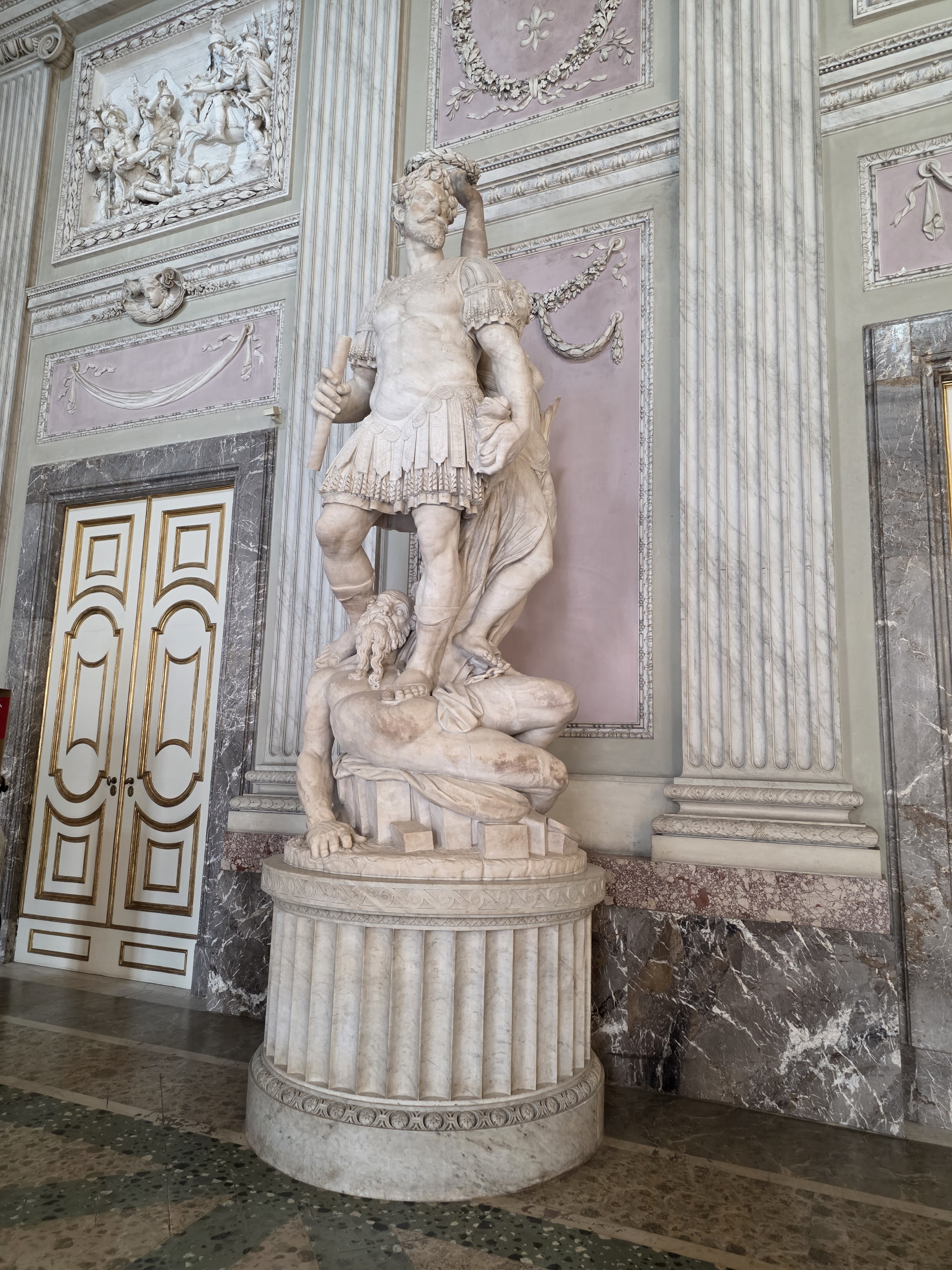

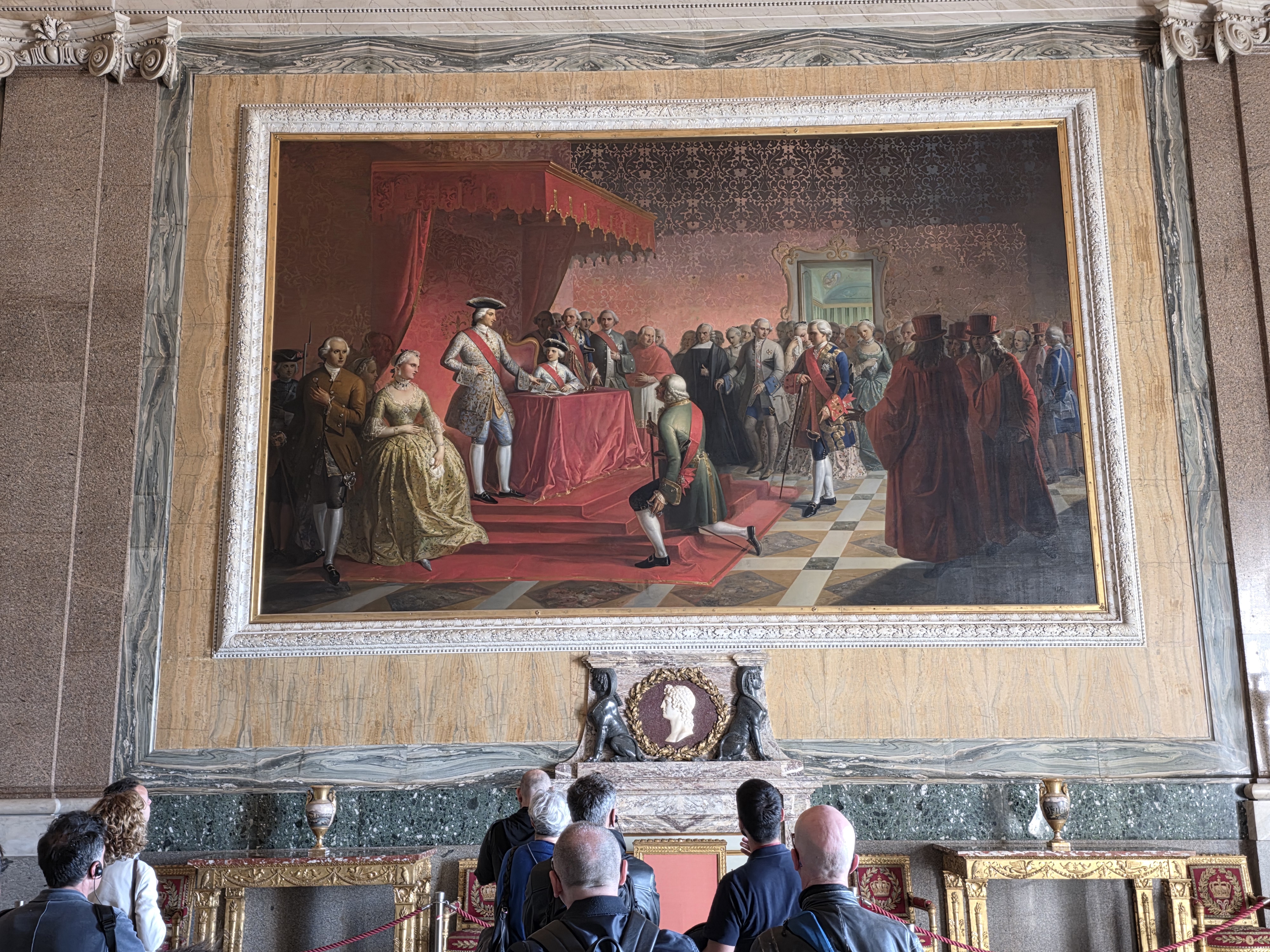


C & I went through the Royal Apartments and the Aqueduct, which is something to see. But we didn’t get through all the gardens. At 120 hectares, there’s just too much to see. The Palace rents e-bikes, so we decided next time, we’ll just do the grounds and rent e-bikes to ride around.
Stayed tuned for more adventures! I’ll be posting my September weekend trip later this week. And then Saturday, we’re off on another adventure! This time, we’re going for an entire week Stay tuned to find out where we’re going!
Put your guess where we’re going next in the comments below.
All content, including photos, © 2025 L. Long/wanderinglynn.com. All Rights Reserved. No part of this website or its contents may be reproduced, copied, modified, or adapted without prior written consent of the owner.
All links are merely for reference and/or for your convenience.
 wanderinglynn.com