I had a trip tentatively scheduled over the New Year holiday but had to cancel. Frankly that worked out better for me as I took time over the holiday to simple rest, relax, and reflect. So my first trip of 2026 was a couple of weeks into the New Year.
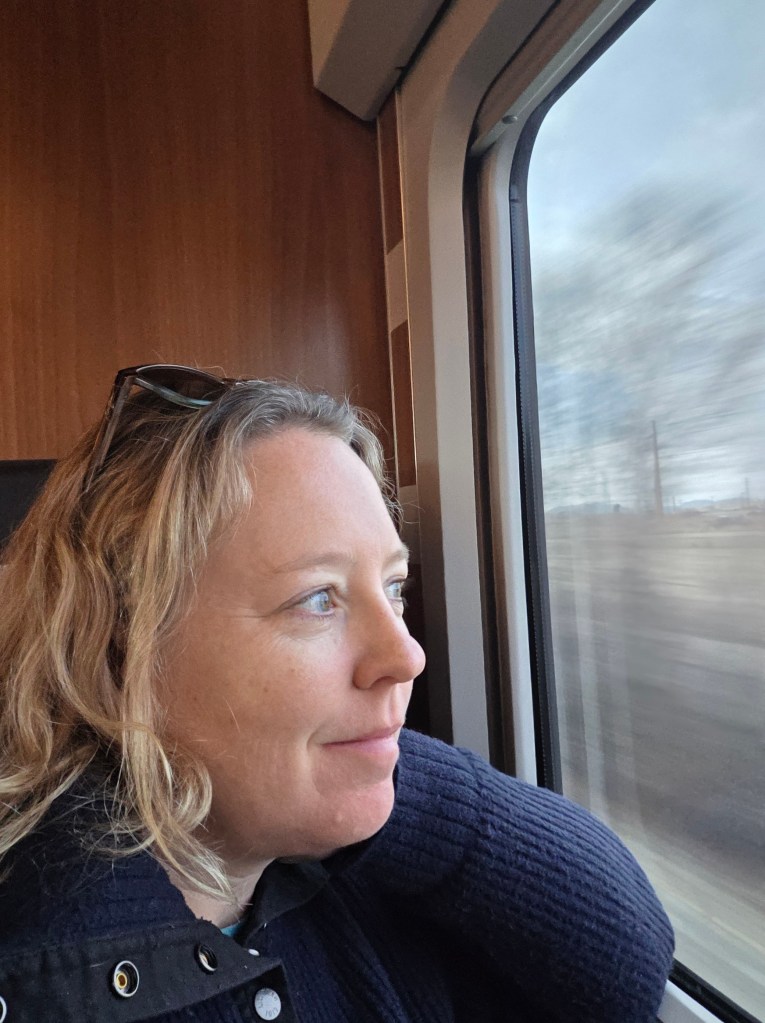
January is my birthday month and I always take a birthday trip. The birthday trip doesn’t always happen on my birthday week or even in the month (Scotland in April 2023). But this year is a landmark birthday year and I was determined to go the week of.
As I’ve mentioned before, one of the perks of being in Europe are all the budget airlines. Budget airlines have their downsides but overall, the low prices make the cons bearable. Case in point, the destination of my birthday trip was decided based not on location but on cost. I got a round-trip ticket for less than €100.
At this point, you’re probably yelling at me to get on with it and tell you where I went.
So without further ado, I went to Spain!
I spent a fantastic week in Valencia and Seville.
A Little History
(Not interested in History? Skip to the next section or even to my final thoughts.)
Valencia
Located on Spain’s east coast, the Iberian Peninsula, on the Mediterranean Sea. The city is the 3rd largest in Spain after Madrid and Barcelona.
Like most European cities, Valencia has a long and varied history. Founded in 138 BCE as a Roman colony, the city remained under Roman control until the 4th or 5th century (records aren’t too clear) when the Visigoths took over. The Kingdom of the Goths were a Germanic people, who played a major role in the fall of the Western Roman Empire and the emergence of medieval Europe. In 711 AD, the Goths were overthrown by the Moors, and Islamic rule and acculturation, together with the introduction of new irrigation systems and crops, brought prosperity and knowledge to the city for the next 500 years.
The city was conquered by James I of Aragon in 1238 when the city became the capital of the Kingdom of Valencia. The main mosque, which had been built on the remains of an ancient Roman temple, and in turn converted into a Visigothic cathedral, was consecrated as a Christian church. In 1262, the keystone of the current Cathedral was laid, and thus, the structure designed more than two thousand years ago would mark the location of the seat of civil and religious power, which has remained unchanged since. The 15th century saw the establishment of the Universitat de València. And of course, various wars across the centuries continued to shape the city until modern times.
One interesting fact about Valenica is the Turia River once separated the city. In 1957, it overflowed its banks, flooded the city, and caused a great deal of damage to both life and property. To prevent future floods, the city rerouted the river to the north and the old riverbed was turned into the Turia Garden—a vast municipal urban park.
Seville
Or Sevilla, is located the Andalusia region of southern Spain, and is Spain’s 5th largest city after Zaragoza. The city was likely founded by the Iberian people, a prehistoric group living in southern and eastern Spain before Roman, Greek, or Carthaginian influence, as archaeological excavations found anthropic remains under the north wall of the Real Alcázar dating to the 8th–7th century BCE. At points, the Phoenicians, Greeks and Carthaginians all inhabited the city until the Romansn usurped the city from the Carthaginians in 205 BCE. For two centuries, the Romans helped the city flourished and called it Hispalis. The most accepted theory is the town was founded by Hercules, who then granted it to his son, Hispano; hence the name Hispalis. When Rome fell in the 5th century, Seville was occupied by Silingi vandals (a Germanic people who sacked Rome in 455 CE) until they were banished by the Visigoths, who made the city one of the capitals of their kingdom.
Following a similar path as Valencia, Seville fell to Abd al-Aziz ibn Mussa, who changed its name from ‘Hispalis’ to the Arabic ‘Isbiliyya’, which is where the name Seville is derived from. Under Moorish rule, Seville prospered for centuries until, like Valencia, the Moorish rule ended in 1248, after a long siege, by the Christian King Ferdinand III of Castile. In the 16th century, the Cathedral was built on the ruins of the old mosque. The Seville Cathedral is the world’s largest Gothic temple and the third largest temple in the world after St Peter’s Basicila in Vatican City and St Paul’s Cathedral in London.
Two key pieces of history are tied to Seville. The first tribunal of the Spanish Inquisition was instituted in Seville in 1478. The Inquisition, which was to combat heresy, lasted until 1834. And second, eleven years after Christopher Columbus’s landfall in the Americas in 1492, Seville was chosen as headquarters of the Casa de Contratación (House of Trade). Seville became the only port awarded the royal monopoly for trade with Spanish Americas and the influx of riches from them. Columbus, who completed four Spanish-based voyages across the Atlantic Ocean, is buried in Seville after Spain lost Cuba in the Spanish-American War.
Two interesting facts about Seville. First, more operas have been set in Seville than in any other city of Europe. In 2012, a study of experts concluded the total number of operas set in Seville is 153. The best known is Bizet’s Carmen, Rossini’s The Barber of Seville, Verdi’s La forza del destino, Beethoven’s Fidelio, Mozart’s Don Giovanni and The Marriage of Figaro, and Prokofiev’s Betrothal in a Monastery.
Second, Seville, specifically the Triana district, is considered a birthplace of flamenco. Flamenco began as an expression of the poor and marginalized. Seville’s Romani population, known as Flamencos, were instrumental in the development of the art form. Today, flamenco has also become a national heritage symbol of Spain.
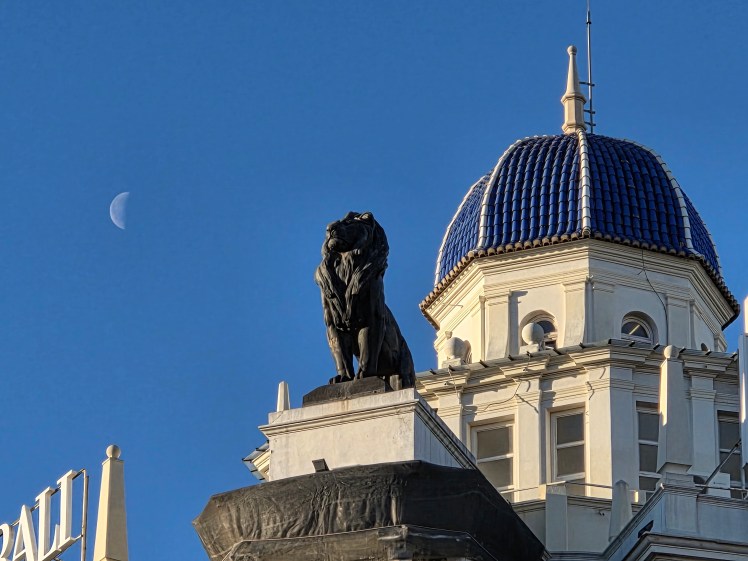
Valencia 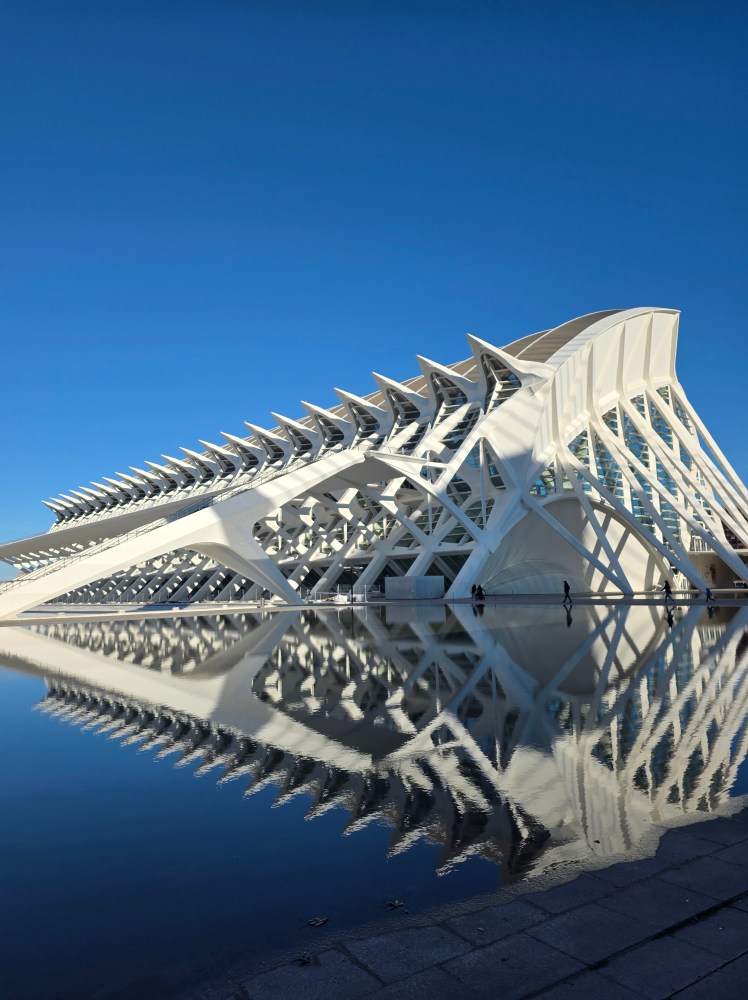
Valencia City of Arts and Sciences 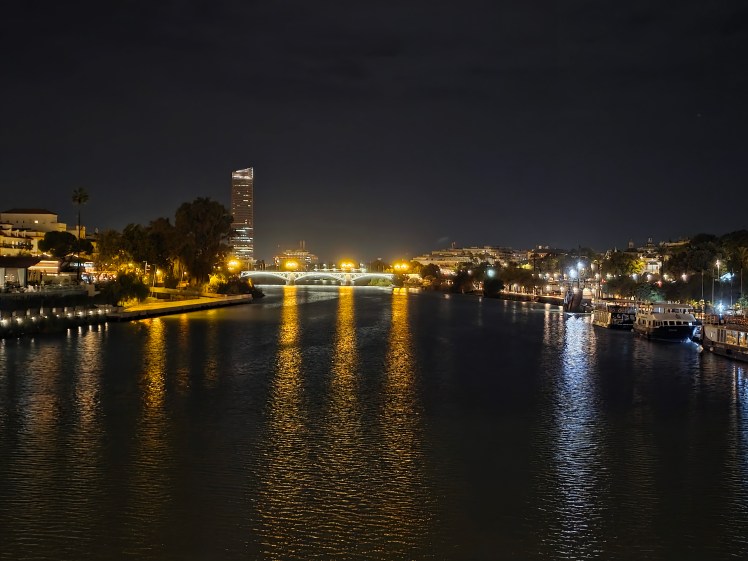
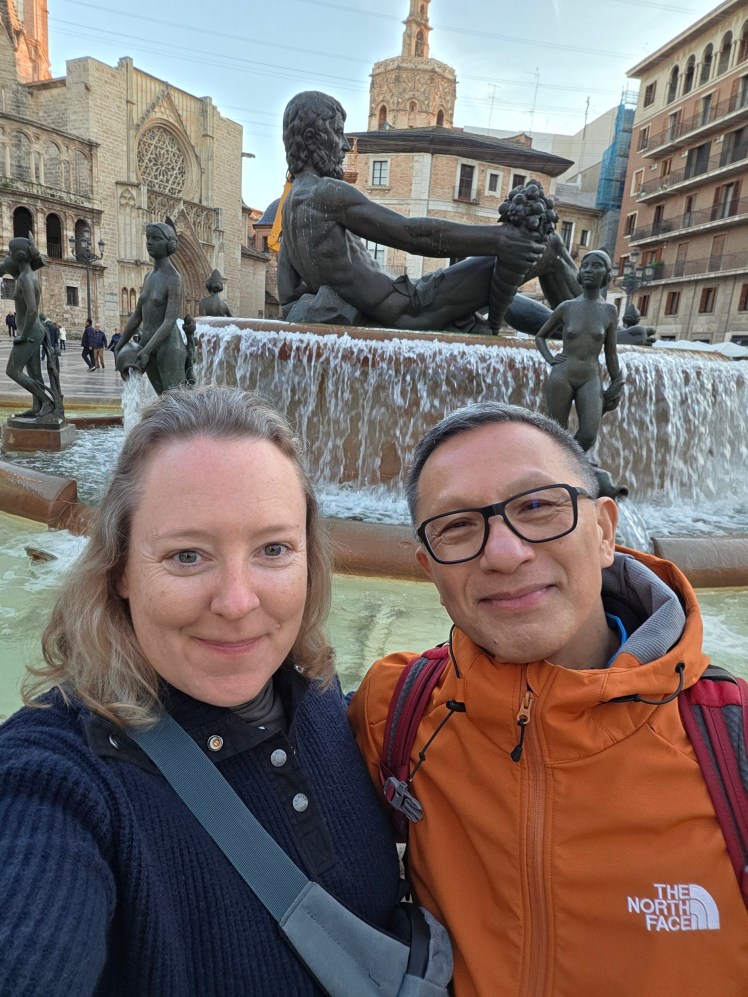
Guadalquivir in Seville 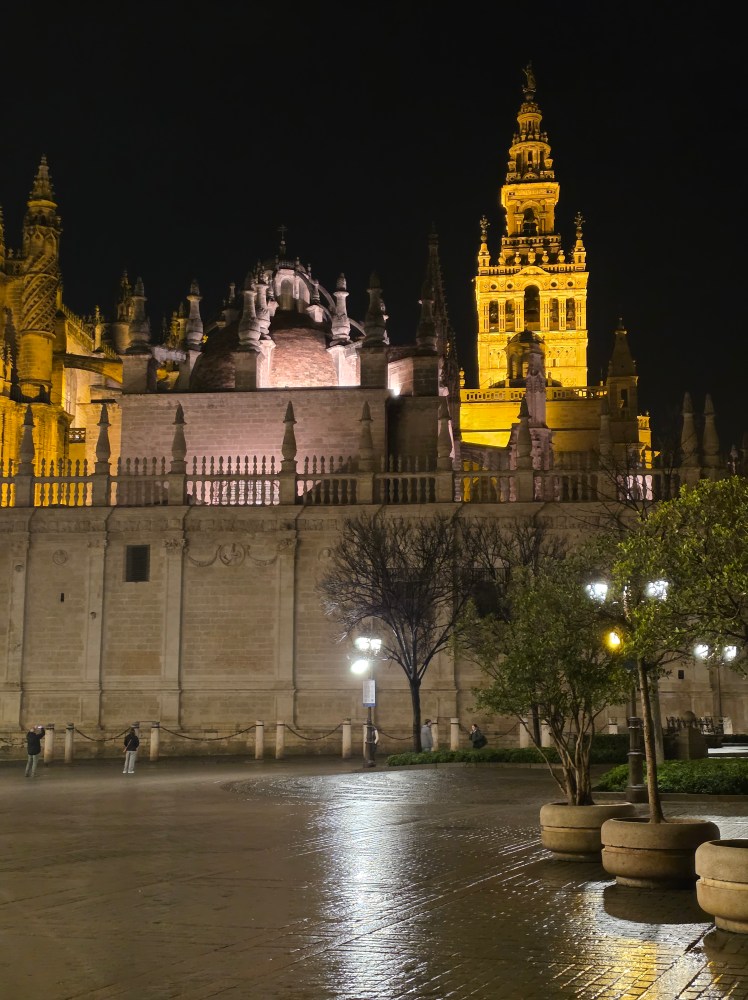
Seveille Cathedral 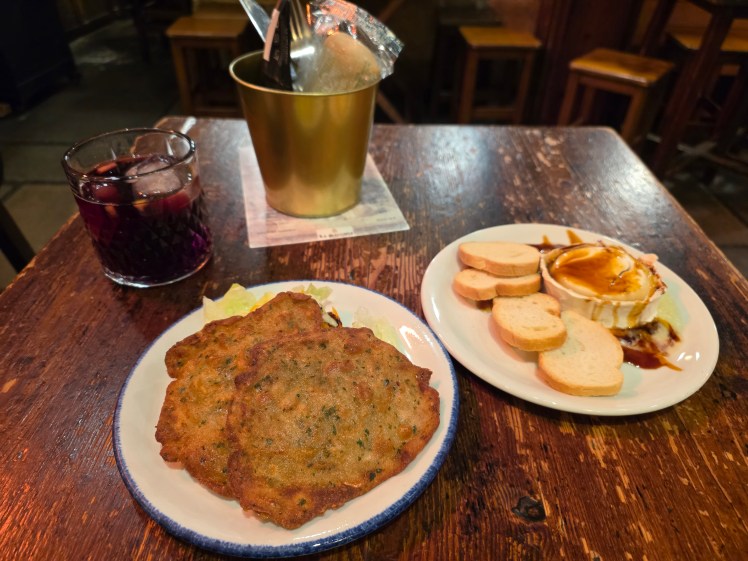
some of the delicious tapas 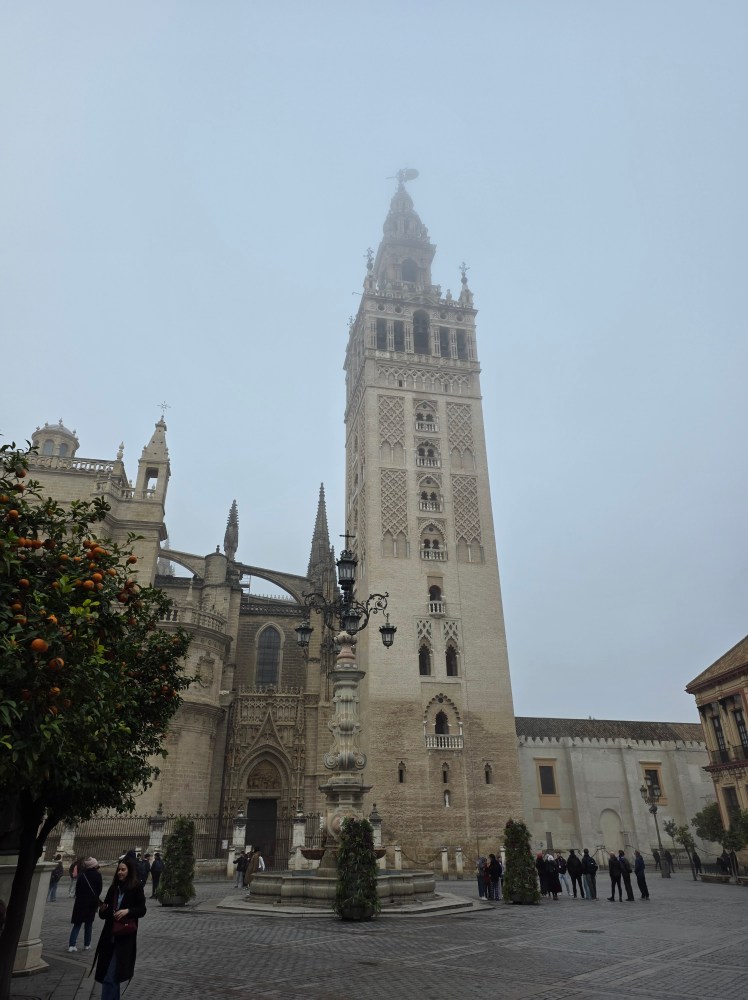
la Giralda 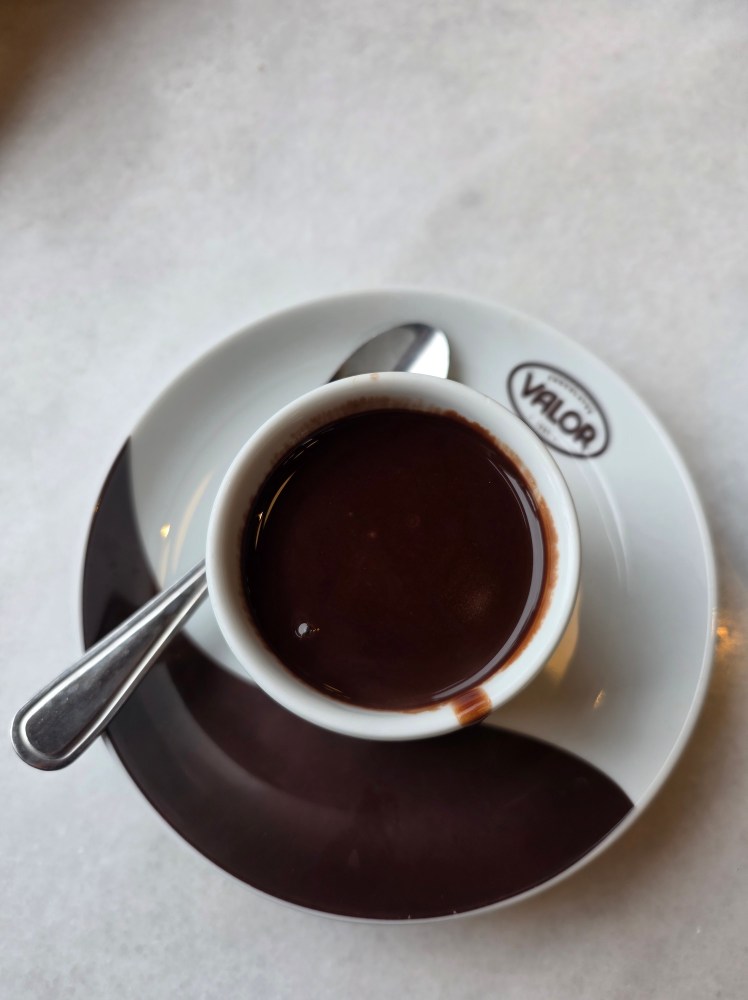
chocolate a la taza con naranja. 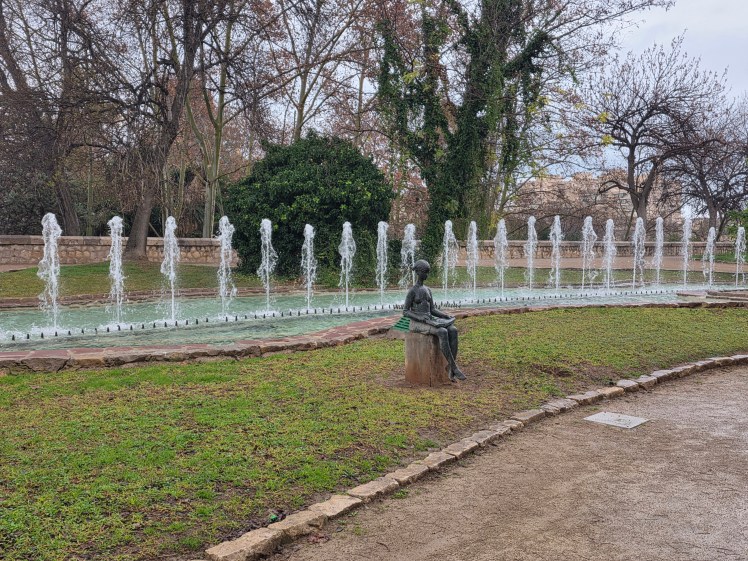
Valencia 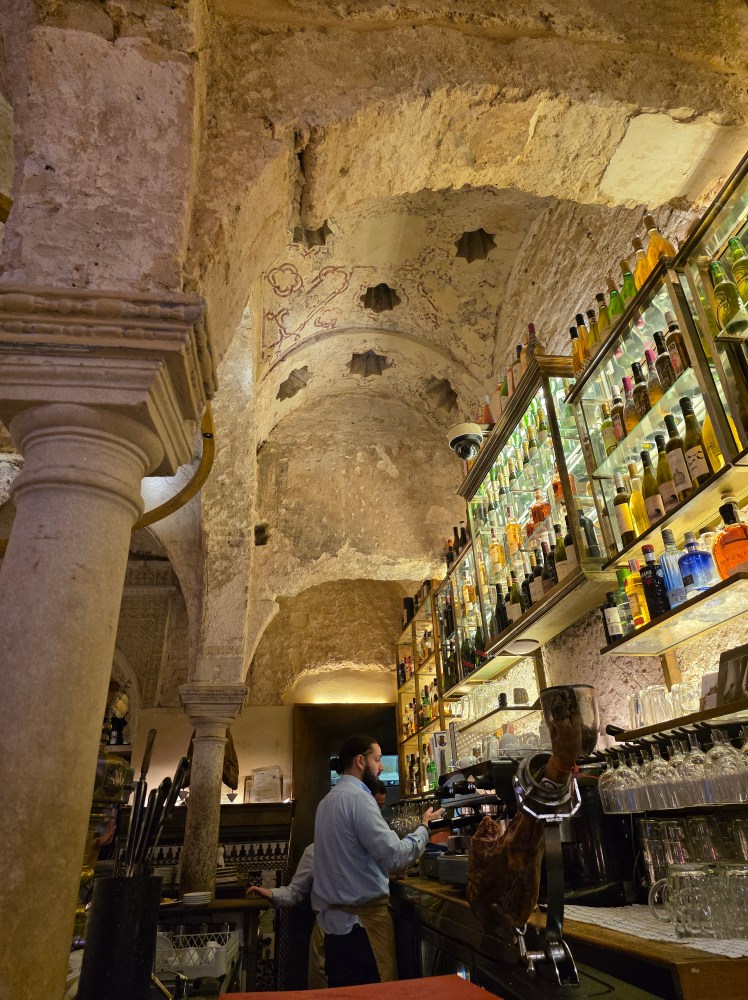
Seville – Cerveceria Giralda Bar 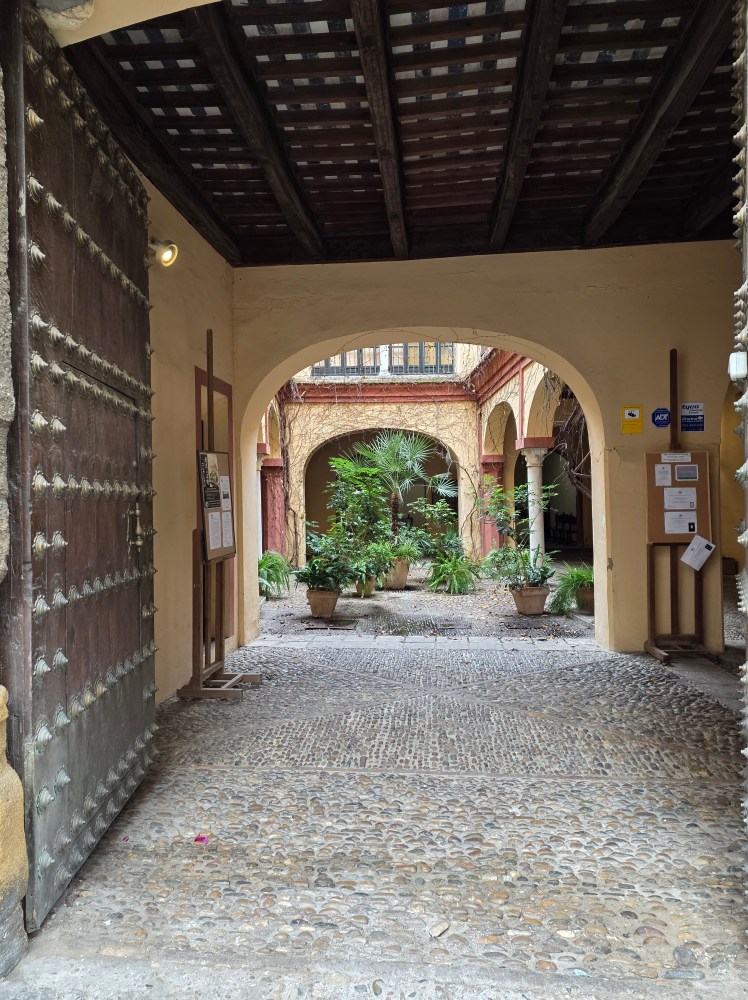
Seville 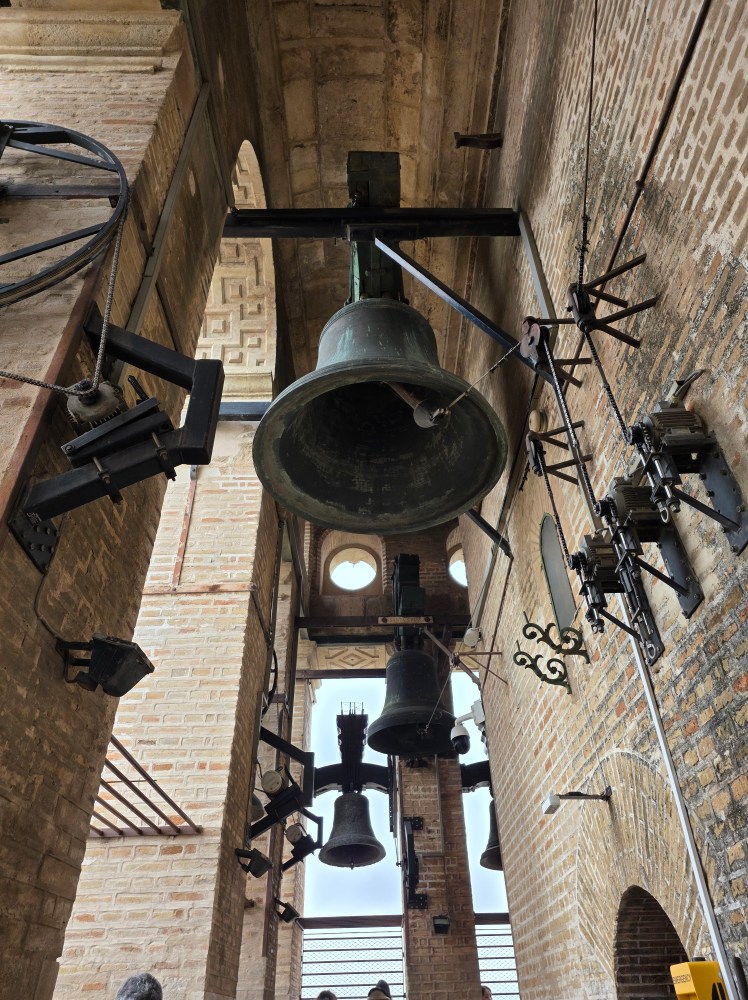
bells in la Giralda 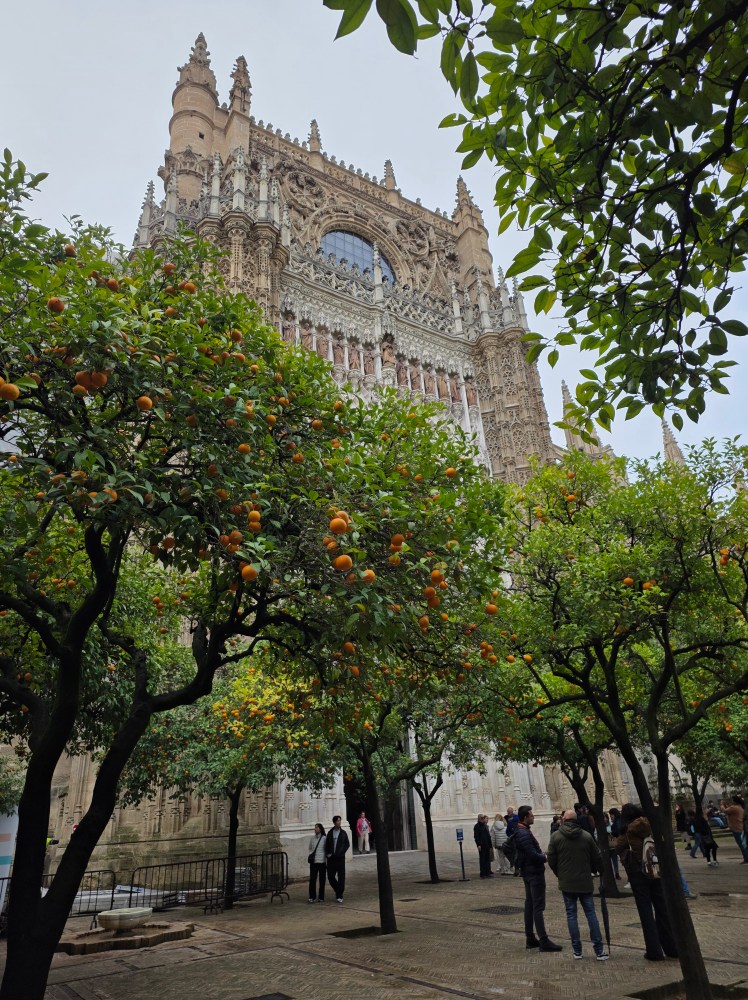
Seville Cathderal 
Valencia Plaça de Bous 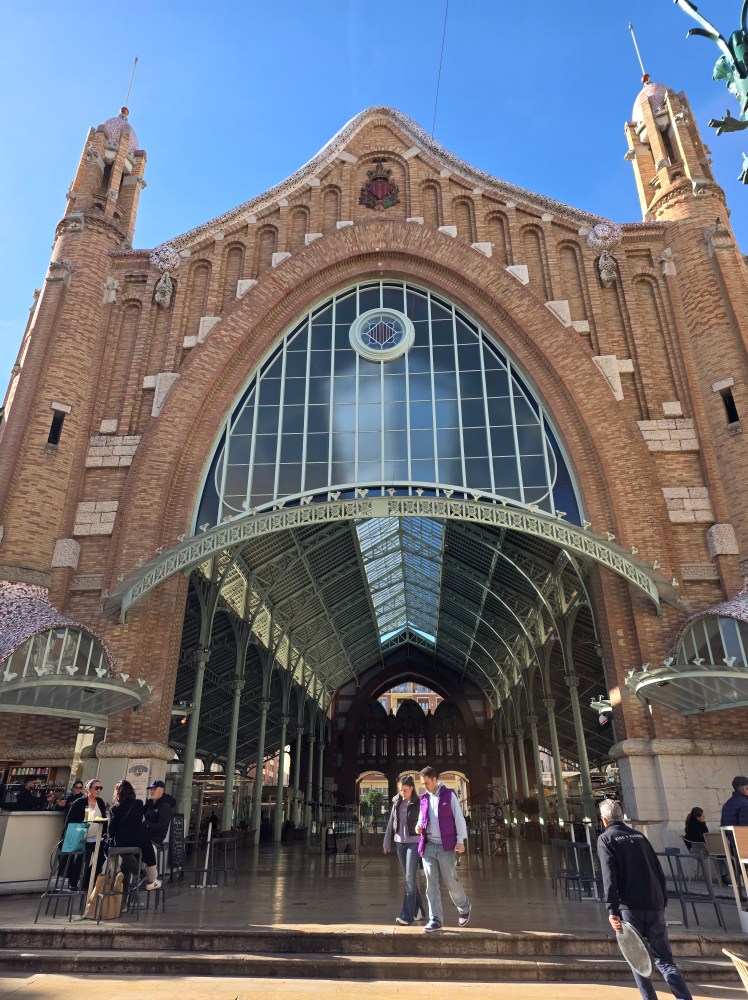
Valencia 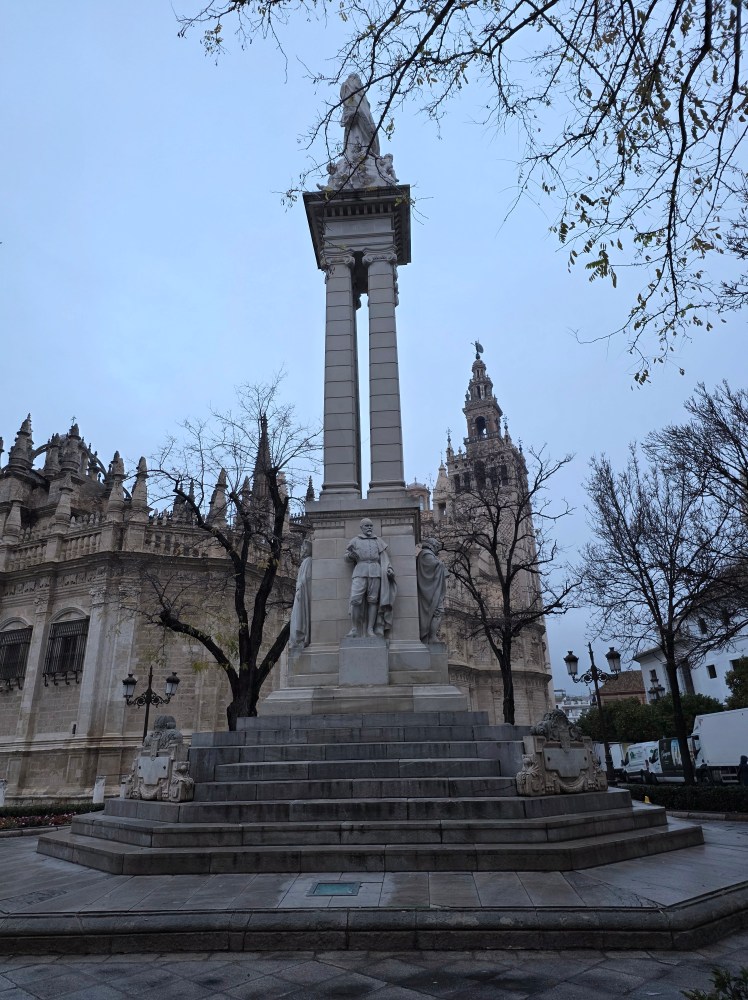
Seville 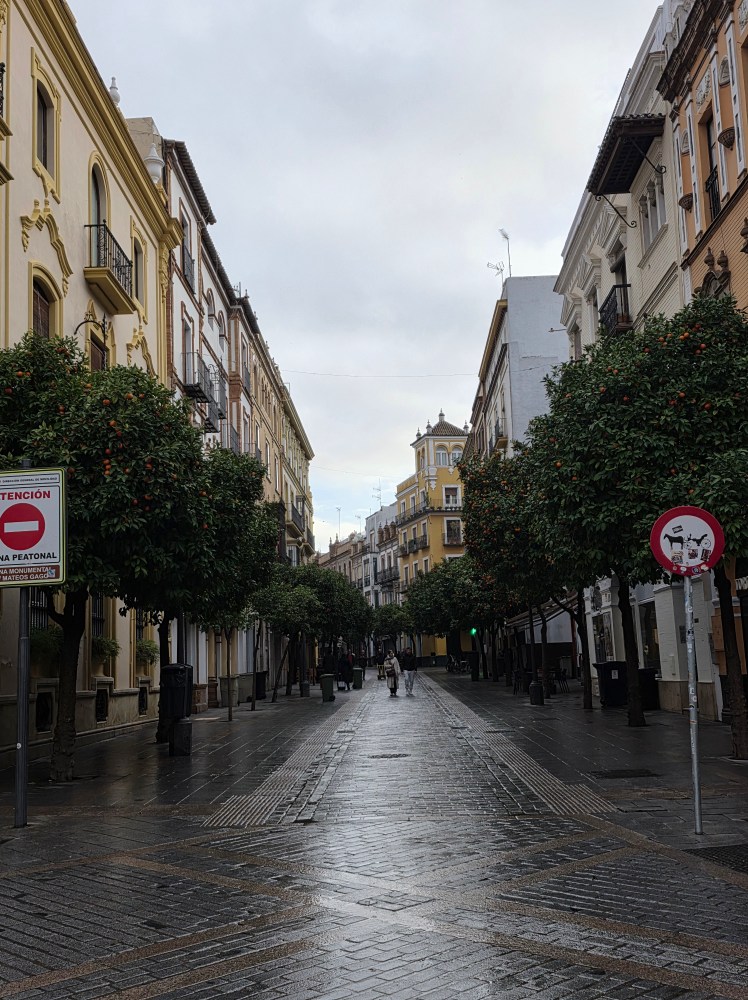
Seville 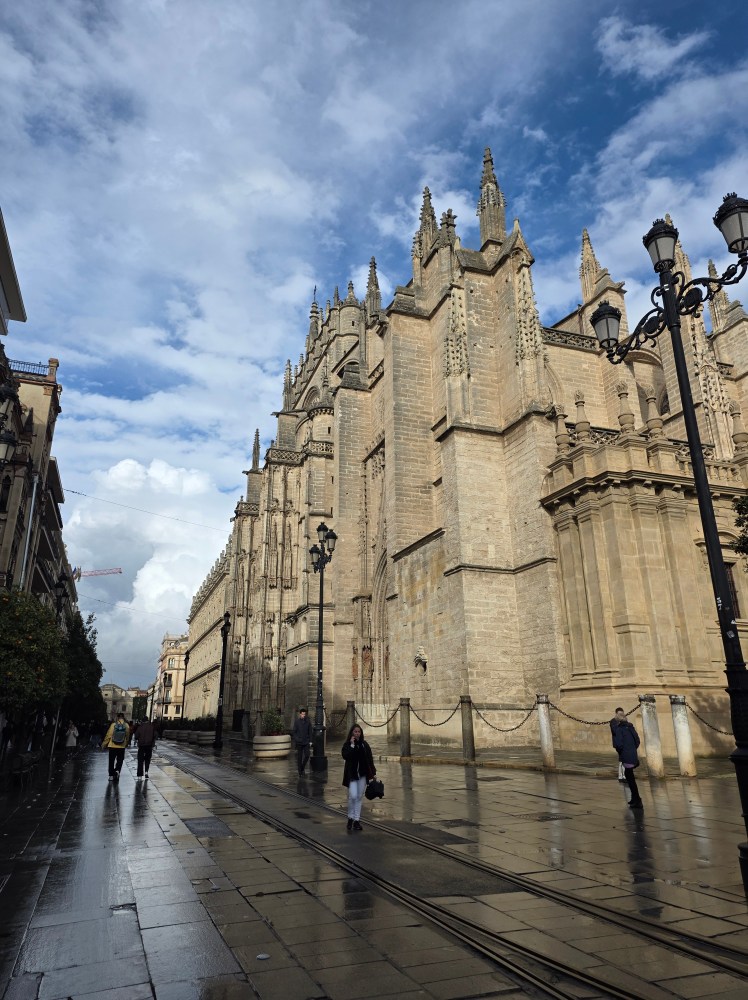
Seville 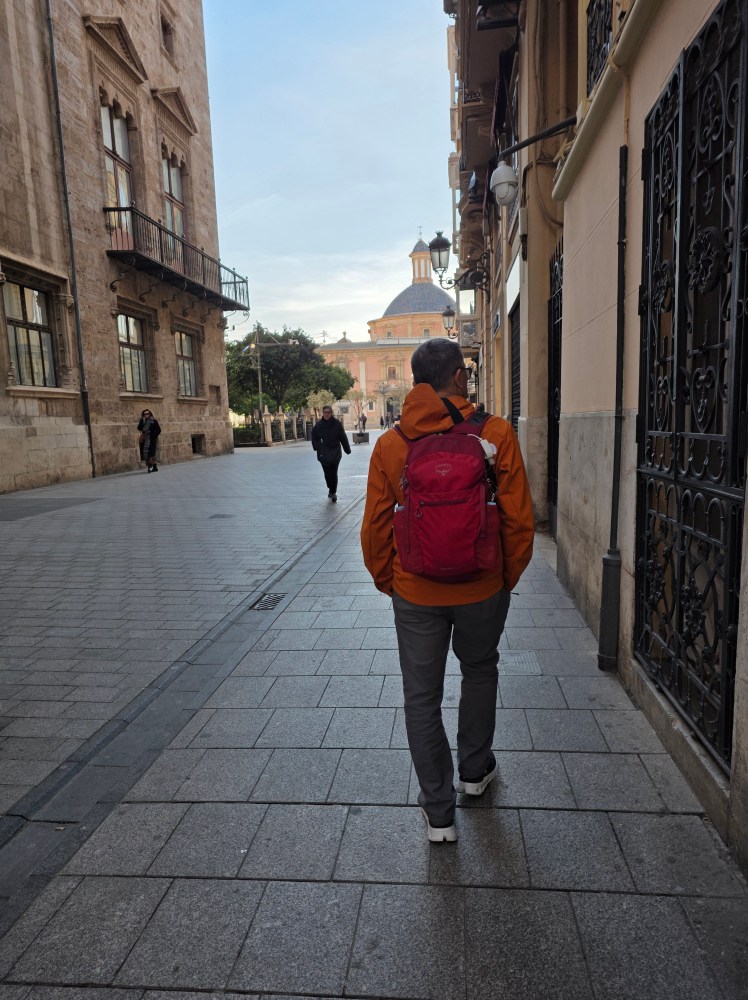
Valencia 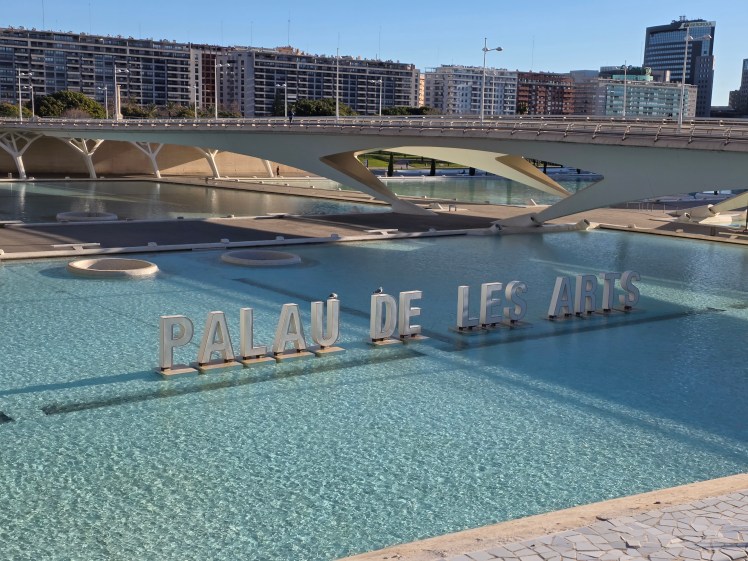
Valencia 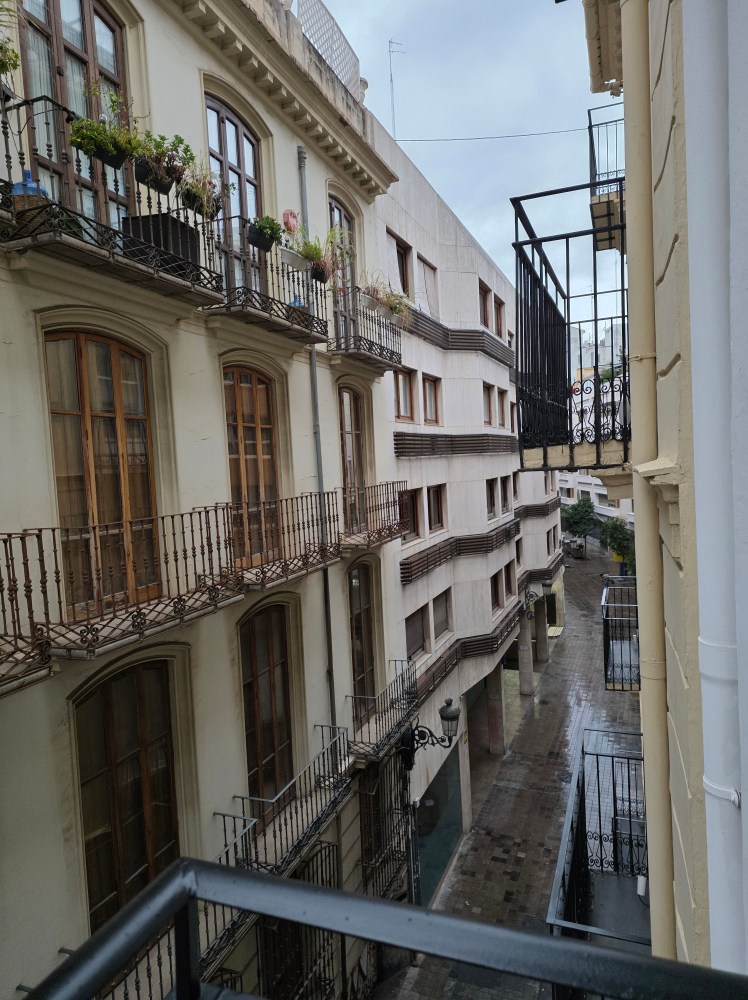
Valencia 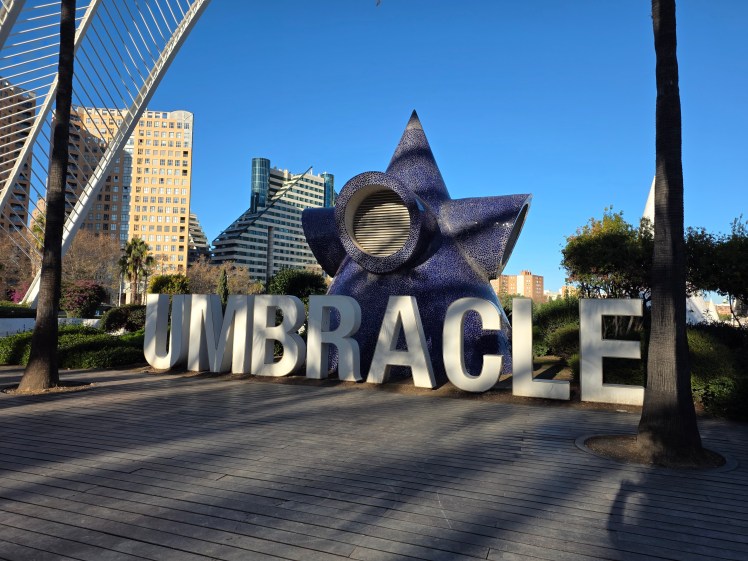
Valencia 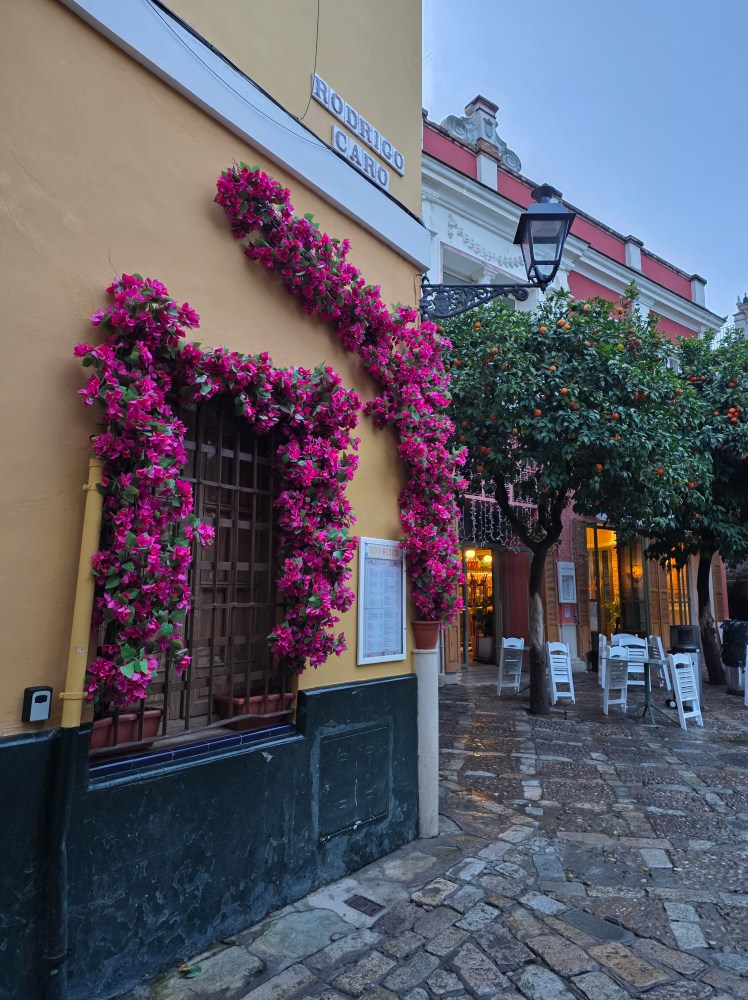
Seville 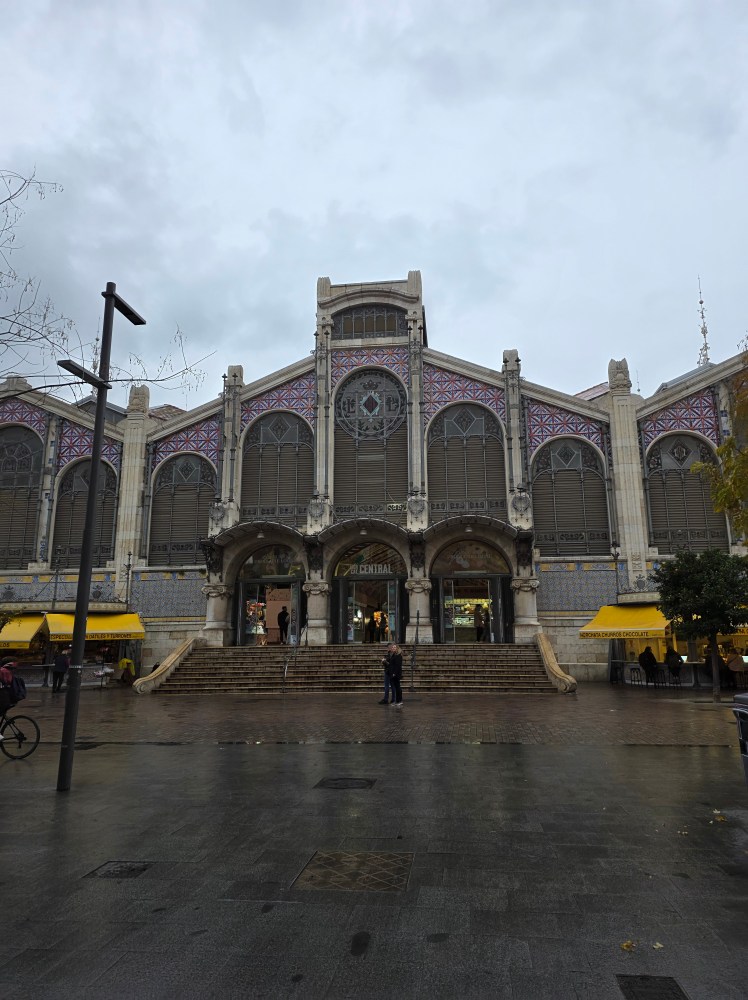
Valencia Central Market 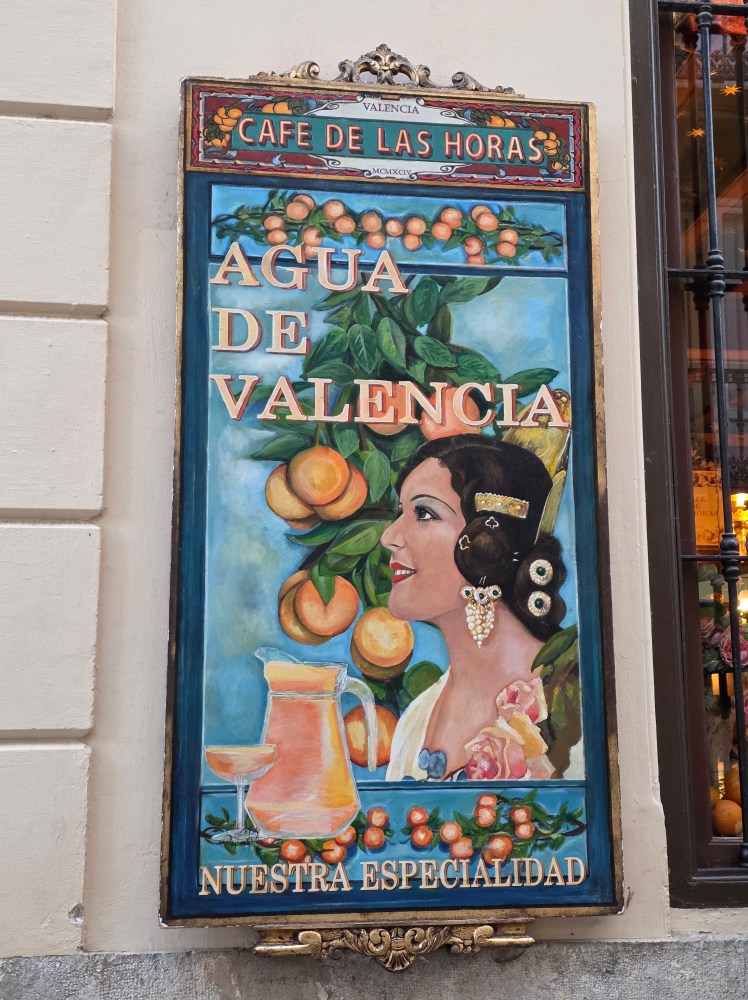
Valencia 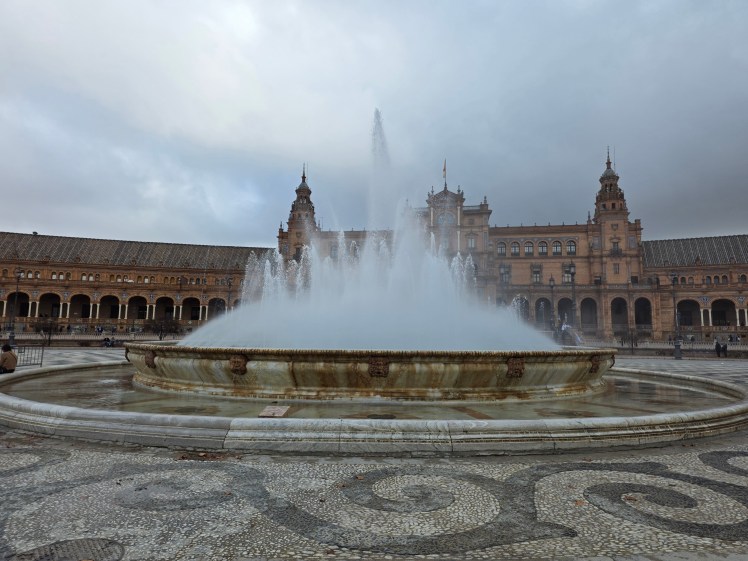
Seville Plaza de España 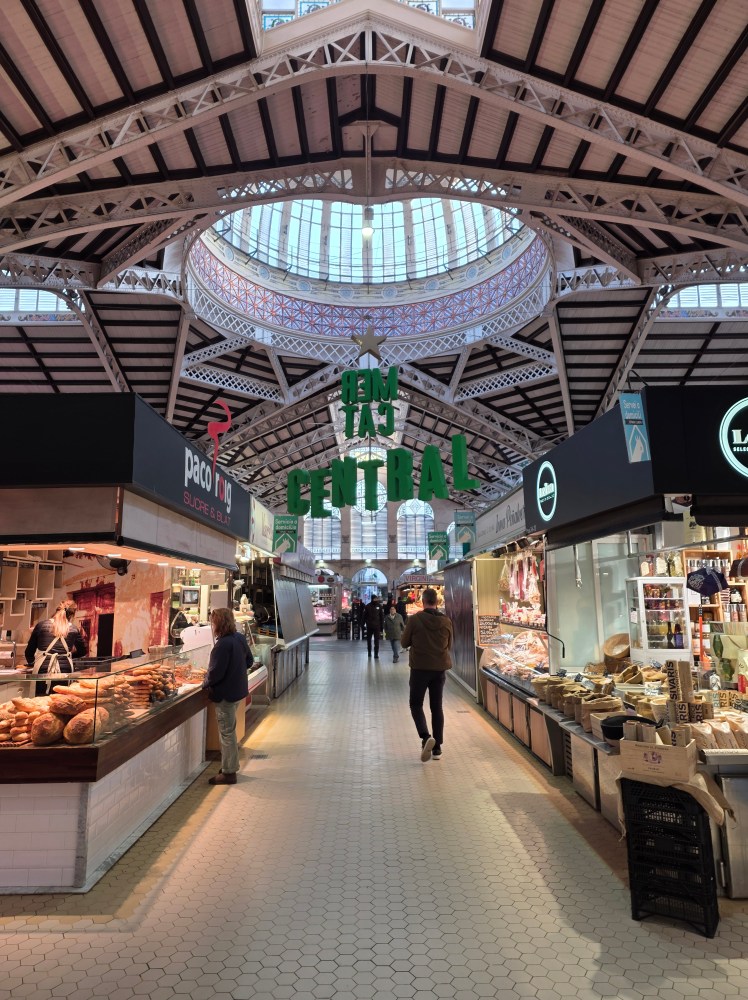
Valencia Central Market 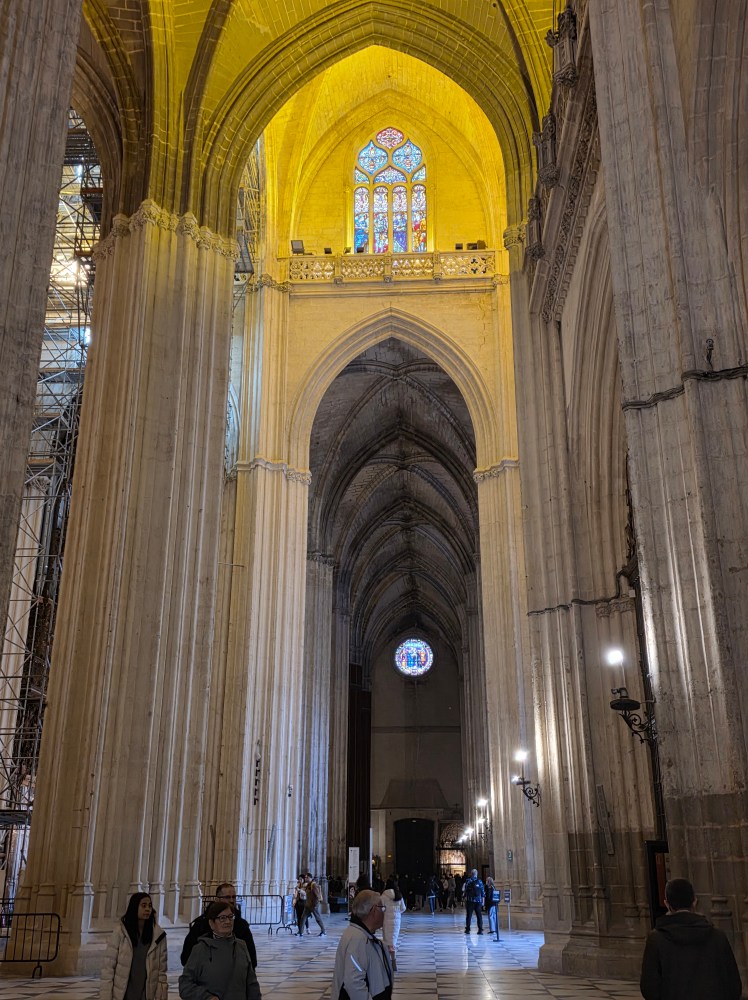
Seville Cathedral 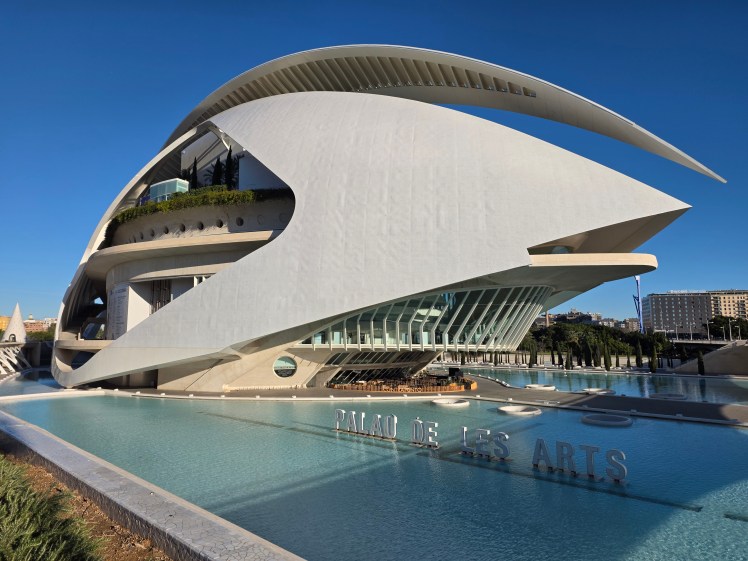
Valencia City of Arts and Sciences 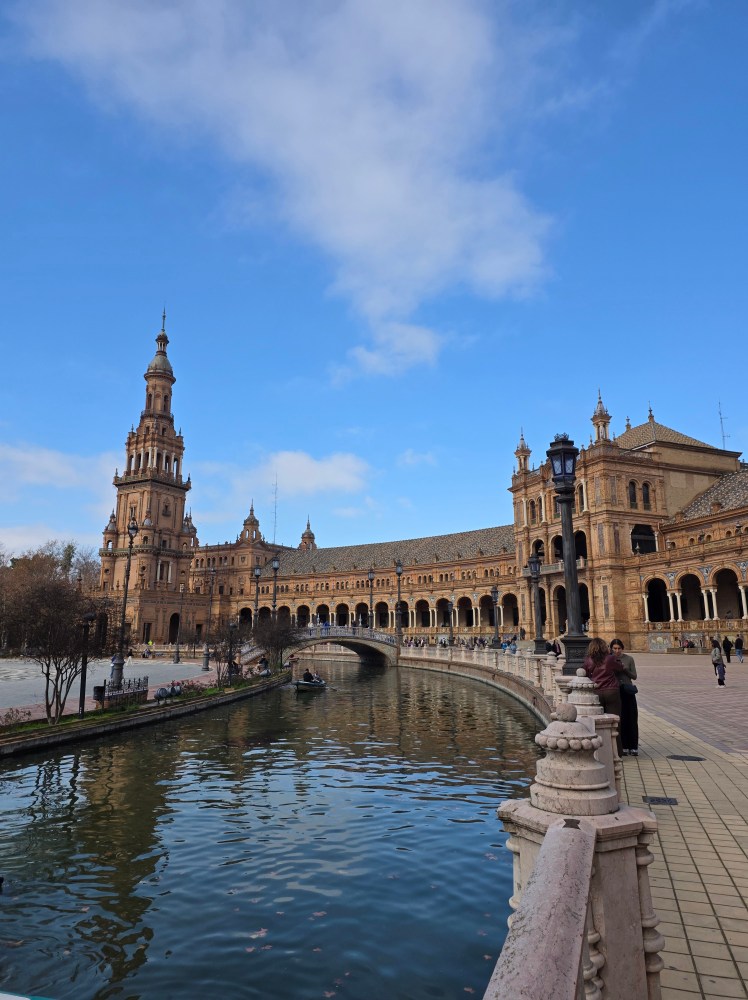
Seville Plaza de España
Starting in Valencia
We landed in the evening, so it was already dark (a downside to traveling in January). So we didn’t see much in our taxi ride from the airport to our hotel. But we dropped off our bags and immediately headed out for dinner.
In addition to the cheap airfare, I wanted to visit Spain for the food and wine. And these cities did not disappoint. The tapas were incredible. Over the course of our trip, we had various croquetas (ried breaded nuggets filled with béchamel and jamón, pollo, bacalao, queso, or gambas), paella, patatas bravas (fried potatoes with spicy sauce), tortilla española (potato omelet), gambas al ajillo (garlic shrimp), pimientos de padrón (small, mild fried green peppers), pan con tomate (toasted bread rubbed with garlic, tomato, and olive oil), fried manchego (sheep’s milk cheese), camembert frito con salsa de frambuesa (fried camembert with raspberry sauce), and queso de cabra con miel (fried goat cheese with honey).
On top of the food, all the beverages. I tried port for the first time, which was more delicious than I had thought it would be. We also had vermut rojo (red vermouth), vermut blanco (white vermouth), aqua de valencia (a famous Spanish cocktail from Valencia made with cava (sparkling wine), fresh orange juice, gin, and vodka, often sweetened with sugar), tinto de verano (a Spanish cocktail made of equal parts red wine and a fizzy lemon-lime soda), various local wines, and sangria. When I’ve had sangria in the states, I didn’t enjoy it because it was often heavily sweetened. But sangria in Spain? It’s not a disgustingly sweet heavy drink but rather alight and refreshing fresh fruit-infused red wine drink. And it was delicious.
I also enjoyed the best fresh orange juice I’ve ever had, as well as incredibly delicious hot chocolate. Valencia is world-renowned for its citrus, with the region serving as Europe’s largest producer of oranges, particularly the sweet, juicy Valencia variety known for having few seeds and high juice content. As you walk around Valencia, you see orange trees (over 8,000) everywhere, lining the city streets and parks; but sadly, these trees are only for decoration and the oranges mostly used for compost. I’ve been told those oranges, while beautiful, are actually bitter. But the oranges grown in the groves outside the city, are juicy and so sweet.
The hot chocolate is not what Americans think of hot chocolate, with our powder packets of Swiss Miss. No, Spanish hot chocolate is thick and rich, not watered down. Valencia has many chocolaterias, including Valor where I enjoyed several tazas (cups) of chocolate a la naranja (chocolate with orange).
On top of all the eating and drinking we did over the entire week, we also had a blast exploring Valencia. The city, at least the older part where we stayed, was absolutely delightful. Wide, open plazas filled with cafes, restaurants, and shops where you can stroll and enjoy the architecture, music, and scene or sit and sip a coffee, wine, or cocktail and people watch.
In addition to being known as the birthplace of paella, Valencia seamlessly blends historic charm with futuristic architecture and has this laid-back coastal vibe. Since it was mid-January, the days were cool and the evenings once the sun went down did get a bit crisp and chilly. So we didn’t go to the beach, but stayed mostly in the historic part of the town.
Valencia is also known for Ciudad de las Artes y las Ciencias (the City of Arts and Sciences), a complex with six main areas, including L’Oceanogràfic (Europe’s largest aquarium), Hemisfèric (IMAX cinema), and the Príncipe Felipe Science Museums, all housed in strikingly spectacular futuristic buildings. Designed by Santiago Calatrava, the complex stretches for almost two kilometres along the former Turia riverbed. We enjoyed walking around the Science Museum, which even had an exhibition on 500 Years of Genius: Leonardo da Vinci, which was fascinating.
The former Turia riverbed is now a massive green space, more than nine kilometres long, known as Jardín del Turia (Turia Garden). It might be my favorite thing about the city. We walked a good part of the park and saw a futbol field, playgrounds, dog parks, cafes, and loads of benches throughout. Each time we walked through the park, we saw bicyclers, runners, groups exercising, kids and dogs playing, people reading, and all ages enjoying the green space. It is such a well done space—if I lived there, I would be there all the time.
We spent three nights enjoying Valencia.
Then on Tuesday morning, we headed to the Joaquín Sorollan (the high-speed rail station) to continue our holiday.
Train to Sevilla
The bullet train to Sevilla took approximately 4 hrs (~650 km, or about 6 hours by car). We arrived in Sevilla in the early afternoon. After dropping off our luggage, we headed out to explore the town.
Several people questioned my decision to go from Valencia to Seville as both Madrid and Barcelona are much closer to Valencia (~350 km each, or half the time). Madrid is the capital with iconic landmarks and art museums (the Prado!), and Barcelona is known for its art, architecture, and food scene. Both of these cities are still on my travel bucket list. But Seville is known for flamenco, its Moorish-influenced Mudejar architecture, and 3 UNESCO World Heritage Sites. Did I mention flamenco? I have long wanted to see a flamenco show in Spain, and even more so in Seville.
Sevilla, unlike Valencia, has more narrow cobbled streets, ceramic tiles, and feels like being surrounded by Spanish culture, almost like a living open-air museum with its grand palaces, historic churches, and colorful plazas. Seville is all about passion and tradition. In comparison, Valencia, the (slightly) larger city, felt more open and modern with its wide plazas and mix of modern and old architecture.
One of the tapas bars we ate at in Seville was Cerveceria Giralda Bar, which is in the remains of a 12th-century hammam (Arab bath). The exposed architecture—the remains of cermaic tiles, the arches, the vents for the steam and water vapor to escape—made it feel like we were eating in a different place and time. Simply incredible (photo in the gallery above).
The main reason I wanted to visit Seville was to see a flamenco show. While flamenco is synonymous with Spanish culture, flamenco was born in Seville. So what better to place to see a show and there are so many to chose from. We opted to go to Baraka, a 60-minute flamenco show in the heart of Triana, on the banks of the Guadalquivir River. The show took place in Lola de los Reyes, a comfortable space that had seats for may 65 people. So every seat had a great view of the guitarist, singer, and two dancers. And the show did not disappoint. The music, the dance, the passion, the emotion—it was indescribable. The show asked us not to film or take photos during the main part. I probably wouldn’t have remembered to anyway as I got caught up in the story. After the main part, the artists came back out to do an encore, which they allowed us to film. I still didn’t get very much because I was too absorbed in the music.
The other main features of Seville are the Cathedral (the larges Gothic cathedral in the world), the Royal Alcázar of Seville (the oldest royal palace still in use in Europe), and Plaza de España (Spanish Square of Seville). We didn’t get to the palace, but did explore the Cathedral and Plaza de España. Both have incredible architecture and are definitely worth seeing.
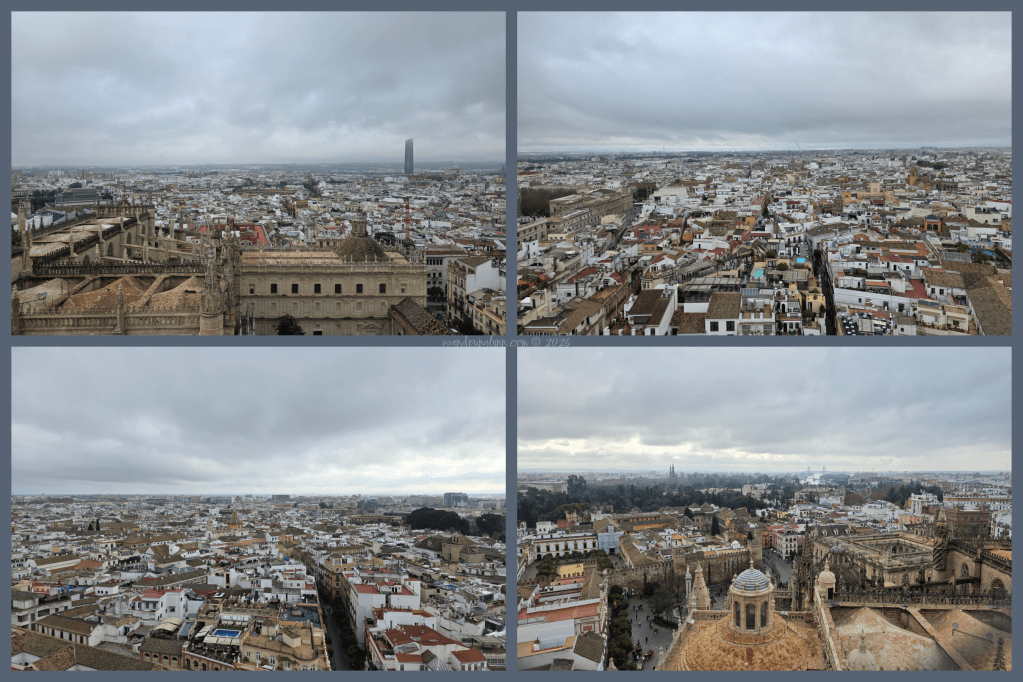
The Cathedral has a bell tower, la Giralda, which has the classic structure of Almohad dynasty minarets with a Renaissance-style belfry added by the Catholics after the expulsion of the Muslims from the area. Composed of a central prism with a square base, it has ascending ramps instead of stairs and from the top, a 360° view of the city. Simply incredible.
The Plaza is located in the Parque de María Luisa (Maria Luisa Park). Built in 1928 for the Ibero-American Exposition of 1929, it is a landmark example of regionalism architecture, mixing elements of the Baroque Revival, Renaissance Revival and Moorish Revival styles of Spanish architecture. A huge fountain is center of the plaza with a pavilion building surrounding one side and a the park on the other.
After 3 nights in Seville, we returned to Valencia via the slower train, which took about 7 hours as it stopped at various stops along the way. I didn’t mind because I love train travel. Seeing the landscapes, having space to sit, being able to stand and go to the cafe car. We spent a final night in Valencia before flying back to Naples.
Final Thoughts
I absolutely fell in love with Spain and in particular Valencia. The food, the culture, the architecture, the people. The people were super friendly and all seemed to appreciate my attempts at conversing in Spanish. It has been a couple years decades since I’ve taken Spanish, but it came back to me better than I had hoped. I think my attempts to learn Italian have brushed off the cobwebs on my former language studies.
Overall, hands down, this was one of the best birthday trips I’ve ever taken.
As much as I enjoyed Seville, I did enjoy Valencia more. Seville had more of a touristy feel to it. While I’m glad I visited Seville, and in particular, got to see a flamenco show in the Tirana distric, I doubt I’ll return. But now Valenica . . . I could see myself living there. The architecture, the food, the Turia River Park—all so amazing. I will definitely go back to Valencia sometime in the late spring or summer when I can go enjoy the beach too. And if I somehow can ever figure out how to move there, I will absolutely do so. That’s how much I loved it.
All links are merely for reference and/or for your convenience.
All content, including photos, copyright 2026 by L. Long/wanderinglynn.com. All Rights Reserved. No part of this website or its contents may be reproduced, copied, modified, or adapted without prior written consent of the owner.
 wanderinglynn.com