This past weekend, for better or worse*, my travel friend C and I headed to Tuscany—specifically to Tuscany’s capital city Florence (Firenze) and Siena.
*More on why I say “for better or worse” below.
Historical Highlights
(Not interested in history? Want me to get to the point? Skip to the next section or even skip to the end & my final thoughts.)
Both cities, as well as the Tuscan region in general, have a rich and varied history, most of which I won’t go through here. But here are some highlights:
The Tuscan region was originally founded by the Etruscans, a civilization thought to originate from Asia Minor, between the 6th and 7th centuries BC. Etruscan civilisation was later suppressed by Rome (why hello Julius Caesar), and then the Romans founded Florentia (Florence) and Sena Julia (Siena) on the ashes of Etruscan villages.
Florence, the Roman version, was founded in 59 BC by Julius Caesar, who named it Florentia, which translates to “the flourishing one”. Florentia was intended as a settlement for Caesar’s veteran soldiers with the centre of the city where the modern Piazza della Repubblica now stands. A column in the Piazza marks the interesection of the two main Roman streets.
While Florence has had a long history, including as a flourishing city throughout the Medieval period, the city is best known as the birthplace of the Renaissance, which began in Italy in the late 14th century. Florence was also home to the infamous Medici family, Leonardo da Vinci, and the great Michelangelo di Lodovico Buonarroti Simoni.
(A book recommendation: Irving Stone’s The Agony and the Ecstasy, a fictional biography of Michelangelo. Read my review on StoryGraph.)
In addition to all the Renaissance art and architecture, Florence is also known for its cuisine (which really isn’t saying much because all of Italy shares in this), leather goods, and its key landmark, the Ponte Vecchio.
Siena, or the Roman Saena Iulia, was founded during the time of Emperor Augustus, the founder of the Roman Empire (which came after Caesar). But according to local legend, Siena was founded by the two sons of Remus (aka the nephews of Romulus). Supposedly after their father’s murder by Romulus, they fled Rome, taking with them the statue of the she-wolf suckling the infants (Capitoline Wolf), thus appropriating that symbol for the town.
While Siena did well during the Middle Ages, it lost steam after the Black Death, which happened in the early-to mid-14th century, and it eventually was ceded to the town of Florence and then subsumed into the rest of Italy.
Siena is known for its well-preserved medieval architecture, the Piazza del Campo, and the Palio horse race.
Both cities’ historic centers are UNESCO World Heritage sites.
Off to Tuscany
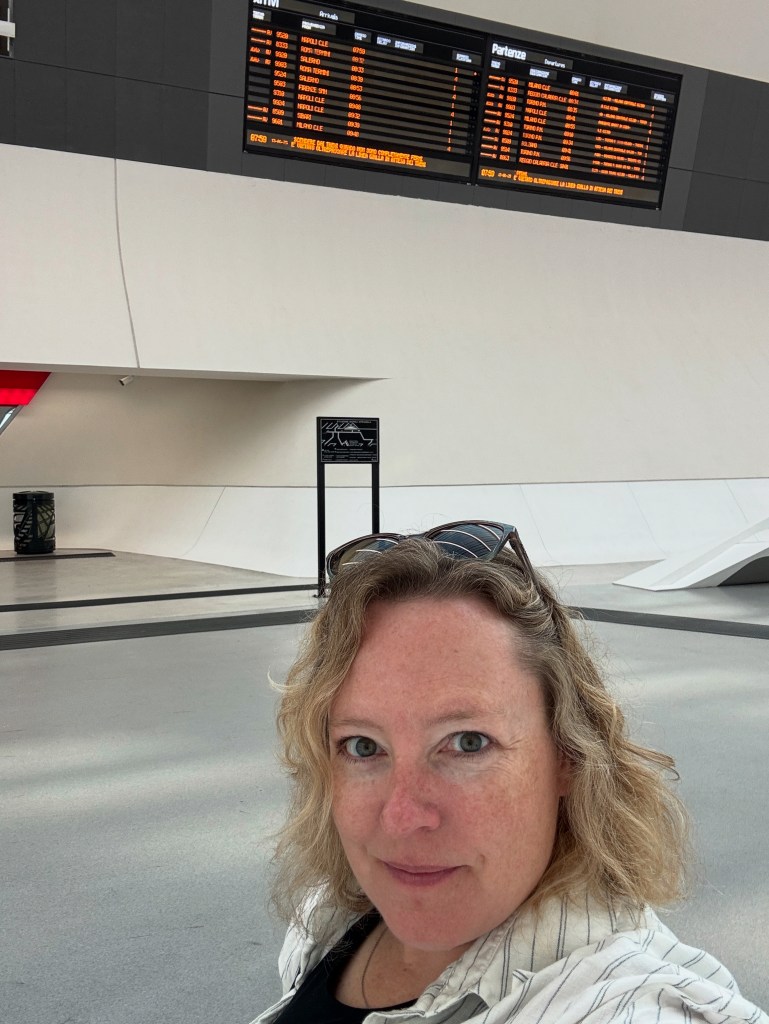
Days 1 & 2 – Florence
Florence is less than 3 hours from Napoli by high speed rail. We took the 8:30 am train and arrived in Florence around 11:30 am. Our first stop was the Hotel Atlantic Palace to drop off our bags since it was a bit too early to check-in.
Our hotel was centrally located, only about 400m from the train station and right around the corner from the Piazza del Mercato Centrale. Despite facing a rather busy road, I barely heard any noise from the street. Of course, it is a hotel, so the rooms weren’t soundproof and I did hear some inside noise from other rooms or from the hall. But more importantly, the room was air-conditioned, which is not always the case in Europe. Overall, the room wasn’t bad and I slept well. It even had a decent sized bathroom, which again, isn’t always the case.
After dropping off our bags (since it was a bit too early to check-in), we headed to the Mercato Centrale (Central Market) for lunch.
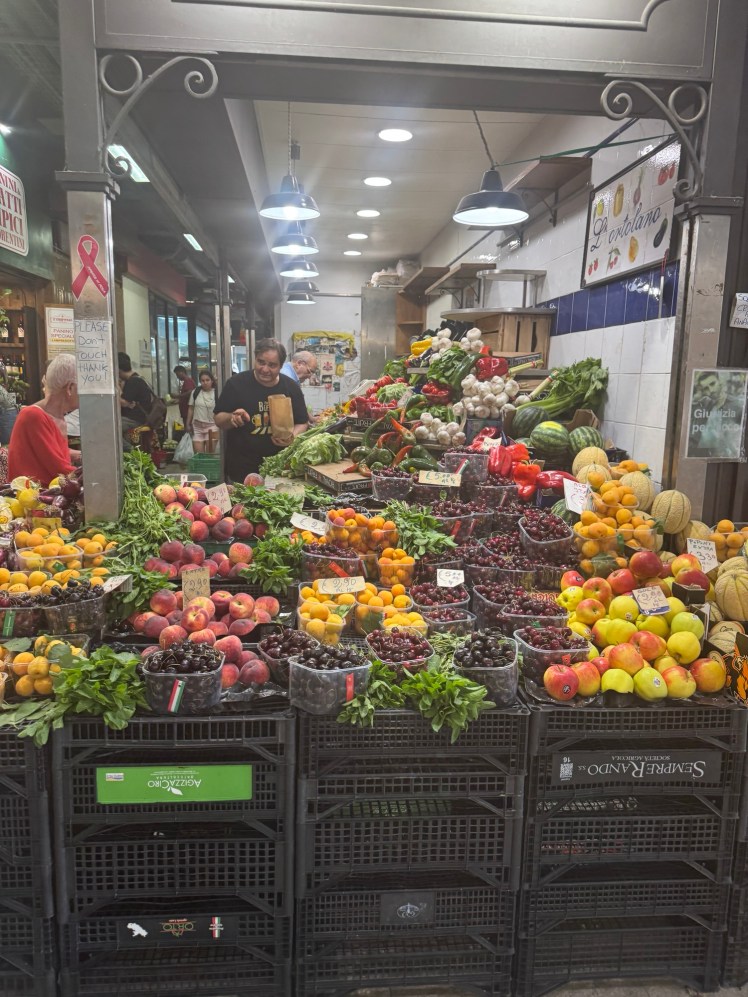
The Mercato Centrale Firenze is two stories of deliciousness. The first floor is mostly vendor stalls with fruits, meats, seafoods & fish, pastas, veggies, wines, and so much more. Locals mix with tourists to buy their weekly produce and products. Staying in Florence somewhere with a kitchen? Then definitely stop by the Mercato Centrale.
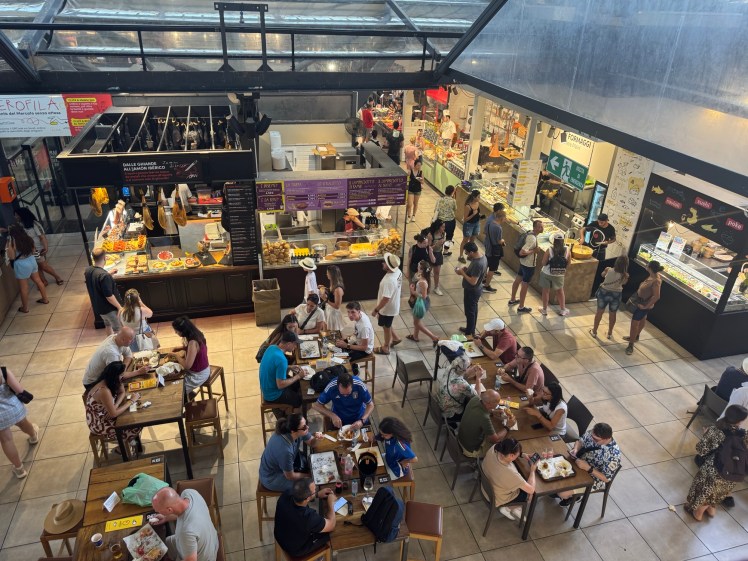
The second floor is mostly restaurants open 365 days a year from 0900 to 1100 (Sun-Thurs) and to midnight (Fri-Sat). We ate so many delicious foods here (including an amazing seafood variety plate that I sadly forgot to take a photo of because I was too busy enjoying). We also ate breakfast here both days because the variety was incredible. I enjoyed fresh fruit, a fried rice ball, breakfast pizza, and, of course, caffè (espresso).
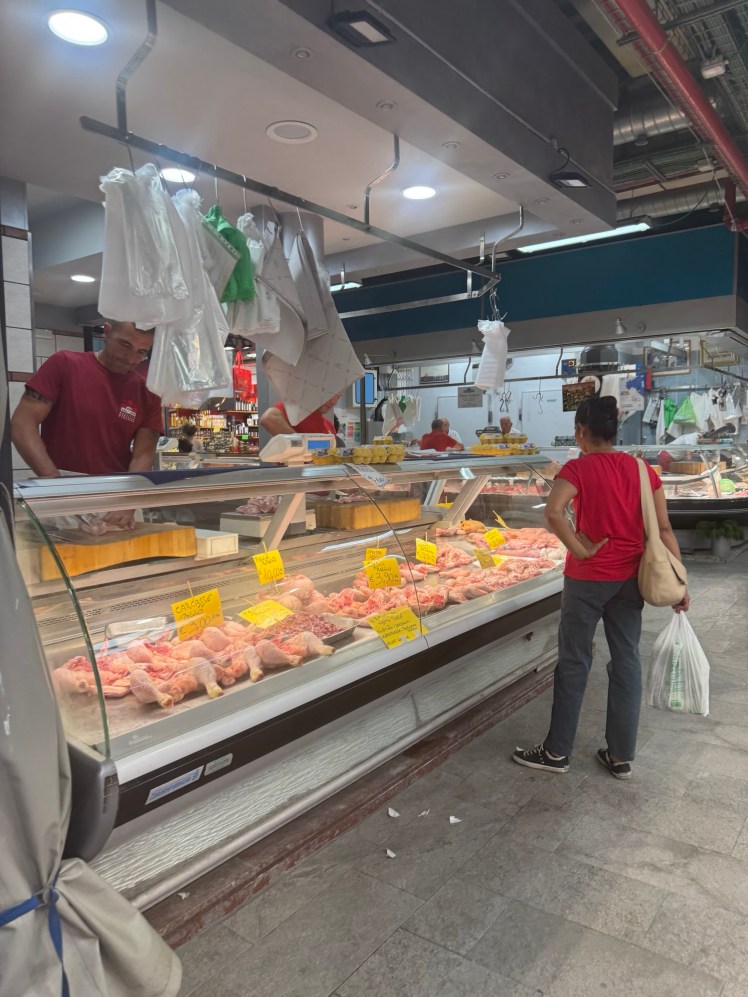
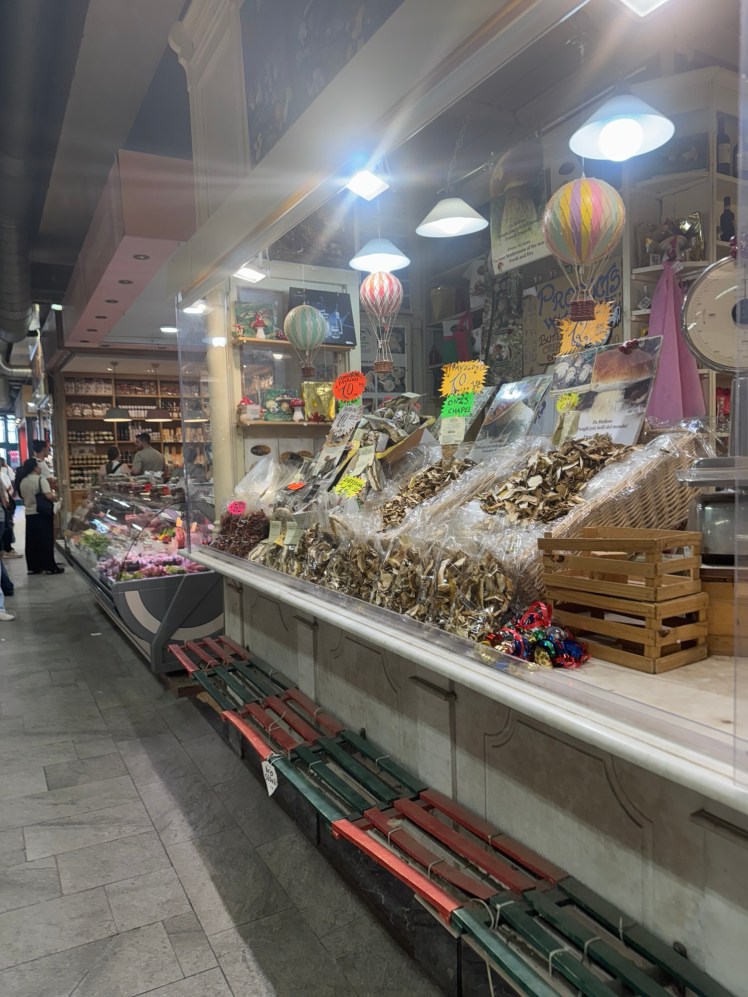
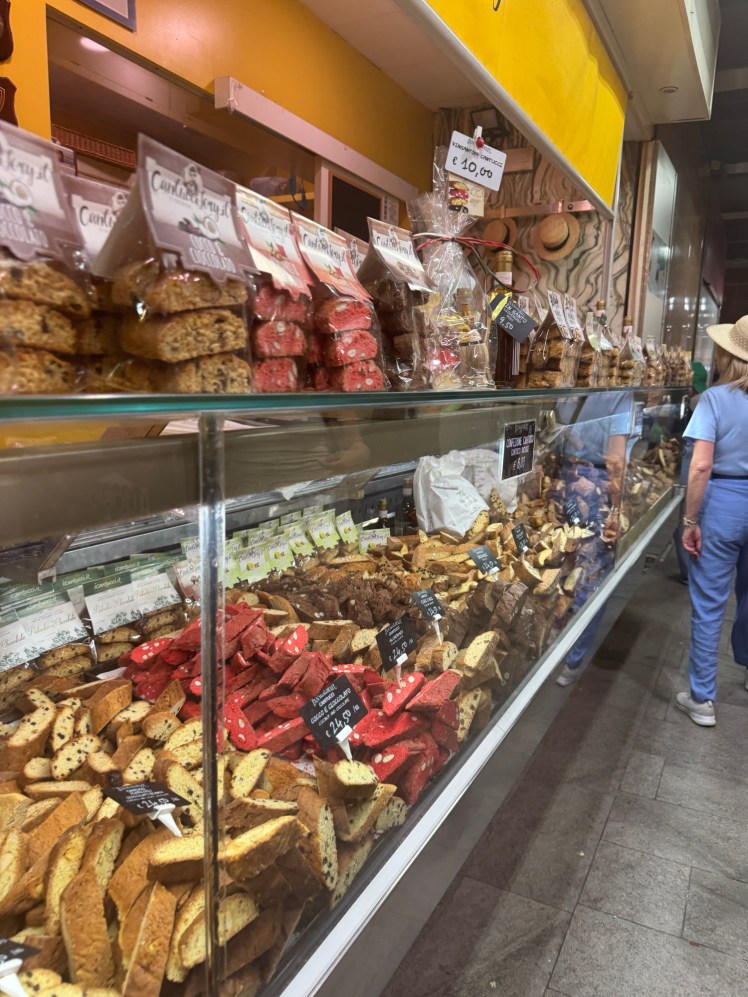



After lunch, we headed back to the hotel to check-in.
The bad part of traveling to Florence in mid-June was the heat. A heatwave hit most of Italy and the temperatures reached the mid-90s (between 34°-36°C) the days we were there. So early on, we decided we’d take a siesta (which involved a cool shower followed by a nap) during the hottest part of the day (~1:00 pm – 4:00 pm).
Cool and refreshed, we headed back our around 5-5:30 pm and walked to the Arno River, the principal stream of the Tuscany region. The Arno divides Florence between the north side where the majority of the famous sites are, and the Oltrarno, the “other side”, where the Palazzo Pitti and Boboli Gardens are. We walked along the river on the north side before deciding to head to the Oltrarno.
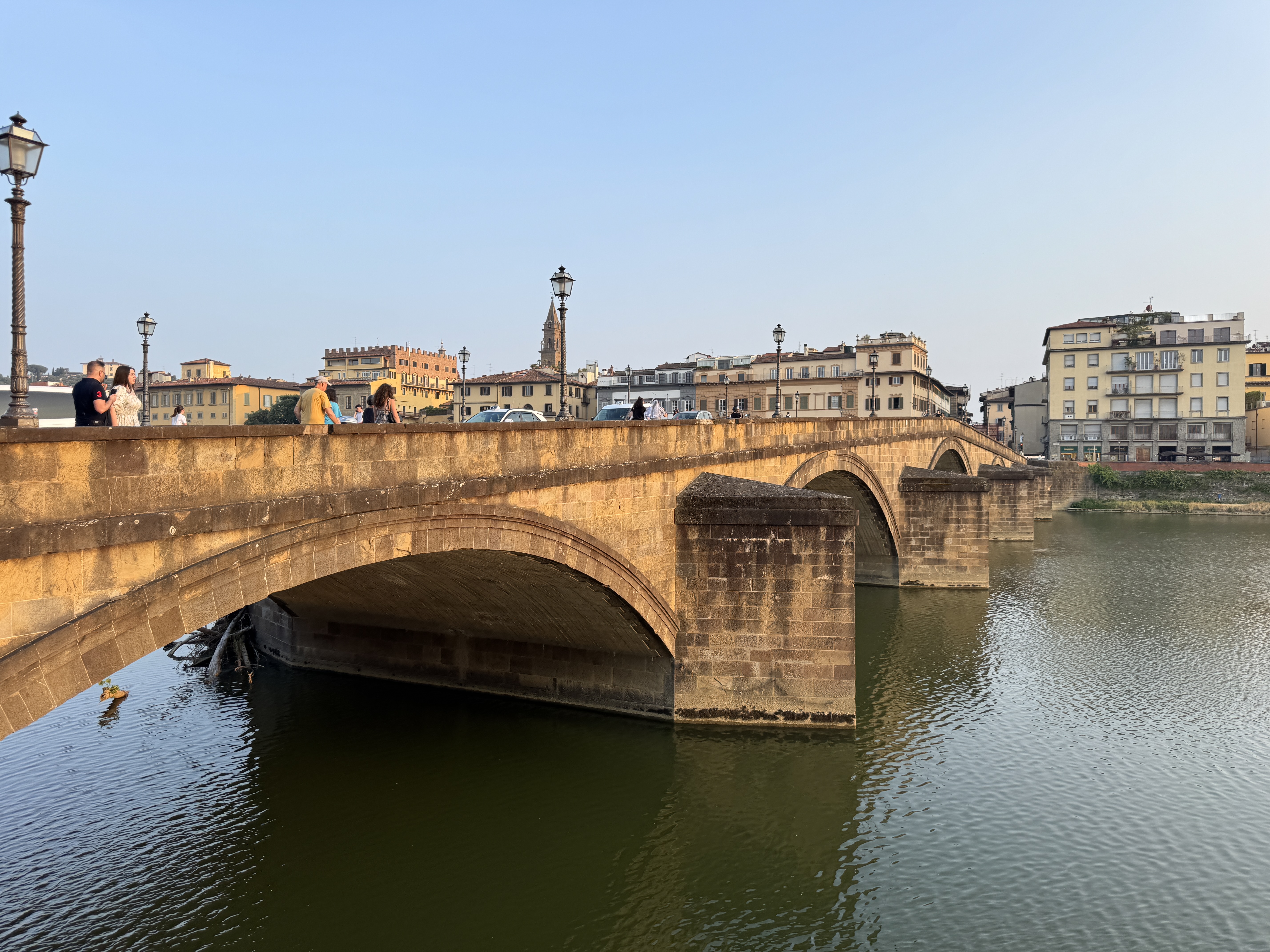
We crossed the Ponte Santa Trìnita, the third oldest bridge on the Arno, to Oltrarno.
First built of wood around 1252, it was rebuilt several times after being destroyed from floods and wars. The bridge, as it appears today (because like nearly all the bridges in Florence, it was destroyed by the Nazis in 1944) is based on the version built by Bartolomeo Ammannati from 1567 to around 1570, under the patronage of the Grand Duke Cosimo I de’ Medici. The Ponte Santa Trìnita represents a stunning example of Renaissance architecture with its mix of elegance and strength and is my favorite of the 6 Florence bridges.



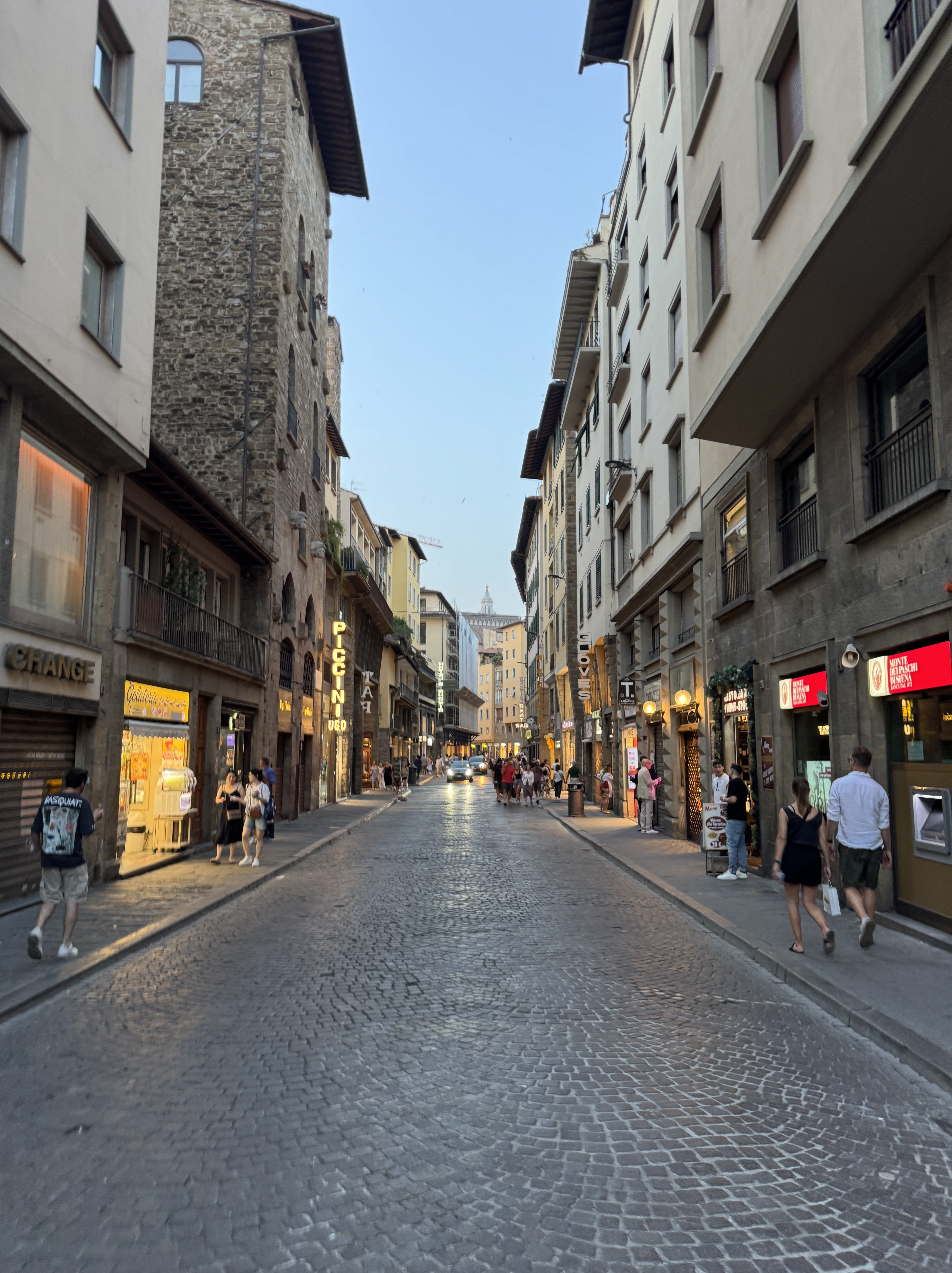

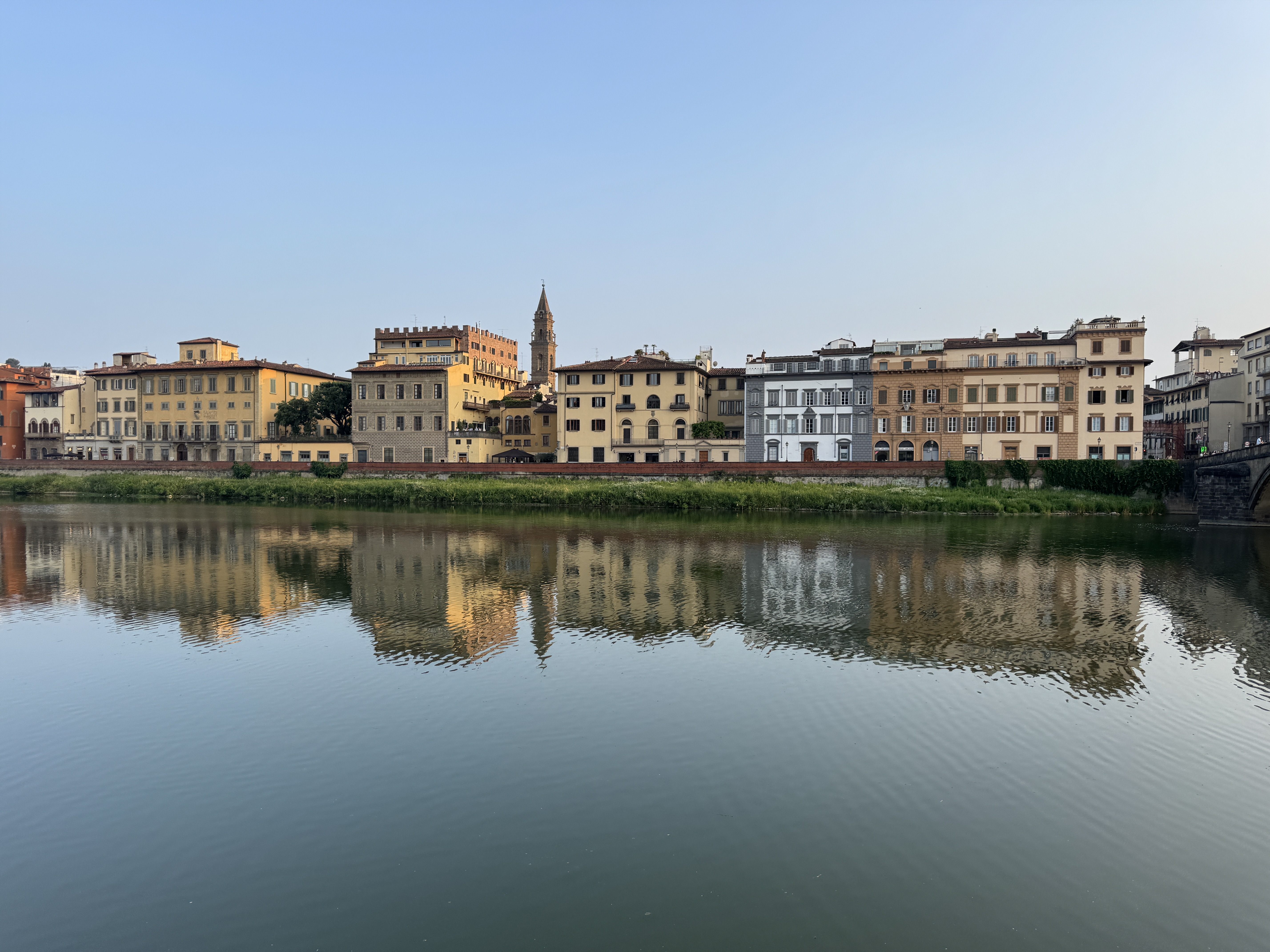
The Oltrarno is the quieter, less chaotic side. We wandered through the streets and saw few tourists. Of course, by this time the stores had closed, so that does make a difference. But the Oltrarno also has a more residential feel. We also found a great gelato bar that had granitos, a lemon ice, which was delicious on a hot evening.
As we strolled back to the river, we opted this time to cross the oldest and most famous Florence bridge—the Ponte Vecchio (literally “the old bridge”). The Ponte Vecchio is famous for being the only remaining bridge to have houses and shops on it and is also the only bridge solely for pedestrians,
This bridge was built at the narrowest part of the Arno and likely dates back to Roman times, although the first mention was in 996. There are records of bridges in this location collapsing in 1117 and 1333, and the current structure was erected in 1345. During WWII, the Uffizi gallery treasures were stored in the the Vasari Corridor, a secret passageway built for Grand Duke Cosimo I de’ Medici in 1565 to link the Palazzo Vecchio to the Pitti Palace. The Ponte Vecchio was also the only bridge in Florence to be spared from bombing during the German retreat of August 1944, and instead they razed all the buildings on either side of the bridge, which is why there are more contemporary structures on either end of the bridge.
The next day after breakfast at the Central Market, we headed to the School of Leather. The Scuola del Cuoio opened in 1950 by Marcello Gori and his brother-in-law Silvano Casini, to teach war orphans the art of leather and hide processing. The school is located in what was the Novitiate of the Franciscan Friars, inside the Convent of Santa Croce.
He who is rich in knowledge and does not pass it on will be poor forever.– Marcello Gori
Today, the school still resides in the old dormitory of the Monastery of Santa Croce and the Gori family continues to run it.

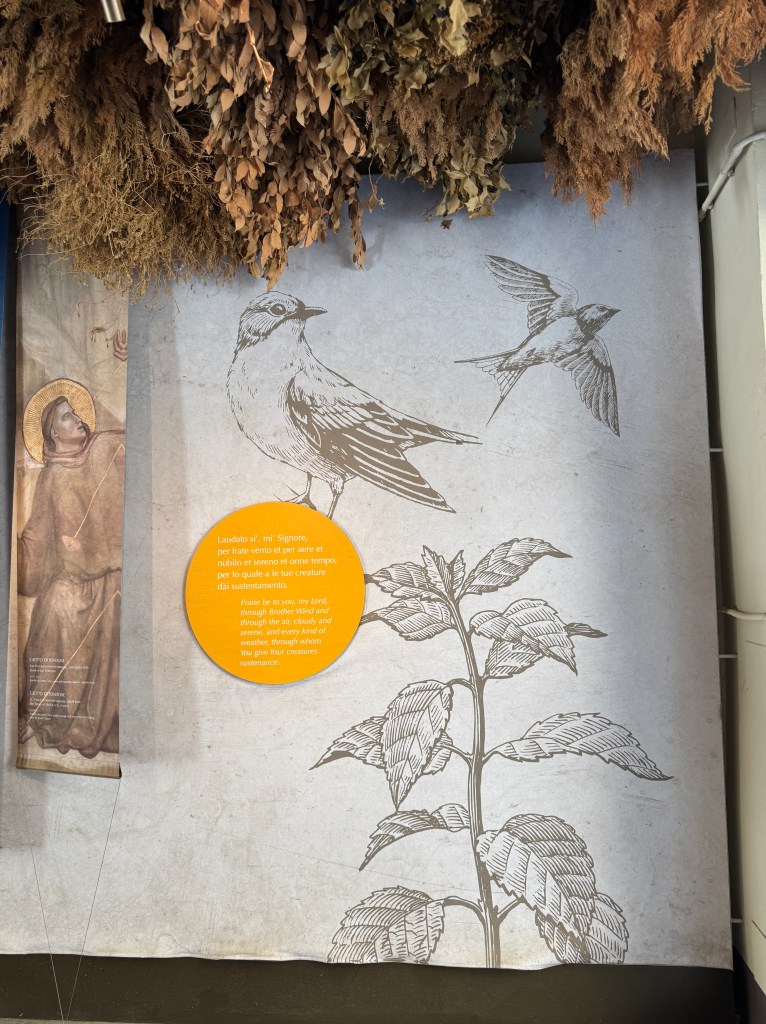

We walked through the garden surrounding the Apsis of the Monastery as the school is on the backside of the chapel. During the week, the school offers guided technical visits. Since we were there on a weekend, we simply enjoyed the shop, where you can find all sorts of leather goods from bags and wallets to jackets and boxes. I did purchase a new credit card holder and a change purse, and I can attest the quality is perfetto!
We strolled back to the Piazza della Signoria, where the Galleria degli Uffizi is located. The Uffizi, which means “offices”, was begun by Cosimo I de’ Medici as a means to consolidate his administrative control of the various committees, agencies, and guilds in Florence’s. Over the years, more and more sections were recruited to exhibit paintings and sculptures collected or commissioned by the Medici family until the last Medici heiress bequeathed the last of the collection in the 18th century. The Uffizi is one of the most important Italian museums, one of the largest museums in the world, and one of the most visited.

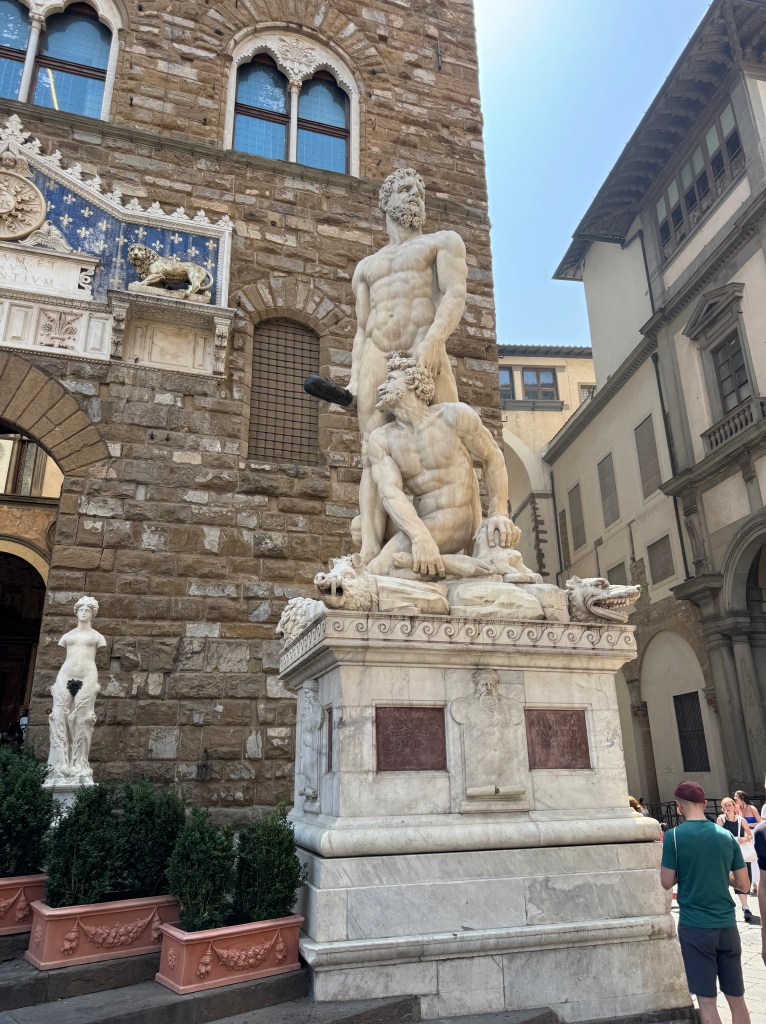


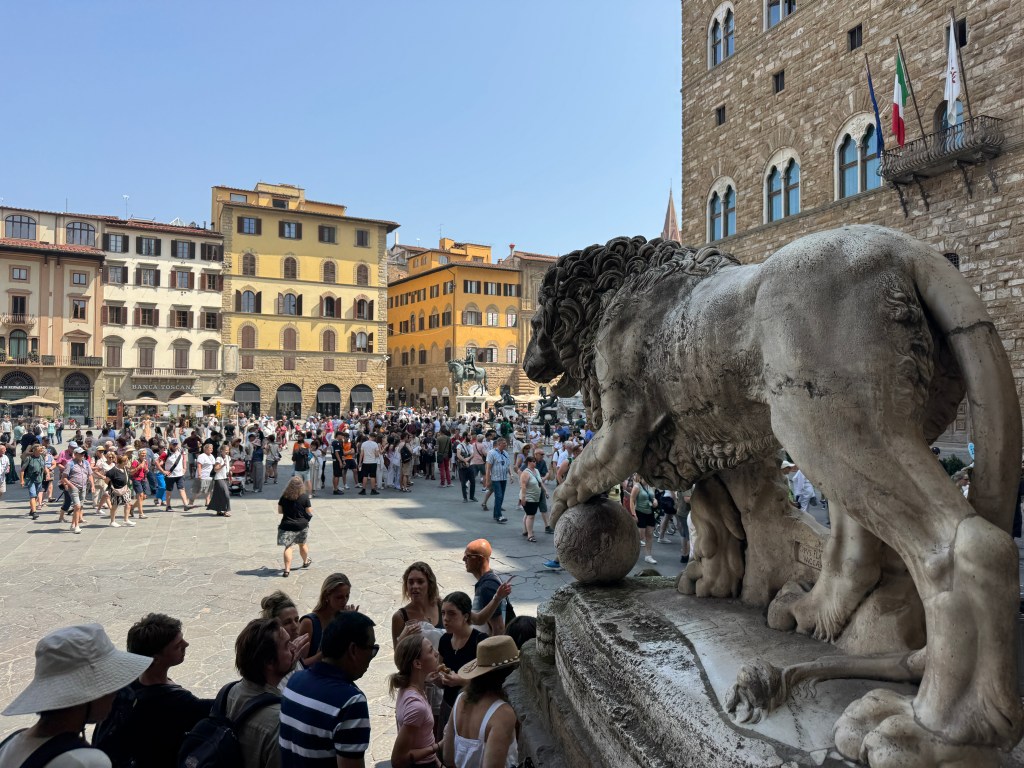
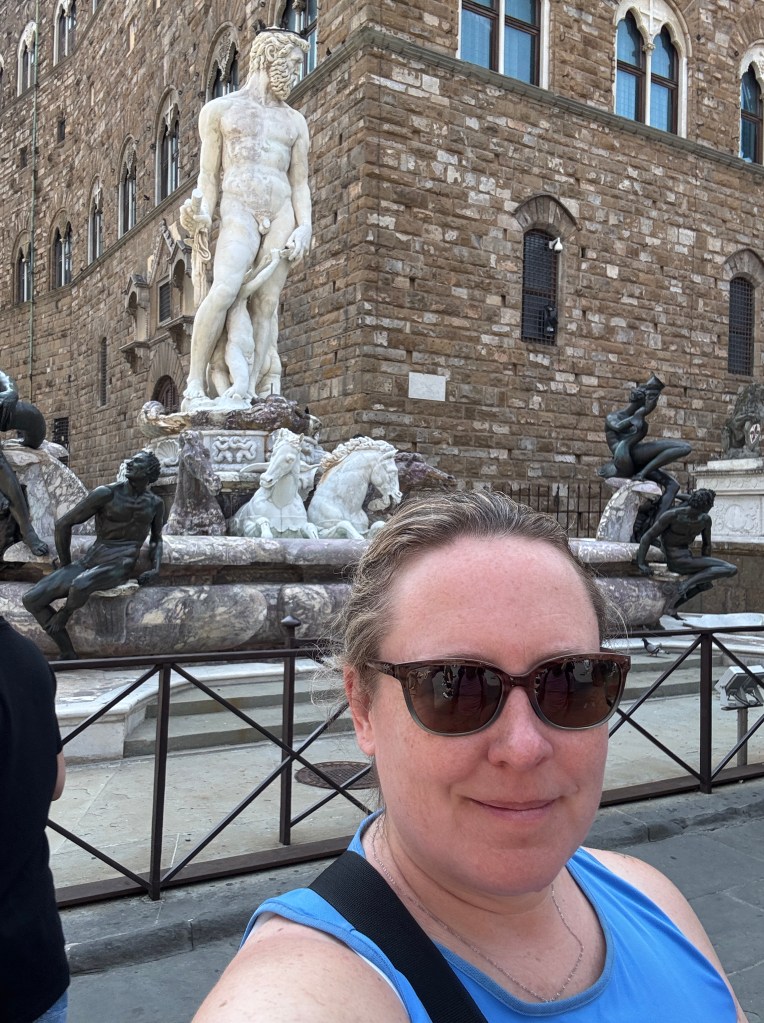
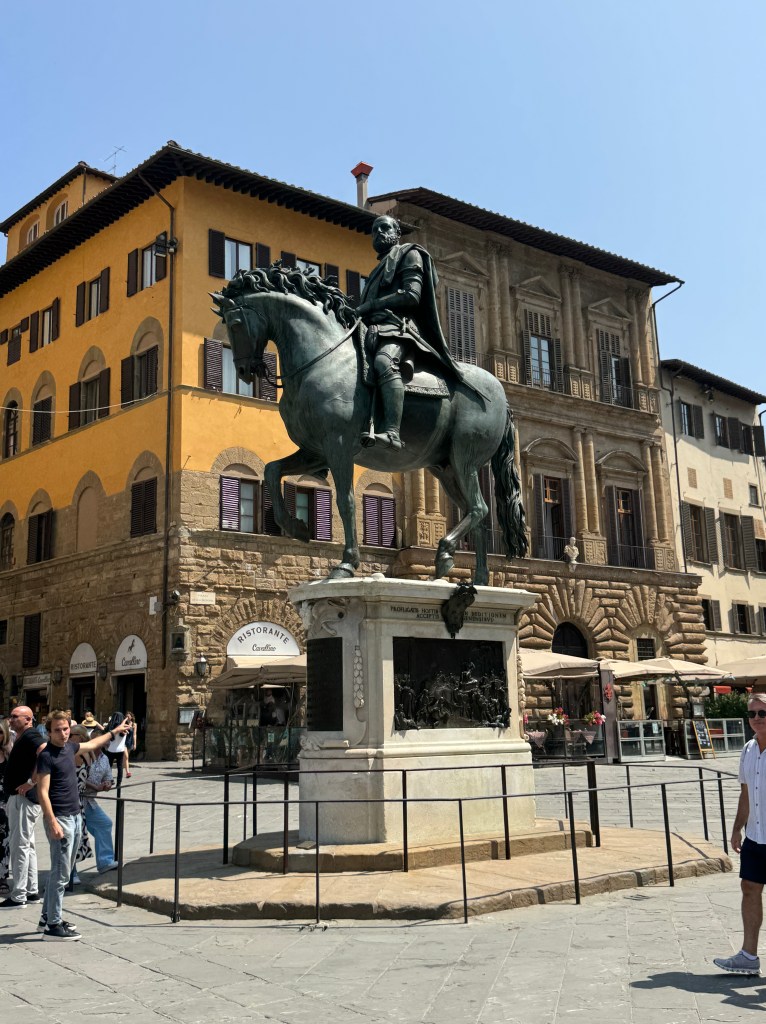


Travel tip: if visiting Florence in the summer, buy advance tickets to the Uffizi or pay for a guided tour as wait times can be as long as 5 hours without a ticket. The first, fourth, and fifth photos above give you some idea about the crowds outside the Uffizi.
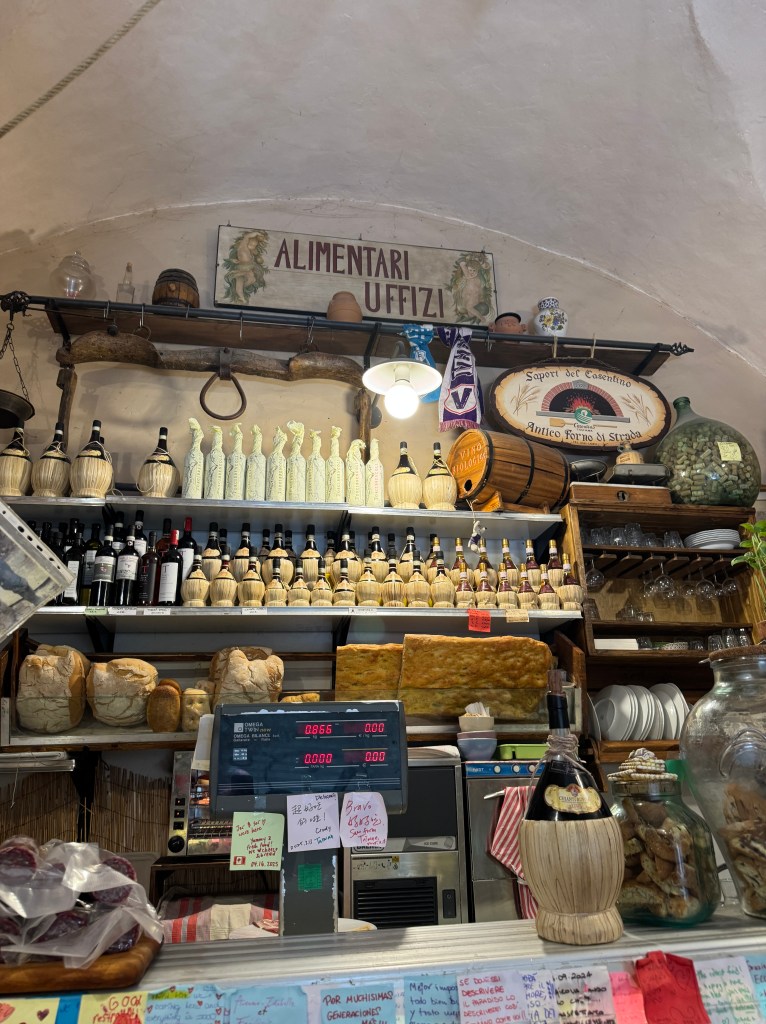
Right off the Pizza della Signoria is a small, 4-tabled deli called Alimentari Uffizi. Run for over 50 years by the same family, this deli has a set menu of meats and cheeses, which come from their farm located about 20 minutes outside the city. We had the 2-person plate, along with some white wine. It was the perfect meal for a hot day. While I forgot to take a photo of the plate, I did get a couple of the deli itself (see gallery above). It’s small but totally worth going. Just remember to take Euros because they don’t accept cards.
After another siesta, we headed back out and tried to eat at one of the oldest restaurants in Florence, but sadly, we did not have a reservation. So we went to Il Grande Nuti, which is only a few steps from Piazza Duomo.
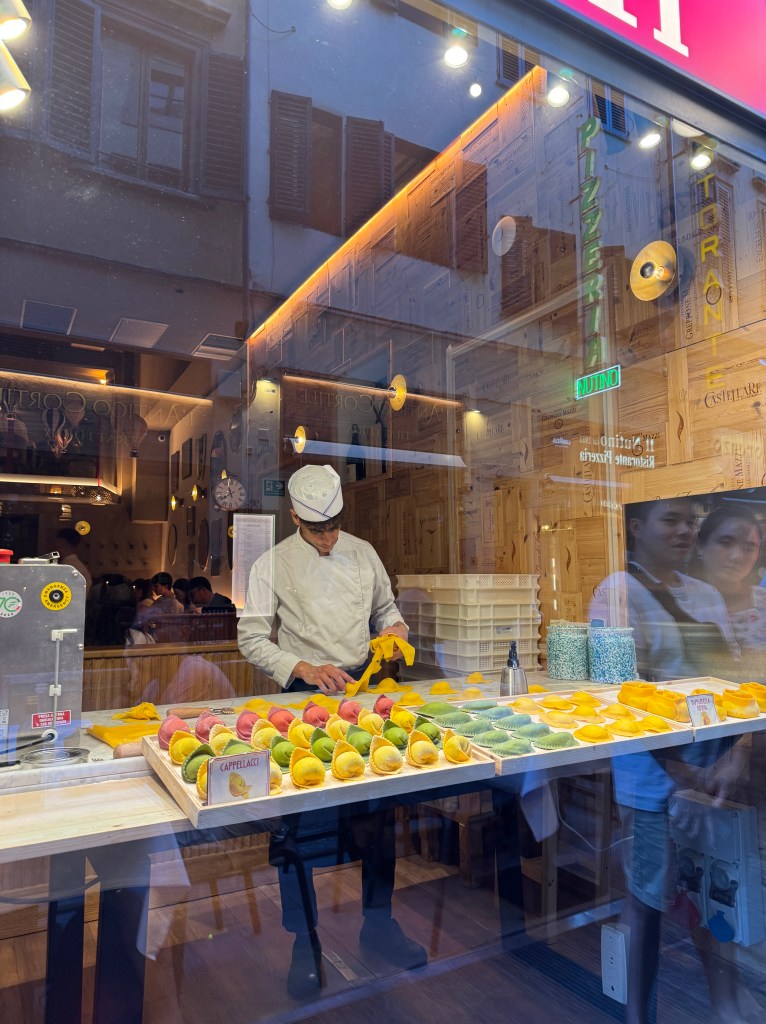
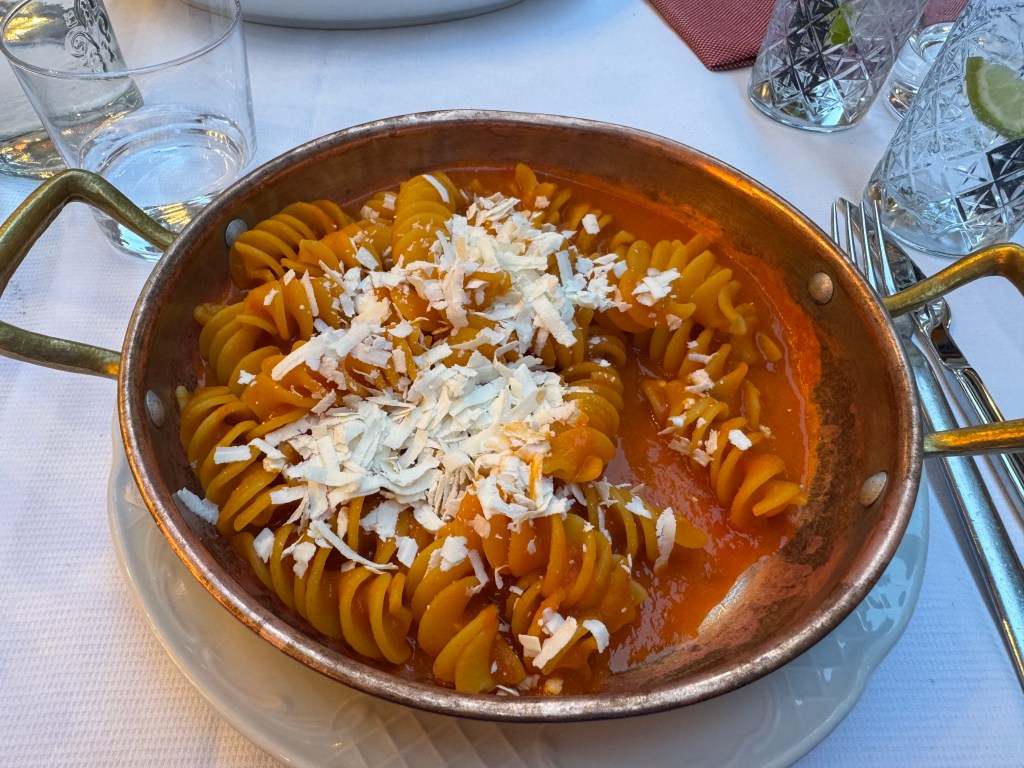
Nuti has windows where you can watch the chefs make the fresh pasta, which was enough advertisement for me. I had the Fusilloni alla Nuti, which had the fusilloni pasta with fresh tomato sauce, aged ricotta, and basil.
Deliziosi! <chef’s kiss!>
Days 3 & 4 – Siena
After 2 days in Florence, we were ready for a change and took a regional train to Siena, a smaller city about 78 km south of Florence. Since it was a regional train (meaning it stopped frequently), the trip took about 90 minutes.
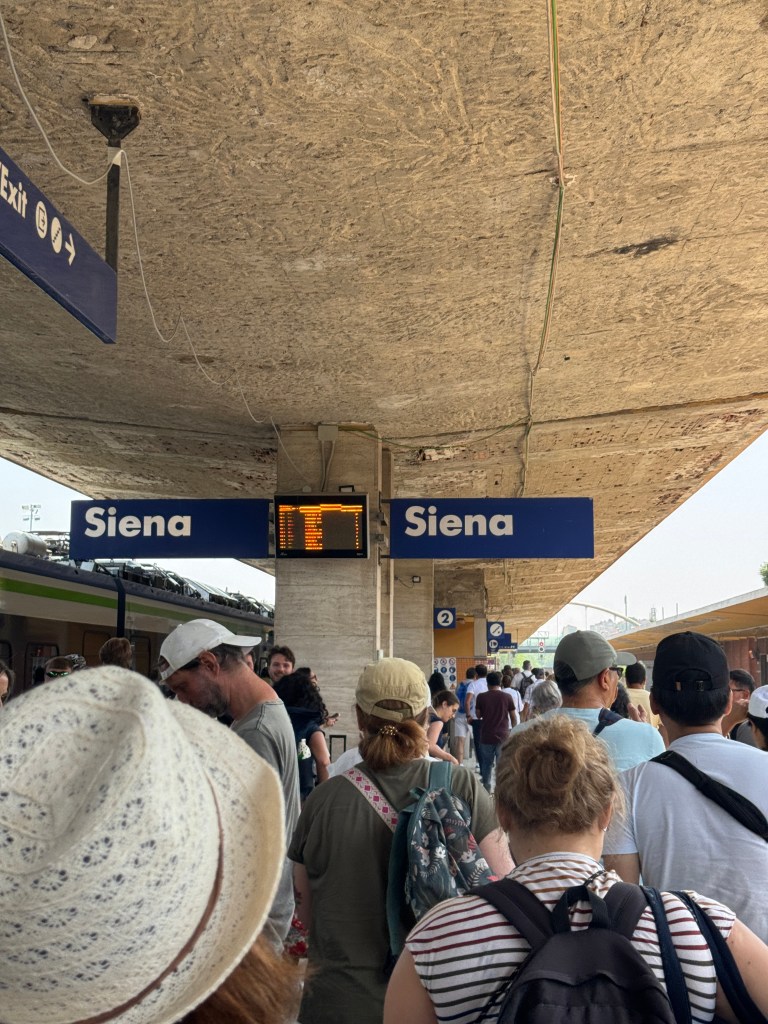
One travel note: the train platform itself is at the bottom of a hill, and so we had to take about 6 escalators in the station to get up to the street level, and not every escalator was working. There are buses, so if you have mobility issues, a lot of luggage, or things like strollers, you may want to consider bussing from the train up to the historic part of the city.
We opted to spend the night in Siena because (1) several people gushed about how much they loved Siena and (2) we didn’t want to be rushed. Our hotel Villa Socini was only 500m from the upper part of the train station and right across the street from the historic district. Villa Socini, however, was a villa converted into small little apartments. So we had a living/dining area, a separate bedroom, and a nice sized bathroom with 20′ ceilings. The downside—no A/C, only one stand fan. But with the high ceilings and a stand fan (plus the fact our room faced north), the temperature didn’t bother us. What did was the fact the bed was old and not comfortable. Oh well!

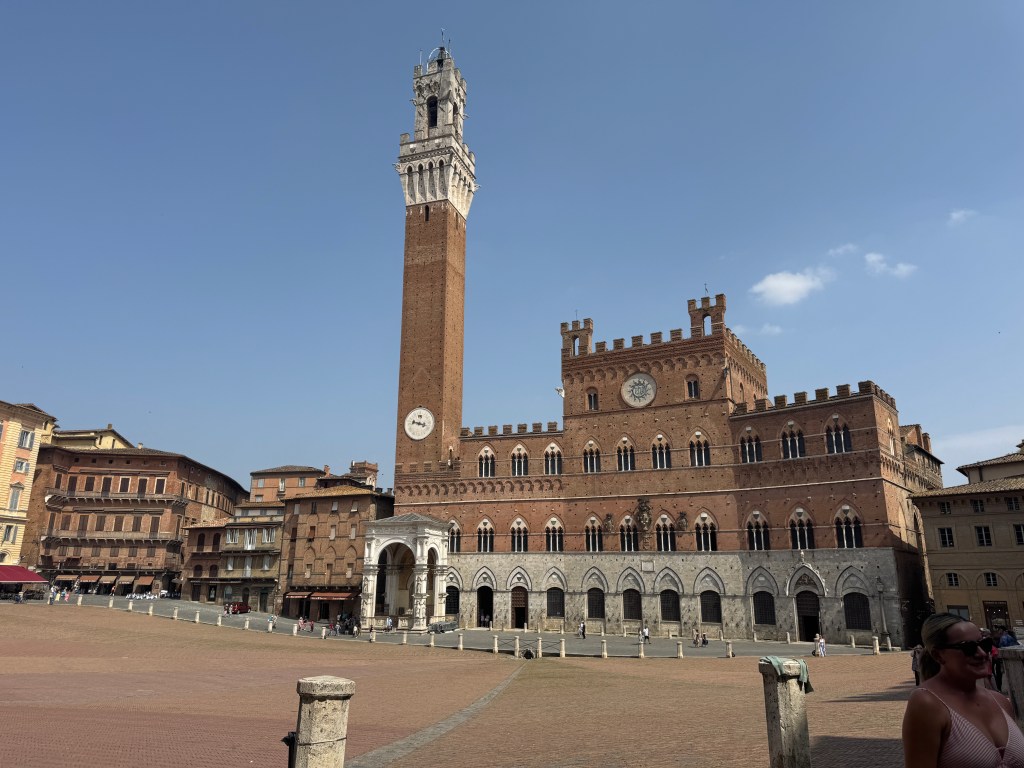
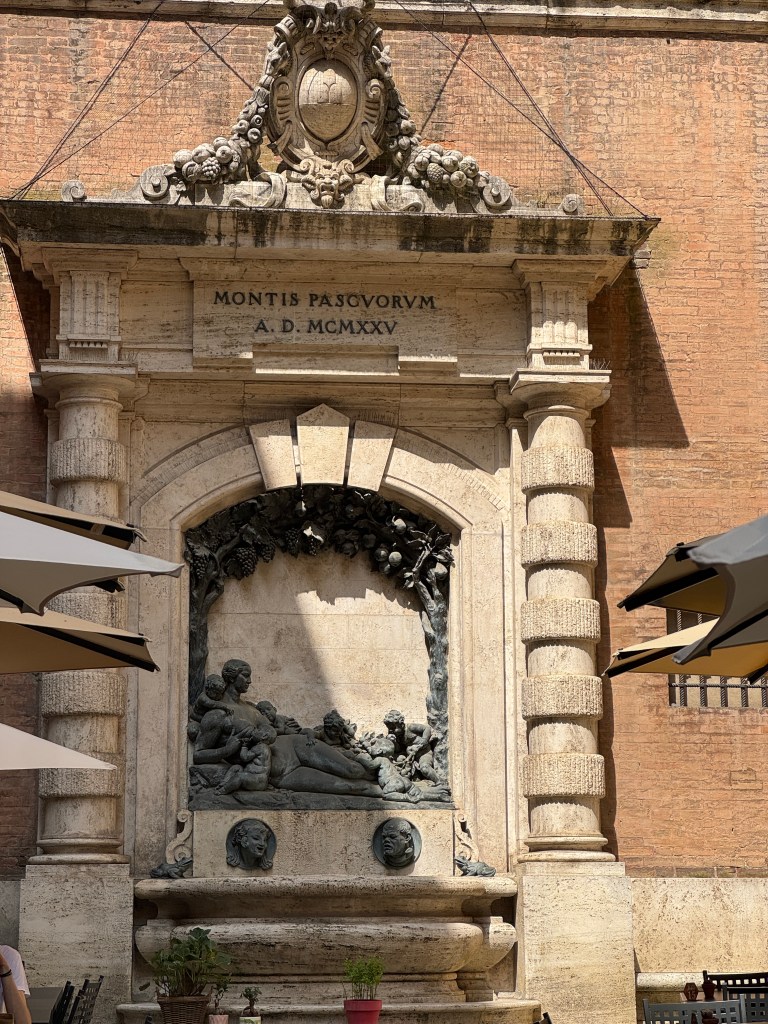
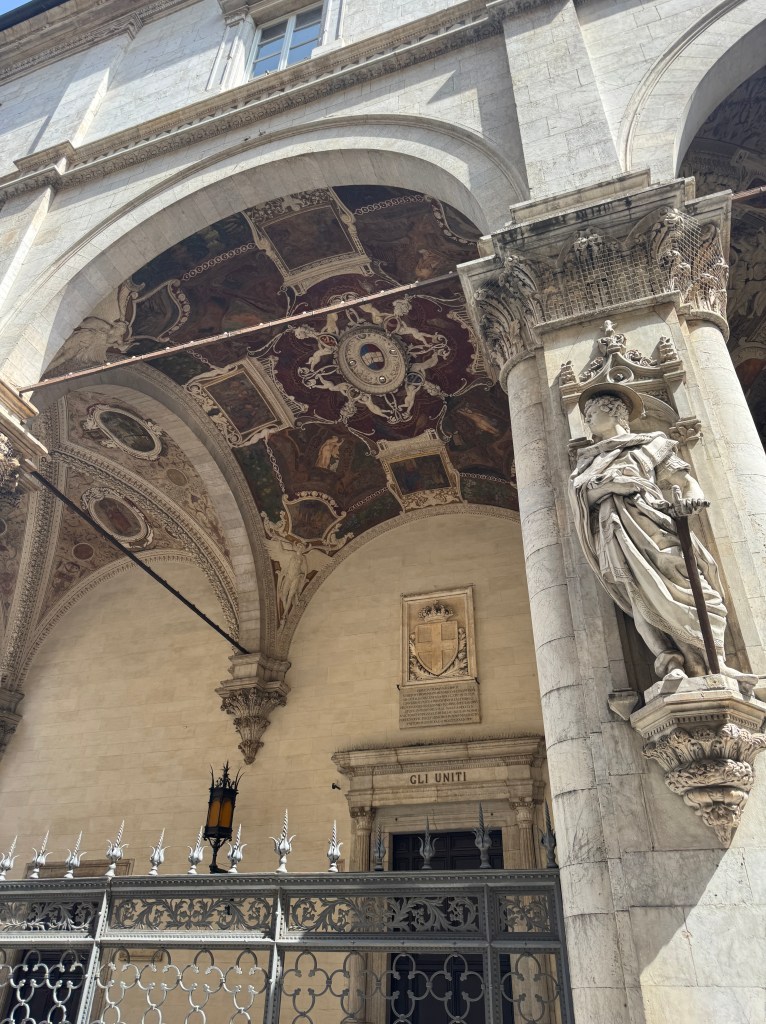
Siena is a much smaller city than Florence. It’s also hillier, but not like MDP where we live. Despite it’s smaller footprint, it does have 17 historic “contrade” (districts), which extend outward from the fan-shaped Piazza del Campo.
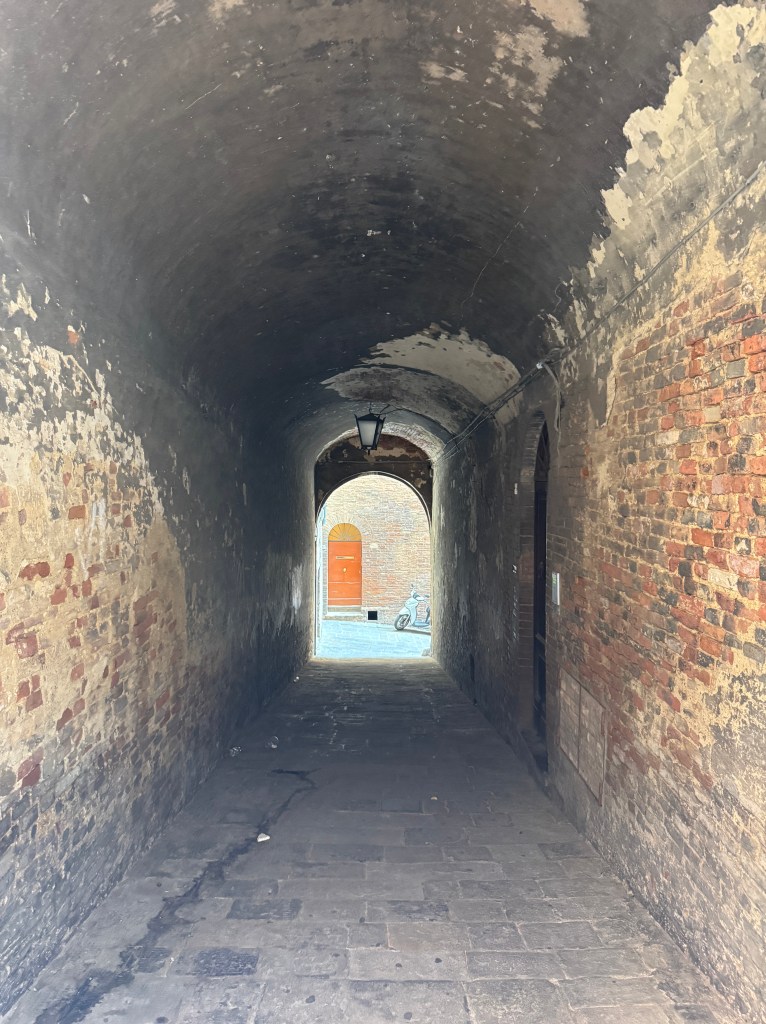
The buildings are mostly medieval bricks and the Piazza features the Palazzo Pubblico, the Gothic town hall, and Torre del Mangia, a slender 14th-century tower.


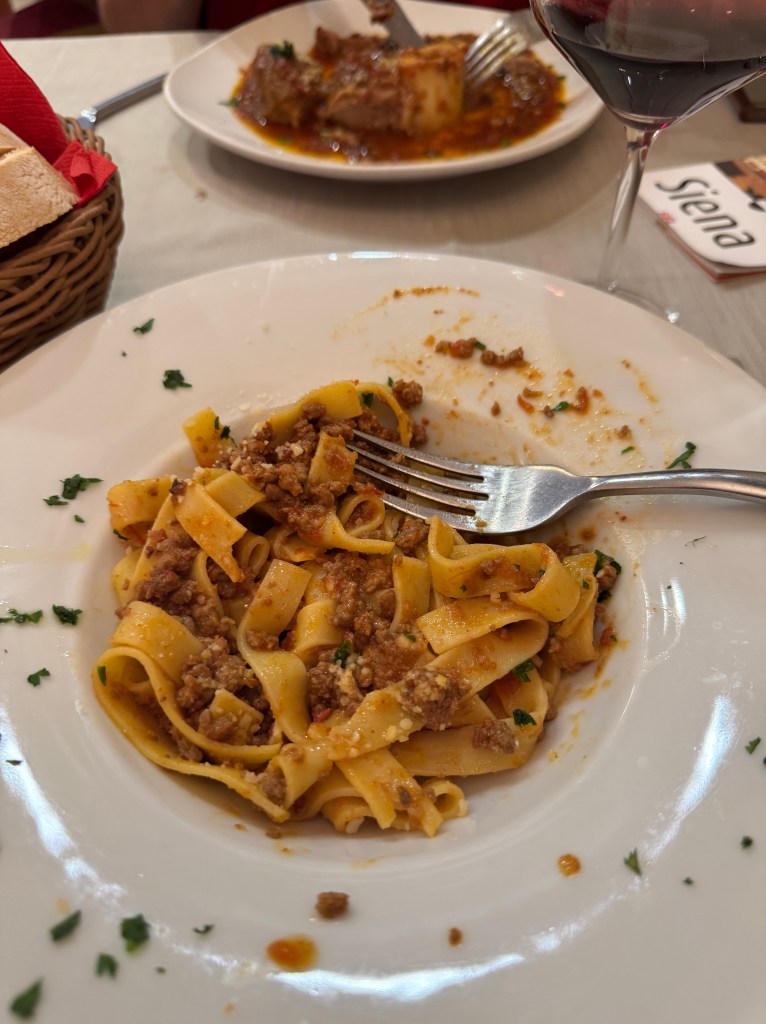
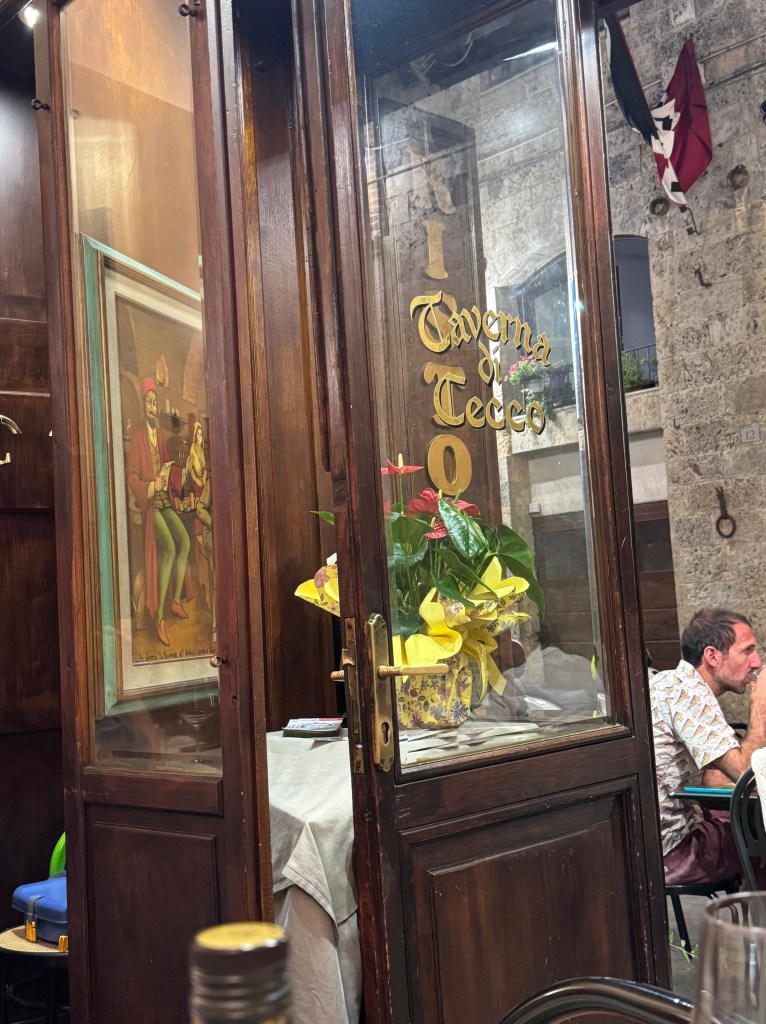
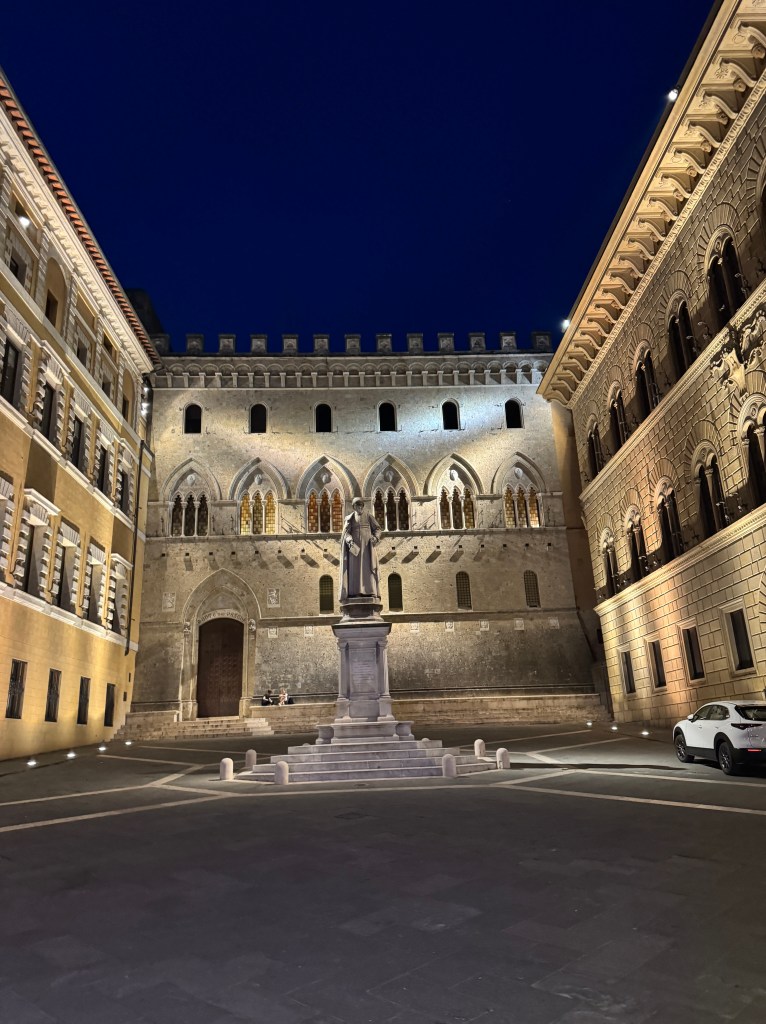
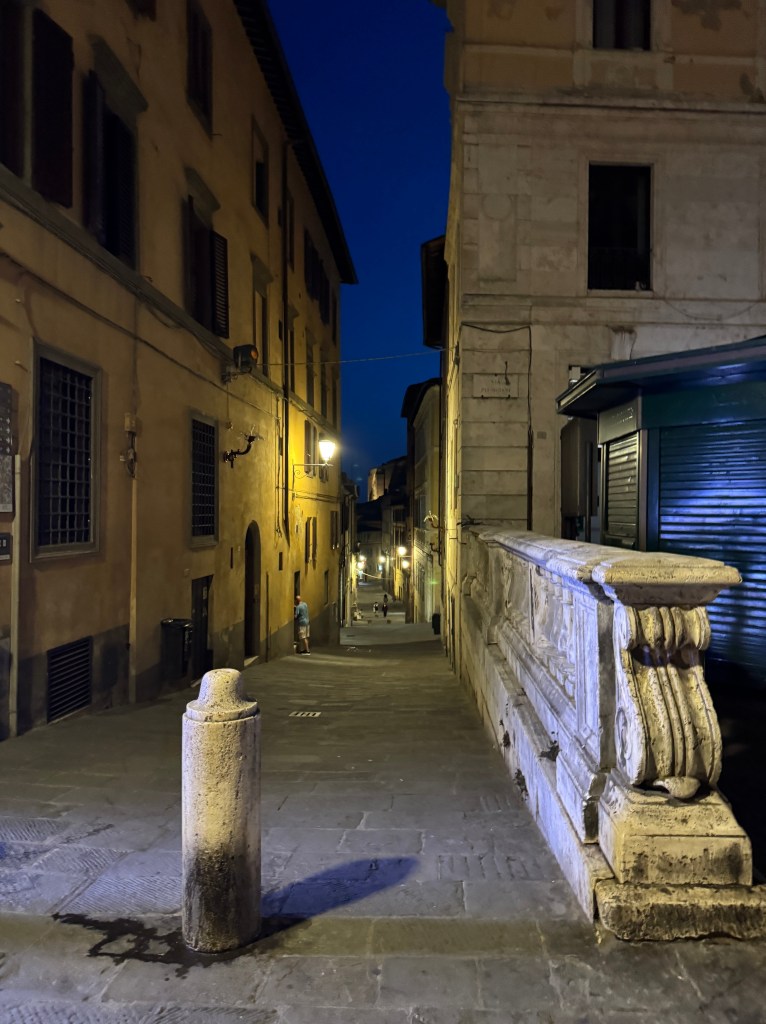
We ate dinner at La Taverna di Cecco, which was recommended by my friend P. And it was amazing.
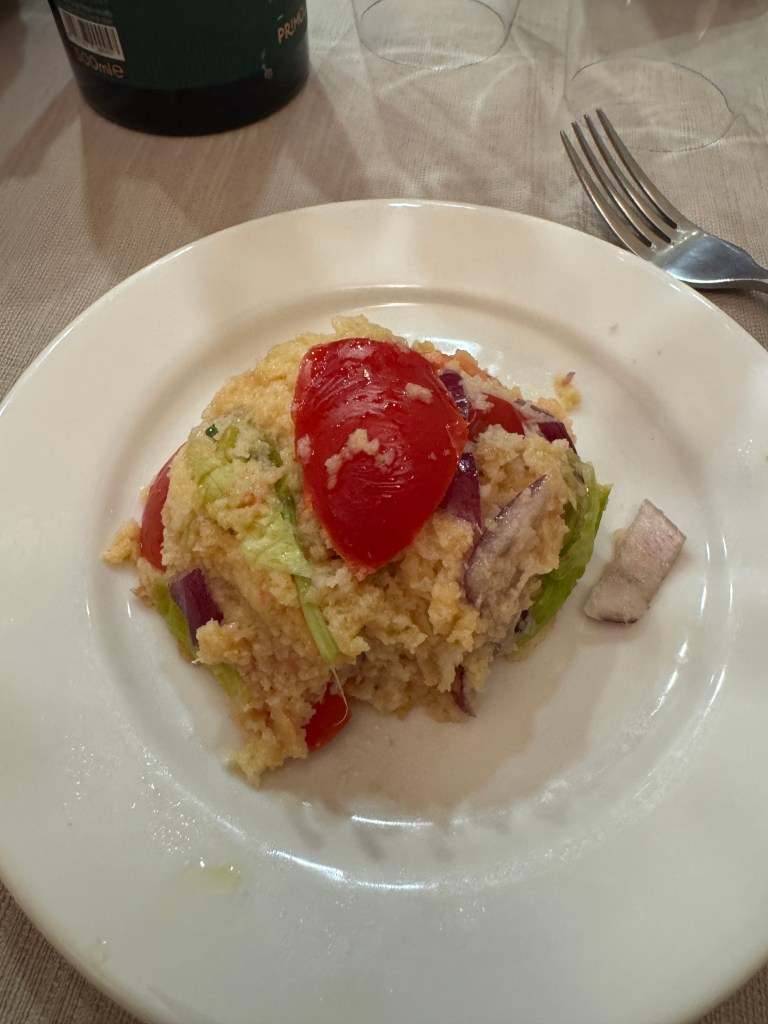
I ordered a glass of chianti, and he brought the bottle out so we could see the label. The chef then brought us a complimentary bread salad, which was simple yet delicious. Then I opted for the Tagliatelle al Ragú di Cinta Senese and I could have licked the bowl clean.
They also brought out bread. And Tuscan bread looks delicious, but here’s a fun fact—it is not made with salt. And salt it what gives bread it’s lovely bread flavor. So why do they not put salt in their bread? Well, I heard two reasons. One, in medieval Florence, salt was taxed too heavily and so bakers left it out, a tradition which continues today. Two, their staple, prosciutto, and other cured meats along with their tomato-based sauces and cheeses are salty enough to make up for it.
Which is true? You decide. But luckily, they brought salt to the table along with olive oil.


We also got a bit of a show with dinner. While we never did find out the occasion, a drum and flag processional marched by the restaurant. We heard the drums earlier, but assumed they were in the Piazza, which was where they likely did start. Luckily for us, they came right by the restaurant.
Since we were a little underwhelmed with Siena overall (except the flag & drum parade), we opted to take an earlier regional train back to Florence to catch an earlier fast train back to Napoli (the fast train doesn’t go through Siena). Luckily, italo, one of the fast train providers, has a flex ticket, which allows you to easily switch times.
For Better or Worse – Final Thoughts
In hindsight, between the heat and crowds, I would choose a different time of year to go. Live and learn, right? Of course, I have the privilege to go again anytime I can. But if this is a once kind of trip, I recommend picking a different time of year other than summer.
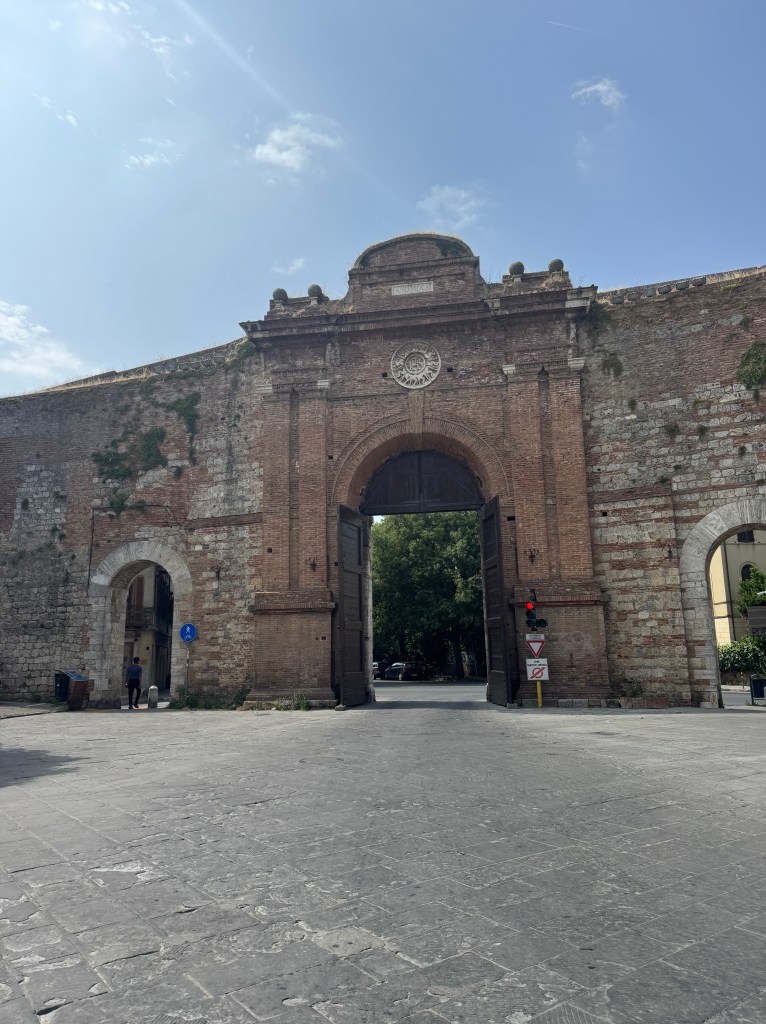
I also probably would skip Siena. Several people commented how they loved Siena, but I didn’t get all the hype. Was it a nice Italian town? Yes. But does it look pretty much like every other wall Italian town? Also yes. Other than the Palio horse race, which happens in July and August, I didn’t see anything that really stood out for me. Frankly, I had never heard of this horse race before visiting Siena. So not really a draw for me, like the F1 race in Bologna wasn’t a carrot for me.
Florence definitely has more going for it. It is the larger city and has all the Renaissance art, architecture and history to capitalize on. That being said, I don’t recommend visiting in summer. Beyond the heat, June is the start of core tourist season. We saw soooooo many tour groups. I heard more American and British accents than I did Italian. We even skipped the Uffizi (saving it for another trip) because of the crowds.
The upside, three days felt more sufficient to see Florence. Had it been cooler and less crowded, we could have easily marked everything off our to-see list, including the Uffizi. Florence is easy to navigate and fairly flat. Even with the heat, we walked around 7 or 8 miles a day and that was with a 3-4 hours break.
My 6 key takeaways:
- Visit in the fall. Sometime in September after U.S. Labor Day so the days are still nice but the crowds are fewer. Spring is another option but it might be rainy.
- Skip Siena. Really, skip any small walled town unless you have enough time or the city has some really compelling, unique site or you’re particularly interested in that city’s history/art/architecture/etc. For me, Siena was nice and I’m glad I saw it, but I live in Italy and can go again. If this was my one trip to Italy, I would’ve been disappointed I didn’t get to see some other amazing part of Italy instead.
- Do a road trip. While the cities are nice, Tuscany is known for its countryside and vineyards. I want to explore more of the Tuscan countryside and do a vineyard tour.
- Buy tickets in advance. Although we never planned to visit the Uffizi (or any other museum, duomo, cathedral, or other place that requires a ticket) because we knew it would be crowded, it’s always a good idea to purchase tickets early, even in the off season. And check the museum/cathedral’s opening days and hours.
- Make restaurant reservations. We didn’t care as long as the food was good, so it worked out okay for us. But if you have your heart set on a specific restaurant, especially a famous or Insta-famous one, make a reservation.
- Be prepared. If you do visit in the summer, be prepared for crowds and sun. Sunscreen and refillable water bottles are musts. (And make sure to reapply the sunscreen.) I saw a lot of people with pink and even red shoulders and feet. Yes feet in sandals with no socks will get burnt. Better, bring a hat and even an umbrella to keep the sun off of you. And be ready to be patient with all the other people trying to see the same things as you.
Despite the heat and the crowds, I did have a fun trip. But with a few tweaks, I think I’ll have an even better experience next time.
Catch up on all my Italian Journals here. And stay tuned for my next Italian Journal on Bucharest, Romania.
Links to Bookshop.org are affiliate links. Read more about affiliate links in my Terms of Use. All other links are simply for your convenience and reference.
 wanderinglynn.com
I’m glad you had a good trip despite the heat! I really enjoyed reading about your adventure!
LikeLiked by 1 person
Thank you!
LikeLike
I am so enjoying your travel journals!! Is C from Italy, or a transplant like yourself?
LikeLiked by 1 person
Thank you! C is also an American. We met through a mutual friend & then realized we’re practically neighbors as Monte di Prochida is a smallish town.
LikeLike