After moving abroad, I had so many people tell me how jealous they were . . . because they only saw the awesome parts of living abroad. The carefully curated photos with the polished descriptions. The seemingly glamorous life that plays into the romantic idealism and dreams of a living life abroad.
I wrote the first post about the downsides of living abroad and admitted that I too am guilty of only sharing the awesome bits. Because who really wants to talk about the not so great, the ugly, or the bad?
Despite the fact I love living in Italy, some days I do find it really hard and/or frustrating.
So, continuing my list, here are the next 5 downsides to living abroad in southern Italy.
6. Limited Food Diversity
Craving Pho? Maybe a taco? Or some Souvlaki? Or maybe just a simple salad or a bowl of soup?
Sorry, no can do in Napoli.
You can have pizza. Or pasta. Or a panini. Or did I mention pasta? There is the occasional rotisserie chicken place. But that’s about it.
There are a handful of non-Italian food restaurants around Naples (none where I live), but not many. And of the ones there are, most I’ve been told aren’t that great. And what they call soup is not what I call soup. There’s really no soup in their soup.
Italians are great at pasta and Neopolitan pizza but not a lot else. This is one of the reasons why I travel—to eat different cuisines.
7. Landscape That Isn’t Always So Lovely
When people think of Italy, they see the blue waters of Capri, the terraced houses of Positano, the Naples skyline framed with Mount Vesusvius.
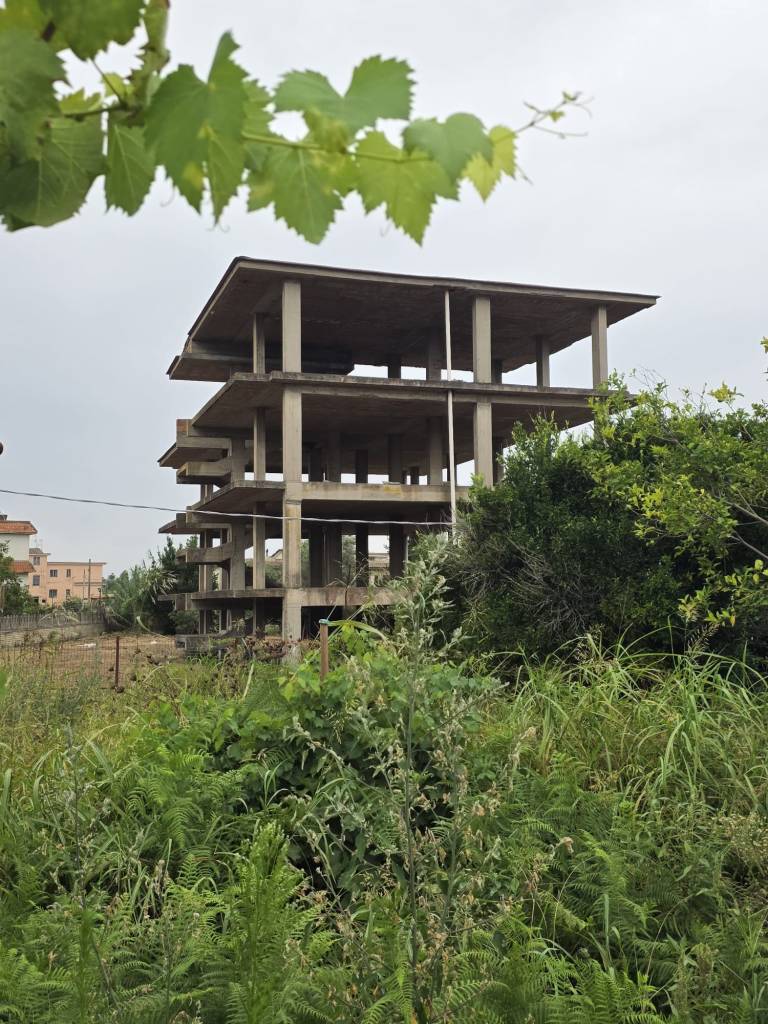
unfinished & abandonedWhat you don’t see in the travel photos are things like abandoned buildings, partially built houses, overgrown fields, and trash along the road.
Driving around the Campania region can often feel like being in a third world country. Exteriors of houses are not kept up, roadsides are often really overgrown, and trash, oh the trash. There are sections of the roads where you’d think it was a dump if it wasn’t actually a highway.
In addition to the overgrown roadsides, fields, and other areas, there are buildings that have been completely built, and probably even used at some point, but are now abandoned. Those buildings are just left to crumble.
What makes the saddest and maybe the most baffled are the skeleton structures of buildings. These buildings, usually houses, are not even partially built. There’ll be a concrete frame, maybe some wiring going into it, and that’s it. I’ve been told that it has to do with avoiding paying taxes. Maybe that’s so, but it just looks awful and incomplete. Then add on top of it the often overgrown yard area, and it just looks like a setting out of a horror film.
All of it is just sad and avoidable.
8. Language Challenges
While Italian is one of the 5 romance languages, it is just different enough from Spanish and French (the two languages I’ve studied). On top of that, Italian, like Spanish, varies by region. Here in Napoli, they speak Neapolitan.
In other words, if you ask someone from Milan or Venice or Florence, they will claim that Neapolitans do not not speak Italian.
Regardless, Neapolitans speak very fast and muddled. I often have difficulty parsing out words. But a smile and an attempt does go a long way. I just don’t have any in depth conversations.
9. August
Why am I calling out an entire month? Well that’s because of Ferragosto.
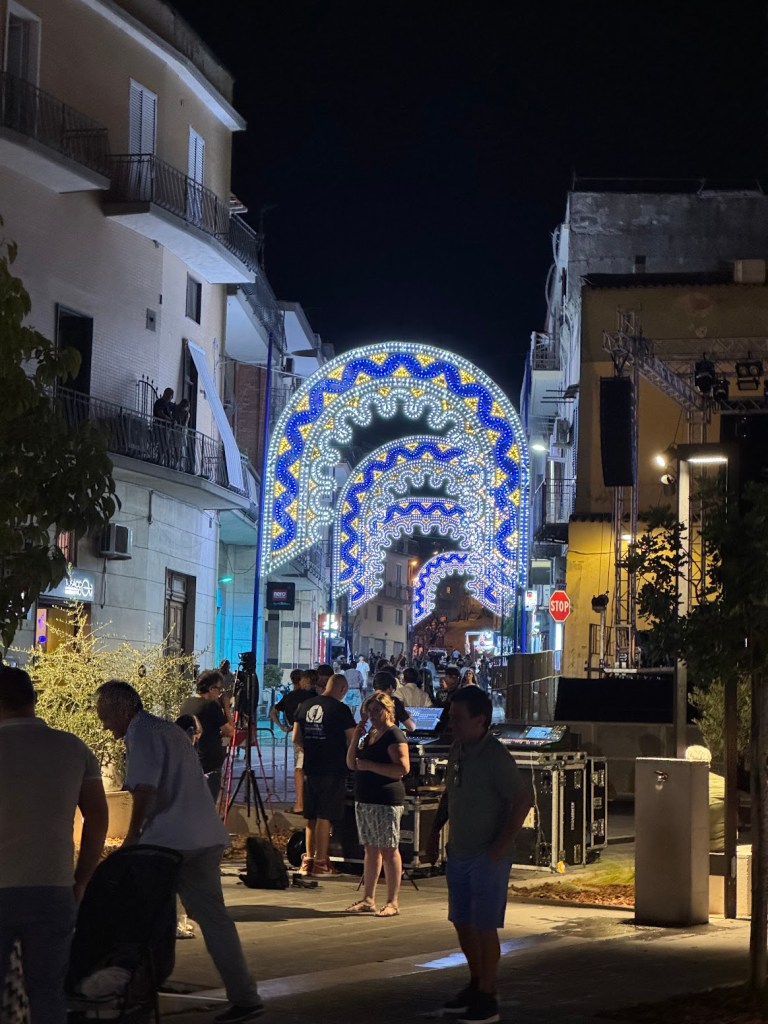
Ferragosto celebrationFerragosto is a public holiday that falls during the peak of the Italian summer and is a deep-rooted cultural phenomenon that blends ancient history, religious devotion, and the art of relaxation.
This holiday stems from the days Emperor Augustus, who is 18 BCE created Feriae Augusti, which translates literally to the rest of Augustus. Feriae Augusti was held on August 1 as a day of rest after weeks of hard work on the agricultural sector. This holiday became law during the Roman Renaissance, and then the Catholic Church merged the secular harvest festival with the religious feast of the Assumption of Mary (Assunzione di Maria).
During Mussolini’s reign, the holiday evolved into a summer break and a way to give the working class the possibility to visit cultural cities or go to the seaside for one to three days, from August 14 to 16. This established the iconic tradition of the Italian mid-August getaway. And until 2010, 90% of companies, shops and industries closed for the entire month.
Today, larger businesses, especially chains, stay open the entire month. But many small, family business close for a week or two. And most Italians take at least a week off.
This makes driving a dream because everyone is gone, especially the week before August 15 and the week after. But this means that it’s harder to go out to eat or shop, or really, to get anything done. My friend Shannon had to wait two weeks to get her second car down. The car lift stopped working and the people who could fix it were on holiday.
So, it’s important to know when major holidays are and what the impact of those will be. For Italy, beaches and lakes will be packed, but the cities will be quiet and mostly closed.
10. Lack of A/C
Air conditioning has not been a thing in Europe. It was considered an American idiosyncrasy.
Only around 20% of European homes have air conditioning, according to the International Energy Agency, compared to around 90% in the U.S.
I do have A/C in my apartment. Each room has it’s own unit, which I find more convenient that central air. For the rooms I don’t use frequently (like the spare bedroom), I can keep the unit off. For the other rooms, I can adjust the temperature for that room. I keep the living room slightly warm than my bedroom, which I like cold.
But my apartment is not the norm. My apartment was meant to rent to Americans, who expect A/C. But my Italian neighbors don’t have A/C.
For hotels, A/C availability varies depending on the age of the building, the country, and the category of property. Even hotels that have A/C, it may only go down to a certain temperature (like 24°C / 75°F) and it may only be available during certain summer months. Some Italian hotels charge an extra fee of around €10 per night for in-room A/C. Businesses like malls, grocery stores, or big stores like IKEA, usually have A/C, but again, walking into these businesses will not have the cold blast of air like U.S. businesses.
Italy introduced “Operation Thermostat” in 2022, which set a minimum temperature of 27°C (80°F) for air conditioning in government offices and public buildings (like museums and airports) with a ±2°C tolerance. What this means in practice is temperatures can range between 25°C (77°F) and 29°C (84°F.) So, the building will be only slightly cooler than the outside temperature.
Restaurants also vary greatly whether they have A/C. Many have outdoor seating and so, while even if they have A/C, it’s unlikely to be on because the outside seating is often an extension of the inside.
What this means is that you can’t necessarily escape the heat by going to the mall. And going out to eat this time of year means I wear lightweight clothes and then often have to take a shower when I get home because I’m that sweaty.
Final Thoughts
There are downsides to living anywhere. I have found that people get caught up in the glamour and dream of living in Italy without understanding the reality. So, I hope I’ve brought a little perspective—while it is lovely to live here, it’s not all what the photographs portray.

