At the end of June, I did a twofer trip and visited North Macedonia and Kosovo.
North Macedonia and Kosovo are both landlocked countries that are part of the Balkens. North Macedonia shares a border with Greece to the south, Albania to the west, Bulgaria to the east, Kosovo to the northwest and Serbia to the north. Kosovo is bordered by Albania to the southwest, Montenegro to the west, Serbia to the north and east, and North Macedonia to the southeast.
A Little History
(Not interested in History? Skip to the Macedonia section, the Kosovo section, or even to my final thoughts.)
The history of the Balkens, which includes Greece, is ancient, long, often bloody, and complex. So I’ll start with more recent history as both countries are relatively new.
At the end of the First World War, there was a newly formed Kingdom of Serbs, Croats and Slovenes, colloquially known as “Yugoslavia” (literally Land of the South Slavs), that encompassed, among other areas, North Macedonia and Kosovo. In 1929, the Kingdom of Serbs, Croats and Slovenes was officially renamed the Kingdom of Yugoslavia. Yugoslavia encompassed Bosnia and Herzegovina, Croatia, Macedonia, Montenegro, Serbia (which included Kosovo), and Slovenia.
The Kingdom of Yugoslavia became the Socialist Federal Republic of Yugoslavia in 1945 at the end of World War II. In 1991, Macedonia (now North Macedonia) and two other areas declared their succession. Yugoslavia lasted and lasted until 1992 when it dissolved amid the onset of the Yugoslav Wars.
Macedonia officially celebrates 8 September 1991 as Independence day and Bulgaria was the first country to recognize Macedonia’s independence in 1992. It’s called North Macedonia now because from 1991 to 2019, Greece opposed the international community recognizing Macedonia due to concerns over historical and cultural heritage, as well as potential territorial claims over the northern regions of its country, which are also named Macedonia. The 27 year dispute resulted in Macedonia becoming North Macedonia and Greece having to back North Macedonia’s bid to join the EU.
Kosovo, on the other hand, is not officially recognized as an independent nation by some countries, like Serbia. Leading up to the dissolution of Yugoslavia, Kosovo Albanians proclaimed the existence of the Republic of Kosovo in 1990, and declared it a sovereign and independent state in September 1992. Then the mid-1990s started the Kosovo War, which ended in 1999. In 2008, Kosovo declared its independence from Serbia. Europe’s major powers and the United States recognized its independence, but Serbia did not. Today, Serbia still does not diplomatically recognize Kosovo as a sovereign state, but the two countries have enjoyed normalized economic relations since 2020 and have agreed not to try to interfere with the other’s accession to the European Union.
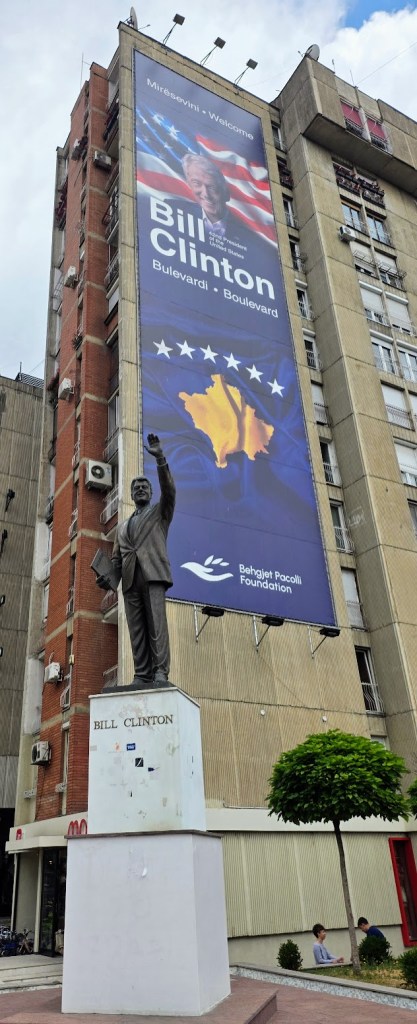
Because the United States recognized Kosovo the day after it declared it’s independence in 1992, Kosovo considers the United States one of its most important allies. Kosovo has dedicated several monuments to American politicians deemed instrumental to the nation’s independence, especially Bill Clinton.
While North Macedonia is an EU candidates, Kosovo is only a potential candidate as 5 member countries do not recognize Kosovo as an independent nation from Serbia. What this means for travel is that I had to go through immigration. Not a huge burden but something to note.
Visiting North Macedonia
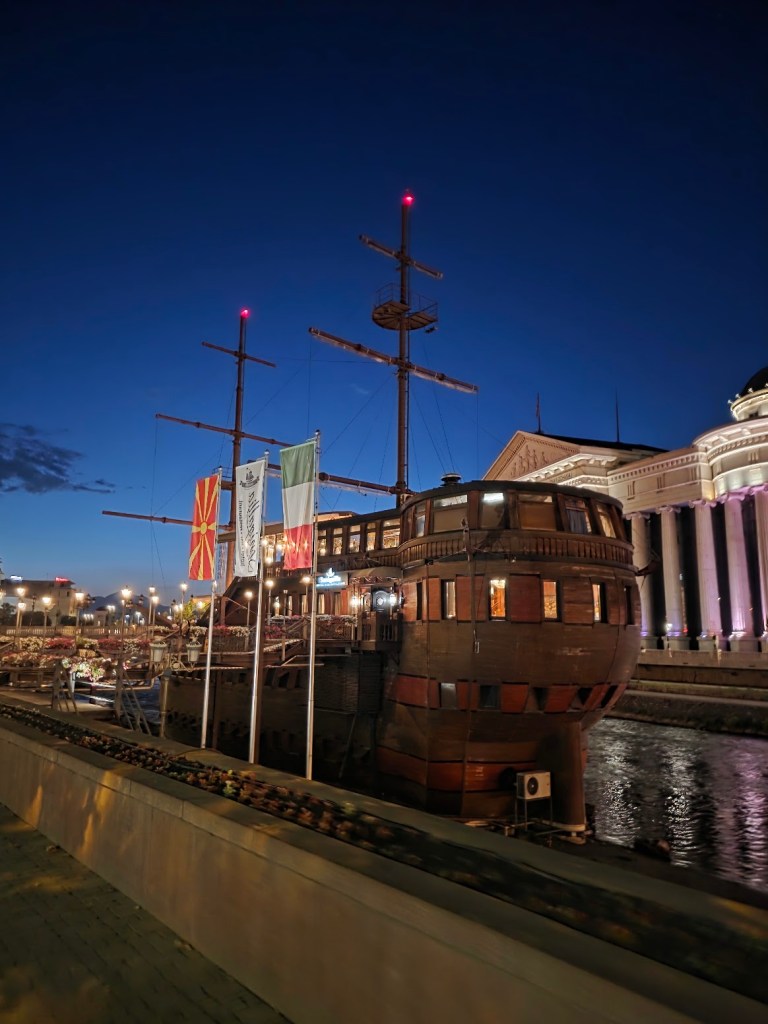
We flew in to Skopje, the capital of North Macedonia. From Naples, it was only a 90 minute flight. We landed in the evening, so we took a taxi from the airport to the city center where we were staying. Because it was already dark, we couldn’t see a lot.
I had booked Hotel Senigallia, which is a boat-like hotel on the river Vardar, which divides the capital into two parts: the modern city center and the historic Old Bazaar district. While the photos looked cool and amazing, the reality wasn’t quite the same. Sadly, the hotel could use some upgrades and repair. There were also two other similar boat-like hotels, both part of Skopje 2014, but have been abandoned and left to rot. But it was a super convenient place to stay.
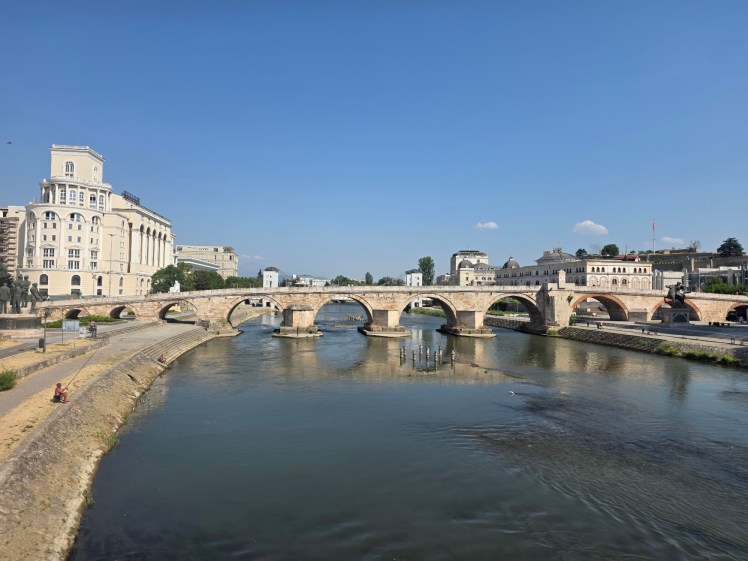
Skopje is located in the northern part of North Macedonia, within a valley surrounded by mountains and hills. The Stone Bridge provides a symbolic connection between the modern city center and the Old Bazaar. The current Stone Bridge was built on Roman foundations between 1451 and 1469.
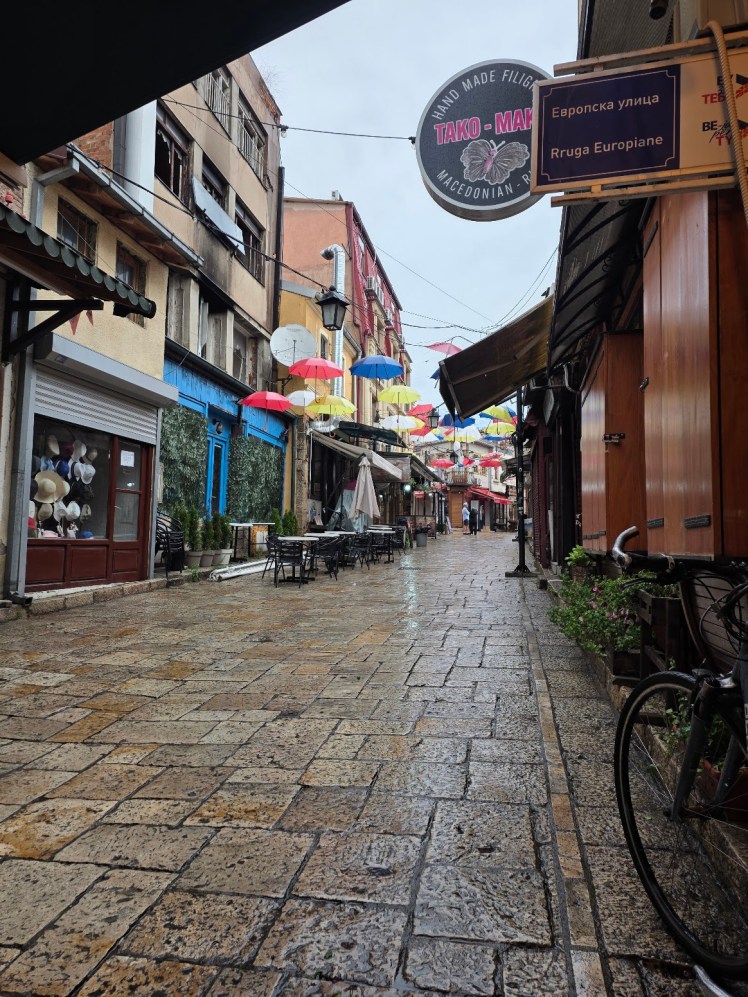
Our first full day in Skopje was hot and humid, and so after walking through the Old Bazaar, we headed indoors to the Archaeological Museum of the Republic of North Macedonia. The museum has over 7,000 artifacts from Prehistoric Archaeology, Antiquity, Medieval Archaeology, Numismatics, Anthropology and the Lapidarium.
There was a lot to see and the museum was well laid out and designed with dark walls and ceiling to focus on the artifacts.
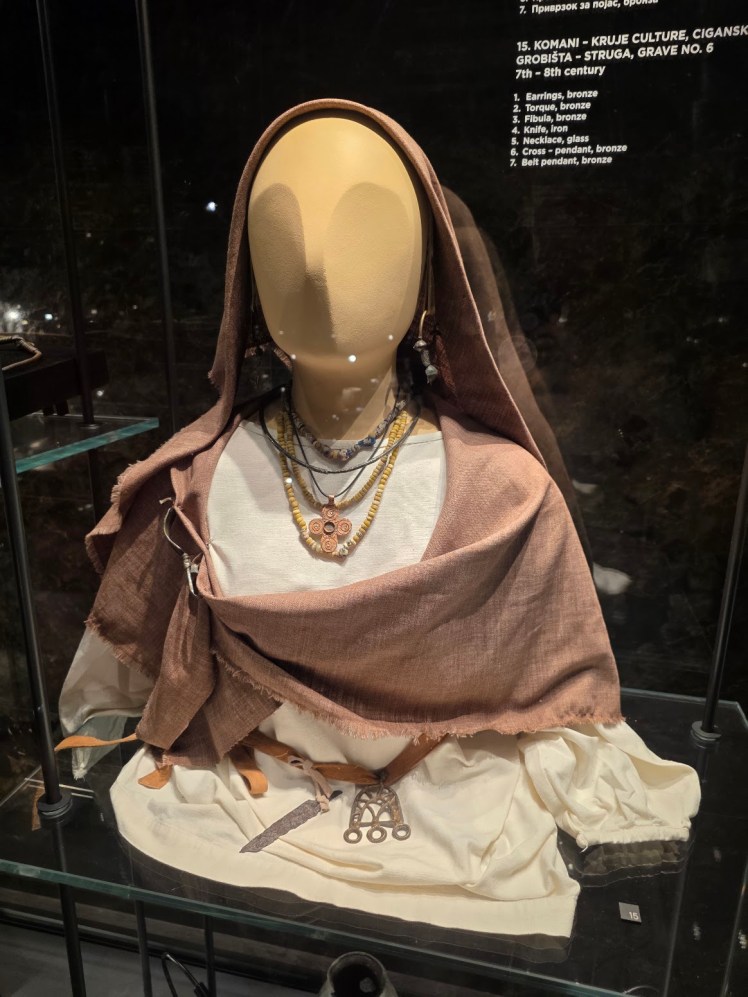
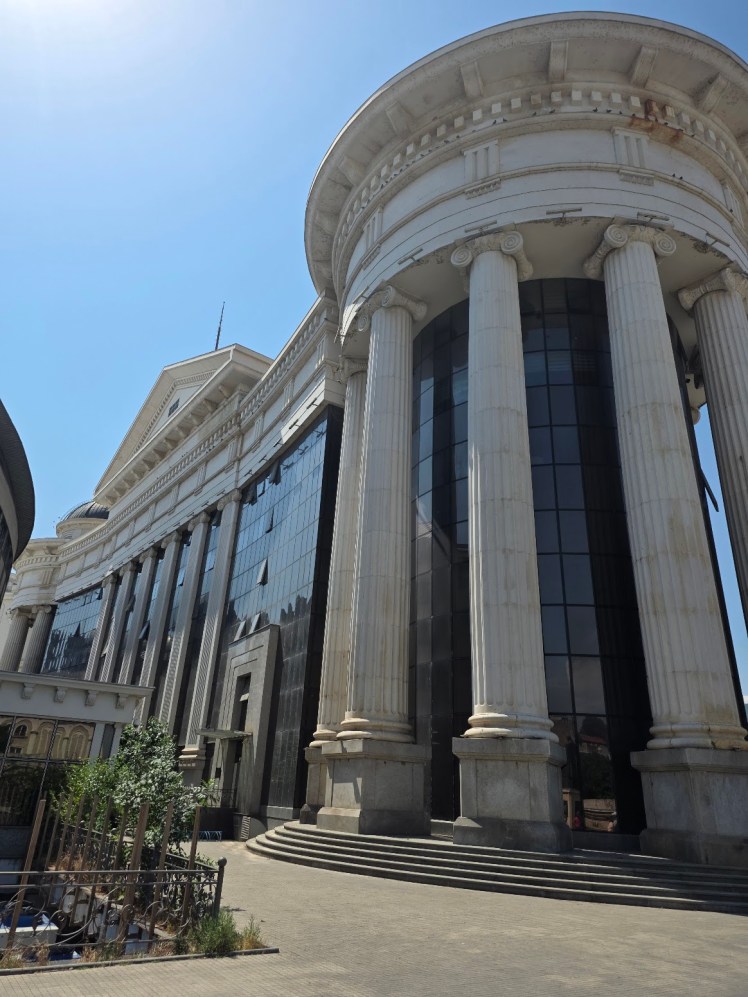
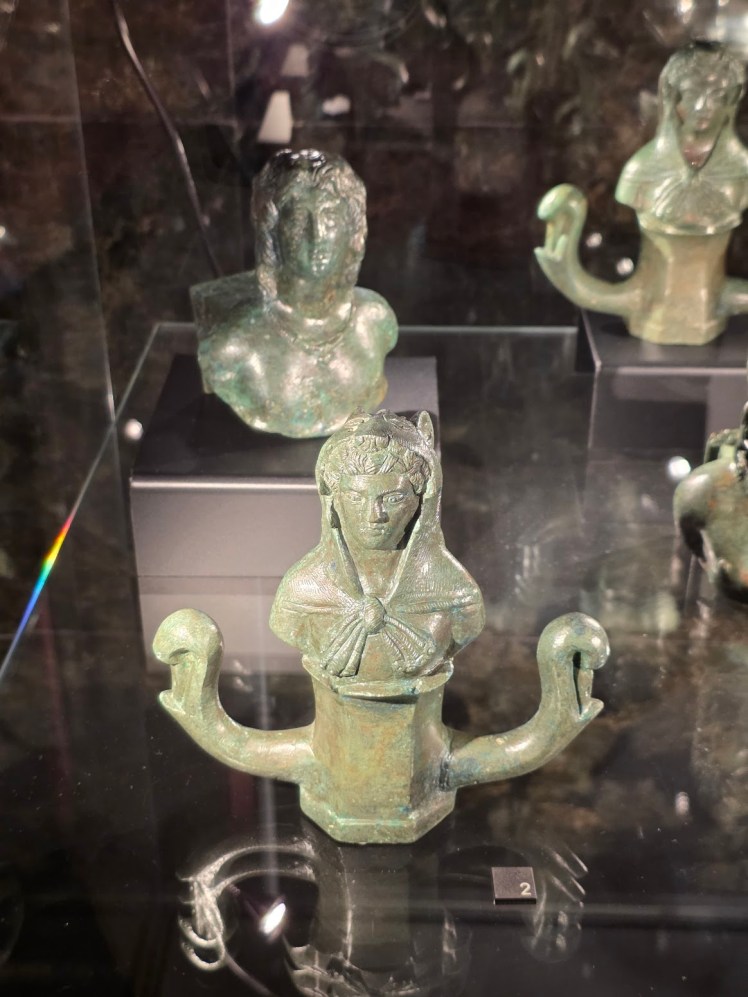
Luckily, that evening there was a storm. The next day was a bit better, and then another storm came and the weather broke and the weather was lovely after that.
Our second day, we just headed out to explore all of Skopje from one end to the other. One thing Skopje is known for is all its sculptures. In 2010, the capital announced “Skopje 2014”, which among other things, included the erection of monuments, many of which depict historical figures from Macedonia.
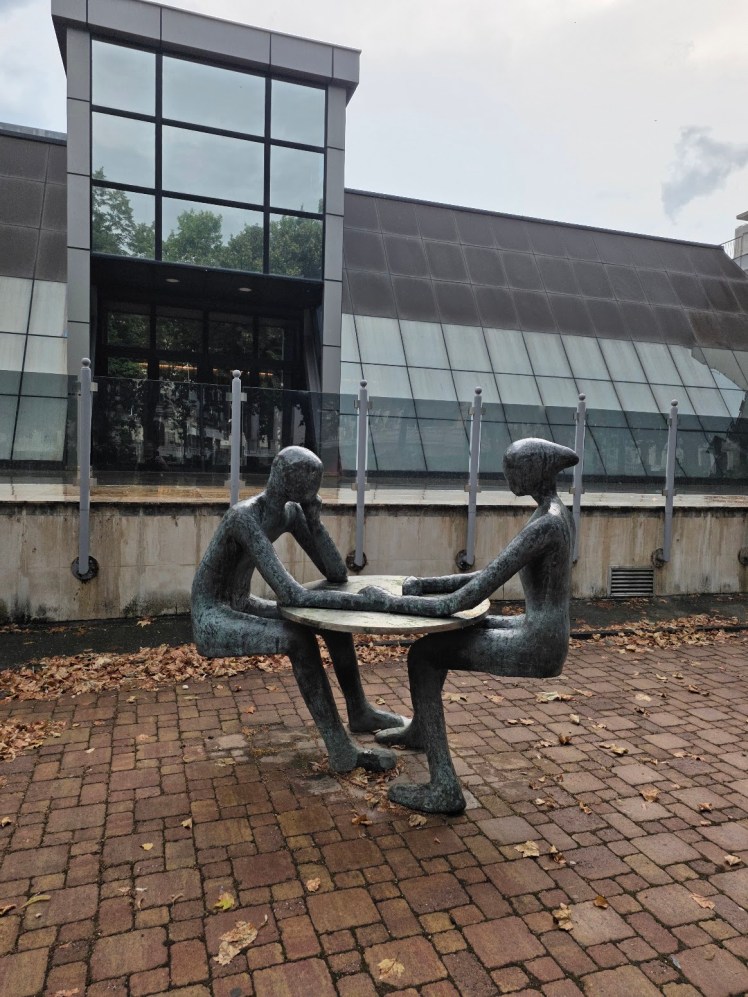
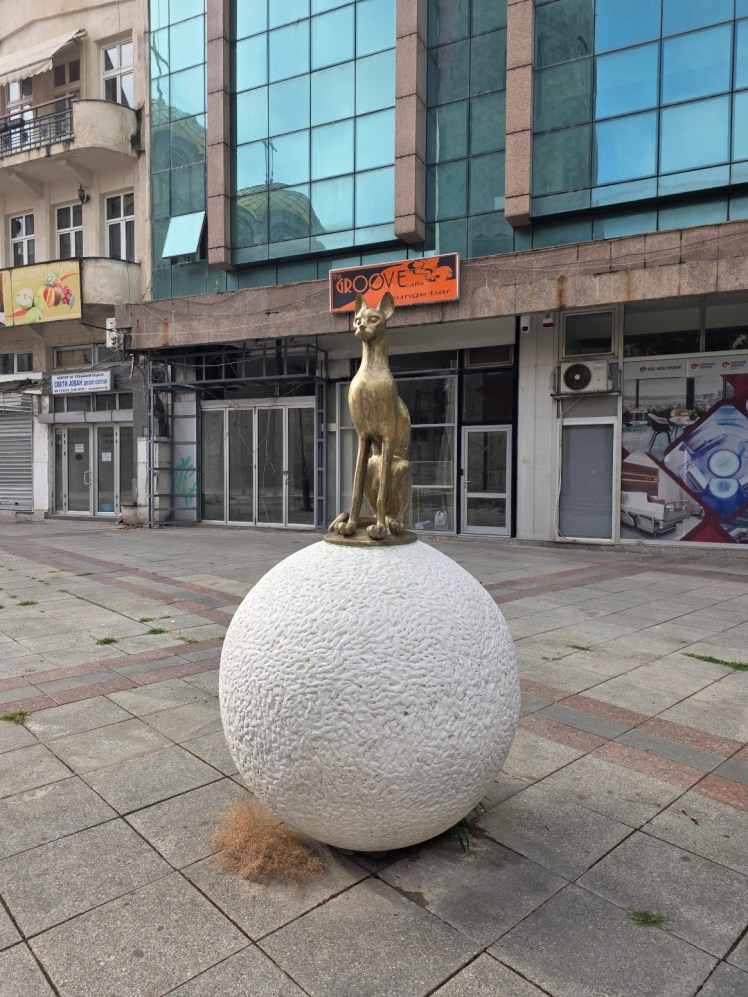
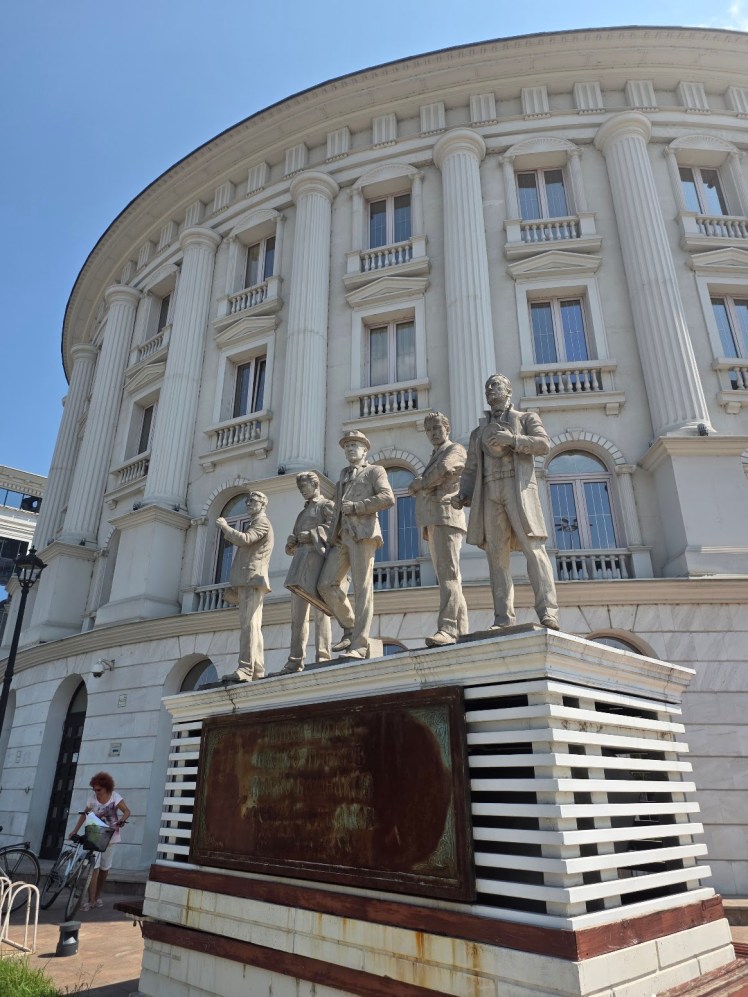
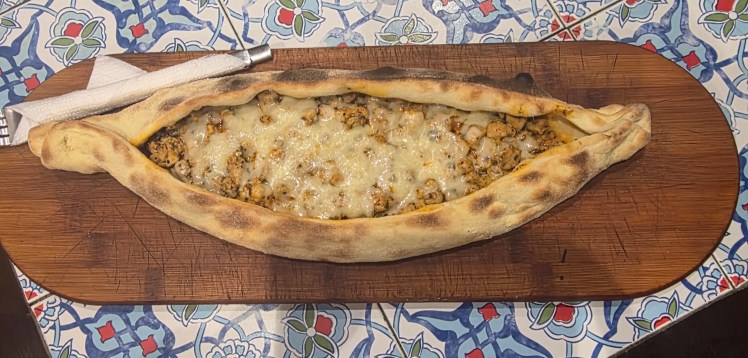
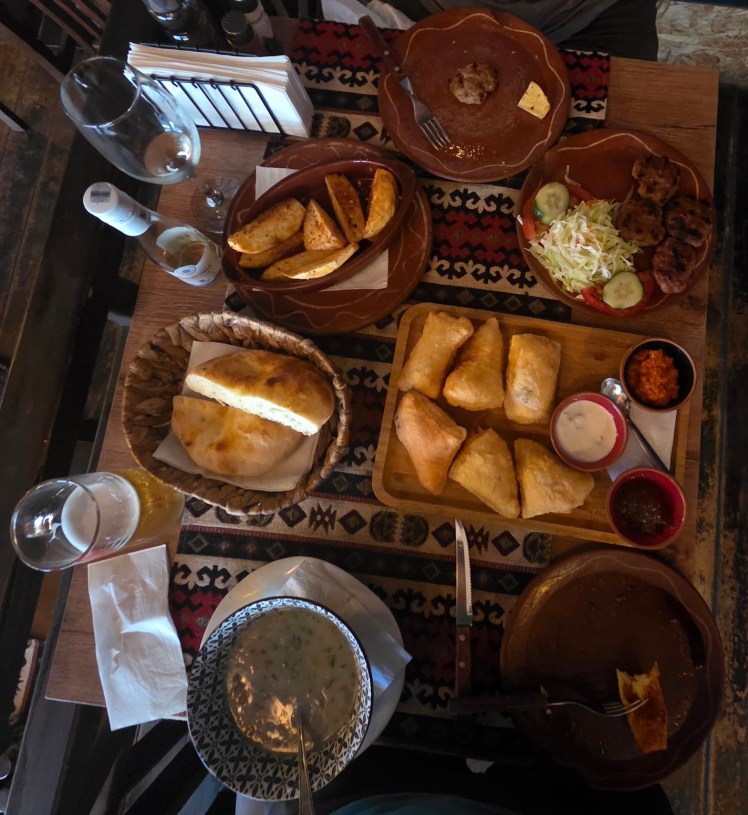
Later that afternoon, we did a walking food tour with our guide N. We had some delicious, authentic Macedonia food, which like most of the Balkens, is Greek and Turkish influenced. My favorite was the pastrmajlija, an oval-shaped Macedonian baked dough pie, similar to pizza and generally topped with small chunks of salted diced pork or chicken.
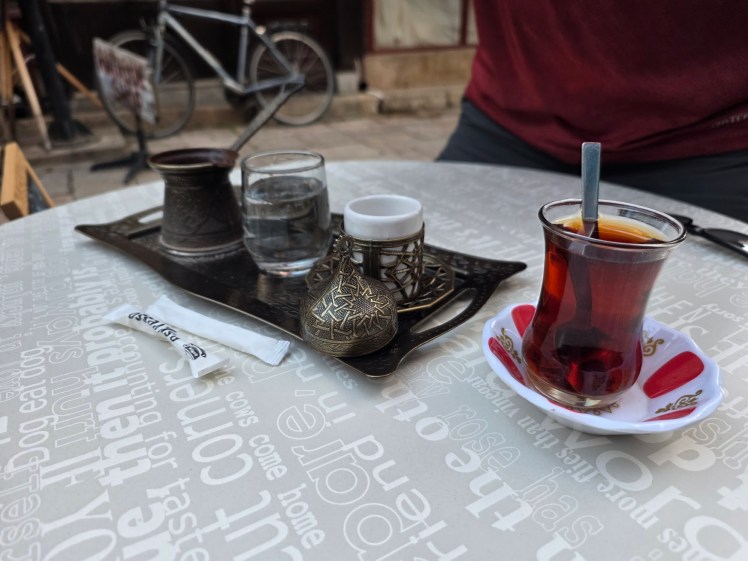
We also had Turkish coffee and Turkish tea. The coffee I wasn’t crazy about because it’s not filtered. But it was fascinating to watch it being prepared. The barista simmers finely ground coffee beans in a small traditional pot, known as an Ibrik, over coals. The grounds remain in the brew when served. I did greatly enjoy the tea, so much so that I had several more cups over the course of the trip.
Since we had a third day and had seen most of the city, we decided get out of the city to tour Canyon Matka.
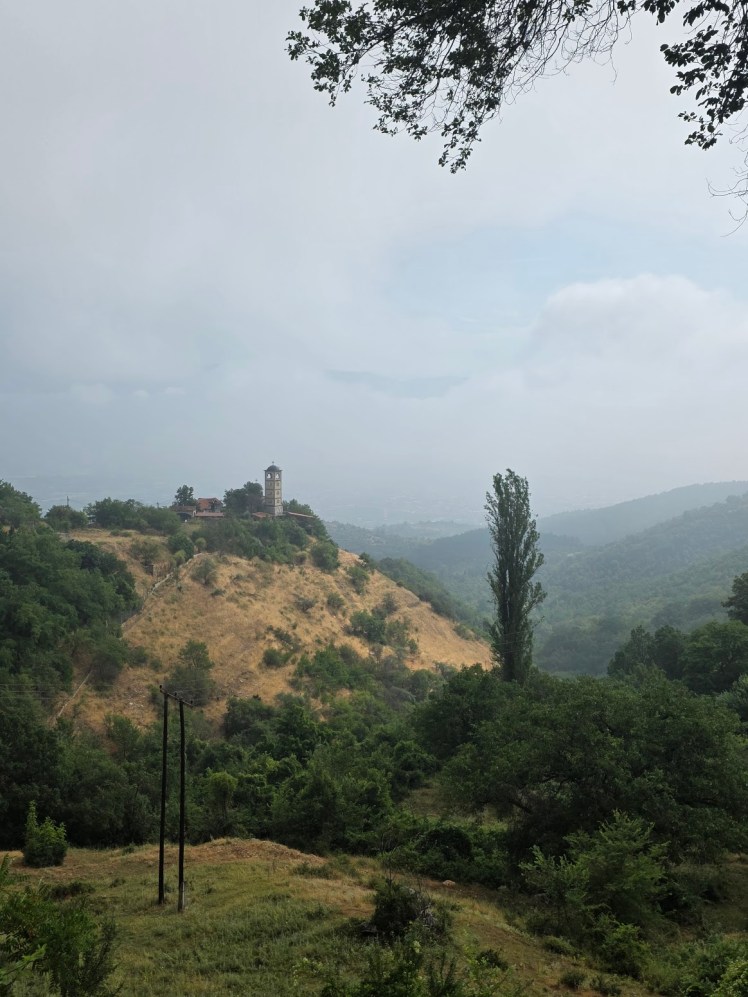
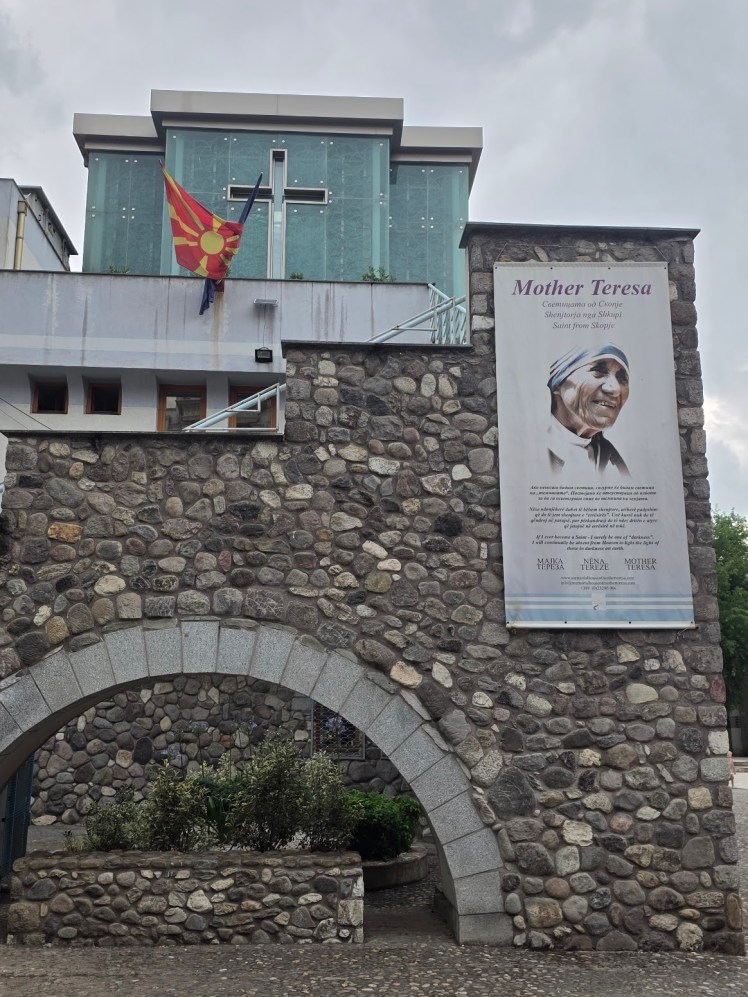
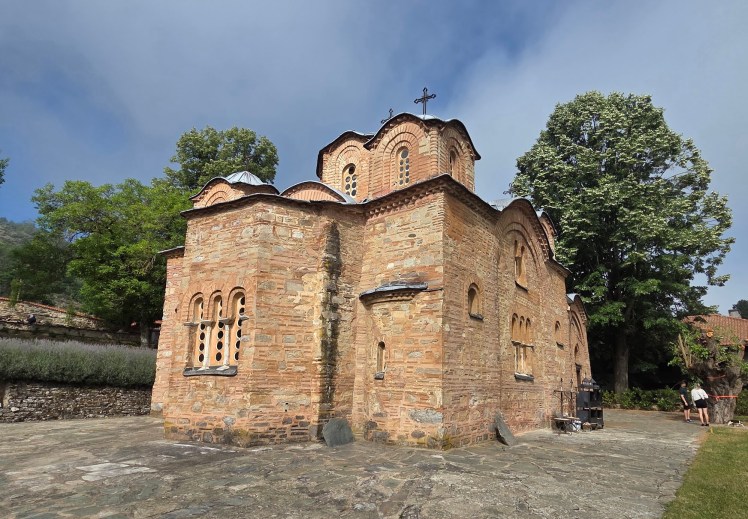
The group met near the Mother Teresa Memorial House, a museum dedicated to honoring her life and humanitarian work and situated near the church where she was baptized. On the way to the Canyon, our group stopped at Saint Panteleimon Monastery. Built in 1164, the church is dedicated to the patron saint of physicians. Though damaged by an earthquake in the 1500s, the church has several notable frescos from the Komnenian-era of Byzantine art. And some experts claim this is place were the origins of the Renaissance started.
We had breakfast and enjoyed the view and the frescos in the church, then hopped back into the van to continue on to the Canyon.
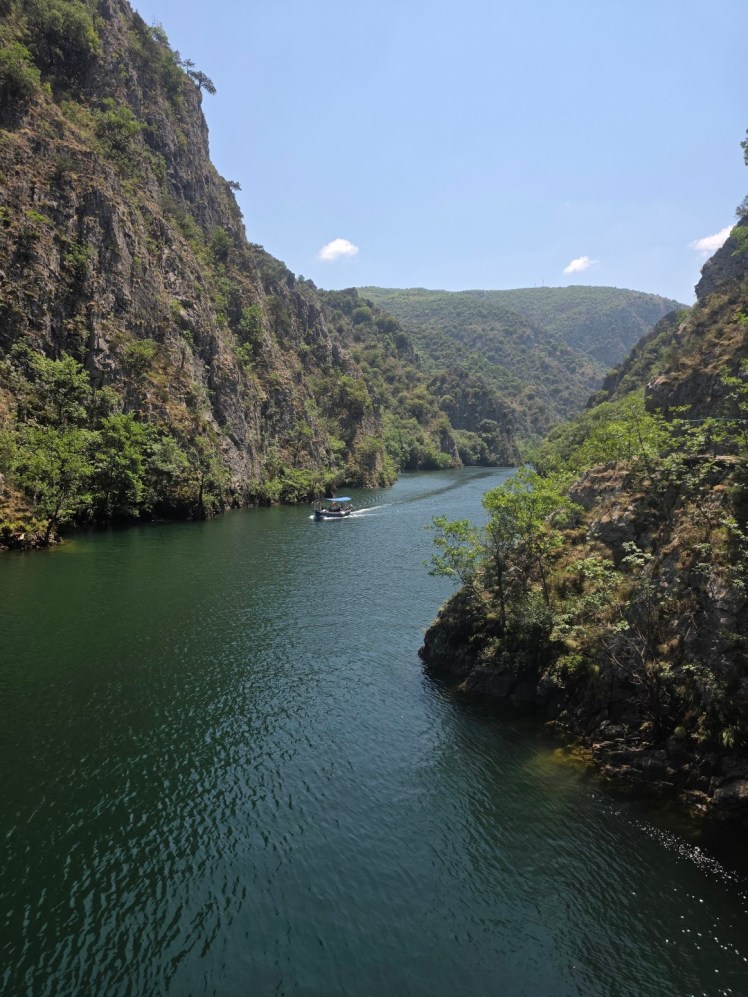
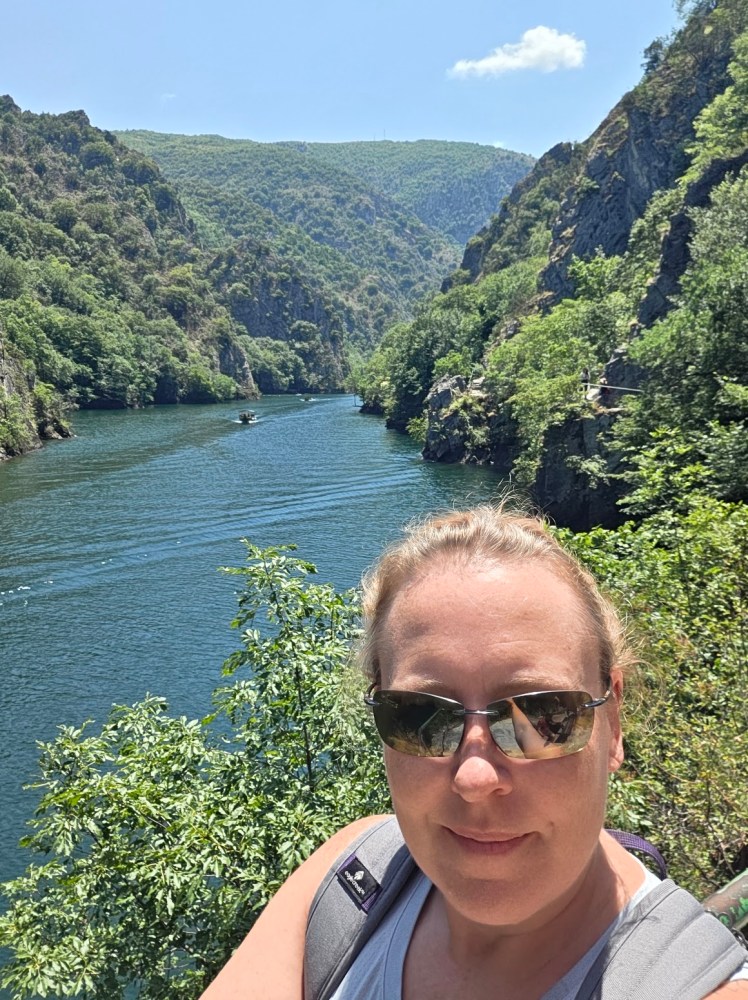
Created in 1938 by damming the Treska River, Lake Matka is the oldest artificial lake in North Macedonia. It has steep limestone cliffs and Vrelo Cave, one of Europe’s deepest underwater caves. Part of our tour was a 30-minute boat ride to the Cave, where we got out, walked up quite a few steps and entered the cave.
Vrelo Cave has two interior water bodies with massive stalactites and stalagmites, one of which is a 2,700-year-old cone-shaped stalagmite. And the underwater section reaches more than 203 meters in depth, and possibly more. The temperature difference was incredible.
I really enjoyed the Canyon and just wished we had more time to go kayaking.
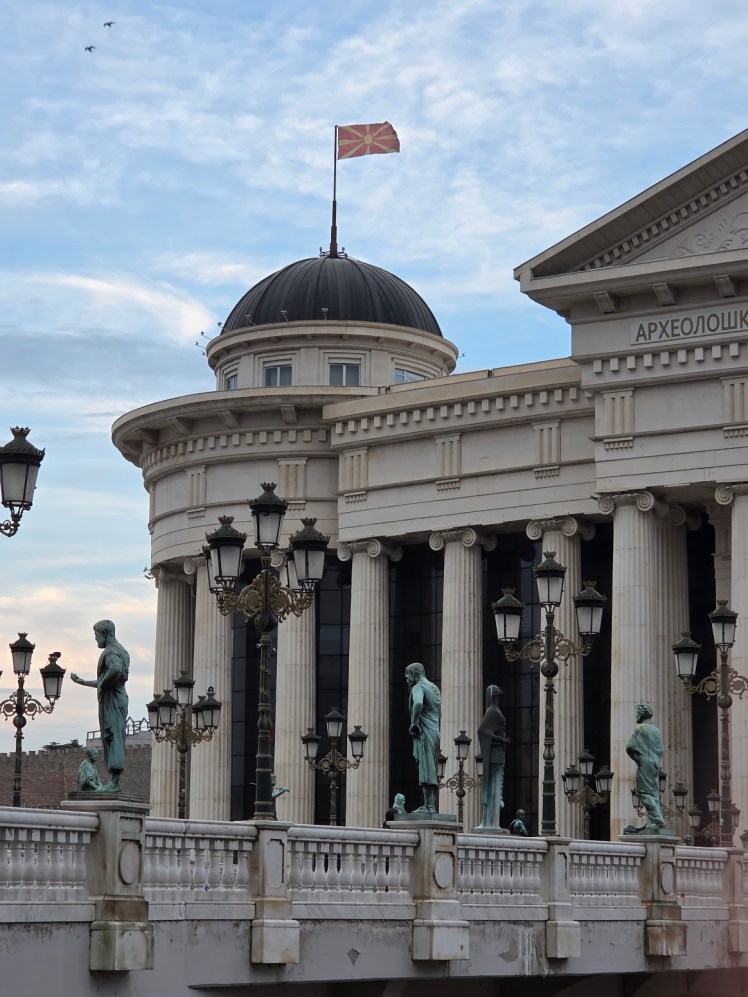
The next day, we packed up and headed to the bus station to catch the bus to Pristina, the capital of Kosovo.
Visiting Kosovo
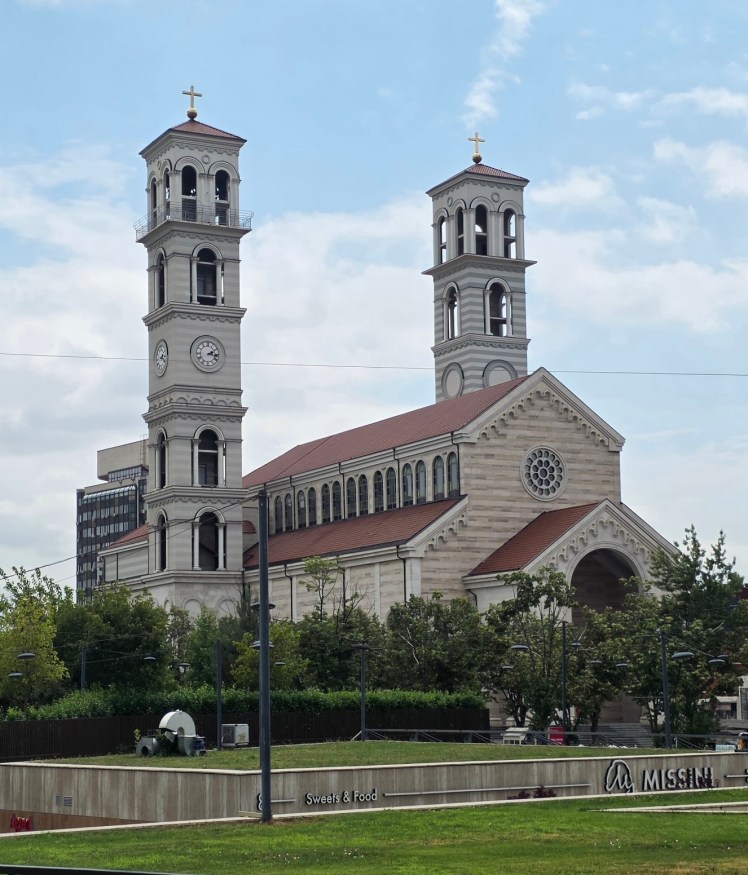
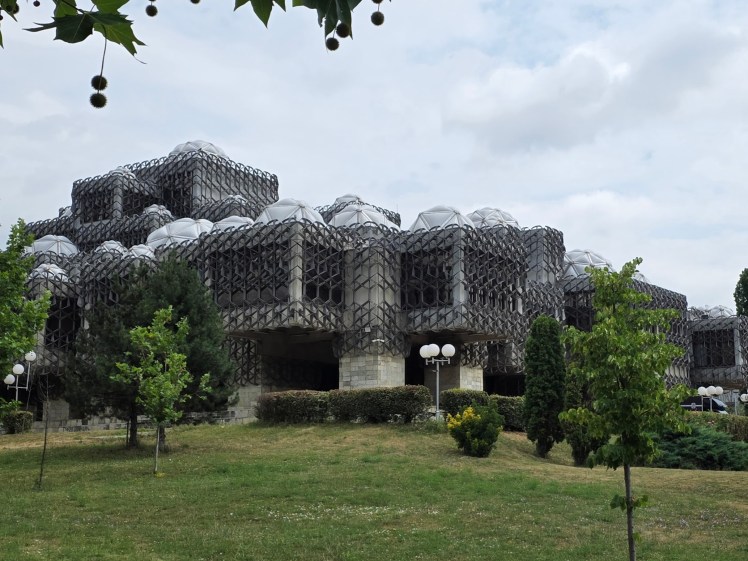
Given Kosovo’s recent history, it’s not surprising to find that most of Pristina (or Prishtina) is pretty new, port-1999. For example, the airport only opened in 2013, the motorway linking Pristina and the Albanian city of Durrës completed in 2013, and the R6 motorway connecting Pristina to Skopje only completed in 2019. As far as buildings, the Cathedral of Saint Mother Teresa was dedicated in 2010. The National Library (which is weird, ugly building) was built in 1982, and sadly, is almost one of their oldest buildings save for a handful of religious buildings and cultural homes. So, there isn’t a lot of historical things to see in Prishtina.
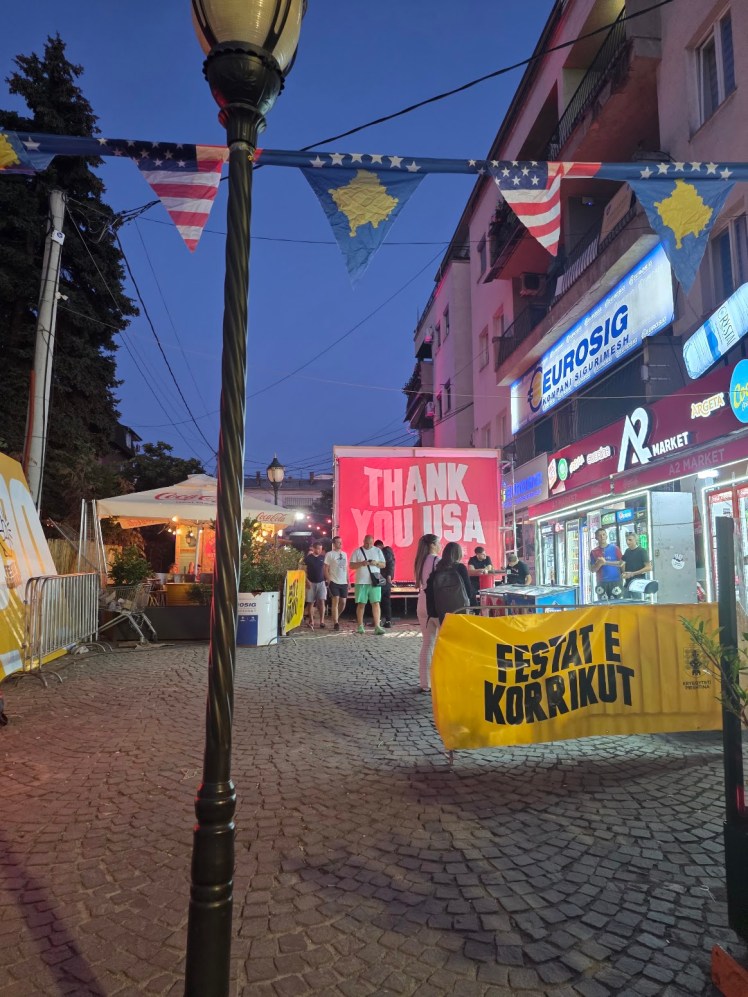
What we did find was an overwhelming pro-American vibe. Because Bill Clinton, former U.S. President, recognized Kosovo as an independent nation the day after it declared its independence in 1992 and he visited Kosovo, the city has a monument to him, as well as a street named after him. There were also American flags everywhere. We just happened to visit on July 4, and of course, they also had a Fourth of July celebration to recognize their relationship with the United States.
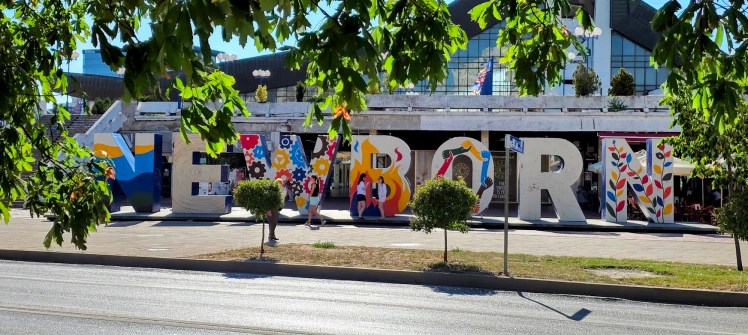
One of the coolest monuments in Prishtina is the NEWBORN monument. The 10-foot-tall, 79-foot-long monument of a single English word in a country dominated by the Albanian language, represents the Kosovo’s independence, its positive connotations, and the potential for a modern, democratic Kosovo. The original monument was bright yellow with blue banners to represent the European Union colors, and the letters are repainted annually to celebrate another year of freedom.
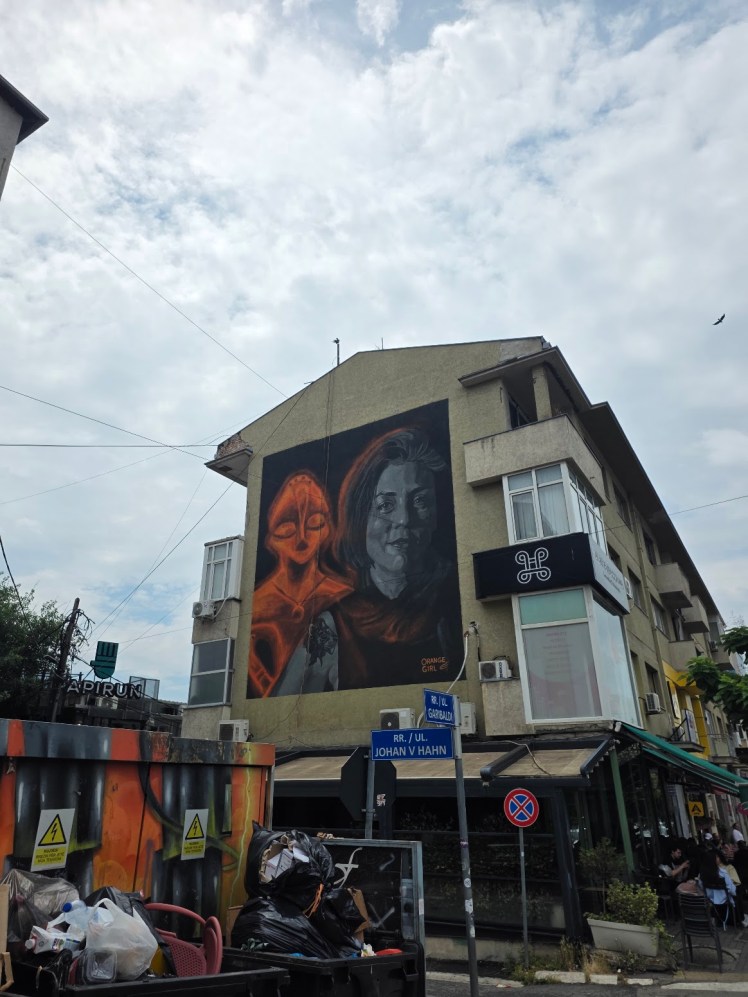
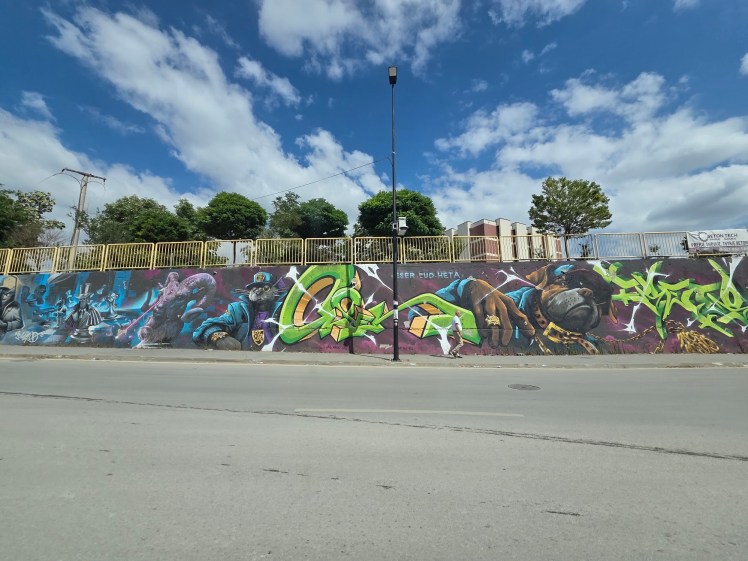
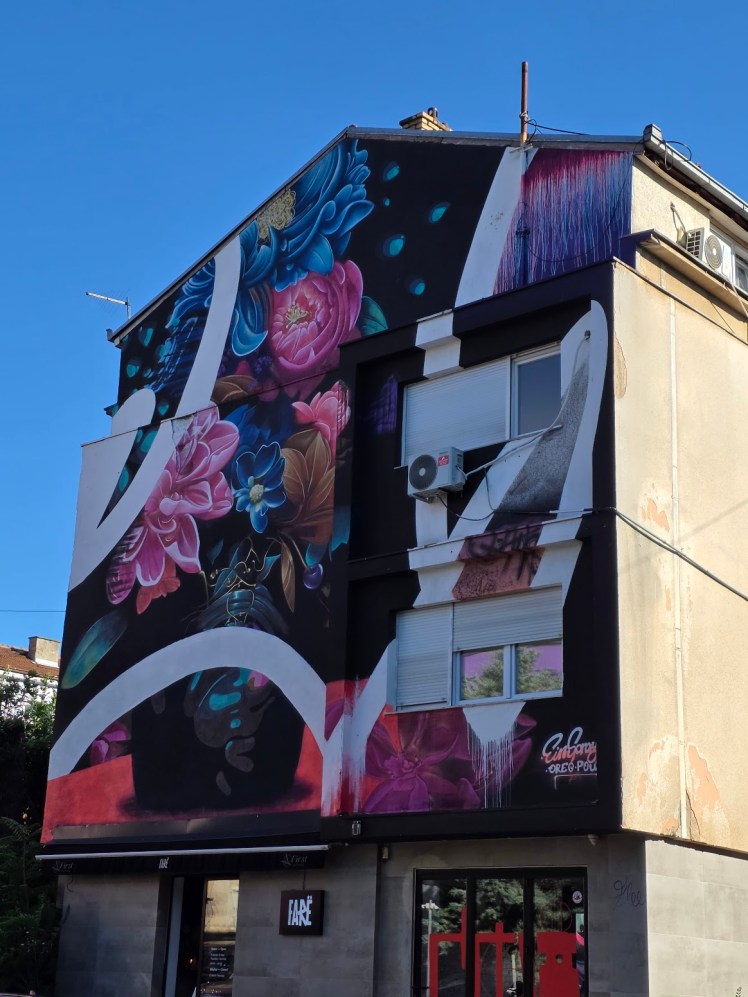
We also saw a lot of street art. I appreciated that Pristina seems to have standards for street art, so it’s not the standard, random, ugly graffiti that I’ve seen in other cities.
Final Thoughts
Two days is sufficient for each city. Neither city is very large and two days is enough to see the highlights. What I did enjoy was the culture and food. The locals we met were friendly and welcoming.
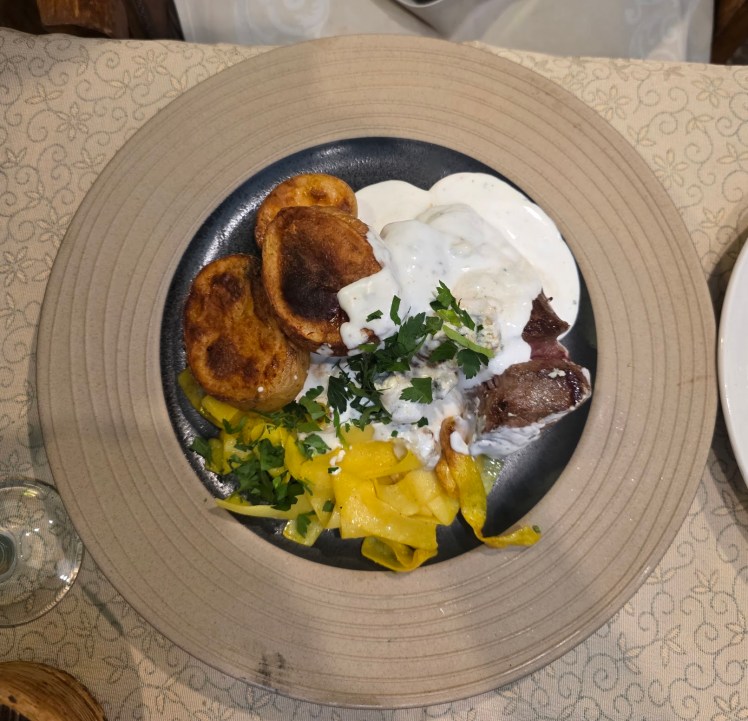
While I enjoyed my trip, I wouldn’t necessarily visit Skopje again. I would visit to Macedonia again to see other parts of the country because what I did see was beautiful. I would go back to Prishtina just for the food as I had some of the best food I’ve ever had. In particular, a delicious steak covered with gorgonzola at Liburnia.
Where else did I go in July? Stay tuned to find out!
All content, including photos, © 2026 L. Long/wanderinglynn.com. All Rights Reserved. No part of this website or its contents may be reproduced, copied, modified, adapted, or used to train AI without prior written consent of the owner.
Any links are merely for reference or for your convenience.

