Because the weather got ridiculous hot, we decided to do a road trip in August. We took quick overnight road trip to the Umbria region.
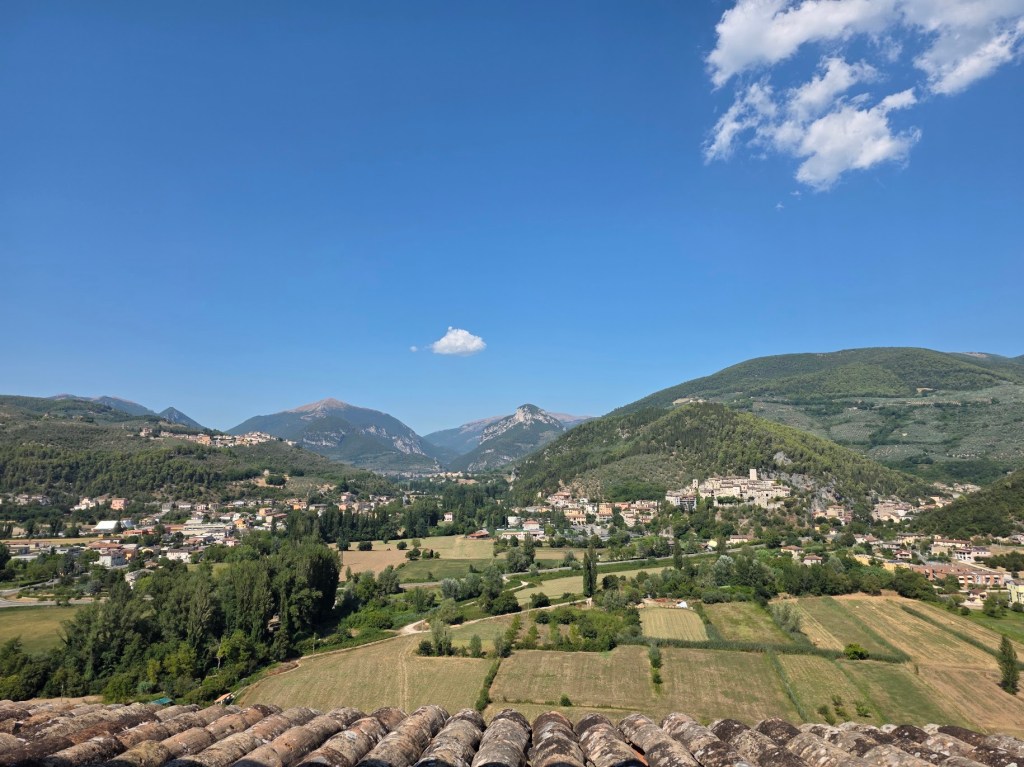
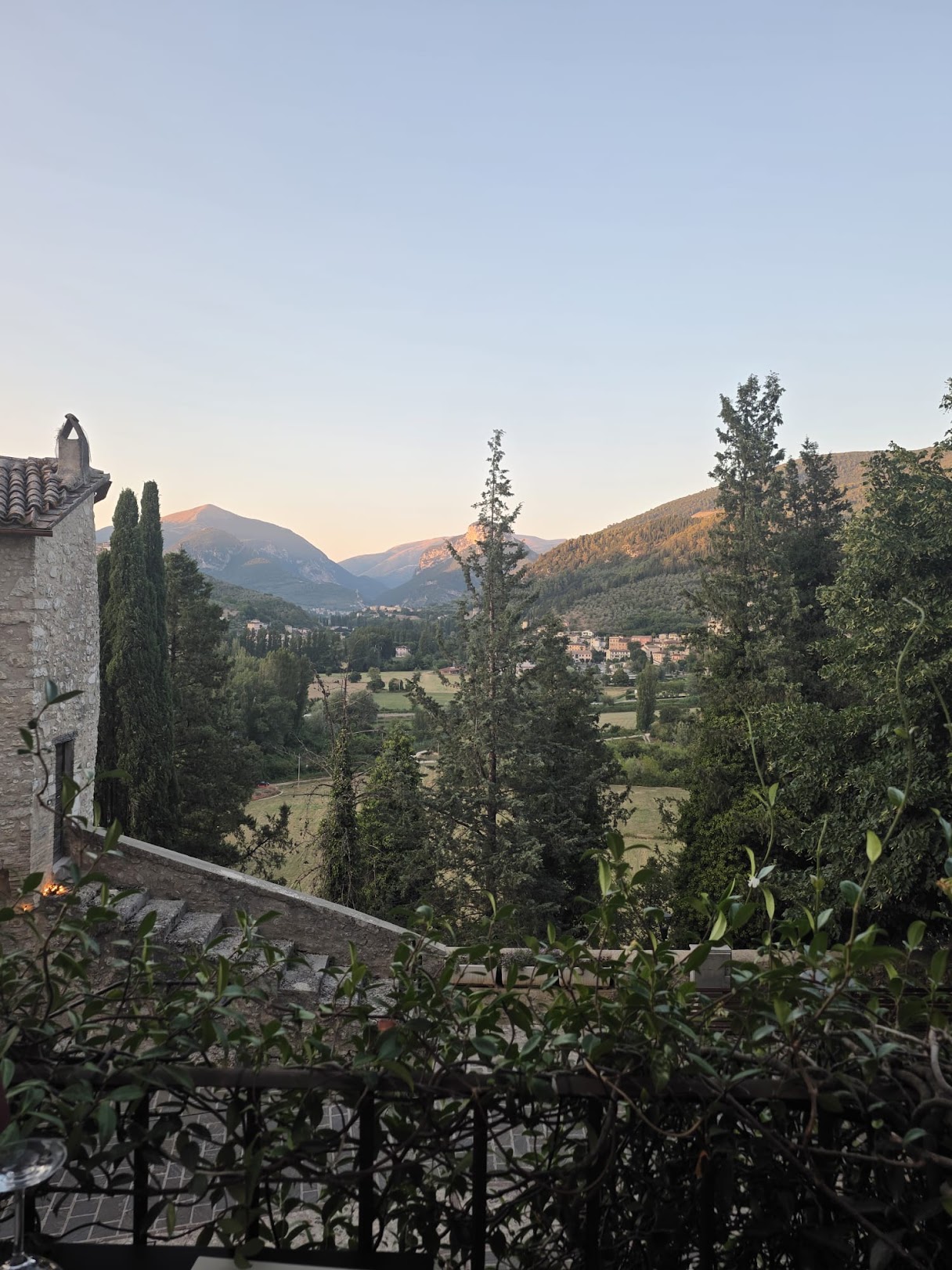
view from our terrace in Casteldilago Umbria is a region in central Italy. In fact, the geographic center of Italy is claimed to be near the Cardona Bridge in Narni*, Umbria, which is marked by a memorial stone. Known as the Green Heart of Italy, it is the only landlocked region in Italy. Roughly halfway between Rome and Florence, it took us about three and half hours to reach the region.
* Did you know?
The modern Narni was a Roman colony established around 299 BCE called Narnia. The name came from the nearby Nar river, which is called the Nera today.
(Not interested in History? Skip to the next section or even to my final thoughts.
A Little History
The region is named for the Umbri people, an Italic people who settled in the area around the 6th century BCE. However, civilization in the region dates back to the Bronze Age (circa 3300 – 1200 BCE).
The Umbri resided to the east of the river Tevere and their rivals the Etruscans to the west. The two conflicting tribes came to loggerheads when the Etruscans invaded, forcing the Umbrians from their homes. However, the two tribes joined forces in 295 BCE in an unsuccessful bid to drive away the powerful Roman Empire who sought to take their lands.
Eventually the Umbri were absorbed by the expansion of the Romans in 90 BCE. After the collapse of the Roman Empire, the Byzantines and Ostrogoths struggled over the region. Then after the Ostrogoths, the Lombards founded the Duchy of Spoleto, which covered much of today’s southern Umbria, from the 6th century to the 13th century when Umbria became part of the Papal State.
The region was later divided into independent city-states, supportive of their separate rules by either the Pope or the Holy Roman Empire. It was during this time that perhaps the most famous figure of Umbria was born—St Francis of Assisi. St. Francis cemented Umbria’s reputation as the core of Italy’s connection to spirituality, and today, thousands of pilgrims venture to the majestic town of Assisi.
The Papacy ruled the region uncontested until the end of the 18the century. The region was then incorporated into the French Empire in 1808 before it returned to papal rule again from 1814. From 1861, the region was under the Kingdom of Italy.
At the start of the 20th century, Umbria was regarded as a center of industrial development. However, World War II ruined any previous growth with steelworks pulled apart by German troops and bombed. After the destruction of WWII, the area received some restoration but has overall stayed an agricultural region.
Umbria is also known for being a hub of knowledge, being the home of one of the oldest universities in the world. Founded in 1308, the University of Perugia is a small university with impressive alumni.
The capital is Perugia and it is the 4th least populous region of Italy.
Road Trip to Umbria
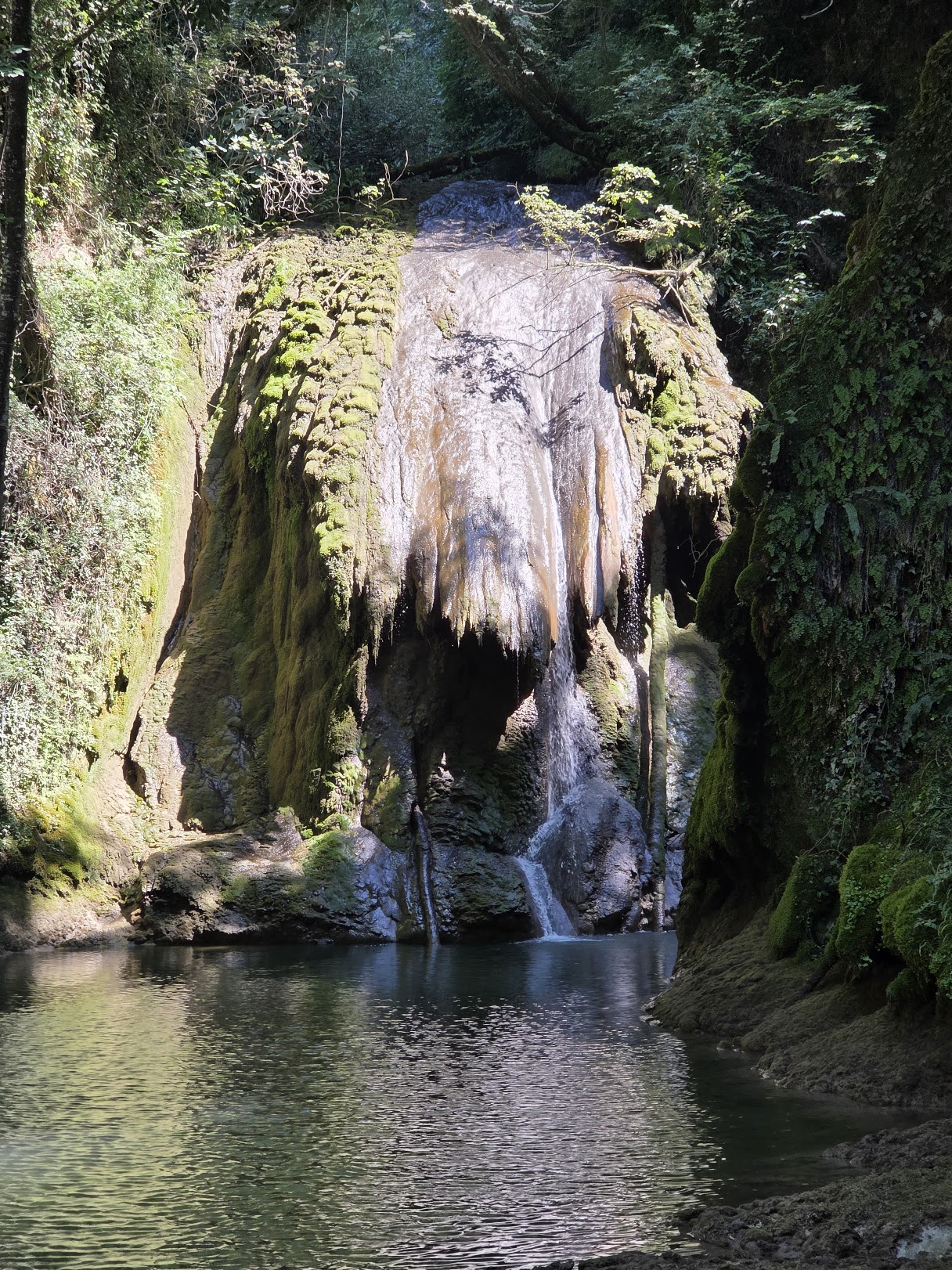
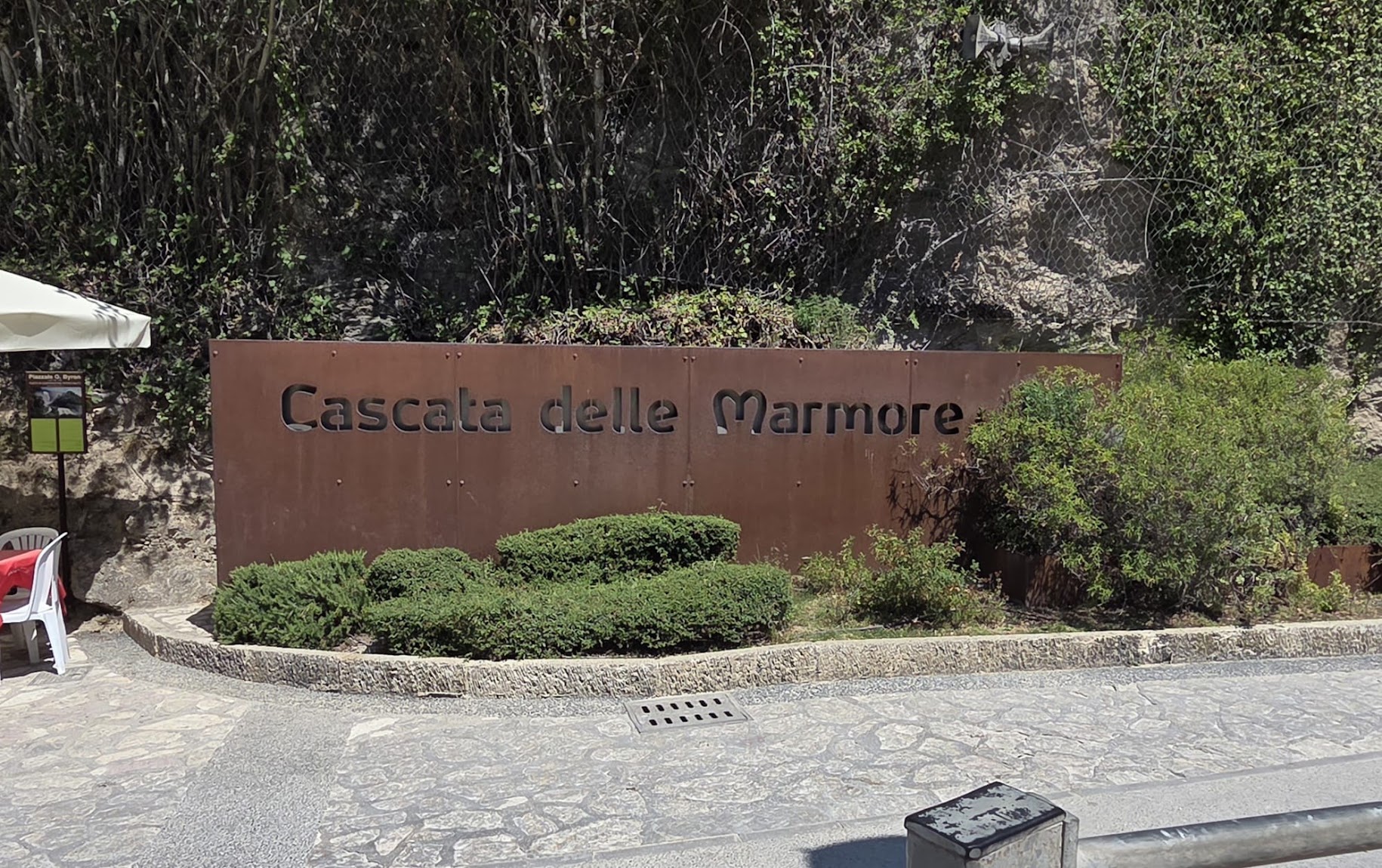
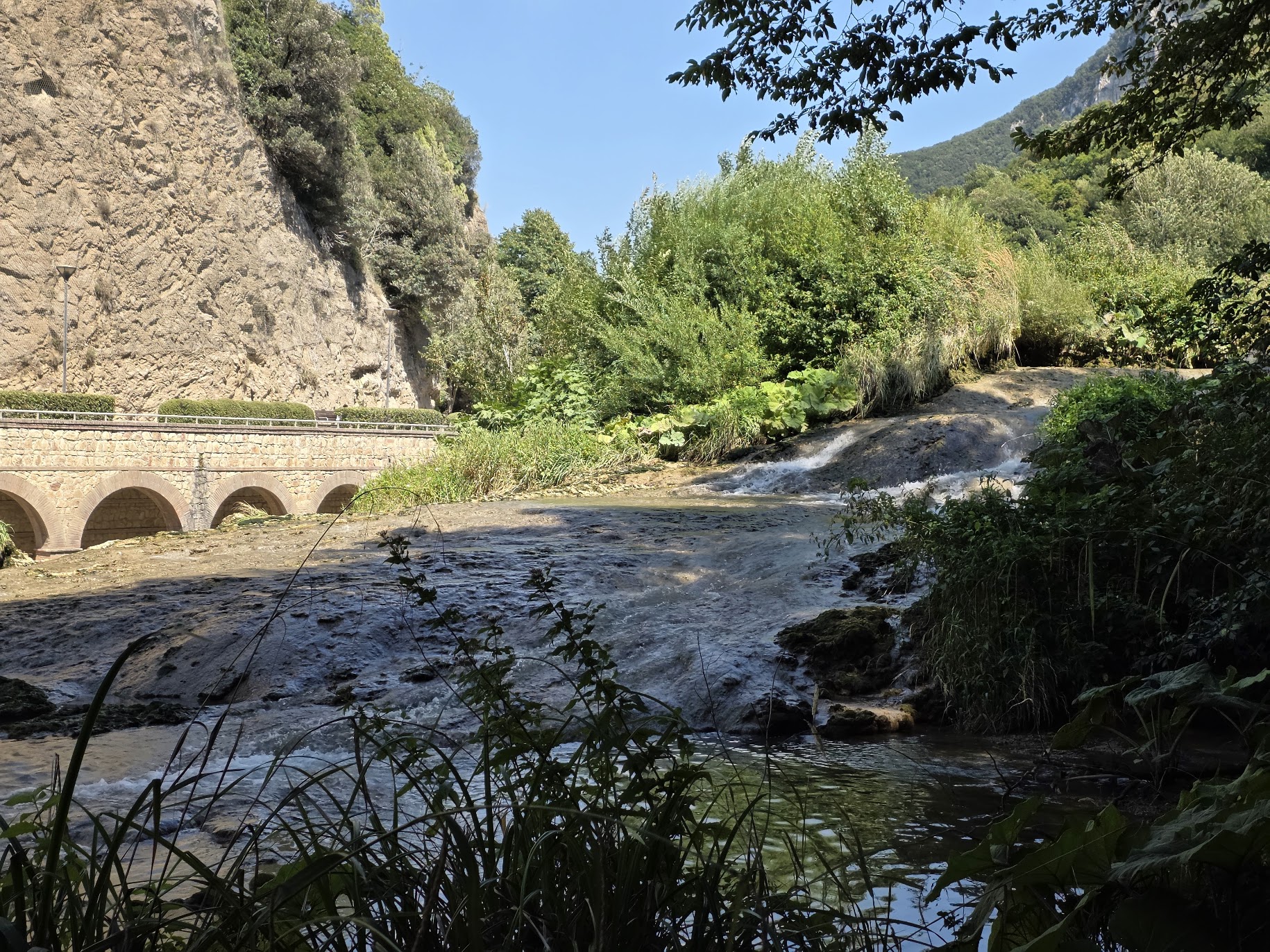
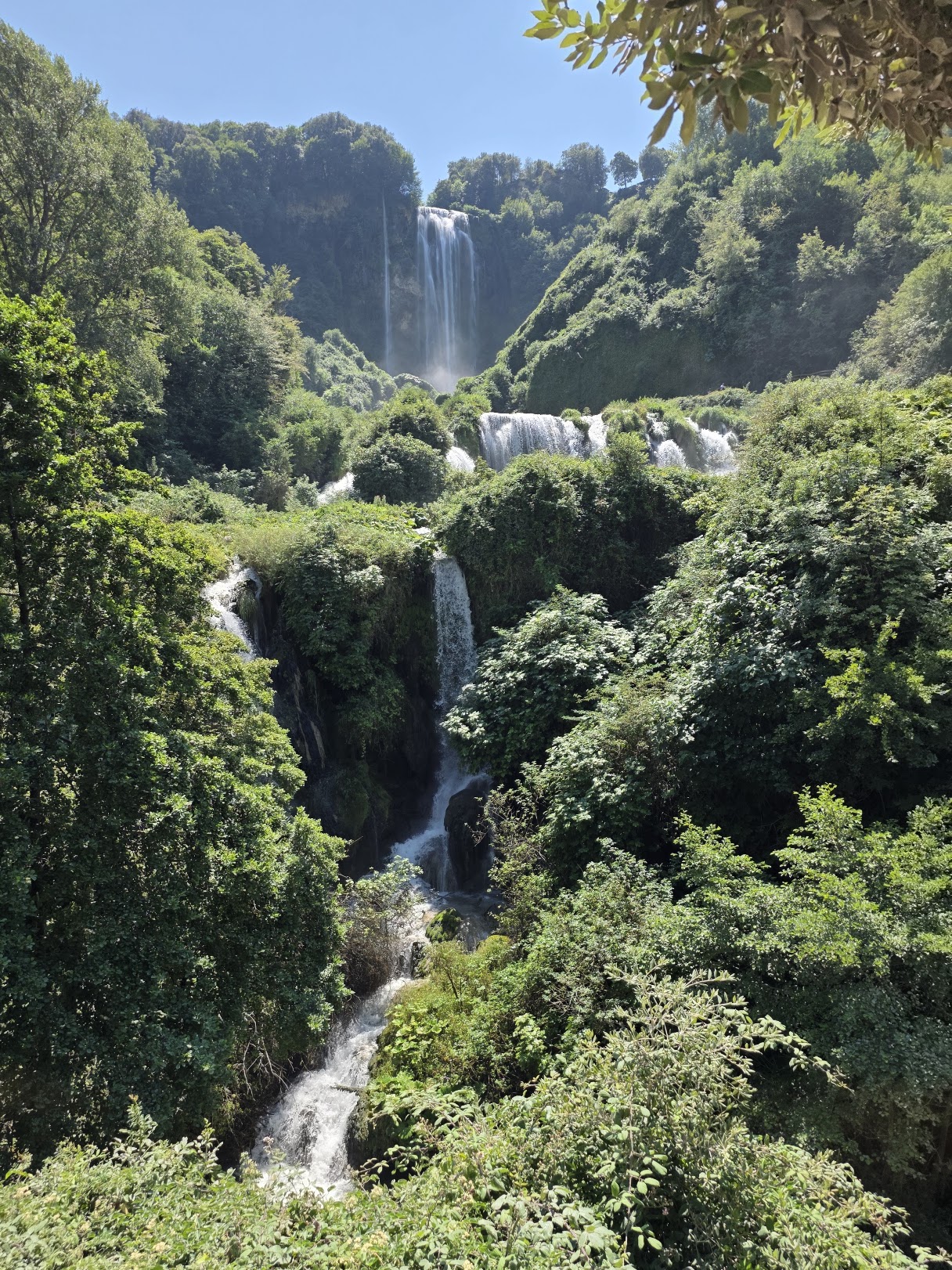
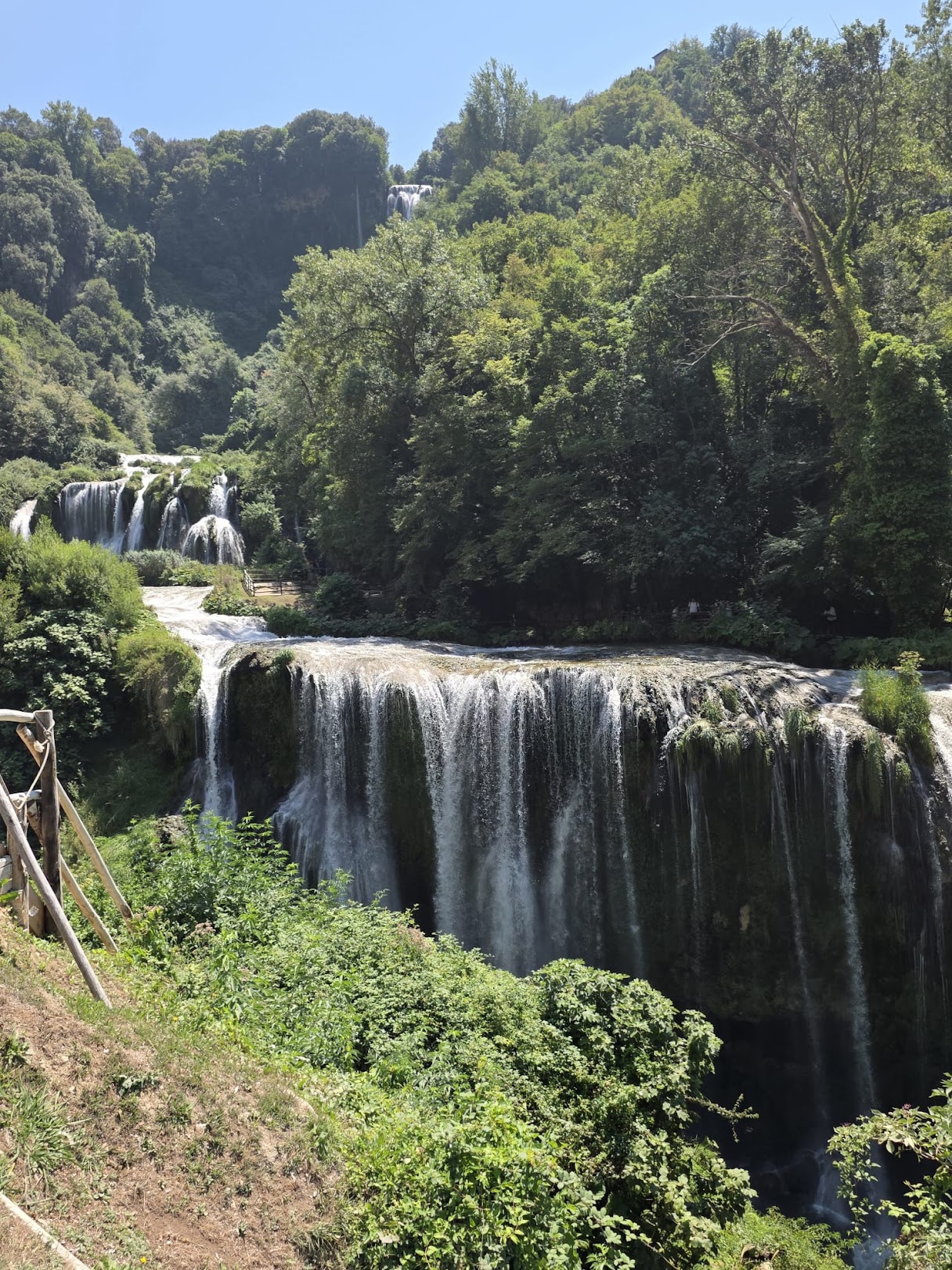
The main reason I wanted to visit Umbria was Cascata delle Marmore, a man-made waterfall created by the Romans to drain water from the river Velino.
The waterfall stands at 165 metres (541 feet) tall and is surrounded by lush greenery. For anyone who has studied history, the Romans were well known for their engineering achievements, like durable road networks with layered construction, vast aqueduct systems that supplied cities with fresh water using gravity alone, and the invention of long-lasting concrete made from volcanic ash and lime. But for me, the waterfall is the epitome of Roman ingeniousness.
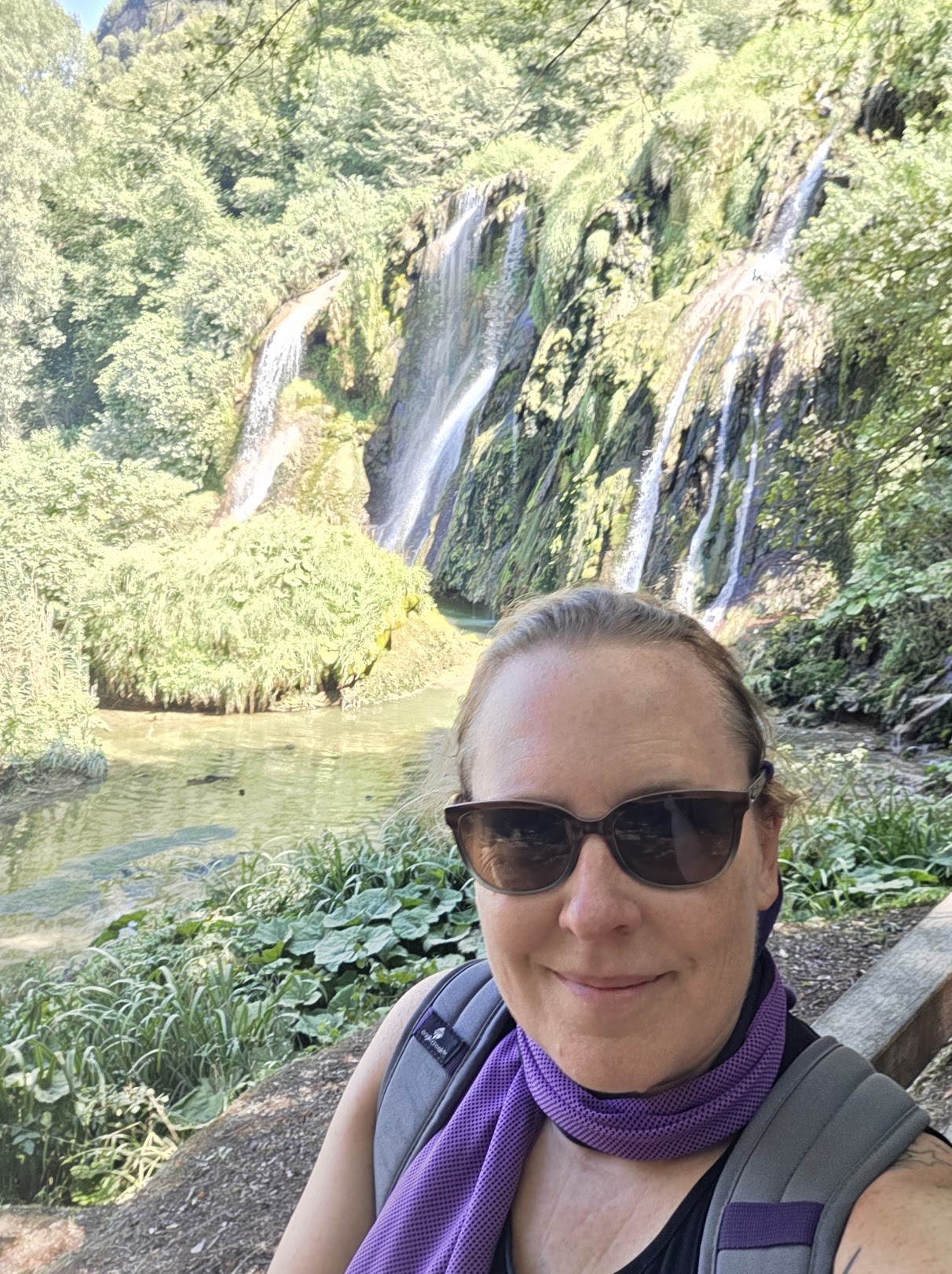
The waterfall is simply amazing. The water is released Monday through Saturday twice a day and once on Sunday, and there is a noticeable difference when the water is released. There is a path (with stairs) to climb to multiple viewing areas. We only went halfway up because the day was ridiculously hot (35°C / 95°F). But I definitely want to go back.
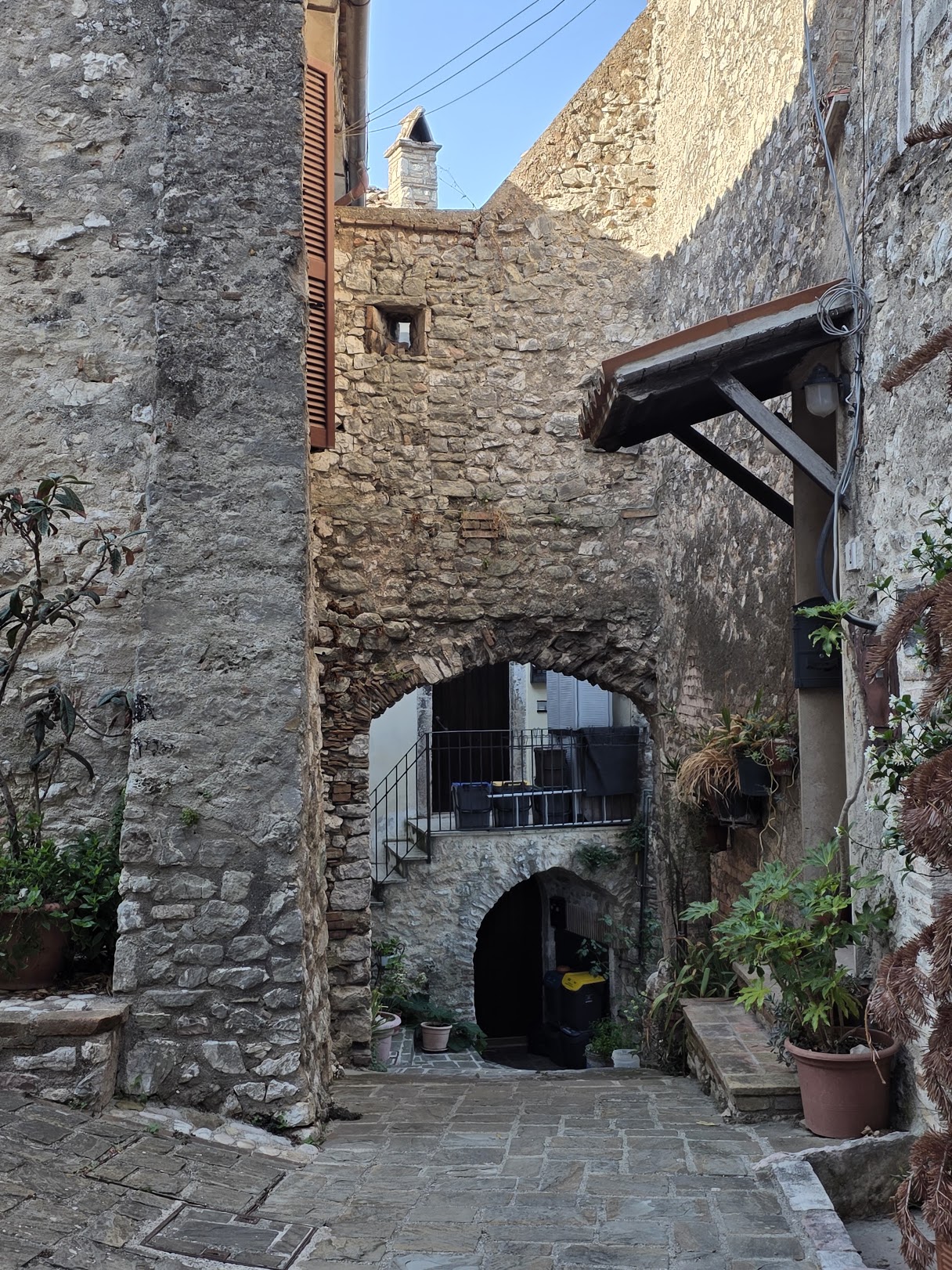
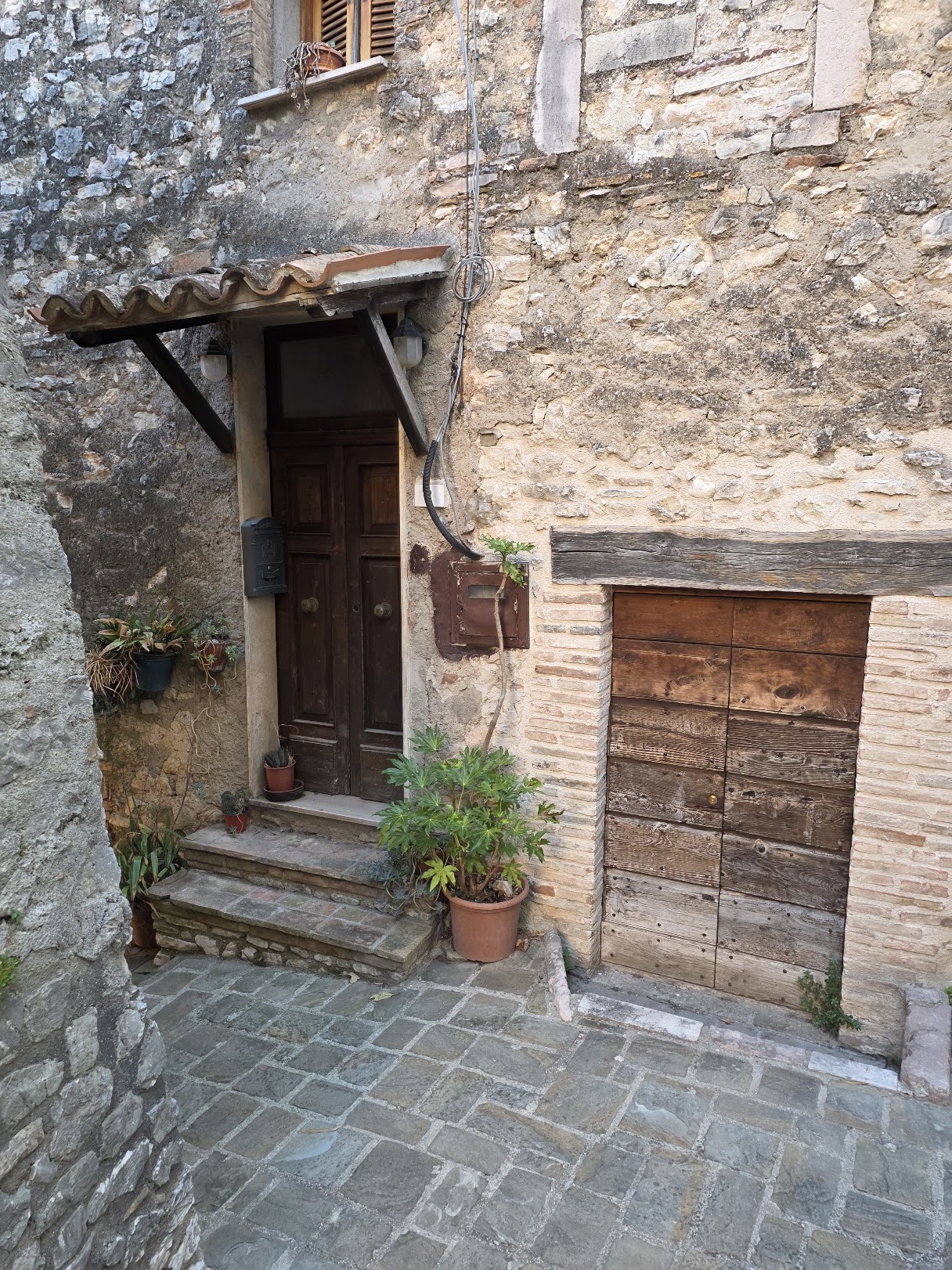
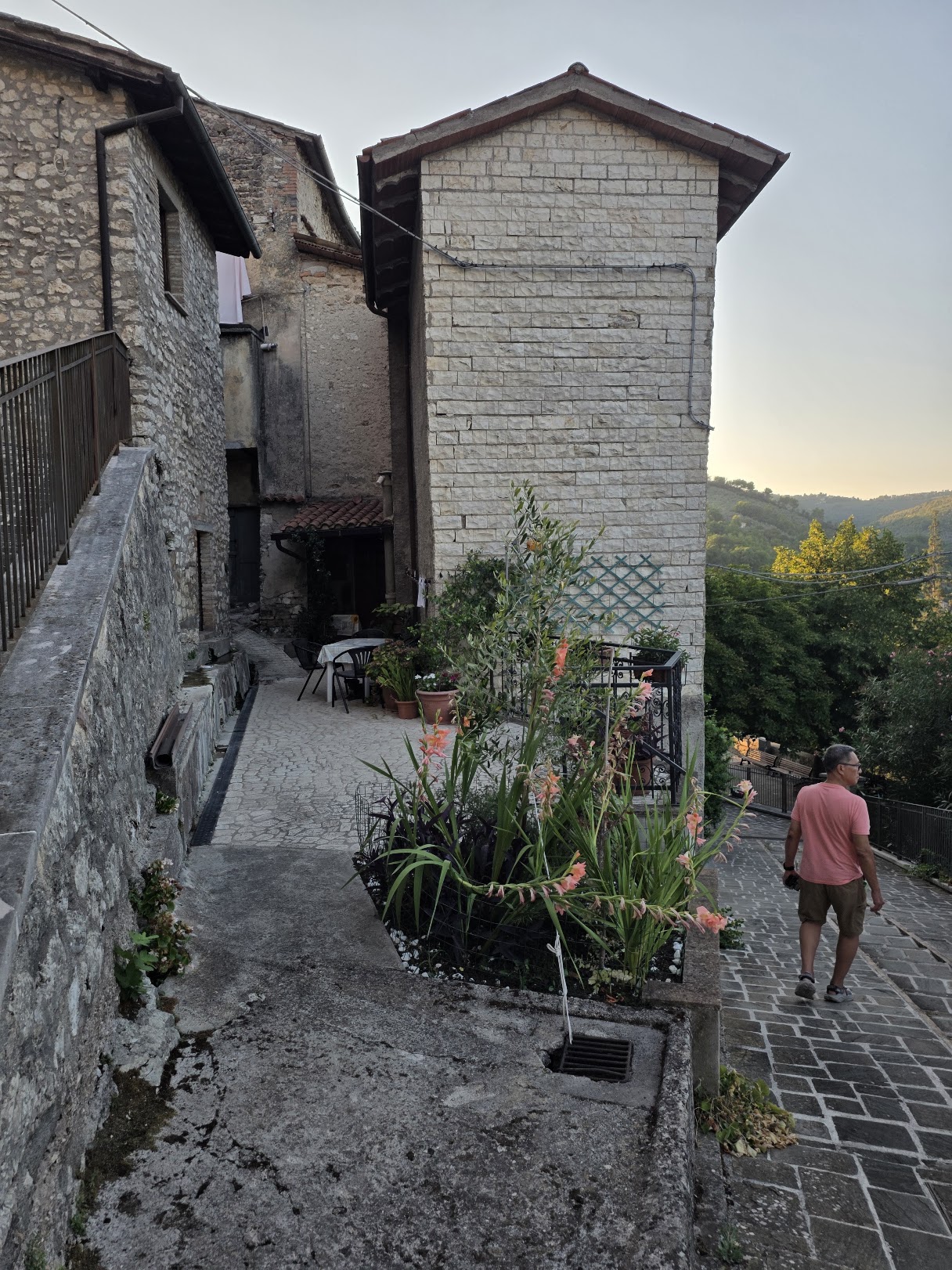
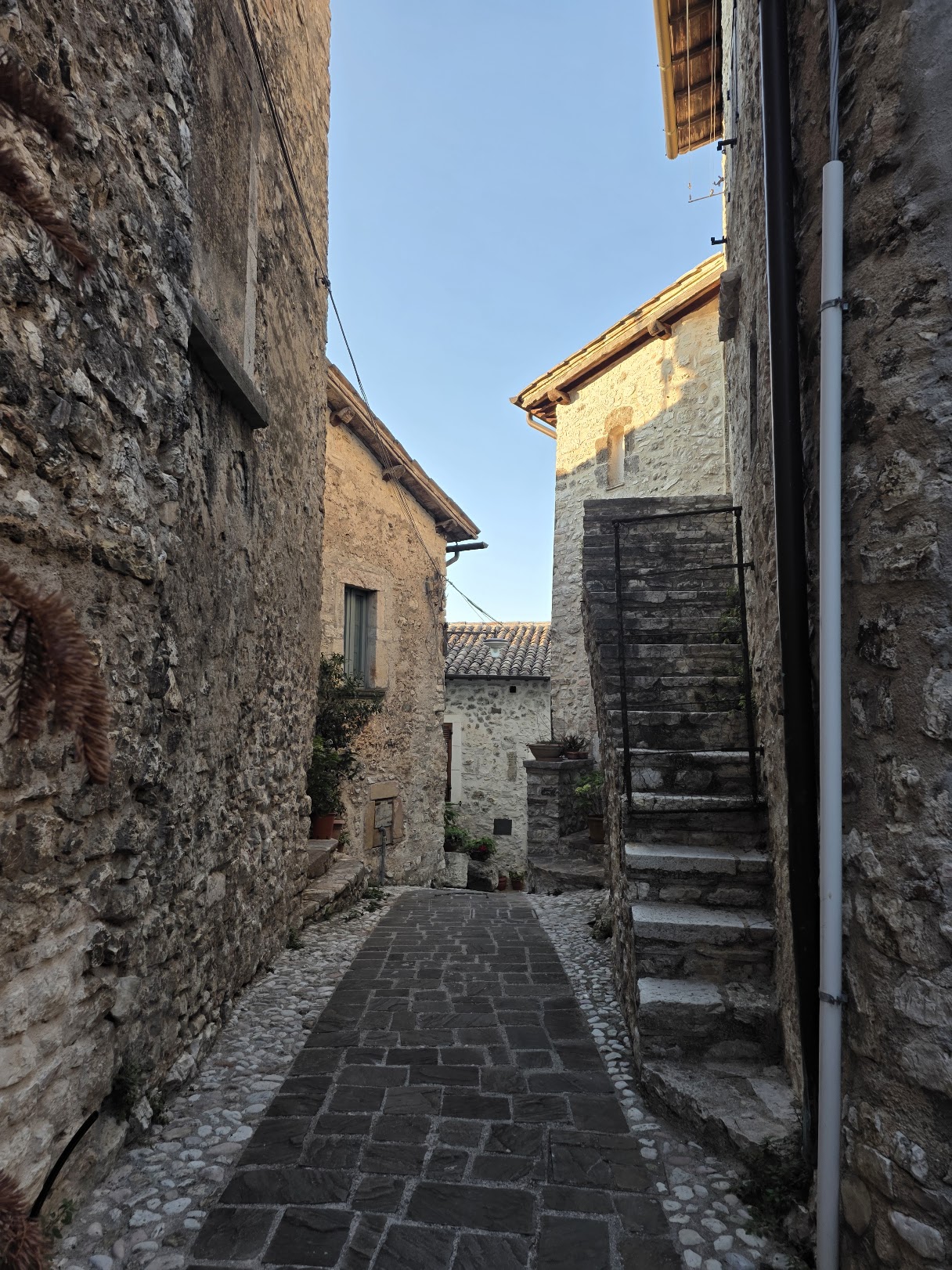
We stayed in Casteldilago, which is in the Province of Terni about 5 km from the waterfall. Casteldilago is a small medieval hamlet perched on a rocky promontory overlooking the Nera River valley. The village has preserved its original layout, with narrow alleys, stone houses and evocative panoramic views opening out over the Umbrian hills and surrounding waterways.
Our “hotel” was Borgo San Valentino, which has restored 13 apartments located within the castle walls, all within a short distance of each other. The apartment we stayed in was located inside a medieval watchtower, and so it was a two story apartment. Off the bedroom upstairs was a small terrace that had a spectacular view of the valley.
Walking around Casteldilago felt like being in medieval times. The “streets” are steep and narrow, maybe wide enough for a compact car. (But there are no cars allowed up in the historical part of the hamlet.) I definitely got a workout climbing up to the top of the hamlet!
Final Thoughts
Everyone says Umbria is the best parts of Tuscany without the tourists. And I agree! Rolling countryside and historic towns and villages, I absolutely fell in love with Umbria. It is indeed Italy’s Green Heart. If I were to buy a vacation home in Italy, I would buy one in Umbria.
I liked it so much that we’re going back at the end of October. This time to Orvieto for olive harvesting, so stayed tuned for more Umbria!
Where else have I been this summer? Stay tuned to find out!
All content, including photos, © 2026 L. Long/wanderinglynn.com. All Rights Reserved. No part of this website or its contents may be reproduced, copied, modified, adapted, or used to train AI without prior written consent of the owner.
Any links are merely for reference or for your convenience.

