Several years ago, maybe 2018, a Litsy friend decided to do an overnight at Gladstone’s Library. She invited others to join her—online friends meeting in real life.
It was the start of a new tradition.
Every year since (save maybe one of the covid years), a group has met there. While the date has changed and the time expanded from an overnight to a long weekend, every year they meet to read and talk books.
And finally, finally, I got to attend.
Knowing I had been wanting to go, my friend Jules messaged me with the dates and told me there was space. I jumped on the chance and immediately contacted the Library.
Luckily, they had one room available and I grabbed it.
A Little History
(Not interested in History? Skip to the next section or even to my final thoughts.
The Library is in Hawarden, Flintshire, Wales. Wales, like the rest of Europe, has had a long and often bloody history.
Quick Welsh History
Skipping the prehistory (the period of human history that occurred before the invention of writing systems, approximately 5,200 years ago), Wales was settled by the Celtic tribes around 1000 BCE.
Then, like a good portion of Western Europe, Wales was conquered by the Romans. Beginning in 43 CE, the Romans took 30 years to complete their subjugation of the native tribes. Their rule lasted over 300 years until approximately 383 CE.
After the fall of the Roman Empire, the Romano-British of the cities and the tribal capitals became a loose collection of separate, independent kingdoms and lordships with influxes and incursions from Europe.
Then the Saxons invaded eastern England, and by the 7th century, they reached the borders of Wales. Centuries of fighting between the Welsh and Saxons followed. Then in the 9th century, the Vikings began attacking Wales, which continued until the end of 10th century. (See, bloody history.)
Oddly enough, when William the Conqueror became King of England in 1066, he did not try to conquer Wales. Go figure.
In the mid-13th century, Llewellyn managed to make himself ruler of most of Wales. He became the Prince of Wales in 1267 when King Henry III of England made the Treaty of Montgomery with Llewellyn.
Then in 1272, Edward I became king of England and decided he did want to rule all of the island. He succeed in October 1283 when he finally crushed the rebellion started by Llewellyn, who was killed in 1282. As ruler, Edward imposed English law upon the Welsh and built a network of castles to control the people.
Wales was gradually annexed to England. In 1485, Henry Tudor landed with an army and marched through Wales into England. After the battle of Bosworth, he became king. Wales joining England culminated in the Henry VII’s Acts of Union in 1536, which also imposed that English should be the language used in Welsh courts.
Wales then prospered until the early 20th century. During World War II, both Cardiff and Swansea were bombed by the Germans. Today, Wales has a population of 3.1 million (as of the 2021 census). And sadly, the number of people who can speak Welsh has declined since 2001.
Side note: The United Kingdom (UK) is made up of four constituent countries: England, Scotland, Wales, and Northern Ireland. Great Britain refers only to the island that includes England, Scotland, and Wales. So, “Great Britain” is considered a geographic term whereas “UK” is a political term. And the British Isles are a group of islands off the northwestern coast of Europe, the largest of these islands being Britain and Ireland.
Interestingly, the origin of the word Wales is a variation on a common word used by the Anglo Saxons to mean foreigners or outsiders. Variations of the same word can be found in other countries, such as Walloon part of Belgium. Cymru, meaning friends/companions, is a preferable name to Wales, although the origins are long in the past.
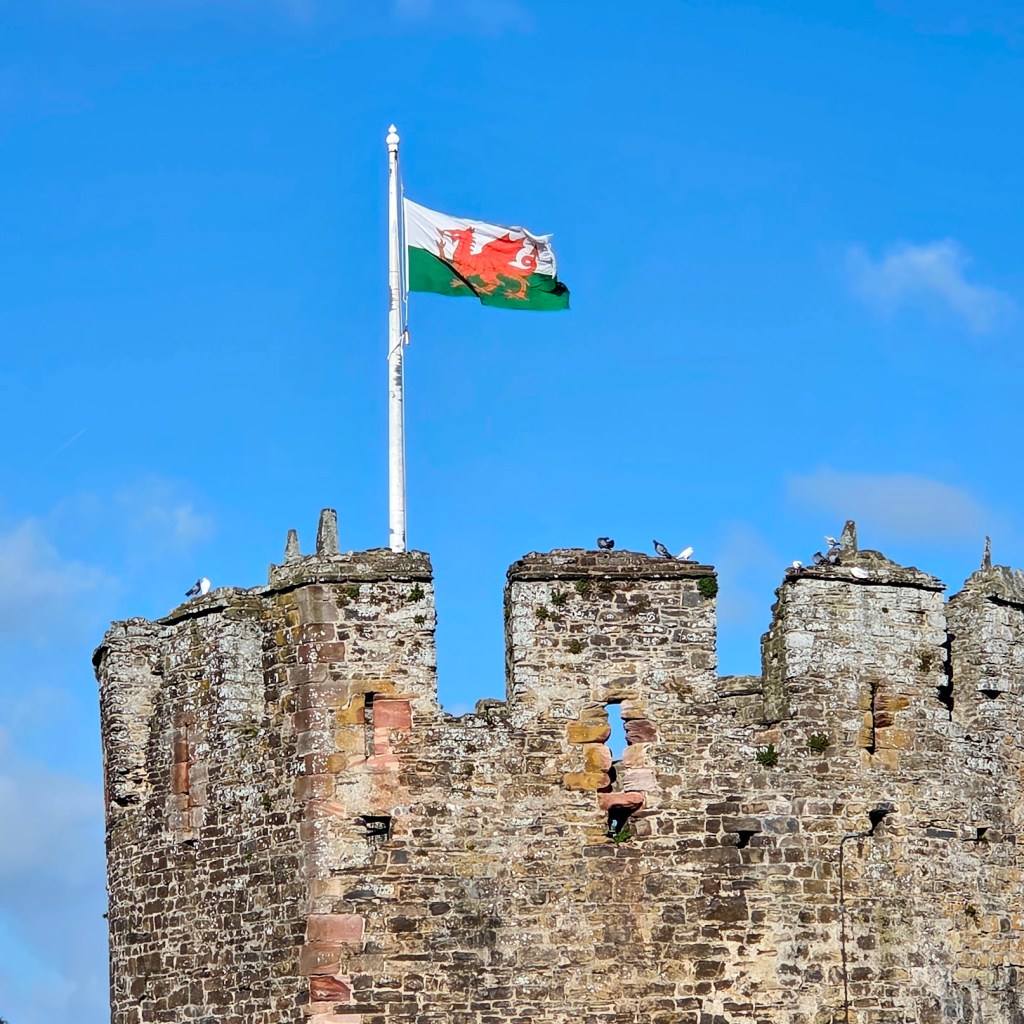
The origins of the Red Dragon flag, or y Draig Goch, could date back to the Roman period, when the dragon (or draco) was used by Roman military cohorts at the time of the Emperor Trajan. After the Romans left, the Red Dragon remained as a key emblem of Wales and there are accounts of battles against the Saxons under the Red Dragon. The Tudors adopted the Red Dragon, and the Welsh-born future Henry VII took to the battle of Bosworth Field under the Red Dragon standard.
Gladstone’s History
Gladstone’s Library is the United Kingdom’s only Prime Ministerial library, built following a bequest from William Ewart Gladstone.
Gladstone was a four-time prime minister of the UK between 1868 and 1894, which is the most terms of any British PM. In 1895, at the age of 85, he bequeathed £40,000 (approximately £6,8 million today or $8.98 million) and about half his collection from his home in Hawarden Castle to a purpose built, corrogated-iron library on a purchased site in the village of Hawarden. While Gladstone was from Liverpool, his wife, Catherine Glynne, was from Flintshire, Wales. They lived at her ancestral home Hawarden Castle.
The first residential guest arrived shortly after and stayed in the Library’s “hostel”, which was a separate house close to the Library building. In 1898, following Gladstone’s death, work began on a grand new building, designed to bring the books and residents together.
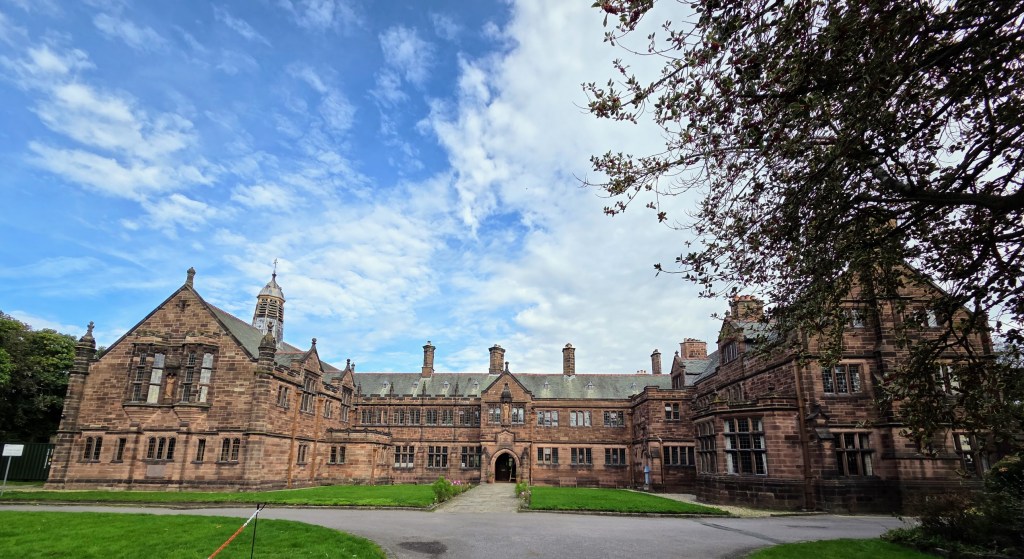
The current building, designed by John Douglas, was completed in 1902 and was funded by public subscription.
Today the Library houses over 150,000 books and archival materials, and includes reading rooms (what most refer to as the Library), 26 bedrooms, an on-site restaurant, a chapel, and a guest lounge.
Be happy with what you have and are, be generous with both, and you won’t have to hunt for happiness. – William Ewart Gladstone
To the Library!
The flight from Naples to Manchester was about 3 hours. Flying over England, I saw a complete rainbow (although the photos sadly didn’t turn out).
From Manchester, the drive to Hawarden was only about 50 minutes. One note about driving in the UK, they take speeding seriously. Not only did my rental car start beeping every time I went 1 MPH over the speed limit, the UK has speed cameras that calculate your average speed.
In other words, don’t speed.
The drive into Hawarden was beautiful—rolling green hills, bluebird sky, and trees. Absolutely stunning.
I found the road to the Library and only had to drive around the country block once because it required merging onto a road to immediately turn left. (And in the UK, driving is on the right side, so turning left is turning across traffic.)
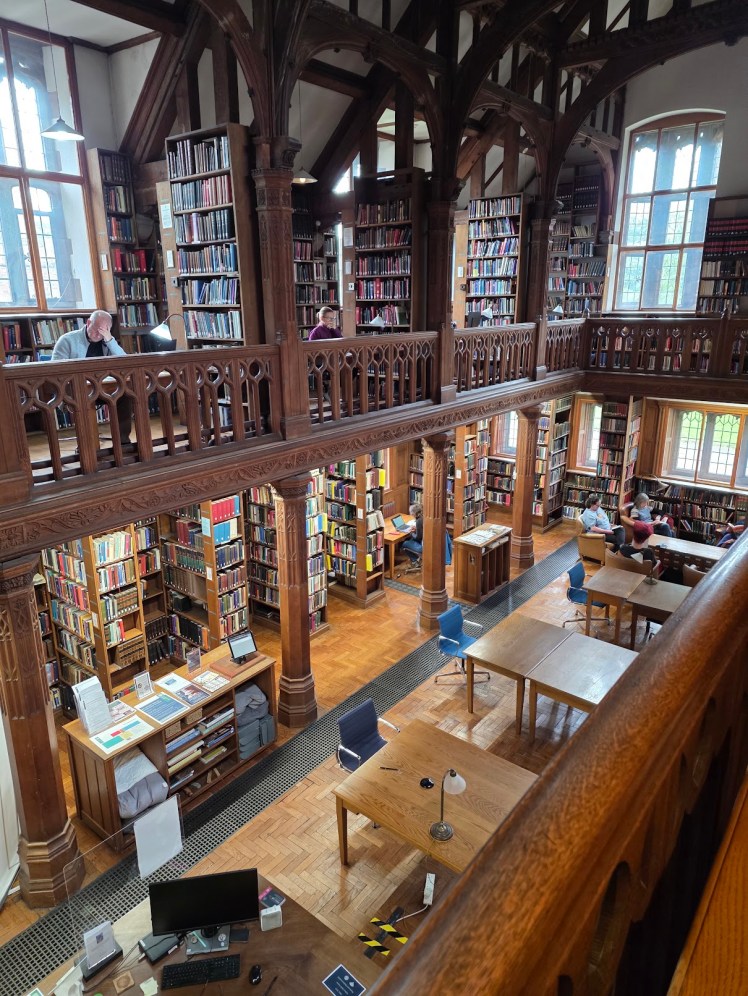
After parking the car, I stopped to take in the site—a building exactly what my imaginings of what a Library should be.
After checking in, I headed to my room upstairs on the second floor. I knew I had a small room with only a twin bed. But I did have an en suite bathroom whereas a few of the other rooms had a bathroom across the hall from the room. So I was thankful for the en suite even though the shower was a small square and not the easiest to get in and out of. But sacrifices must be made in the name of books.
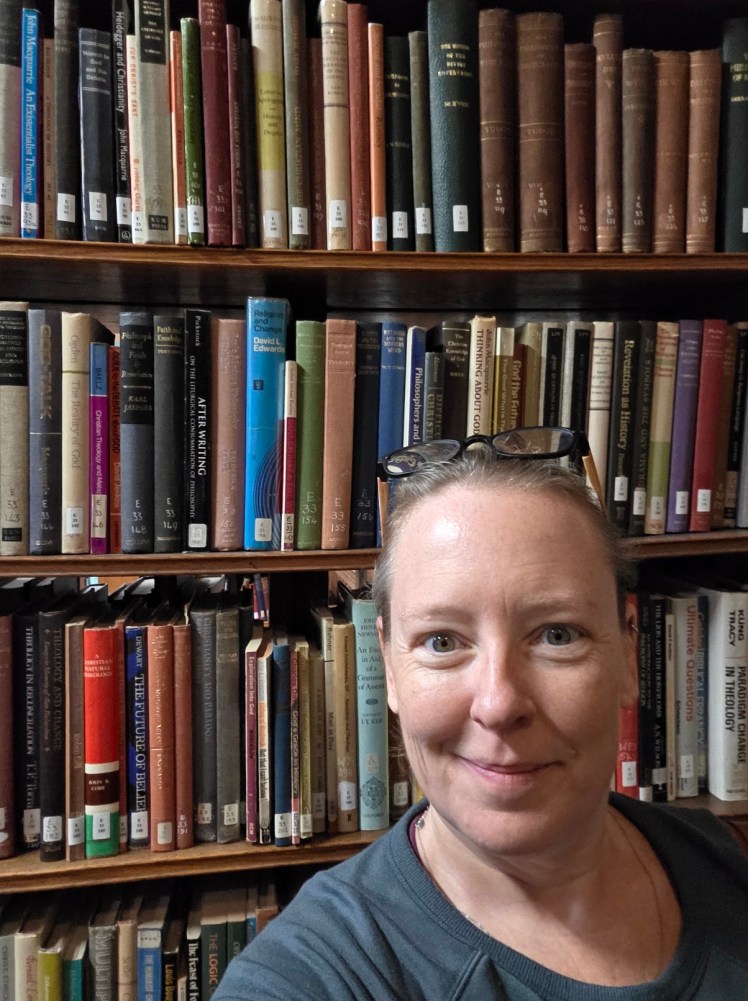
Downstairs, the reading rooms are on the left (if facing the building). While most would call the reading rooms the “library”, the entire building is really the library and the staff distinguish the reading rooms as just such. The main area has two levels with a balcony level looking down to the floor. Tables have been placed admist the stacks for study or work, and the main floor also has a comfortable living room type seating. There is no talking in the reading rooms, which makes for an excellent place to work or study.
The Lounge is on the right (again, if facing the building), which was my favorite place to read. While the reading rooms are lovely and quiet, the lounge has a more laid back vibe. There are, of course, bookshelves in the lounge too. And also board games and puzzles. It’s a large room, divided up into four main seating areas plus a large square table in the middle. (And somehow, I failed to take a photo of the Lounge.) Our group stayed around the three couches by the fireplace.
Then the restaurant is on the backside nearer the Lounge. Also a nice large area to read (either before or after the main meals). They serve drinks and snacks all day, and we could take our drinks and snacks in the Lounge too.
The backyard area (or at least what I would call the “backyard”) has several picnic tables in one section and a couple other benches around. Lastly, there is a chapel, which has a weekday brief gathering and then is also available for shared silent prayer/meditation when the Chapel is not in use. I did not go into the chapel, but I heard other people talking about using it.
I had dinner at the local pub twice and also enjoyed a couple of meals at the Library. I also enjoyed a proper Sunday afternoon tea, complete with small crustless sandwiches and a variety of sweet treats. My favorite was the cinnamon scone.
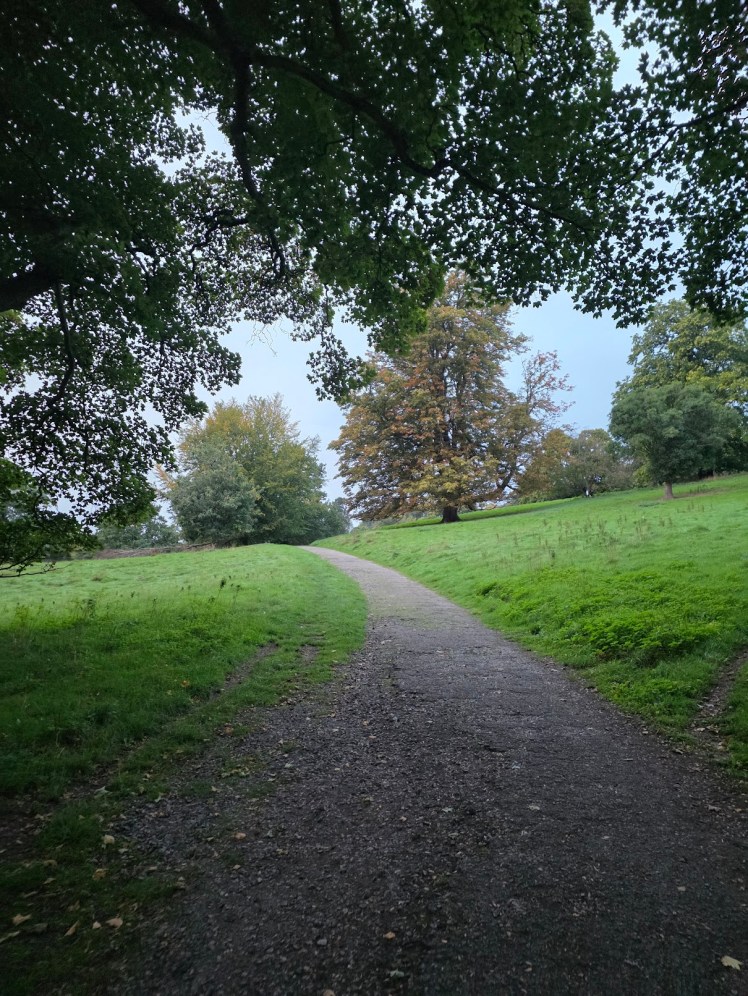
Down and across the street was a park with a trail, where I took several morning walks. The park ends and turns into private land, which requires a permit that the Library will provide. The walk was so peaceful and being in nature always makes me feel better. The Japanese have it right with Shinrin-yoku (“forest bathing”), which is a practice or process of therapeutic relaxation by spending time in a forest or natural atmosphere and connecting with nature.
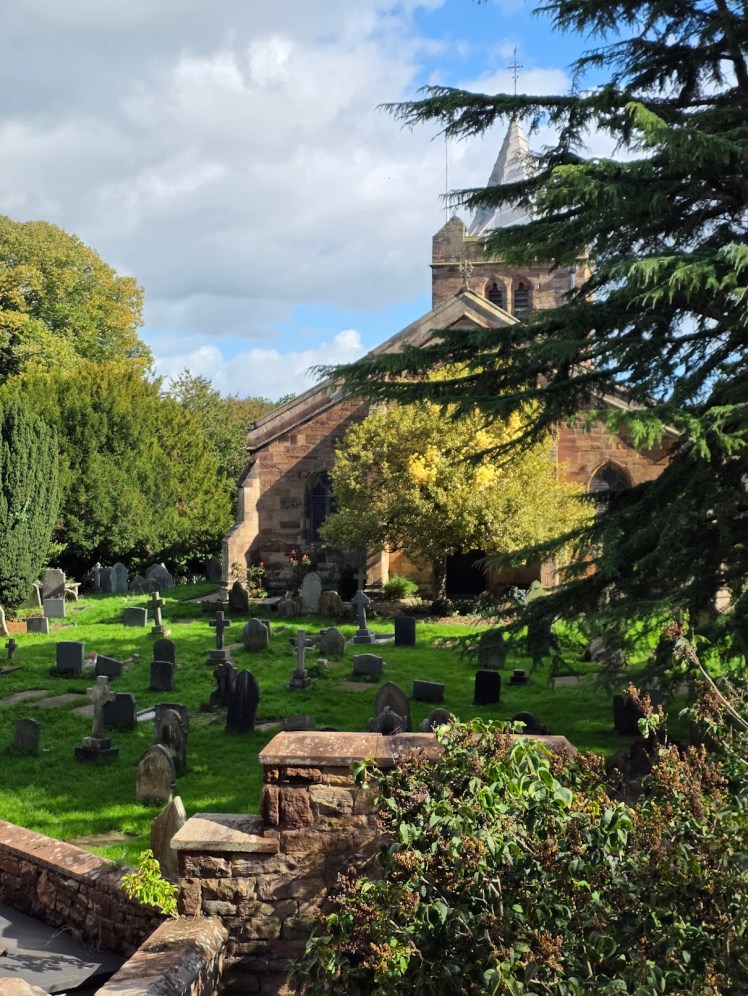
Exploring the Area
While I mostly went to be at the Library, I specifically rented a car to visit some of the nearby attractions.
Of course, being with fellow booknerds, all of whom had been to the Library before and all but two (not counting me) who live in the UK, they had bookshop recommendations.
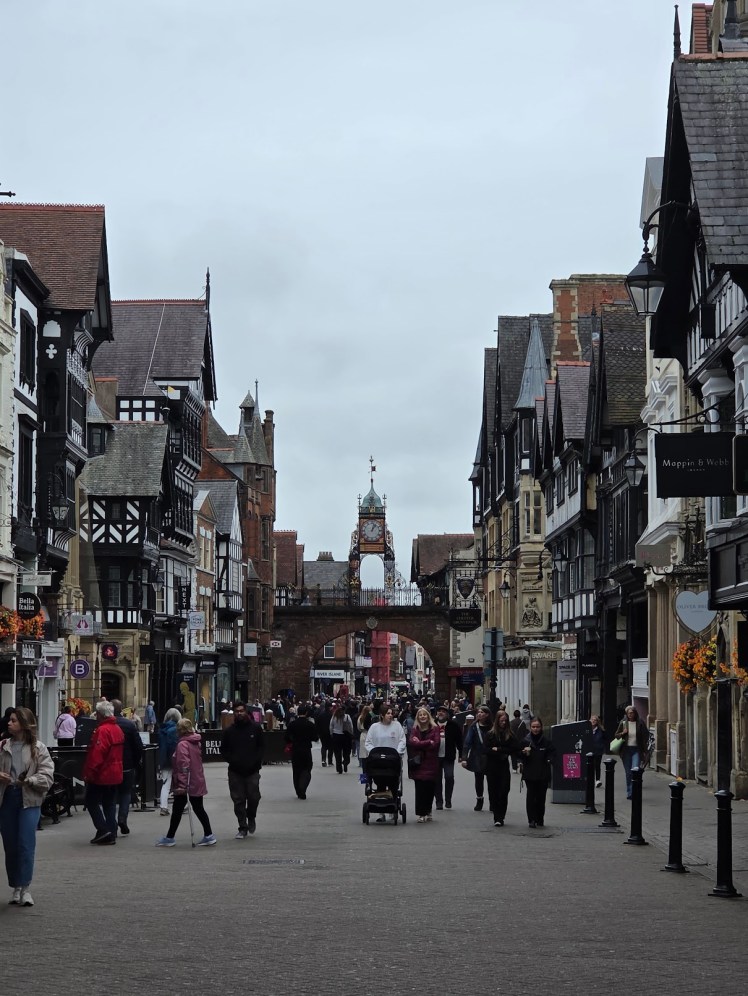
So, on Friday morning, I drove into Chester, Cheshire, England, on the River Dee, which is right across the Welsh border, to visit Books On the Walls and Waterstones.
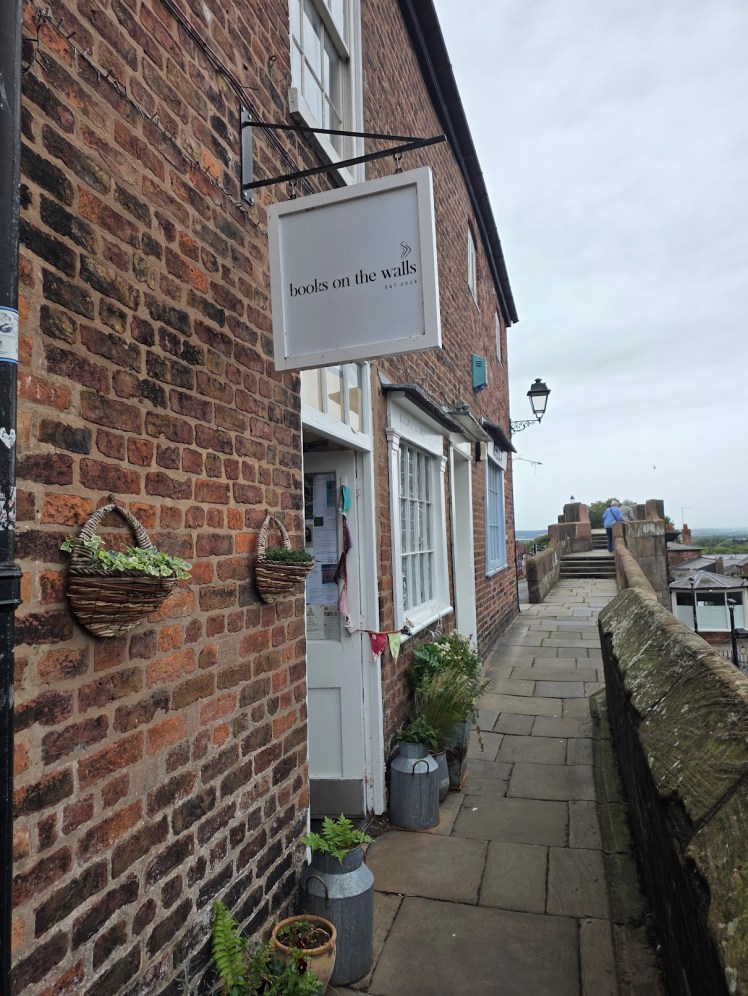
Books On the Walls is exactly as the name suggests—it’s located on part of the wall that surrounds Chester.
Construction of the walls to defend their fortress of Deva was started by the Romans in 70 and 80 CE. Then in the early 10th century, the Anglo-Saxons refortified the city and extended the walls as a stronghold against Viking raids. (Now you get why I put the Welsh history section in, eh?)
Today, Chester’s walls form a pleasant two-mile (3 km) walk that extends nearly all around the historic centre. There are steps every so often to access the city below. Books On the Walls is as described—on the wall. The wall also offers great views of Chester.
The shop itself is small but awesome with an eclectic variety of books, from current releases to local authors. The bookseller on Friday was a delightful woman who I chatted with about one of the books I picked up. I purchased The End of Everything there, and she told me that M. John Harrison was a local writer who sometimes stopped by the shop. And I happened to get a signed copy. Bonus booknerd points! The shop also offers a variety of beverages from tea (which I enjoyed) and hot chocolate to cocktails.
Then I popped into Waterstones where I got 4 more books.
(Check out Tuesday’s Titles for a complete list of the books I purchased over the weekend.)
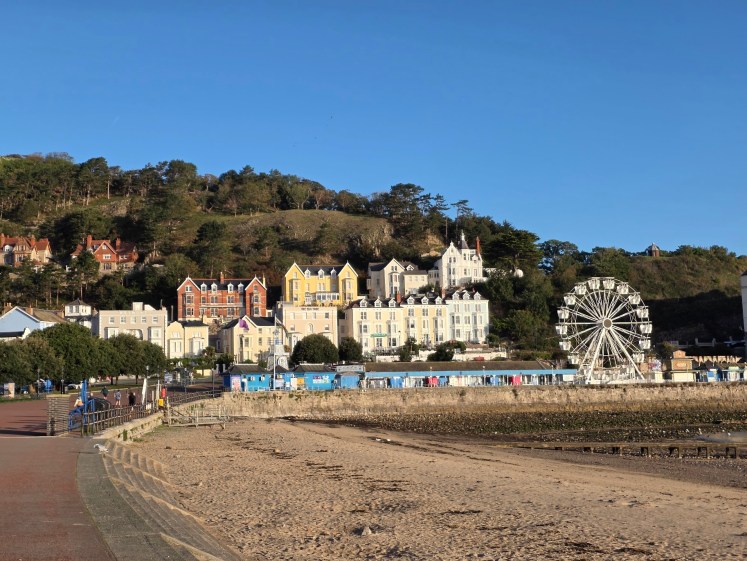
On Saturday, first thing after breakfast, I headed to Llan∂un∂o, a Victorian seaside resort. The town is nestled between two notable carboniferous headlands: the Great Orme to the north-west and the Little Orme to the east. The promenade stretches along the coastline, leading the Victorian Pier, a beautifully preserved 19th-century pier.
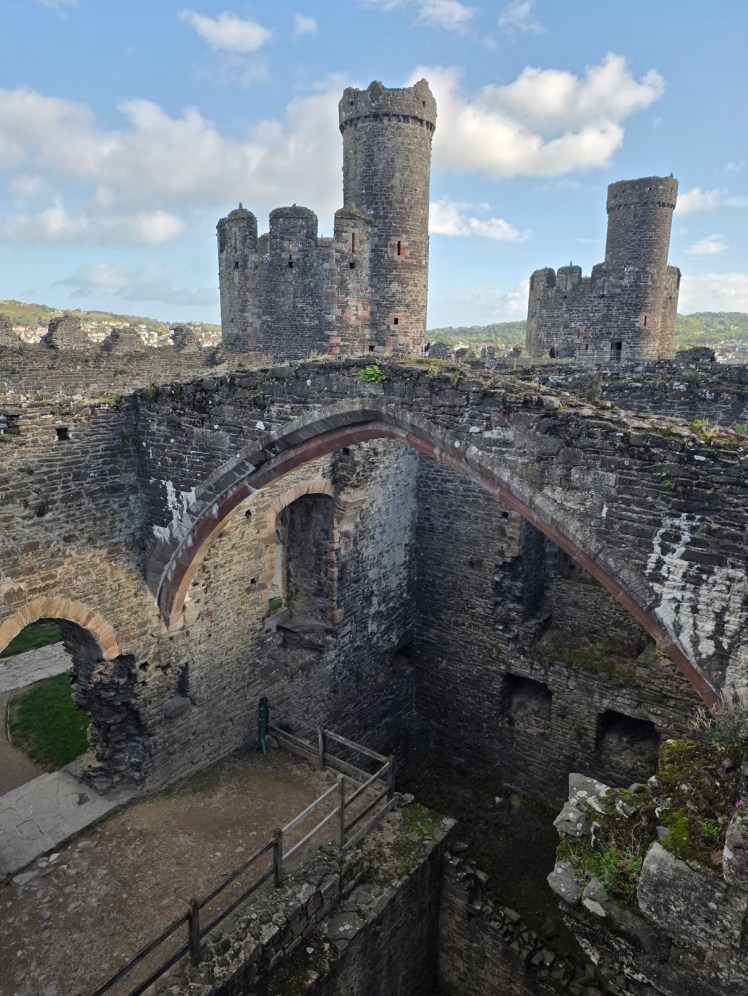
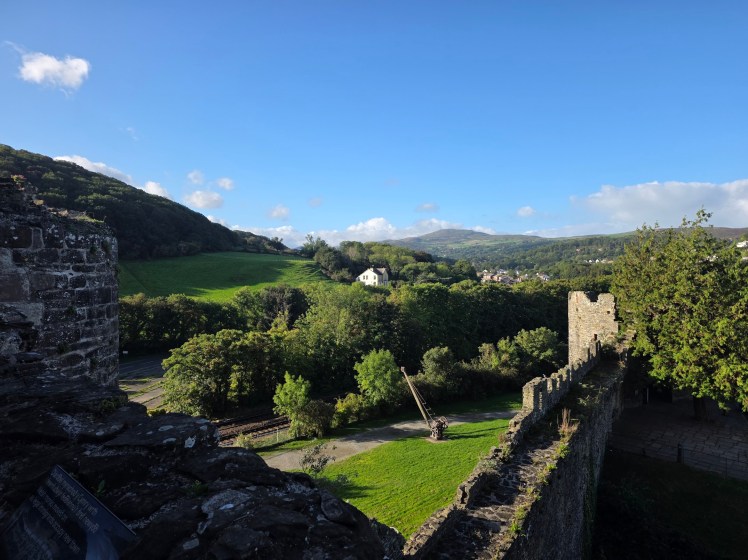
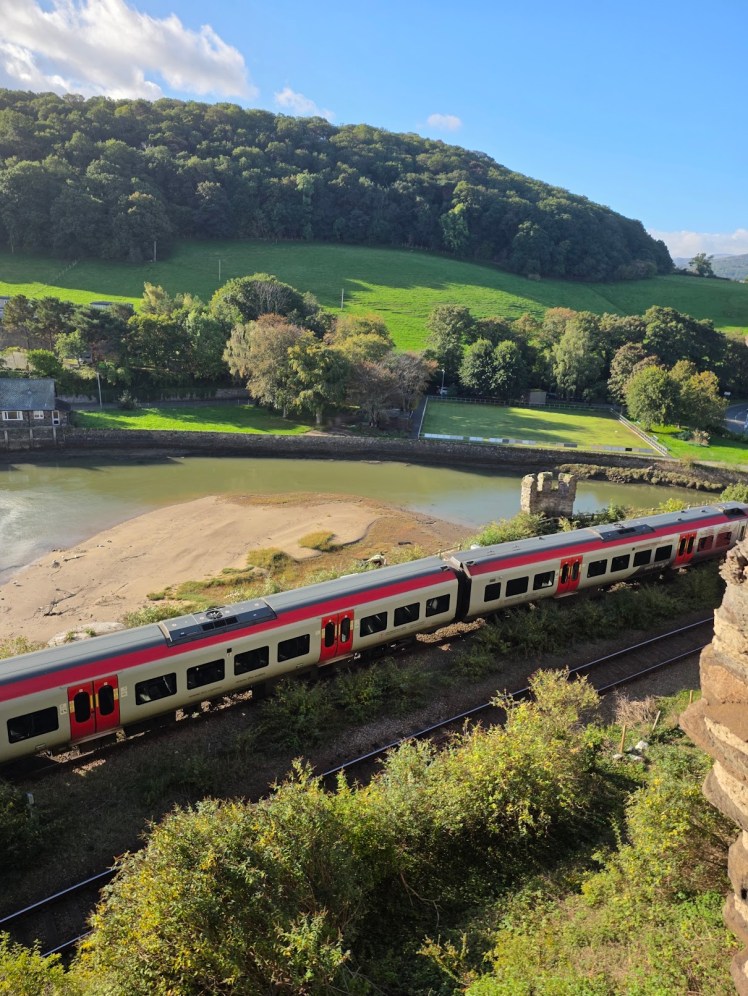
After stopping for a coffee, I then headed to Conwy to see Conwy Castle. Built by Edward I, construction began in 1283 following his second Welsh campaign, and was completed within 6 years. The cost was around £15,000 at a time, an enormous expense when a craftsman’s annual wage might be £2.
The town walls, built at the same time as the castle, enclose the entire medieval town in a circuit of approximately 1.3km and are among the most remarkable survivals of medieval military architecture in Britain. Twenty-one towers punctuate the walls at regular intervals, and three of the original gateways (Upper Gate, Lower Gate and Mill Gate) survive in recognizable form. Today, the castle and wall are a UNSECO World Heritage Site.
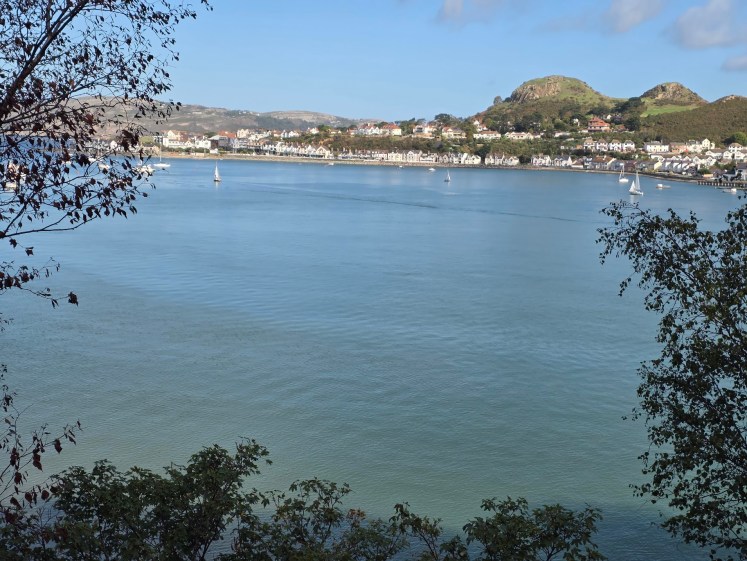
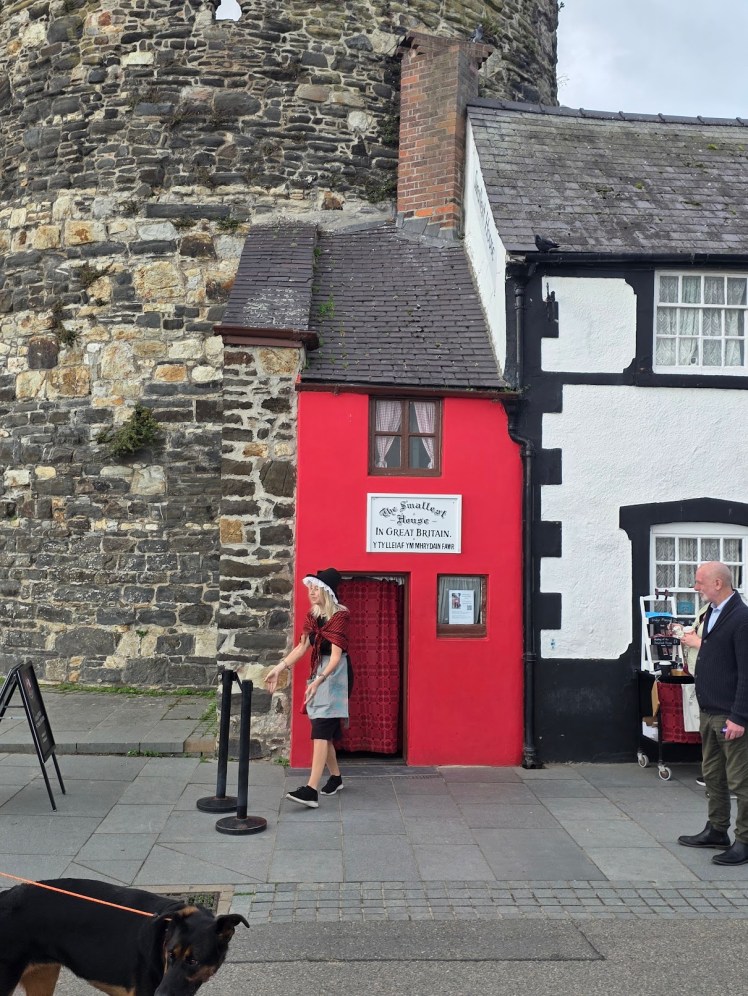
After touring the castle, I spent the rest of the morning exploring Conwy. I walked down to the waterfront, where I saw the smallest house in Britain. Then I walked down the trail by the water and the veered off into the Bodlondeb Woods nature preserve for a lovely hike.
On Sunday, on another recommendation, I took a quick jaunt to The West Kirby Bookshop, another fantastic indie bookstore that has a solid selection of books for all ages.
Final Thoughts
I absolutely fell in love with Wales. The North Wales landscape I saw was beautifully green with rolling hills. The coastline was incredible. And with 230 nature reserves in Wales, there’s no lack of nature. I was simply enchanted and cannot wait to return and explore more of Wales.
As for the Library, it was an absolute reading oasis. Between the books and the walks, I felt so rejunvenated by Monday. I had been in a terrible reading slump, reading only 1 book at the beginning of August and then nothing until this weekend. I hadn’t even done any rereads or listened to an audiobook. Between being in the Library with its dark wood, quiet serenity, and filled with books and that lovely book smell and talking books with my fellow booknerds, my reading slump happily ended. Over the weekend, even with all my side adventures, I finished 3 books and got halfway through a 4th.
My room, despite being tiny, was comfortable and another perfect reading environment. I would definitely stay at Gladstone’s again.
Where am I going in October? Stay tuned to find out!
All content, including photos, © 2026 L. Long/wanderinglynn.com. All Rights Reserved. No part of this website or its contents may be reproduced, copied, modified, adapted, or used to train AI without prior written consent of the owner.
Links to Bookshop.org are affiliate links, which you can read more about on my Terms page. All other links are merely for reference or for your convenience.


Your description of Gladstone’s and the reader weekend is almost exactly what I’d imagined (except for the rainbow…that was a surprise). Another trip for my empty nest travel list!
LikeLike