I’m really behind on posting! Here it is August and I’m just getting around to posting my March trip! Life moves pretty fast, and so I’ll try to catch up.
In March, I visited Yerevan, Armenia. We spent 5 days in Armenia’s capital city.
Armenia is a landlocked country in what most consider “West Asia”; however, in speaking with locals, most consider themselves more European than Asian. The culture and food is related more to the Mediterranean culture, like Greece. Part of the Caucasus region, Armenia lies in the highlands surrounding the mountains of Ararat, bordered by Turkey to the west, Georgia to the north, Azerbaijan to the east, and Iran and the Azerbaijani exclave of Nakhchivan to the south.
A Little History
(Not interested in History? Skip to the next section or even to my final thoughts.)
Armenia’s history dates back to 325,000 years ago as stone tools have been found in Armenia which indicate the presence of early humans at this time. The Armenian Highlands shows traces of settlement from the Neolithic era. There is evidence of an early civilization in Armenia in the Bronze Age, dating to about 4000 BC. And archaeological surveys discovered of the world’s earliest known leather shoe (Copper Age, 3600-3500 BCE), skirt (Neolithic, 3900 BCE), and wine-producing facility (vat and jars radiocarbon-dated to between 4100 BCE and 4000 BCE).
The capital Yerevan (or Erevan) is one of the world’s oldest continuously inhabited cities and is older than Rome. Yerevan dates back to the 8th century BCE when fortress of Erebuni was built in 782 BCE. In comparison, Rome was founded 753 BCE, 29 years after Yerevan. Yerevan declined in importance and was mostly depopulated by the Great Surgun of 1603–05, a forced deportation of the population when hundreds of thousands of Armenians were forced to Iran. Then in 1679, the city was mostly destroyed by an earthquake and rebuilt on a smaller scale.
Over the centuries, Armenia has had a complicated history, Armenia continued to be plagued by wars, caught in between the Ottoman Empire and the Russian Empire. From the 16th century, Armenia fell under Ottoman rule. In the 18th century Peter the Great and the Russian Empire made its first foray into the region. But it wasn’t until the 19th century when Armenia fell under Russian rule.
After World War I, Yerevan became the capital of the independent First Republic of Armenia from 1918 to 1920. In those two short years, Armenia formed diplomatic relations with 40 countries, gained de jure recognition, underwent parliamentary elections, and founded its first university. Despite its successes, Armenia’s short-lived independence was fraught with war, territorial disputes, ethnic unrest, Bolshevik rebellions, and a mass influx of refugees from Western Armenia. In November 1920, after a defeat by Turkish nationalist forces, the Russian Red Army invaded Armenia, and it ultimately became part of the U.S.S.R.
Armenia continued under the U.S.S.R. until 1991 when it once again regained independence, and Yerevan once again became its capital. However, even today, Armenia remains friendly and reliant on Russia, especially in preventing its larger neighbors from taking more territory.
Visiting Yerevan
Spring is a wonderful time to visit Yerevan. The days were mostly warm and we only had one day with rain showers. Our walking tour guide told us summer can get over 40°C (+100°F) and winter can be below freezing.
On our first day, we took a walking tour of the city. Our guide pointed out that Yerevan, unlike other former Soviet cities, preserved quite a bit of their architecture. We walked from one end, right below Republic Square, to the other end, The Cascade, which is a multi-level staircase (572 stairs) with terraces, fountains, sculptures, and exhibition halls. And from the top is an amazing view of the city. I was certainly glad we were there in spring and did not have to climb the stairs in sweltering summer heat. Sadly, one thing we missed was the dancing fountains. March is a bit early in the season and the dancing fountains were not scheduled to be turned on until April.
As we walked around Yerevan, we saw several buildings with incredible art on them. We also saw a bit of graffiti, which we have seen in all the former Soviet Bloc cities. Yerevan, like Tirana and other cities, is still digging out from under communist rule and it shows—from the infrastructure needing an infusion to the graffiti to the run down buildings amidst new buildings. There is new construction and road works occurring, but I think it will take time.
We also took time to visit Yerevan Ararat Brandy Factory. According to the legend, the history of the Armenian Brandy goes back to the ancient times when Noah’s Ark landed on the holy mountain of Ararat. Noah is said to have planted the first grapevine at the foot of Mount Ararat. The modern history of Armenian brandy starts in 1887 when Armenian merchant Nerses Tairyan established the first wine and brandy factory in Yerevan. Then at the 1900 Paris Exhibition, the Armenian brandy won the Grand Prix, a prestigious award recognizing its outstanding quality, which allowed the product to be marketed under the name “brandy”. And speaking of legends, Churchill allegedly said when asked about the secret to his longevity:
Never be late for dinner, smoke Havana cigars, and drink Armenian brandy.
I don’t know about longevity but I can say that Armenian brandy is pretty darn tasty. I particularly enjoyed the peach flavor.
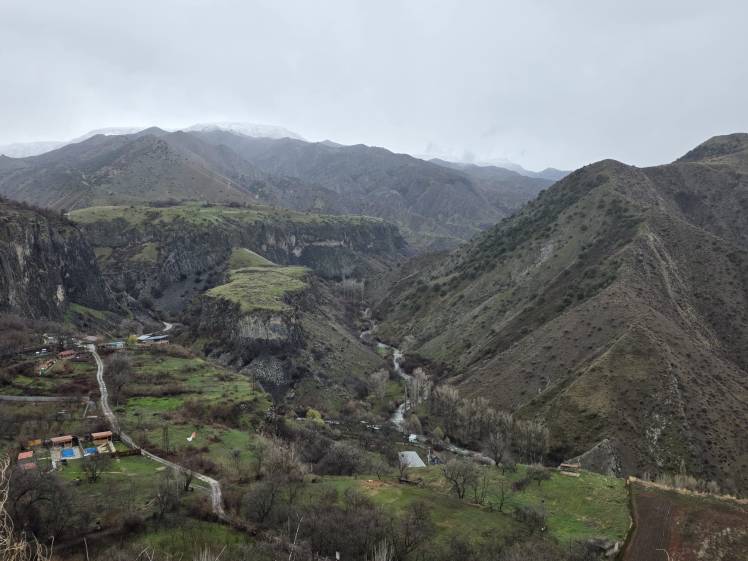
Armenia landscape 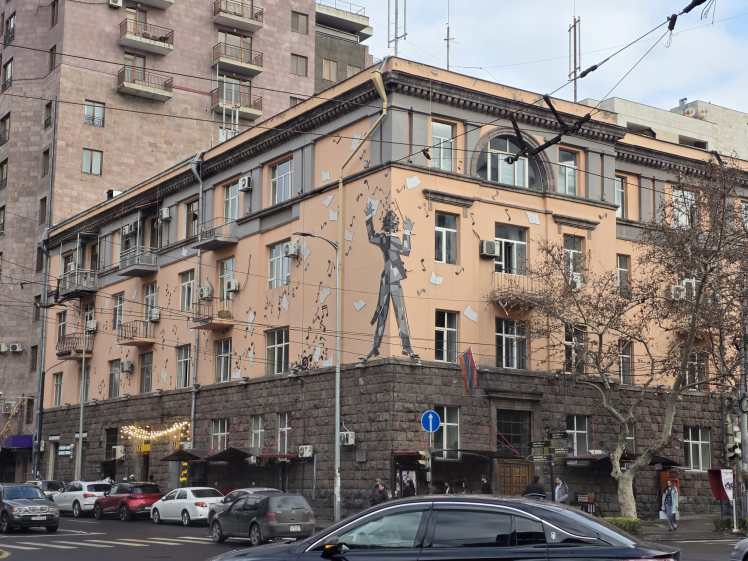
corner building art 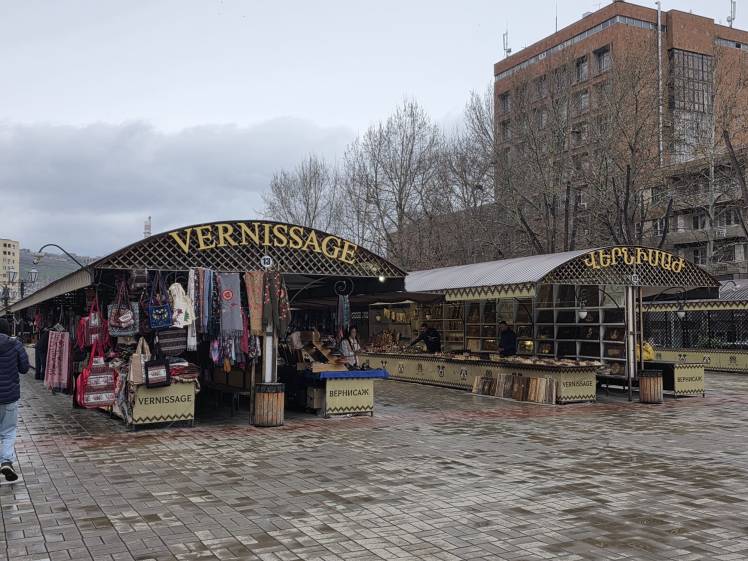
Vernissage market 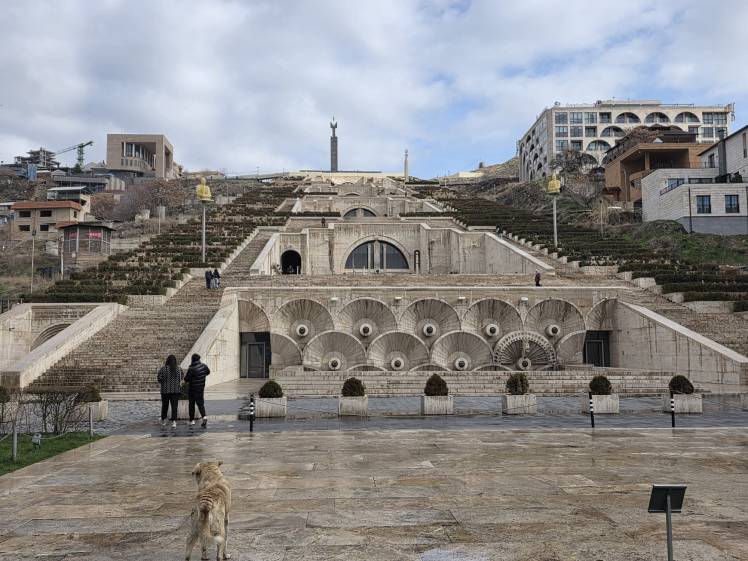
The Cascade – 572 steps 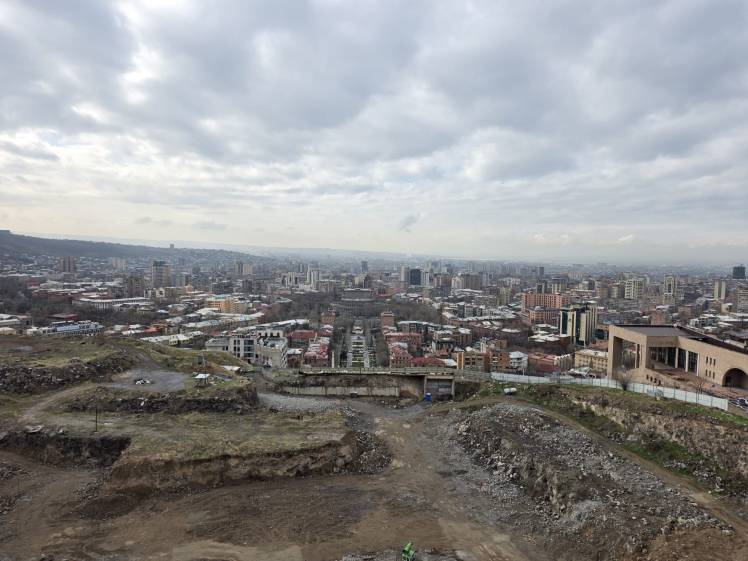
View from top of Cascade 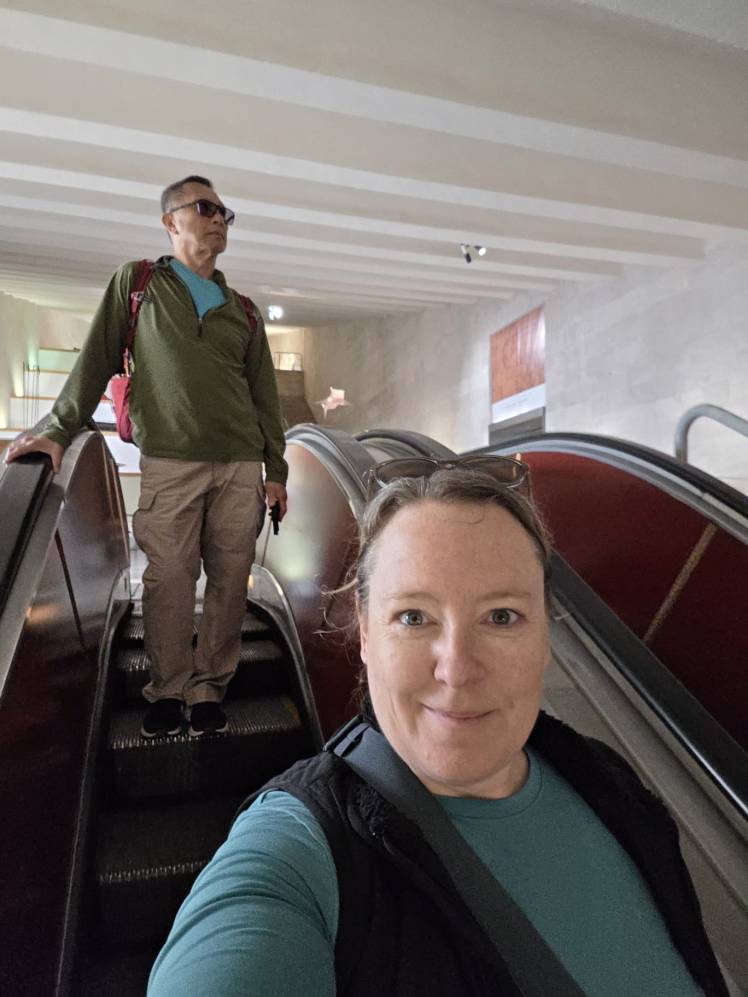
going down inside The Cascade 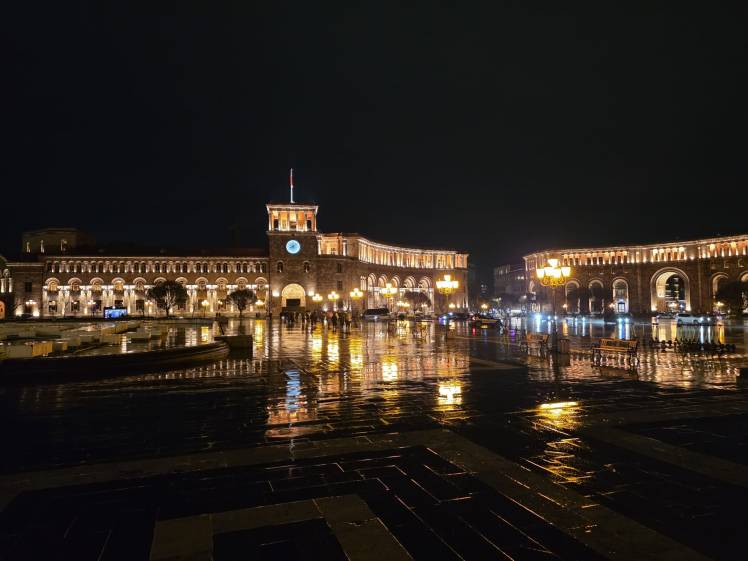
Republic Square 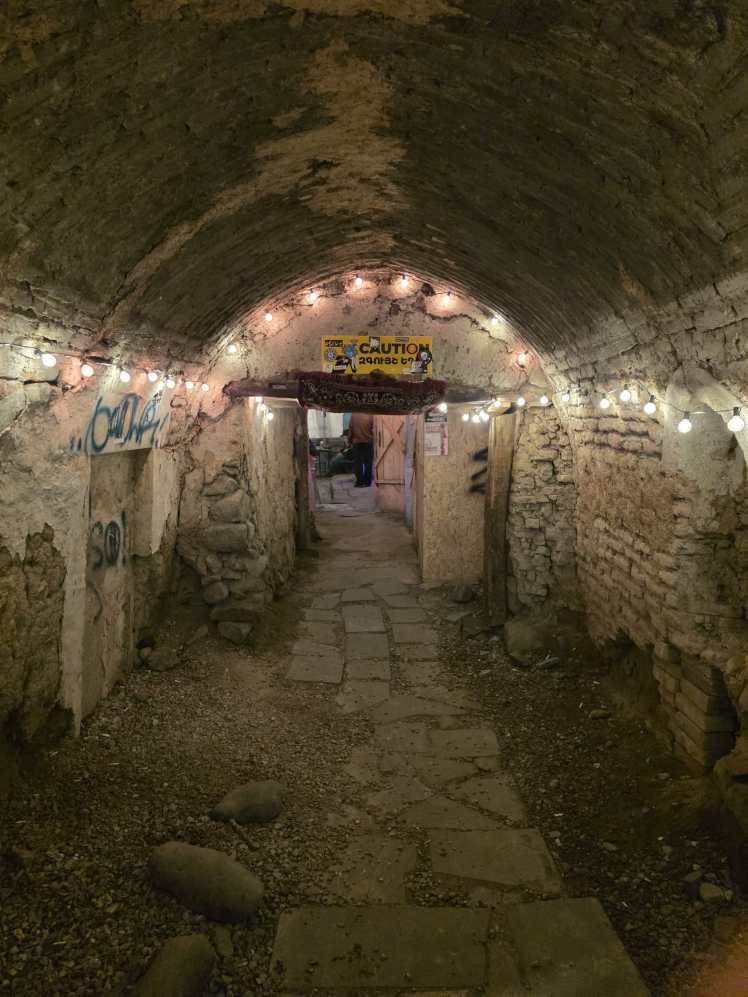
old tunnel in Yerevan 
Upper Asat Valley 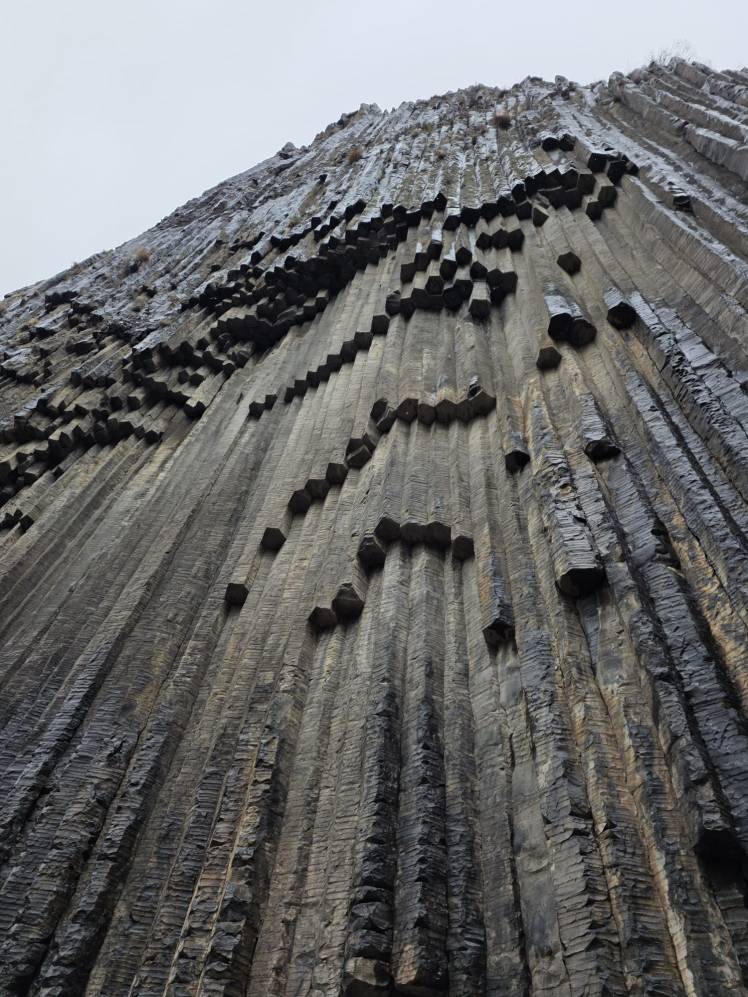
Symphony of Stones looking up 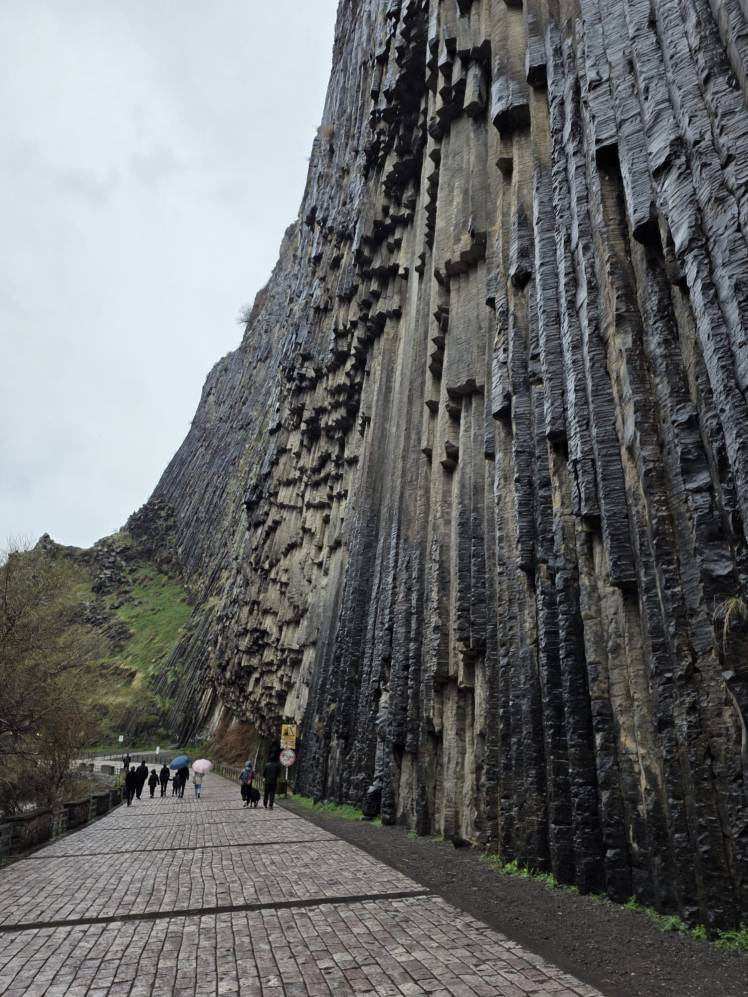
Symphony of Stones 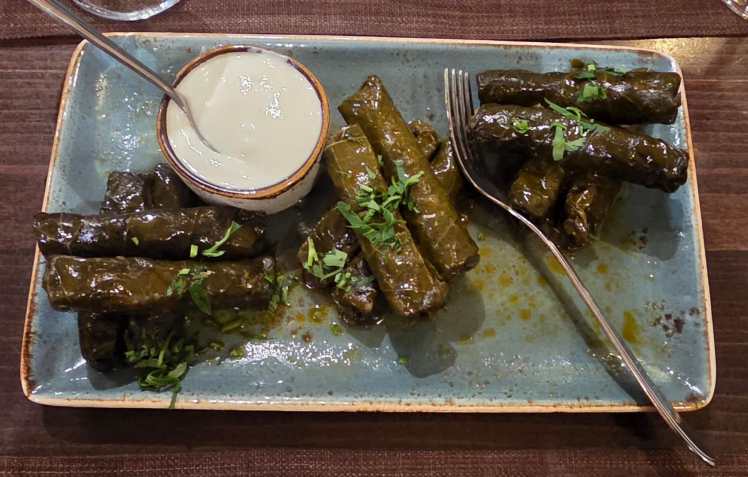
dolma 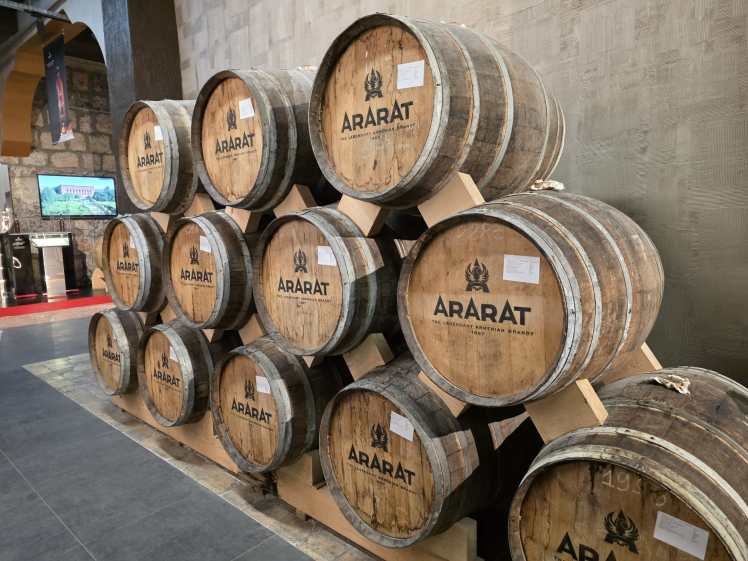
Ararat Brandy 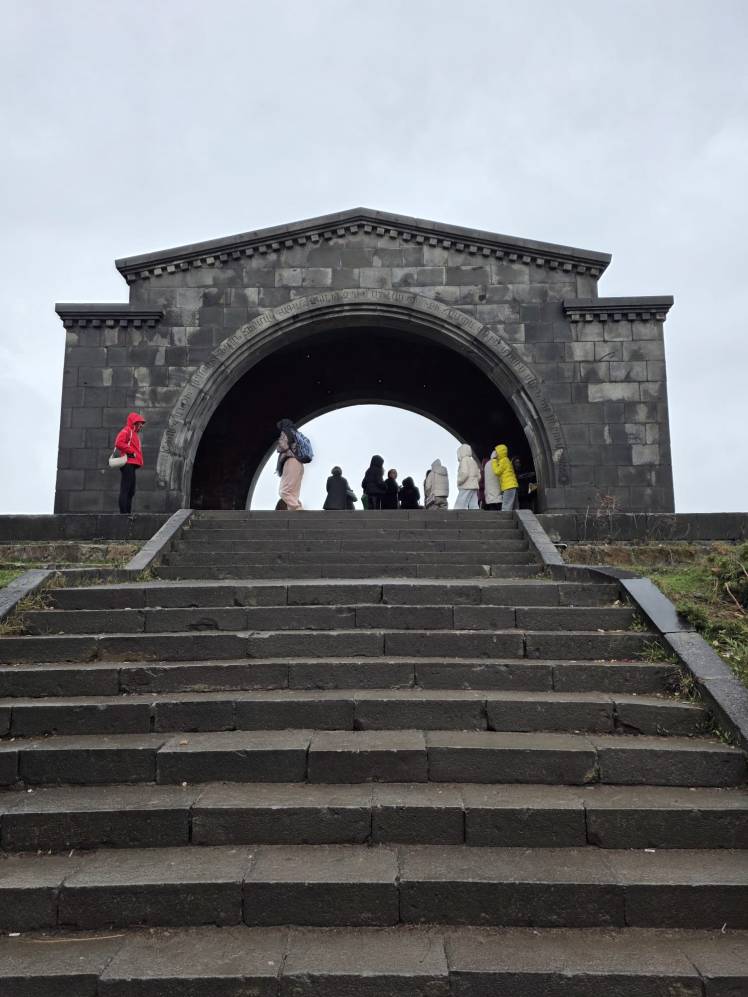
Charerts Arch 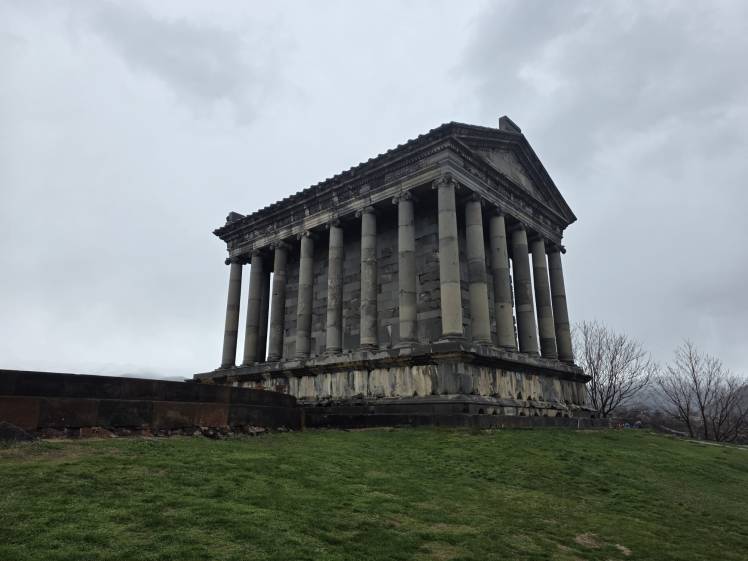
Garni Temple 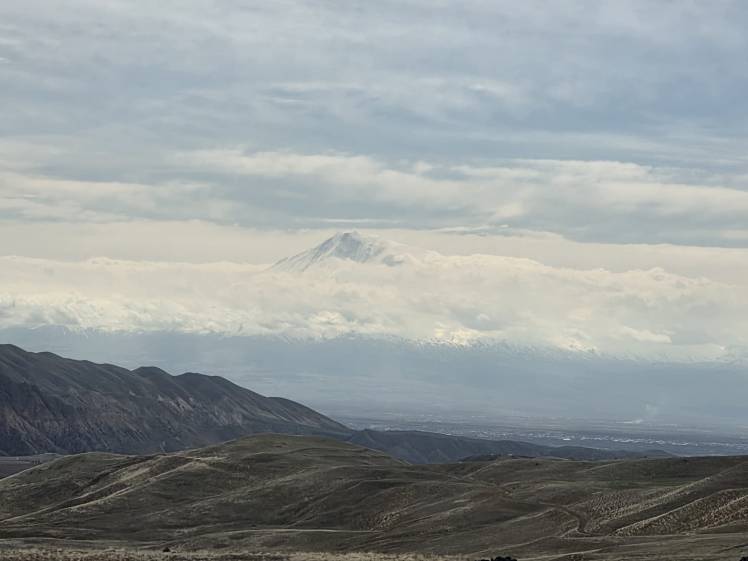
Mount Ararat 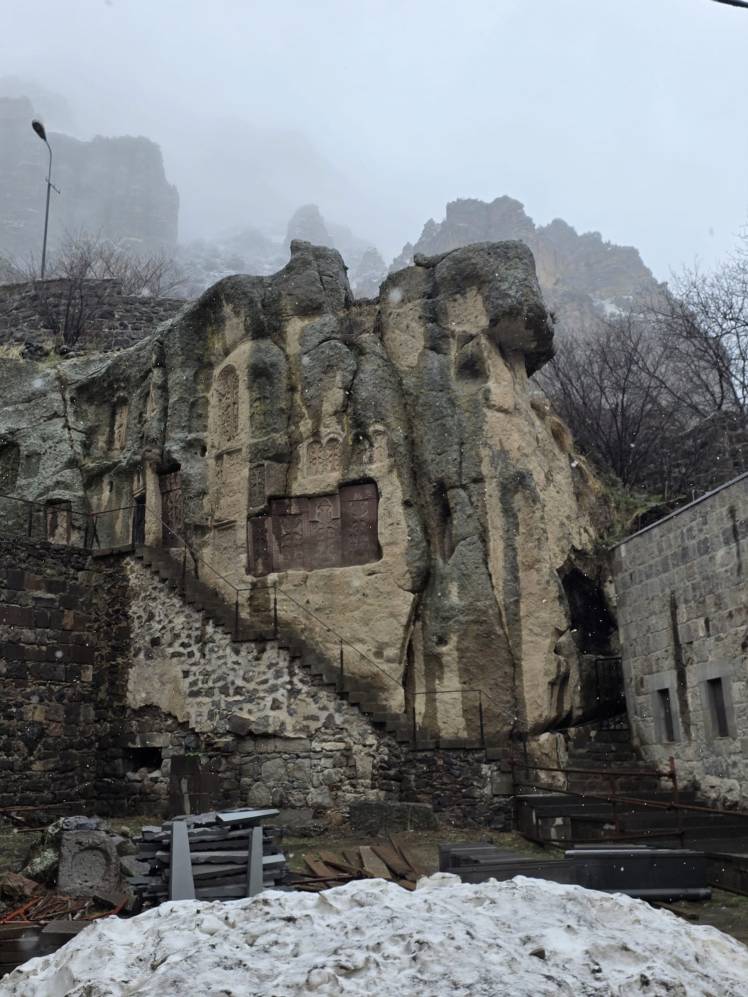
Geghard Monastery 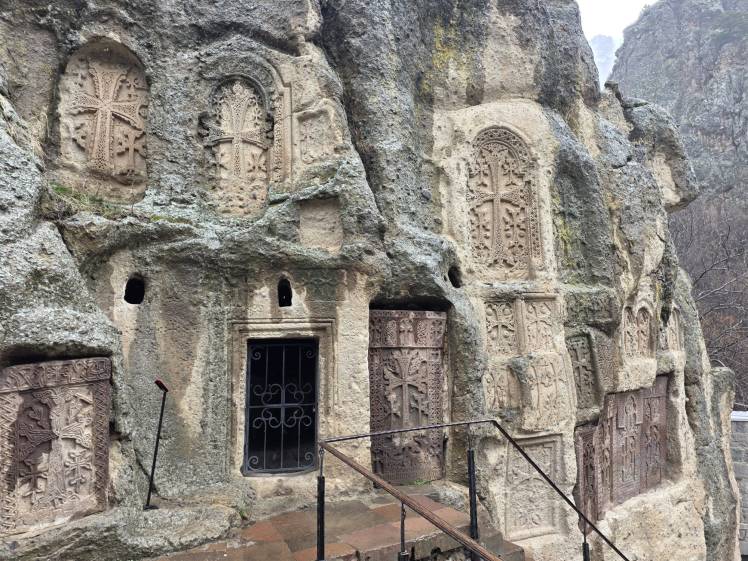
Geghard Monastery 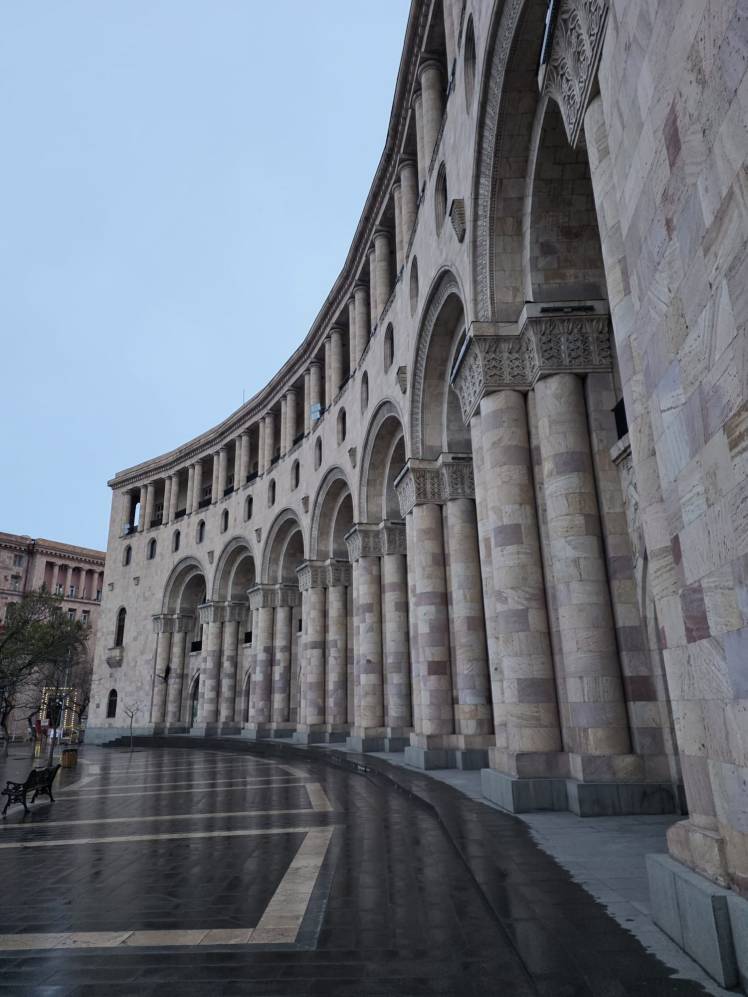
Republic Square 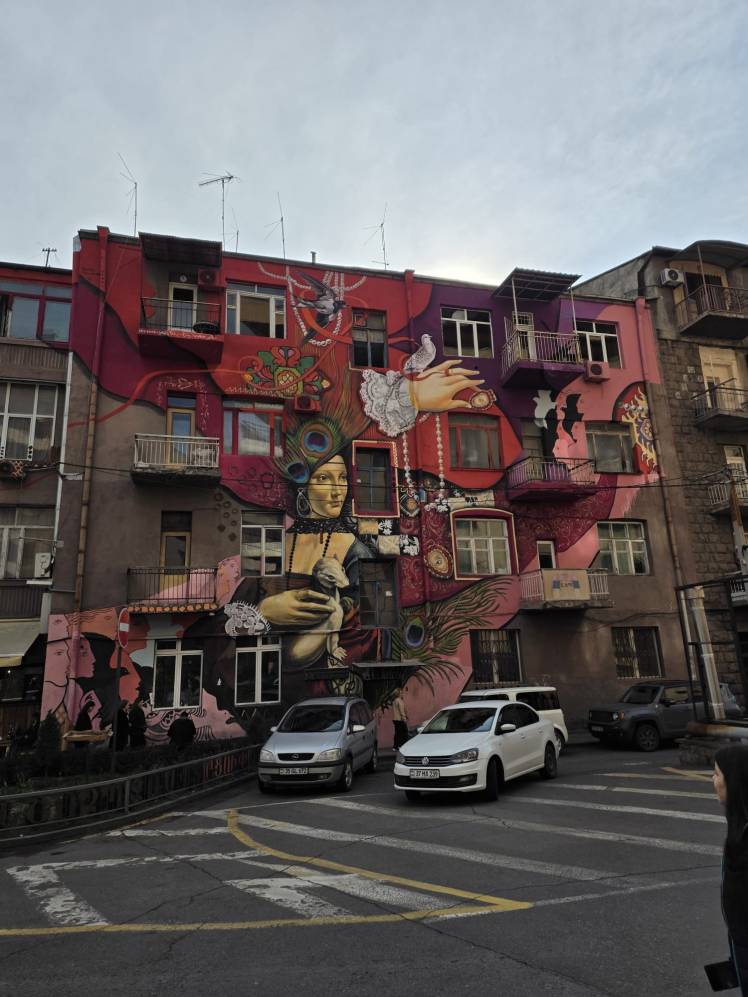
city art 
traditional food
Because we had time, we did a day trip out of Yerevan to Charents Arch, the Symphony of Stones, Garni Temple, and Geghard Monastery. Charents Arch is a monument erected in 1957 and dedicated to the Armenian poet Yeghishe Charents. Located 1500 meters high, you can see Mount Ararat, the peak on which Noah’s Ark is said to have landed during the biblical flood, is visible on clear days. While Mount Ararat was once in Armenia, today it is in Turkey following a 1920s treaty after the Turkish invasion of Amernia.
The Symphony of Stones is located in the Garni Gorge and features perfectly symmetrical hexagonal and pentagonal basalt columns rising up to 50 meters high. It is named the Symphony of Stones because it resembles a gigantic pipe organ. Garni Temple is a pagan temple to the sun god Mihr (Mithra) built in the first century AD. While it mostly collapsed in a 1679 earthquake, it was reconstructed between 1969 and 1975.
Geghard Monstary and the Upper Asat Valley is a UNESCO World Heritage Site. The monastery, originally called the Monastery in the Cave, contains a number of churches and tombs, most cut into the rock of the mountain. The landscape is towering cliffs and it did snow flurry while we were there. The atmosphere is incredibly monumental yet peaceful. Needless to say, it was a great day trip and we got to see a bit of the Armenia landscape.
The cuisine was similar to Greece and Turkey (which makes sense). Everything we had was delicious and we enjoyed traditional foods including dolma (stuffed grape leaves), Khorovats (grilled meats cooked over wood fire), Lavash (traditional Armenian flatbread), Spas (yogurt and herb soup), and Bozbash (lamb and vegetable stew flavored with dried fruits). On our day trip, we even got to see lavash being made in the traditional way.
Final Thoughts
Overall, I liked Yerevan. The people were friendly, the food was delicious, and we saw some really interesting things. But while I like Yerevan, 5 days was too much. Two days, maybe 3 is sufficient to see Yerevan. But that’s the trade off with budget airlines—they only fly on certain days. But if you get the chance to explore more of Armenia, I highly recommend it. While we only took the one day trip, the landscape was beautiful.
In hindsight, we should have gone to Tbilisi, Georgia too. There are no direct flights to Georgia from Napoli, and so we could have taken a bus across the border and see both countries in one trip. Ah, the joy of hindsight. So learn from my mistake.
Where did I go in April? Stay tuned to find out!
All content, including photos, © 2026 L. Long/wanderinglynn.com. All Rights Reserved. No part of this website or its contents may be reproduced, copied, modified, adapted, or used to train AI without prior written consent of the owner.
Any links are merely for reference or for your convenience.

