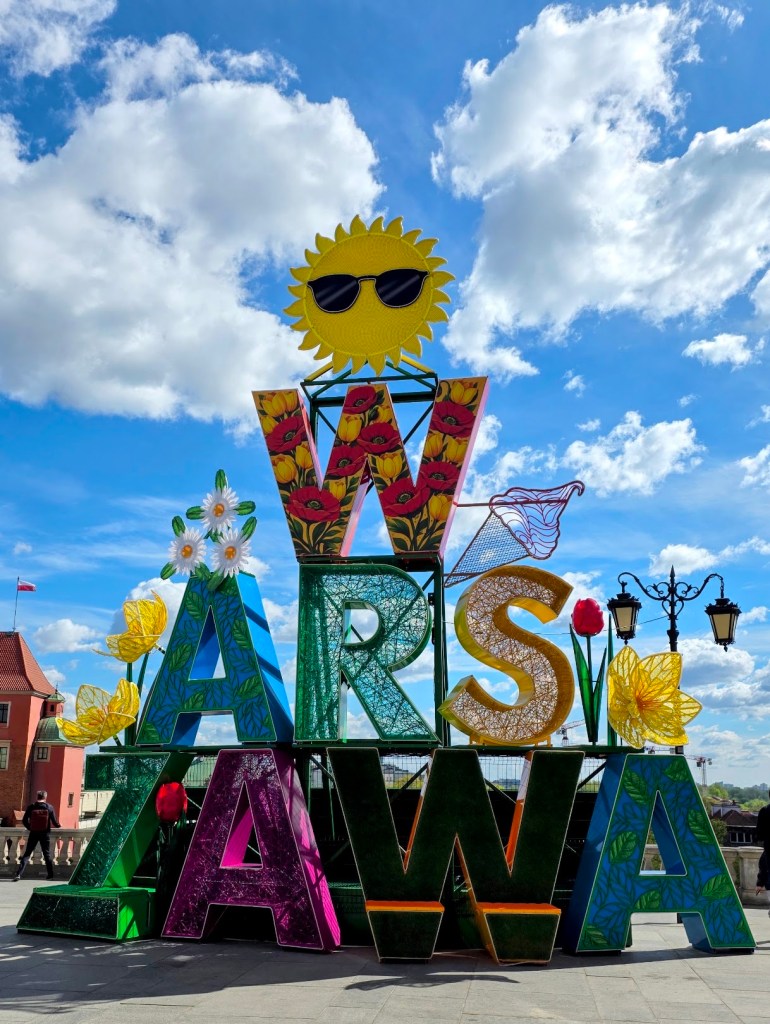
I visited Warsaw, Poland in April. We spent 4 days in Poland’s capital city.
Poland extends from the Baltic Sea in the north to the Suedetic and Carpathian Mountains in the south, and borders Lithuania and Kaliningrad Oblast (a semi-enclave and westernmost federal subject of Russia) to the northeast; Belarus and Ukraine to the east; Slovakia and the Czech Republic to the south; and Germany to the west.
A Little History
(Not interested in History? Skip to the next section or even to my final thoughts.)
Like the rest of Europe, Poland’s history is long and complicated. Initially inhabited by various tribes such as Celts, Scythians, and Slavs, the West Slavic Lechites eventually dominated, establishing early Polish settlements. Duke Mieszko I formalized the Polish state in 966 CE with his conversion to Western Christianity under the Holy Roman Empire. The terms Poland and Poles appear for the first time in medieval chronicles of the late 10th century. The first officially recognized Kingdom of Poland was created in 1025.
Poland remained largely independent and a powerhouse in Europe until the mid-17th century when wars and political instability culminated in the partitions by Russia, Prussia, and Austria. This partition erased Poland from the map as an independent nation for over a century.
Poland regained independence in 1918 as the Second Polish Republic after the end of the First World War, which saw Poland partitioned and turned into a non-monarchical country. Then in 1939, Nazi-controlled German and the Soviet Union invaded Poland initiating World War II. This was the first time that the modern “blitzkrieg” tactics were used, where heavily armored contingents would march directly into the capital and attempt to capture it before any meaningful resistance occurred from the rest of the military and surrounding countries. The capital of Warsaw was under Nazi control in just under two weeks. This caused the worst time in Polish history, as the country was split between Nazi and German control and the rest was given to the Soviet Union.
Post-war, Poland fell under Soviet influence, becoming the communist Polish People’s Republic in 1952, during which significant demographic and territorial changes occurred. The 1980s saw Poland transition from communism to a market-oriented democracy and the Third Republic was created on New Year’s Eve in 1989. Under a “Shock Therapy Program”, the government quickly adopted a modern market economy and recovered much more quickly than its neighbors.
Today, Poland has a developed market and high-income economy. In terms of nominal GDP, it is the 20th largest economy in the world and the sixth in the European Union. With a high standard of living, safety, and economic freedom, as well as free university education and universal health care, Poland is a founding member of the United Nations, and a member of the Council of Europe, NATO, and EU (including the Schengen Area).
While Poland has been an overlooked tourist destination, in recent years, it has posted record tourism numbers with 19.4 million foreign tourists in 2024 and over 20 million in 2025, a 7% rise. Poland still lags behind the European tourist powerhouses, such as Spain, Italy, France, Germany, and Greece, but its historic cities and natural landscapes combined with its high safety, modern infrastructure and lower costs have made it a rising tourist destination.
Warsaw is the capital and most populous city of Poland. There were fortified settlements on the site of today’s Warsaw in the 9th and 10th century. The modern-day city, established on the site of a small fishing village called “Warszowa”, dates back to about 1300. Sadly, approximately 80–90% of Warsaw’s buildings, including the vast majority of museums, art galleries, theaters, churches, parks, and historical buildings such as castles and palaces, were destroyed by the Germans during WWII. So Warsaw today is a relatively new city.
As for tourism, Warsaw has also lagged behind other European capital cities, as well as behind other Polish cities like Gdansk and Krakow. But Warsaw’s tourism is on the rise as it offers a unique mix of meticulously rebuilt historic sites and modern skyscrapers at a lower cost and with fewer crowds than cities.
Visiting Warsaw
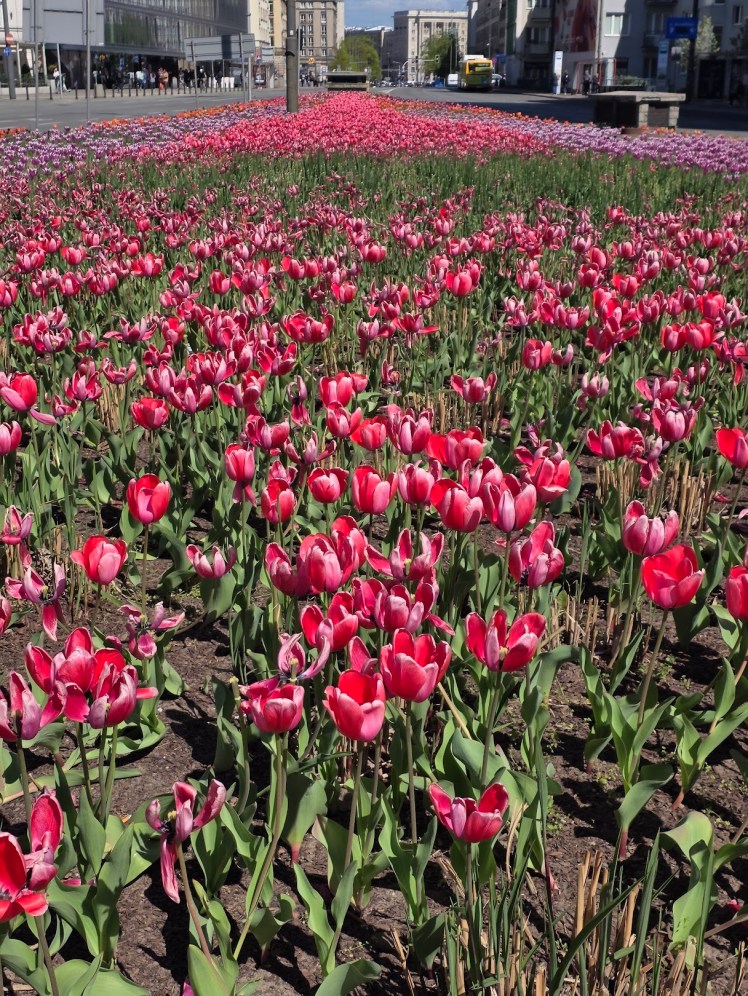
April was a fantastic time to visit Warsaw. The days were warm, the weather was sunny, and flowers were blooming. We had no real itinerary this trip, and so we simply walked around and enjoyed the city.
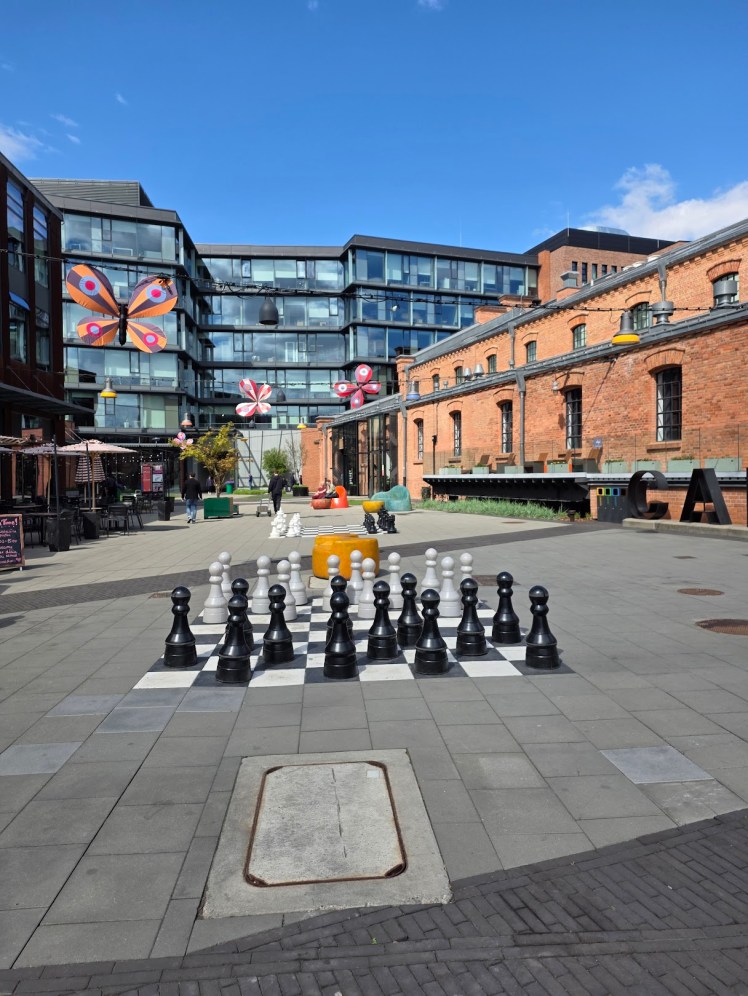
We stayed in the Powiśle district, which is situated between the Vistula River and the city center. Right down the street from our hotel was the impressive Elektrownia Powiśle, which was a power plant that generated electricity for the majority of the city from 1904 for nearly 100 years. It also became the backdrop for the resistance of the Warsaw Uprising. Today, Elektrownia Powiśle is a unique space where history and modern life meet. The developers preserved the historic building while creating a vibrant multi-purposed hall with restaurants (both fast service and sit down), shops, salons, and spas. We ate there twice because there was so much to choose from. And at least one evening, they had a DJ playing tracks in the food hall.

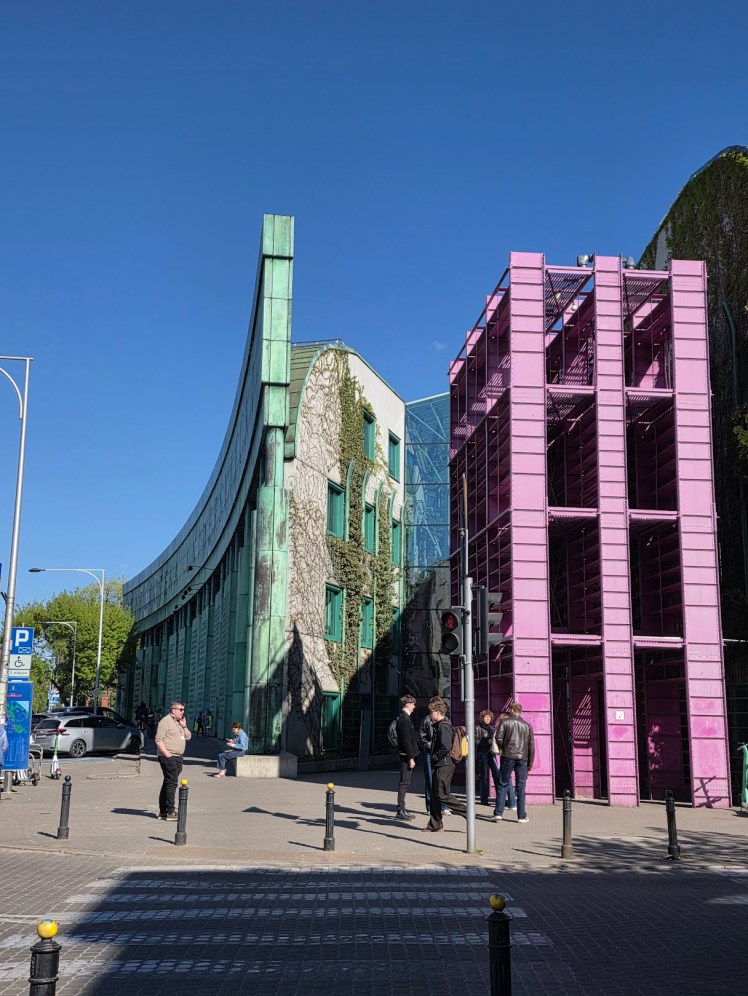

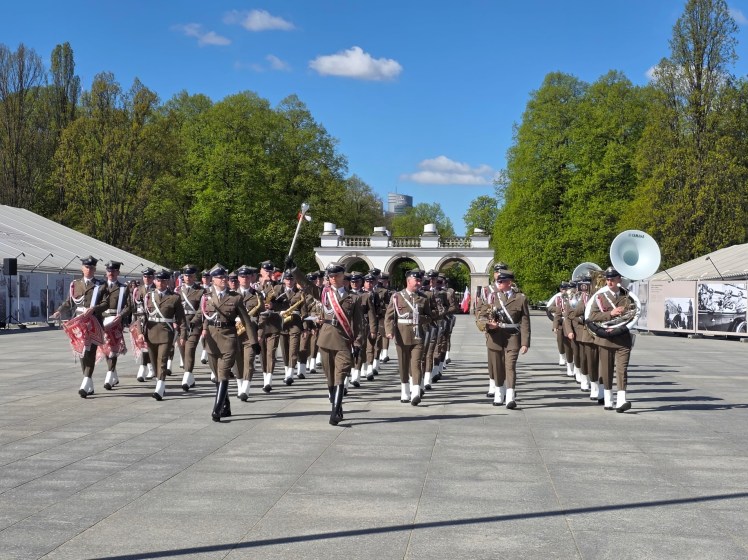
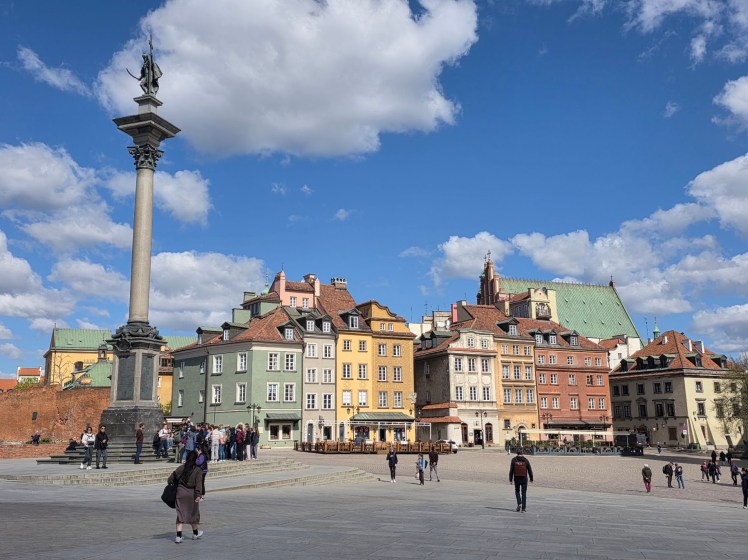
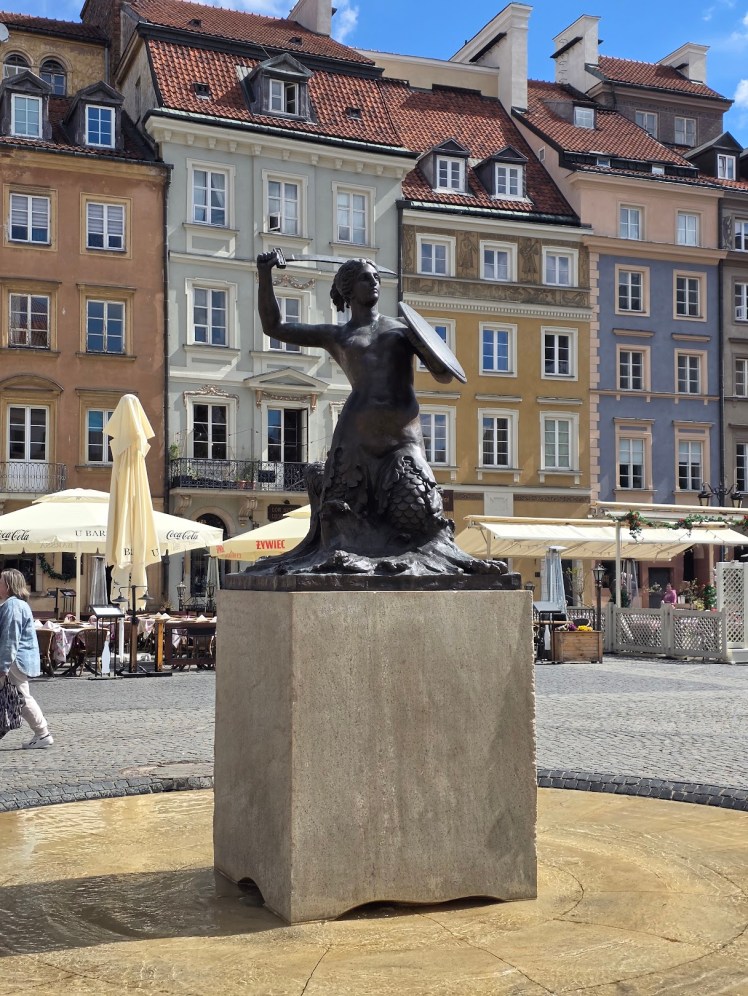


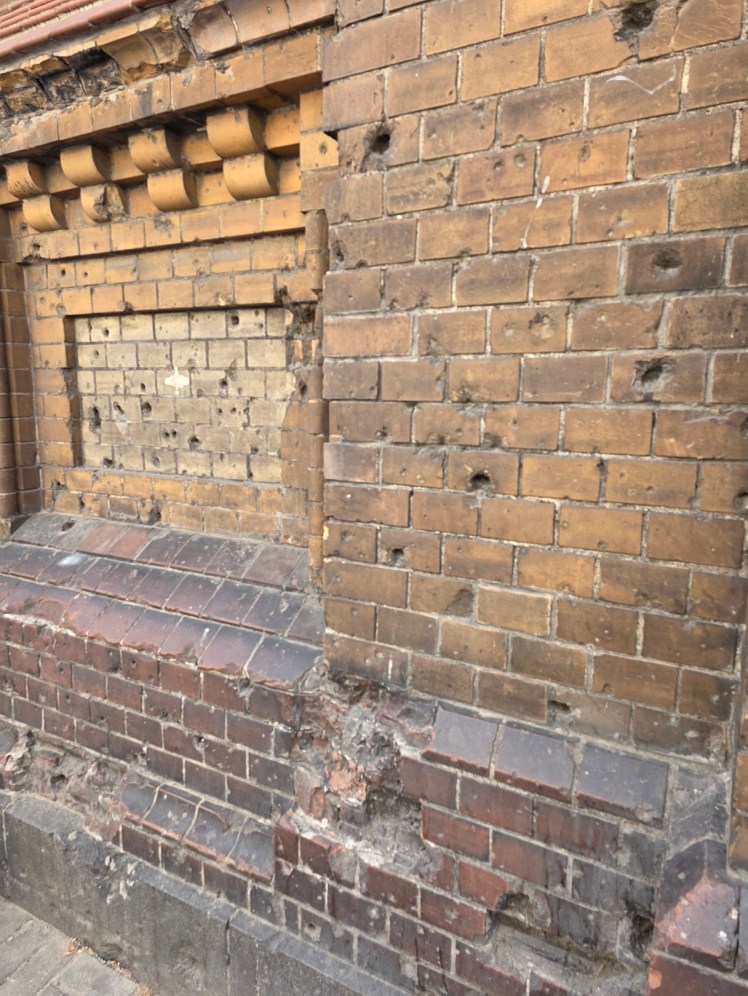
Our first full day, we did a walking food tour. Our guide was fabulous. She provided a lot of modern history and culture, while we walked and enjoyed delicious food. While most of historic Warsaw was destroyed during WWII, we did go to Hala Mirowskie, two identical market halls located in the North Downtown district. The markerts were constructed between 1899 and 1902, and remained the largest commerce location in the city until 1944, when they were mostly destroyed during the Warsaw Uprising. Rebuilt in 1944 and 1962, the west hall was renovated in 2011 but the bullet holes and other damages dating to the building were preserved in its façade as a memorial and remembrance of those who workers who were executed. She also pointed out one of the churches that survived WWII and was then moved 50 meters back when the city was being rebuilt and the city planners opted to make wider roads.
As for the food, now, I will admit that Polish pierogi (filled dumplings made from unleavened dough) are not my favorite. (I think pierogies are just okay.) We also tried the Pączki, which are known as Polish donuts made from rich yeast dough, heavily stuffed with sweet fruit preserves or sweet cream, and coated in a thick layer of powdered sugar or icing. While tasty, they are large and really, really sweet. My favorite pastry was the Ciasto Rabarbarowe, featuring a moist cake base with rhubarb and a buttery streusel topping. The rhubarb provided a nice tartness to the sweet streusel.
I also tried Placki Ziemniaczane (potato pancakes), Rosół (a traditional Polish soup), and Zapiekanki (a Polish street food that’s on an open-faced baguette). C tried a few more things (he eats more than I do). Overall, we really enjoyed Polish cuisine. I also appreciated that there were a variety of cuisines available, like Greek, Chinese, and even American.
The rest of the trip, we just wandered around the various districts. One thing we didn’t do is ride the metro (maybe next time!).
Three of my favorite experiences were Highline Warsaw, the Warsaw Vodka Factory “Koneser“, and the Chopibn
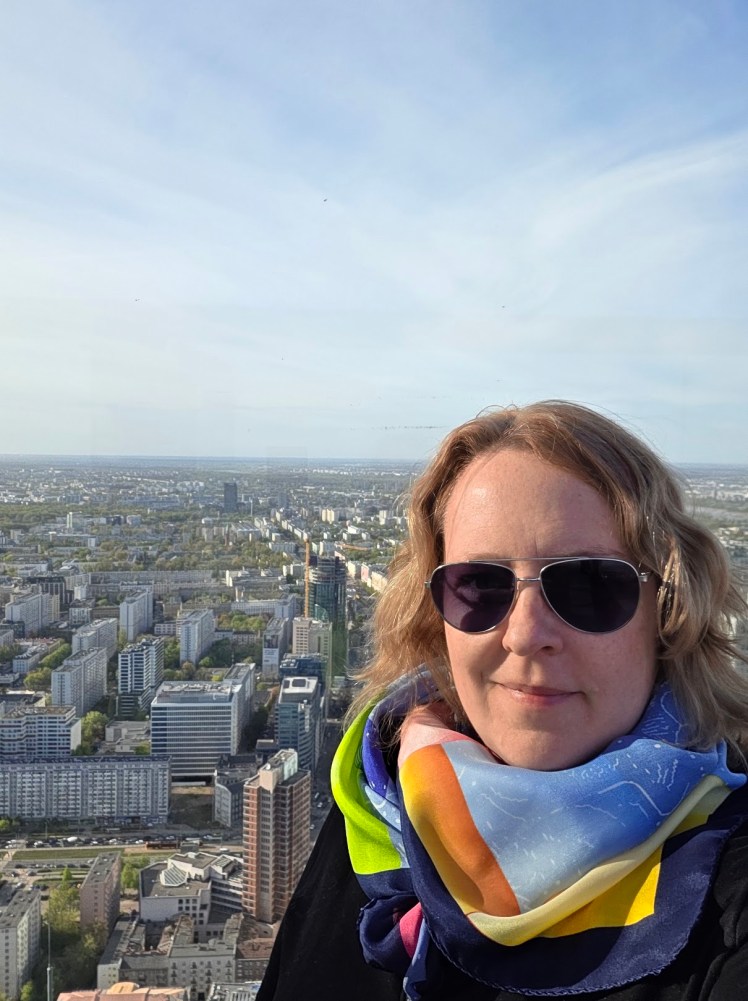
Located on the located on 53rd floor of Varso Tower, the tallest skyscraper in the European Union (310 m/1,017 ft), we got an amazing 360° view of the city from Highline Warsaw. After enjoying the view, we headed down to the 49th floor is the HighGarden Rooftop Lounge, the highest cocktail bar in the EU, connected to an open-air terrace with a living garden where we enjoyed a couple of cocktails while enjoying the city view.
Located in Praga, the historical borough of Warsaw, Koneser a factory complex of neo-Gothic buildings from the late nineteenth century. The Koneser complex covers an area of approximately 50,000 m/164,042 ft. Today, the complex has a mix of culinary, hospitality, cultural-entertainment, retail, service, and business offerings create a unique destination. We went there to visit the Muzeum Polskiej Wódki (Polish Vodka Museum).
The Muzeum Polskiej Wódki is an interactive experience. A proctor takes you through the various rooms that start with goes the origins of Aqua Vitae and the 500 year history of Vodka to its’ modern stance in Poland and the world. The culmination, of course is a vodka tasting in the Vodka Academy Bar.

How close I wasMy absolute favorite experience was the candlelight Chopin piano concert at the Chopin Salon.
Frédéric François Chopin was a Polish composer and virtuoso pianist of the early Romantic period. As a piano student as a child, I grew playing Chopin because he primarily wrote for solo piano.
The Chopin Salon is in a house, which has a restaurant on the lower floor, the Salon is on the main floor, and then the upper floors were a hotel. The room was like a Victorian salon, with the piano right there and chairs all around. The music was simply amazing. The pianist, Thuy Melissa Dao, explained the pieces she performed and played for an a bit over an hour with a short intermission.
There are quite a few venues in Warsaw that have Chopin piano concerts. I am sure they all are wonderful and I highly recommend attending one. I definitely enjoyed the performance at the Chopin Salon.
Final Thoughts
Despite being the capital, most tourist choose to go to other Polish cities, such as Krakow, Gdansk, and Wroclaw. Our tour guide told us that it has only been in the past several years that tourism has increased in Warsaw. And I highly recommend visiting Warsaw. The city was neat and clean, there is a variety of things to do and see, and the food is fantastic and the cost is fairly low. Poland, despite being in the EU, does not use the Euro but has retained its currency, the Polish złoty (PLN).
Three days is perfect to visit. While I want to visit several other areas in Poland, I would absolutely go back to Warsaw.
Where did I go in May? Stay tuned to find out!
All content, including photos, © 2026 L. Long/wanderinglynn.com. All Rights Reserved. No part of this website or its contents may be reproduced, copied, modified, adapted, or used to train AI without prior written consent of the owner.
Any links are merely for reference or for your convenience.

