The weather is hot and muggy and I’m not traveling. I’m also almost* caught up on travel posts.
* I’ve written the last 3 travel posts for June and July. I just haven’t posted them yet. So, stay tuned
This weekend, I realized I hadn’t done a book post in a while. This serendipitous moment made me think about travel and books.
Here are my 10 book recommendations for 10 European Countries to fuel your wanderlust. Some are fiction, some non-fiction—a good and somewhat random list to inspire your European travel, whether that travel be by plane or by armchair.
Or skip to the good stuff and see the complete list of books on Bookshop.org.
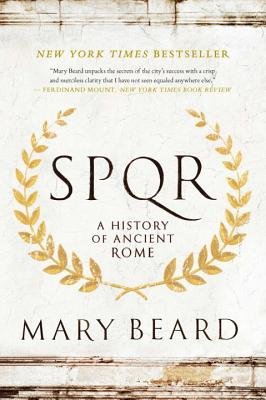
Ancient Rome is important. To ignore the Romans is not just to turn a blind eye to the distant past. Rome still helps to define the way we understand our world and think about ourselves, from high theory to low comedy. After 2,000 years, it continues to underpin Western culture and politics, what we write and how we see the world, and our place in it. – Mary Beard, SPQR: A History of Ancient Rome
In SPQR, Mary Beard narrates the history of Rome from how it went from “a slightly shabby Iron Age village” to rise to become the “undisputed hegemon of the Mediterranean.” With so many books focusing on the fall of Rome, it is refreshing to read how Rome became Rome.
This millennium-spanning history examines what it meant to be “Roman” and leverages every inch of the historical record to consider the roles, life, and treatment of people at all strata of Roman society. Beard writes well and accessibly, concentrating on humanity, especially those Romans who rarely receive much attention. She also makes quite clear how the western view of Rome has shifted over time.
I picked this book up at the National Museum of Archeology here in Naples.
2. Croatia – Girl at War
I absolutely loved Zagreb and want to go back and explore more of Croatia.
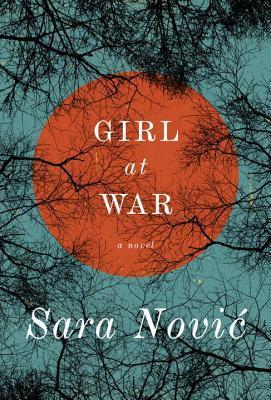
Like most of the former Yugoslavia countries, Croatia has had a long and rather bloody history. To highlight some of the more recent history of Croatia, I chose Girl at War by Sara Novic.
I knew in the end the guilt of one side did not prove the innocence of the other. ― Sara Nović, Girl at War
Girl at War is set in Croatia when Croatia was a part of Yugoslavia. The novel offers an intimate glimpse into the experiences of Ana Jurić living through the Homeland War (also known as the Croatian War of Independence). Her life is irrevocably changed by war with food rations and air raid drills, soccer matches replaced by sniper fire and neighbors suspicious of one another.
Ana’s journey goes from the innocence of her pre-war life, through the harrowing events she endures during the conflict, to her desperate efforts to survive. She manages to escape to New York City, where she grapples with the immense challenge of adapting to normal life, as her past continues to haunt her.
Moving back and forth through time, Girl at War is an honest, generous, novel that illuminates how history shapes the individual.
This is Sara Nović’s debut novel and what a debut!
3. Poland – Swimming in the Dark
I visited Warsaw earlier this year and found the city delightful. Poland is also another country I want to see more of.
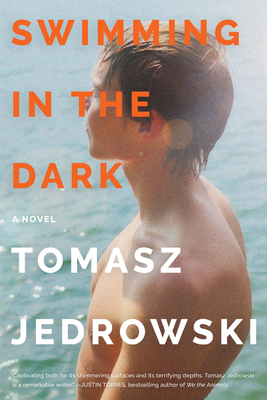
There are quiet a few books about Poland by Polish authors that I could have chosen, such as Maus by Art Spiegelman or Night by by Elie Wiesel or even The Last Wish, book 1 of the Witcher series by Andrzej Sapkowski. But I decided to pick one that might not be as familiar. I chose Swimming in the Dark by Tomasz Jedrowski.
Set against the backdrop of 1980s Warsaw, this queer love story explores the struggles of wanting to be with someone when the world seems set against it.
For a few weeks in the summer of 1980, disillusioned Ludwik manages to find happiness in the form of the charismatic and carefree Janusz. Bonding over literature banned by the state, the two young men spend their time camping in the countryside and falling in love. However, once they both return to Warsaw, the combined pressures of the religious and political communities ensure that their relationship cannot be public knowledge, and the two begin to drift apart.
With communism gradually falling apart around them, their secret love and personal and political differences slowly begin to tear them apart as both men struggle to survive.
No matter what happens in the world, however brutal or dystopian a thing, not all is lost if there are people out there risking themselves to document it. Little sparks cause fires, too. ― Tomasz Jedrowski, Swimming in the Dark
The political is personal and the person is political, and this book shows that.
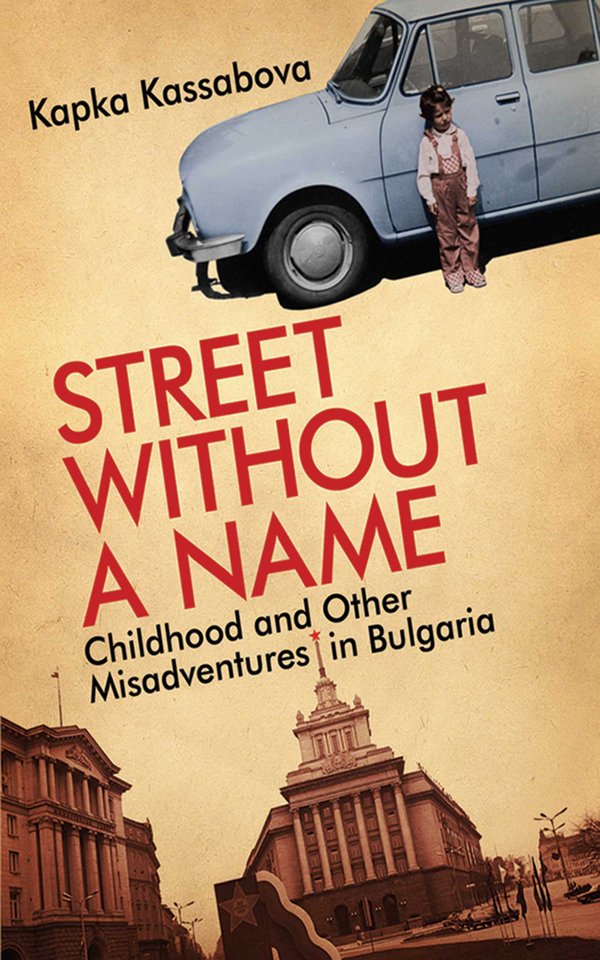
Born on the outskirts of Sofia, Kapka Kassabova grew up under Communism, got away just as soon as she could, and has loved and hated her homeland in equal measure ever since.
After years on the outside, Bulgaria has finally made it into the EU, but beyond the cliches about undrinkable plonk, cheap property, and assassins with poison-tipped umbrellas, the country remains a largely unknown quantity.
In this memoir, Kapka revisits Bulgaria and her own muddled relationship to it, traveling back to the scenes of her childhood, sampling its bizarre tourist sites, uncovering its centuries’ old history of bloodshed and blurred borders, and capturing the absurdities and idiosyncrasies of her own and her country’s past.
Traveling around the country where you grew up , lost some of your virginity and a few of your illusions, acquired some lasting neuroses, and then left in a hateful mood, is a slightly schizoid experience. You are at once an outsider to the present and an insider of the past. Or perhaps the other way round. ― Kapka Kassabova, Street Without a Name
This only makes me want to go back to Bulgaria even more.
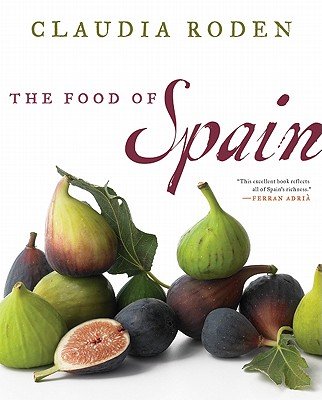
5. Spain – The Food of Spain
After my wonderful birthday trip to Spain in January, I decided I wanted to live there, mostly because of the food. While I can’t live there, I can enjoy the food.
Recipes, I have come to understand, have a special place at the heart of Spanish identity. And they give the measure of a man. It was always so. ― Claudia Roden, The Food of Spain
Of course, when thinking about Spain, the first book that comes to mind is Don Quixote by Miguel de Cervantes or maybe Hemingway’s The Sun Also Rises. But setting the classics aside, I decided to go a different direction and pick The Food of Spain: A Culinary History by Claudia Roden.
Claudia Roden believes that through food, a cook can reconstruct an entire world. She applies that philosophy to a cuisine marked by its regionalism and suffused with an unusually particular culinary history. In hundreds of exquisite recipes, Roden explores both the little known and the classic dishes of Spain–from Andalusia to Asturias, from Catalonia to Galicia.
She blends recipes, like the smoky, nutty Catalan Romesco sauce, Cordero a la Miel–sweet and hot tender lamb stew with honey–or the iconic, emblematic national dish of Spain, saffron-perfumed Paella Valenciana, with Spanish history, culture, and regional traditions.
The Food of Spain is comprehensive food tour through Spain and my mouth watered from the photographs of the various dishes.
6. Finland – The Summer Book
Okay, so I haven’t yet been to Finland. But my friends J & G are getting ready to move to Helsinki. And I will be going to visit them (but probably not in the winter).
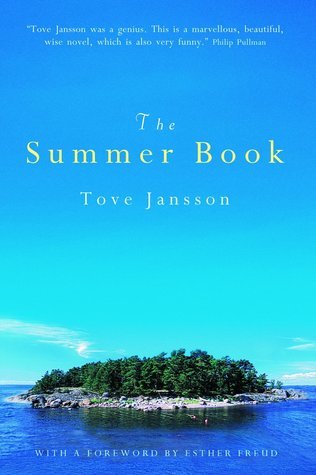
Since I haven’t yet been to Finland, I chose The Summer Book by Tove Jansson. It provides a good overview of the mindset of the Finns and their relationship with the Finnish environment and lifestyle.
The story is about an elderly artist and her six-year-old granddaughter while away a summer together on a tiny island in the gulf of Finland. The grandmother is unsentimental and wise, if a little cranky; Sophia is impetuous and volatile, but she tends to her grandmother with the care of a new parent. Together they amble over coastline and forest in easy companionship, build boats from bark, create a miniature Venice, write a fanciful study of local bugs. They discuss things that matter to young and old alike: life, death, the nature of God and of love.
Gradually, the two learn to adjust to each other’s fears, whims and yearnings for independence, and a fierce yet understated love emerges—one that encompasses not only the summer inhabitants but the island itself, with its mossy rocks, windswept firs and unpredictable seas.
“On an island,” thinks the grandmother, “everything is complete.” ― Tove Jansson, The Summer Book
Tove Jansson, who you may know as the author of the Moomins, captured much of her own experience and spirit in the book. And it definitely makes me want to visit Finland.
7. Czechia – The Last Goddess
While Prague was fascinating to visit, there is a lot more to the Czech Republic and so much more that I’d like to see, including Bohemia, the Carpathians, and Moravia.
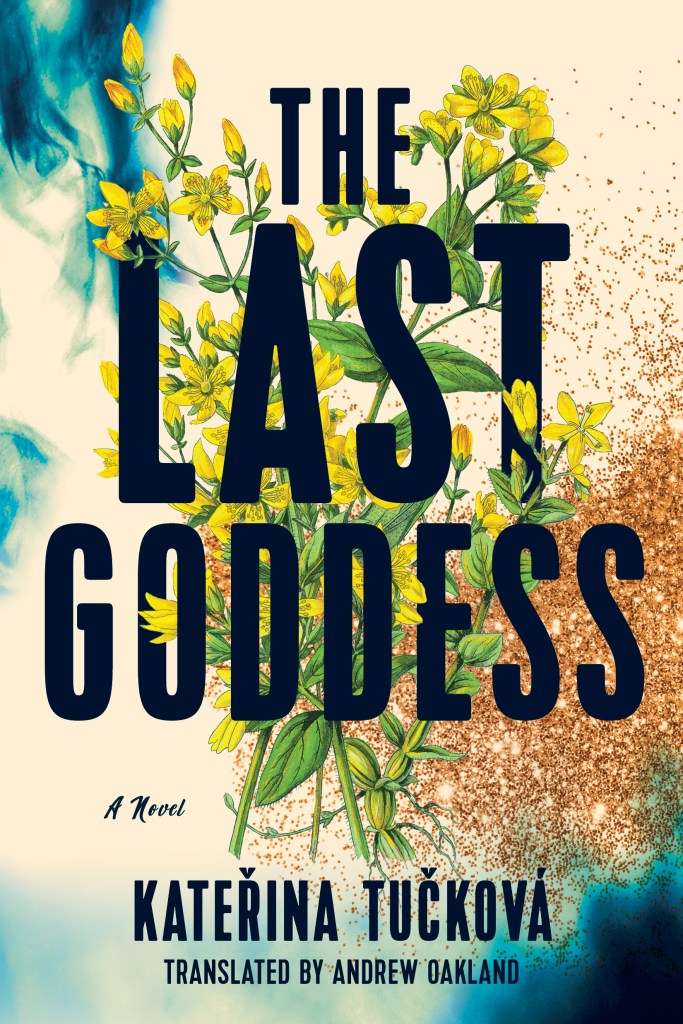
In The Last Goddess by Kateřina Tučková, a woman delves into science and superstition, fear and persecution, and the hope and courage of belief.
Human faith in whatever, provided it is strong and unshakeable faith, is tremendously powerful. ― Kateřina Tučková, The Last Goddess
Dora Idesová was raised by her aunt Surmena in the White Carpathians. Resistant to superstition, Dora grew up hearing stories of the “goddesses” who were said to conjure love and curses and, through divine connection, cure the spirit and the body. Now an academic, Dora is researching the tales that for generations spellbound the hillside where she grew up. As the mysteries become truths, they reveal a stunning discovery that reaches back from the witch trials of the seventeenth century through Nazi-occupied Germany. Embarking on an emotional journey, Dora is about to find out how deeply and fatefully she is entwined with secret tradition.
Deeply rooted in the Czech countryside and drawing on the stories of her ancestors, Tučková blends folklore, history, and injustice, offering a good reason to explore one of Czechia’s most remote regions.
Kateřina Tučková won the Josef Škvorecký Award and the Czech Bestseller Prize for this novel.
8. Iceland – How Iceland Changed the World
Sometimes I forget that Iceland is a part of Europe. Even though the referendum to restart European Union membership talks just failed, Iceland is still politically aligned with Europe, making it Europe’s westernmost and most sparsely populated country.
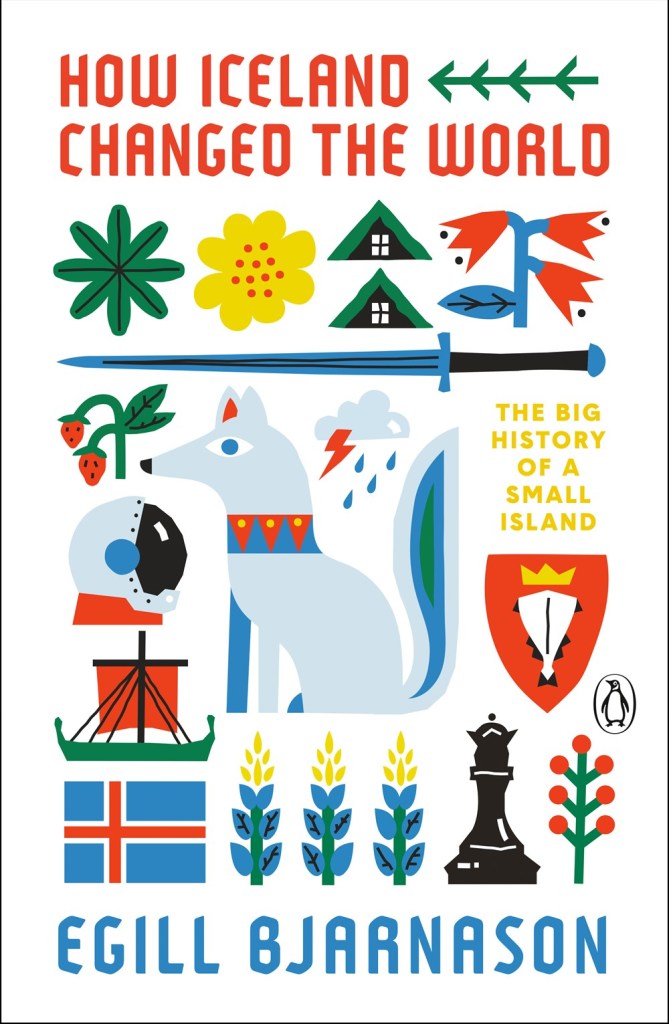
Iceland has a vast history, despite never participating in a full-scale war. Bjarnason starts the book 1,200 years ago when a frustrated Viking captain and his useless navigator ran aground in the middle of the North Atlantic. The tour of this island’s history then continues from there. Over 1,200 years, the island has produced notable diplomats, musicians, sailors, and soldiers, as well as a dynamic landscape, that has quietly altered the globe.
In this book, you will learn how Iceland played a role in the French Revolution, the foundation of Israel, the Moon Landing, and the world’s first democratically elected female president.
For such a small and sparsely populated country, Iceland has been an important in world history. This book is a stirring reminder of how even the smallest nations can cast long shadows across the canvas of history.
“Whales capture people’s imagination,” the captain once told me. “All it takes is a tiny glimpse and people feel like they’ve seen an entire whale, mouth to fluke.” That”s Iceland too. ― Egill Bjarnason, How Iceland Changed the World
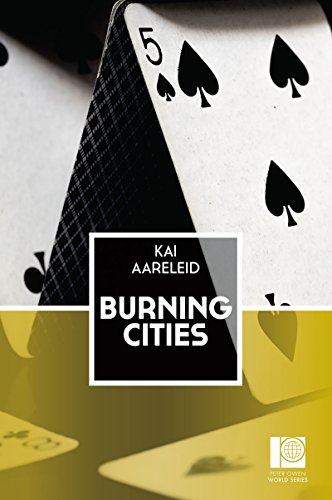
9. Estonia – Burning Cities
Estonia, and its Baltic neighbors Latvia and Lithuania, are three countries high on my travel bucket list. Sharing a border with Russia, this small nation has had an often tragic, yet intriguing history. For example, on 23 August 1989, two million people formed the Baltic Way, a human chain spanning across Estonia, Latvia, and Lithuania, to demonstrate unity in pursuit of independence, which they achieved in 1991.
To showcase a small part of Estonia’s history, I chose Burning Cities by Kai Aareleid.
I should begin from the beginning. But where is that? The beginnings are many. ― Kai Aareleid, Burning Cities
In Burning Cities, Kai Aareleid caputres how ordinary lives continue amid political ruins. Set in post-World War II Tartu, a city destroyed by Nazi invasion then rebuilt and re-mapped by the Soviets, little Tiina knows all the secrets, even if she does not know their import. The adult world that makes up Communist society is one of cryptic conversations, undiagnosed dread, and heavy drinking. From the death of Stalin to the gradual separation of her parents, Tiina, as a young girl, experiences both domestic events and great events from the periphery.
This novel is a family history that provides insight into everyday life in Estonia during the communist period. Much of what is portrayed is still, after many decades, a very sensitive subject for most Estonians.
Kai Aareleid was awarded Estonian Writer of the Year after this book, her second novel, was published.
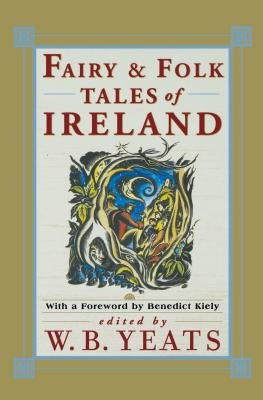
10. Ireland – Fairy & Folk Tales of Ireland
Last but not least, Ireland, my want-to-be homeland.
There are so many things I love about Ireland. Maybe my favorite is the folklore. I think the folklore is why many people become captivated with the Emerald Isle. It’s even in the nickname—Emerald Isle. A descriptor, yes, but also a name steeped in fantasy and myth.
When the pagan gods of Ireland—the Tuath-De-Danān—robbed of worship and offerings, grew smaller and smaller in the popular imagination, until they turned into the fairies, the pagan heroes grew bigger and bigger, until they turned into the giants. – W.B. Yeats, Fairy and Folk Tales of the Irish Peasantry
Fairy & Folk Tales of Ireland combines two books of Irish folklore collected and edited by William Butler Yeats—Fairy and Folk Tales of the Irish Peasantry, first published in 1888, and Irish Fairy Tales, published in 1892. In this delightful gathering of legend and song, the familiar characters of Irish myth come to life: the mercurial trooping fairies; the solitary and industrious Lepracaun and his dissipated cousin, the Cluricaun; the fearsome Pooka, who has ‘grown monstrous with much solitude’; and the Banshee, whose eerie wailing warns of death.
Fascinated by Irish myths and folklore, Yeats included almost every sort of Irish folk in this marvelous compendium of fairy tales and songs.
Ah, Ireland, a land of myths and heroes. How I would love to live there.
This wraps up my 10 book recommendations to fuel your European wanderlust.
Share your favorites armchair travel book or your travel bucket list in the comments below.
Links to Bookshop.org are affiliate links. Read more about affiliate links in my Terms of Use.
 wanderinglynn.com
Ordering The Last Goddess now 😀
LikeLiked by 1 person
Hope you enjoy!
LikeLike